

Crown Gall
Agrobacterium tumefaciens
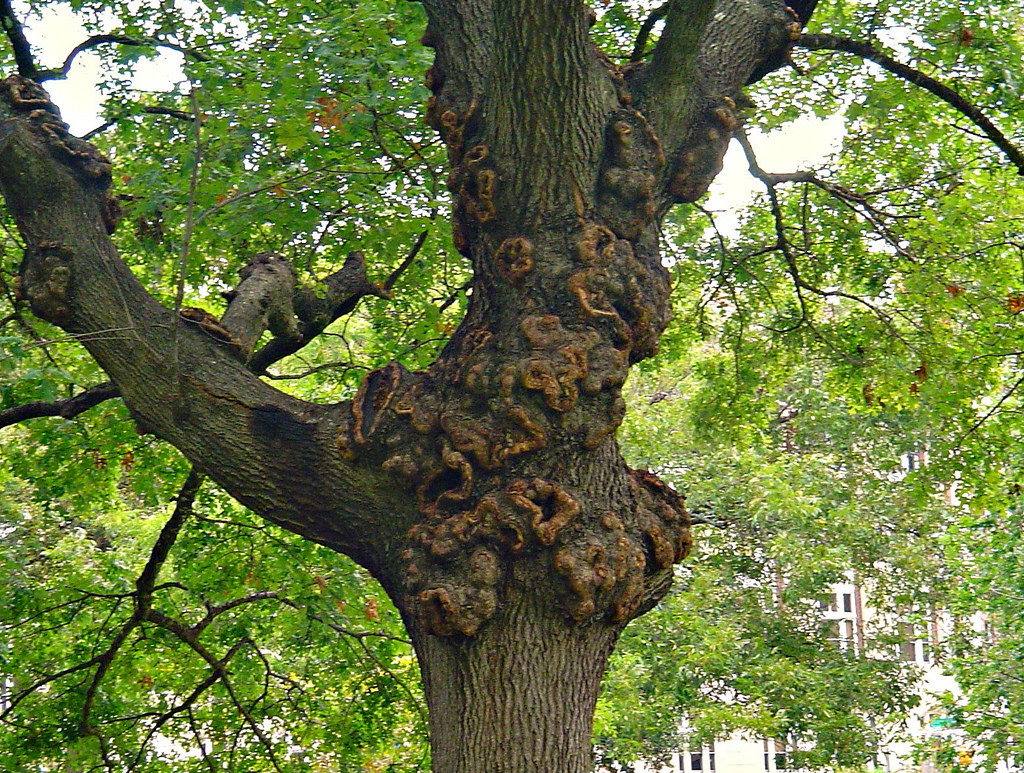
Genetic engineering of plants was perfected by a bacterium named Agrobacterium tumefaciens, long before humans invented bioengineering. The disease is called crown gall as it most often is found in the crown of plants, the area between the roots and stems. Crown galls are most common on roses, fruit trees, and ornamentals such as chrysanthemums. Monocots are not as susceptible.
Agrobacterium tumefaciens is a soil-borne bacterium that infects plants through wounds and inserts its own DNA (called T-DNA) into the plant's chromosome via a plasmid (an extra piece of DNA) called the Ti (tumor inducing) plasmid. This results in tumor growth. The T-DNA also causes plants to produce unusual compounds (amino acids) called opines that the bacterium can use as food but the plant cannot. This is an amazing feat of bioengineering by a very small organism.
More detailed information is readily available on the Internet by googling “crown gall disease.” As a side note, scientists using the T-DNA/Ti plasmid mechanism, perfected by Agrobacterium, made genetically modified plants used throughout the world. An example of this is sweet potatoes having been made more tasty thanks to a gene introduced by the Agrobacterium thousands of years ago.
Please see the many images of crown gall diseased plants on this website.