

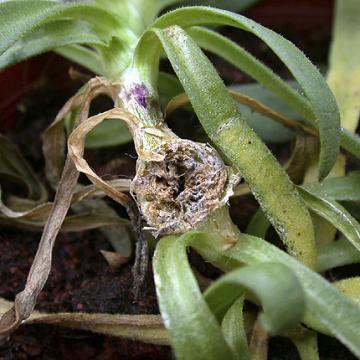
DISEASE: Gypsophila gall
HOST: Gypsophila (Baby's breath)
Gall on gypsophila stem.
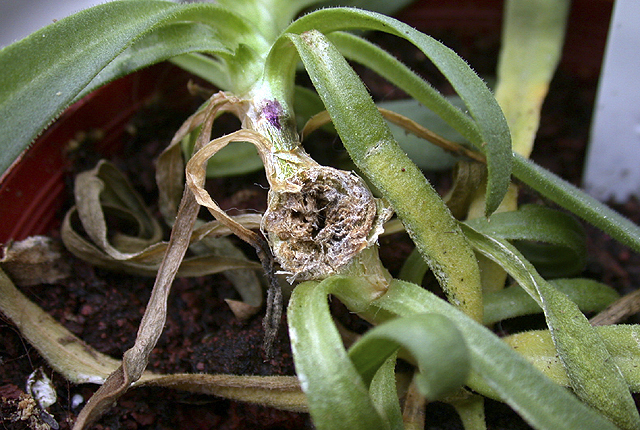
Gypsophila gall | Gypsophila (Baby's breath)
DISEASE: Gypsophila gall
HOST: Gypsophila (Baby's breath) (Gypsophila elegans)
PATHOGEN: Pantoea agglomerans pv. agglomerans
SOURCE: S. Manulis
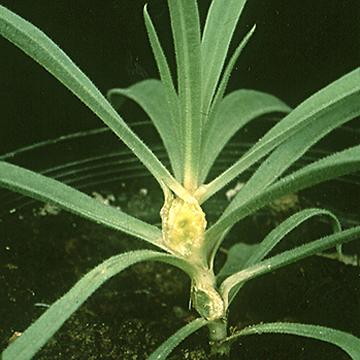
DISEASE: Gypsophila gall
HOST: Gypsophila (Baby's breath)
Gall 1 month after inoculation of stem.
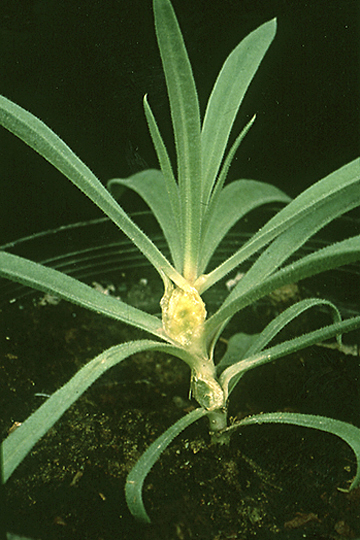
Gypsophila gall | Gypsophila (Baby's breath)
DISEASE: Gypsophila gall
HOST: Gypsophila (Baby's breath) (Gypsophila elegans)
PATHOGEN: Pantoea agglomerans pv. agglomerans
SOURCE: S. Manulis
DISEASE: Gypsophila gall
HOST: Gypsophila (Baby's breath)
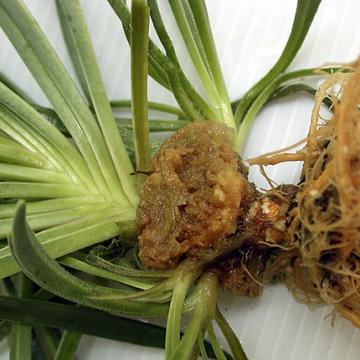
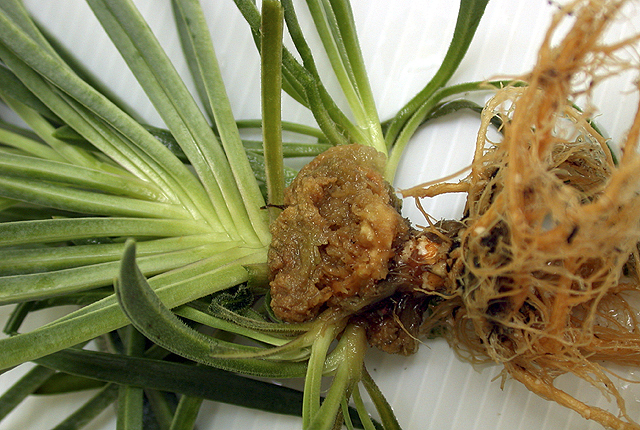
Brown gall on crown of gypsophila.
Gypsophila gall | Gypsophila (Baby's breath)
DISEASE: Gypsophila gall
HOST: Gypsophila (Baby's breath) (Gypsophila elegans)
PATHOGEN: Pantoea agglomerans pv. agglomerans
SOURCE: S. Manulis
DISEASE: Gypsophila gall
HOST: Gypsophila (Baby's breath)
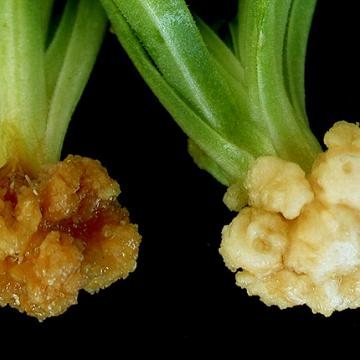
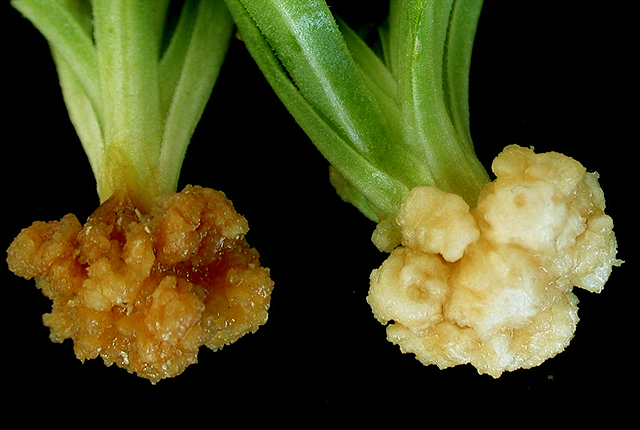
Galls (left) caused by Pantoea agglomerans pv. agglomerans tend to be brownish, and those (right) caused by P. agglomerans pv. betae are white.
Gypsophila gall | Gypsophila (Baby's breath)
DISEASE: Gypsophila gall
HOST: Gypsophila (Baby's breath) (Gypsophila elegans)
PATHOGEN: Pantoea agglomerans pv. agglomerans
SOURCE: S. Manulis
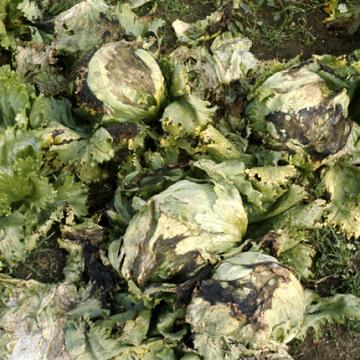
DISEASE: Marginal leaf blight
HOST: Lettuce
Marginal leaf blight first appears as slimy wilting of leaf margins. Small, reddish lesions may be seen on leaf blades. Infected tissues turn brown to black in time.
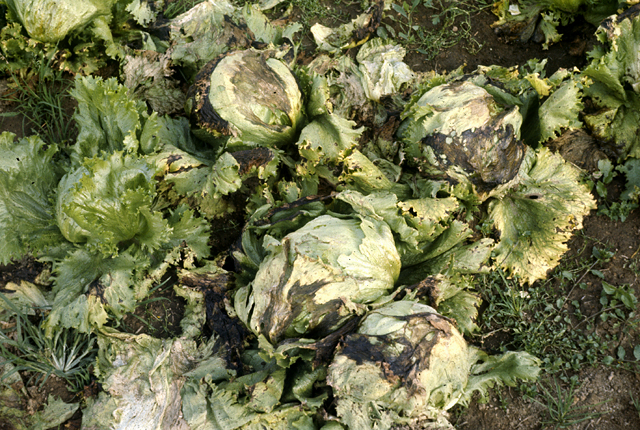
Marginal leaf blight | Lettuce
DISEASE: Marginal leaf blight
HOST: Lettuce (Lactuca sativa)
PATHOGEN: Pseudomonas marginalis
SOURCE: L. Fucikovsky
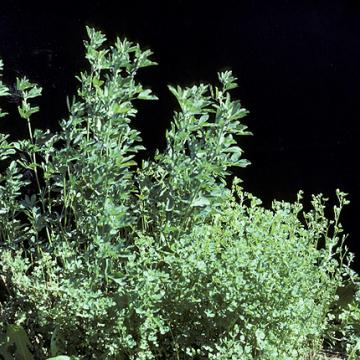
DISEASE: Witches'-broom
HOST: Alfalfa
Alfalfa plant (center) exhibiting stunting and proliferation of stems. Other symptoms are small, rounded, chlorotic, often puckered leaves and a yellowish cast.
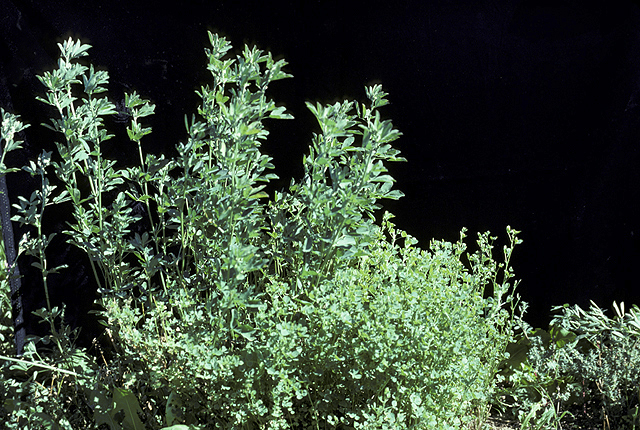
Witches'-broom | Alfalfa
DISEASE: Witches'-broom
HOST: Alfalfa (Medicago sativa)
PATHOGEN: 'Candidatus Phytoplasma trifolii'
PATHOGEN SYNONYM: Phytoplasma Clover proliferation group
SOURCE: S. Thomson
DISEASE: Witches'-broom
HOST: Alfalfa
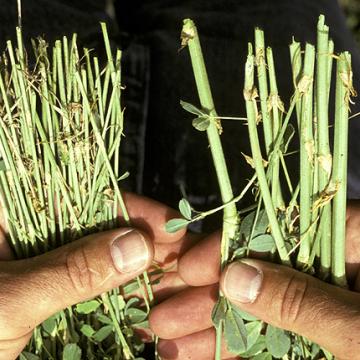
Young plant (left) with small, numerous stems (witches'-broom). Healthy stems (right).
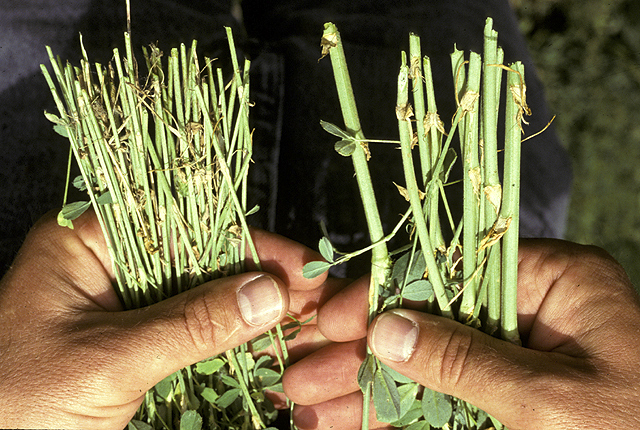
Witches'-broom | Alfalfa
DISEASE: Witches'-broom
HOST: Alfalfa (Medicago sativa)
PATHOGEN: 'Candidatus Phytoplasma trifolii'
PATHOGEN SYNONYM: Phytoplasma Clover proliferation group
SOURCE: S. Thomson
DISEASE: Witches'-broom
HOST: Cactus
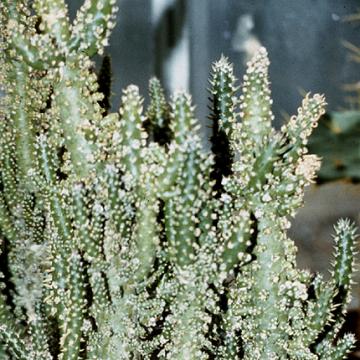
Witches'-broom of Opuntia cactus.
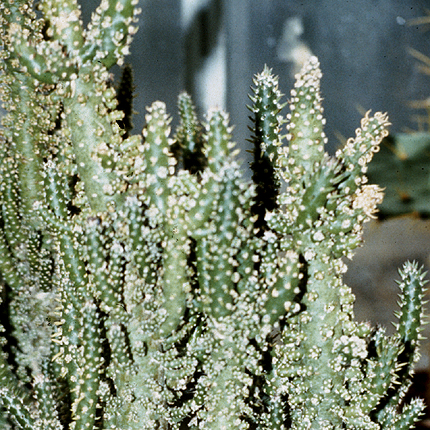
Witches'-broom | Cactus
DISEASE: Witches'-broom
HOST: Cactus (Opuntia sp.)
PATHOGEN: 'Candidatus Phytoplasma' sp.
PATHOGEN SYNONYM: Phytoplasma (undefined)
SOURCE: R. McCoy, M. Davis
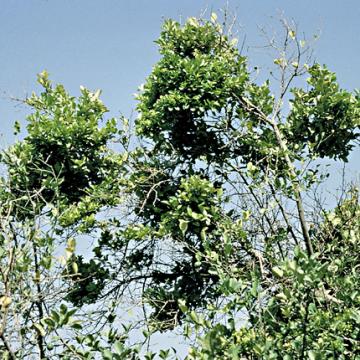
DISEASE: Witches'-broom
HOST: Citrus (Lime)
Lime tree with compact, small leaves (witches'-broom). Leaves on older brooms dry out and eventually drop, leaving dead, bare branches. There are no flowers or fruit on brooms.
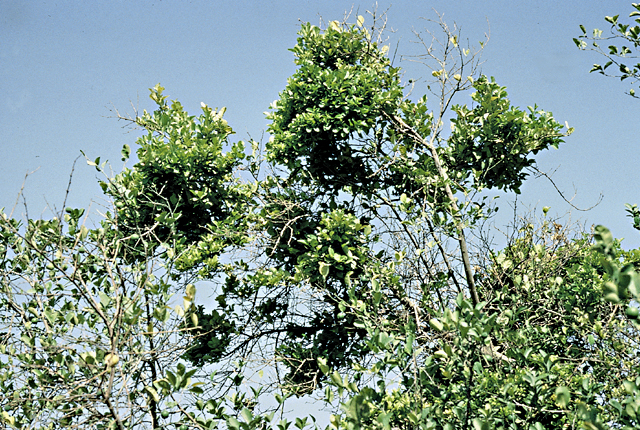
Witches'-broom | Citrus (Lime)
DISEASE: Witches'-broom
HOST: Citrus (Lime) (Citrus sp.)
PATHOGEN: 'Candidatus Phytoplasma aurantifolia'
PATHOGEN SYNONYM: Phytoplasma Peanut witches'-broom group
SOURCE: J. Bove, M. Garnier