

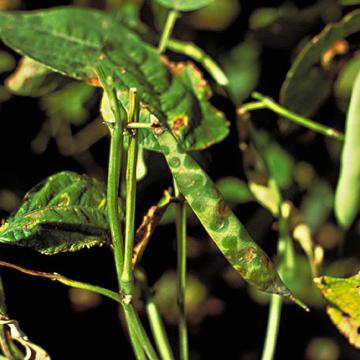
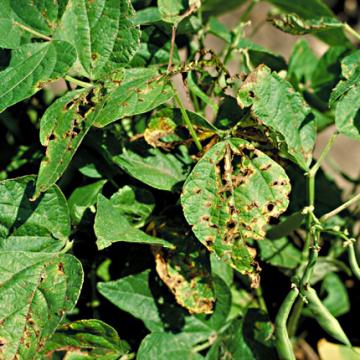
DISEASE: Bacterial brown spot
HOST: Bean
Bean with water-soaked and necrotic lesions on pods and leaves.
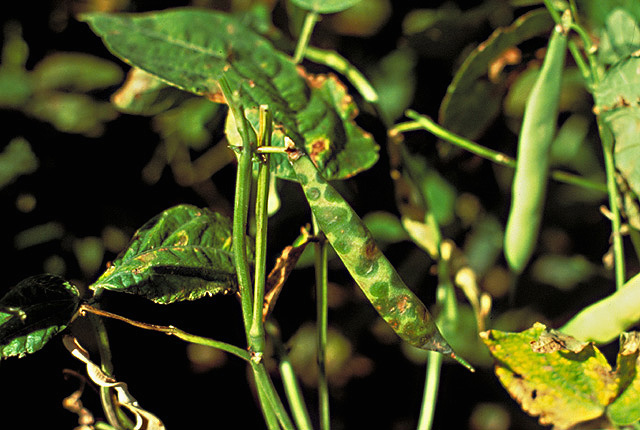
Bacterial brown spot | Bean
DISEASE: Bacterial brown spot
HOST: Bean (Phaseolus vulgaris)
PATHOGEN: Pseudomonas syringae pv. syringae
SOURCE: H. Schwartz
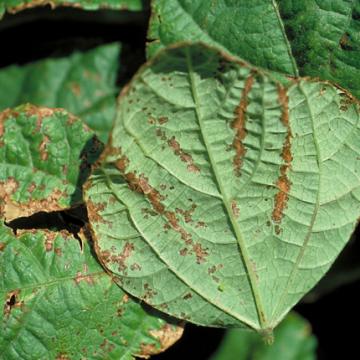
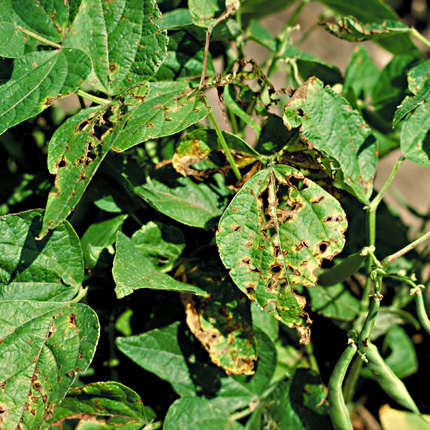
DISEASE: Bacterial brown spot
HOST: Bean
Common bean with necrotic lesions on upper and lower surfaces of leaves. Lesions often are surrounded by bright yellow zones (not shown).
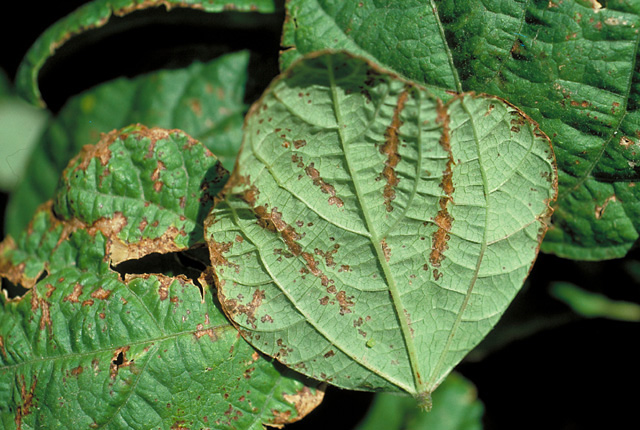
Bacterial brown spot | Bean
DISEASE: Bacterial brown spot
HOST: Bean (Phaseolus vulgaris)
PATHOGEN: Pseudomonas syringae pv. syringae
SOURCE: H. Schwartz
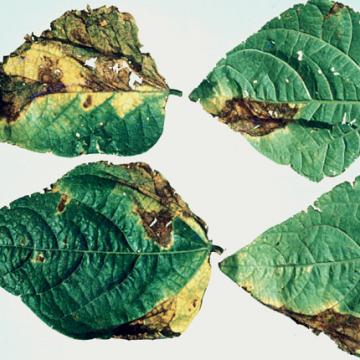
DISEASE: Bacterial brown spot
HOST: Bean
Leaves of common bean with shot-holes, a late stage of disease.
Bacterial brown spot | Bean
DISEASE: Bacterial brown spot
HOST: Bean (Phaseolus vulgaris)
PATHOGEN: Pseudomonas syringae pv. syringae
SOURCE: H. Schwartz
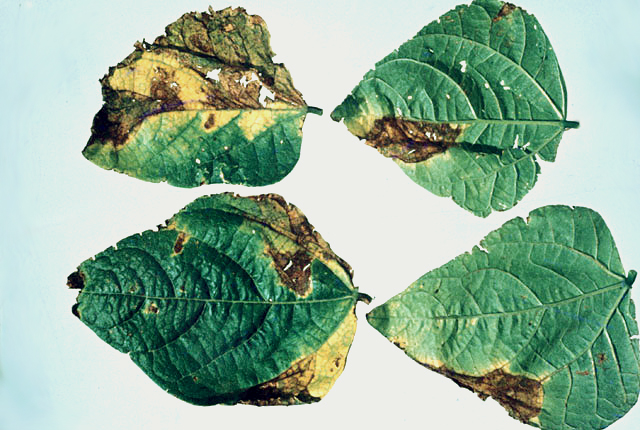
DISEASE: Bacterial brown spot
HOST: Bean
Leaves of dwarf bean exhibiting late stage of disease.
Bacterial brown spot | Bean
DISEASE: Bacterial brown spot
HOST: Bean (Phaseolus vulgaris)
PATHOGEN: Pseudomonas syringae pv. syringae
SOURCE: J. Young

DISEASE: Bacterial brown spot
HOST: Mallotus
Leaf with small, rustylike lesions.

Bacterial brown spot | Mallotus
DISEASE: Bacterial brown spot
HOST: Mallotus (Mallotus japonicus)
PATHOGEN: Xanthomonas campestris pv. malloti
SOURCE: M. Goto
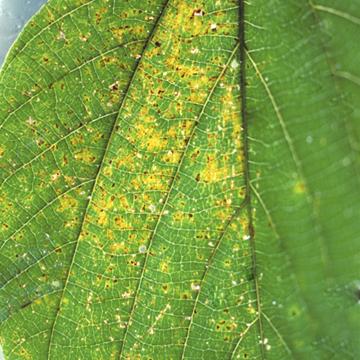
DISEASE: Bacterial brown spot
HOST: Mallotus
Leaf with tiny, light brown spots surrounded by chlorotic zones.
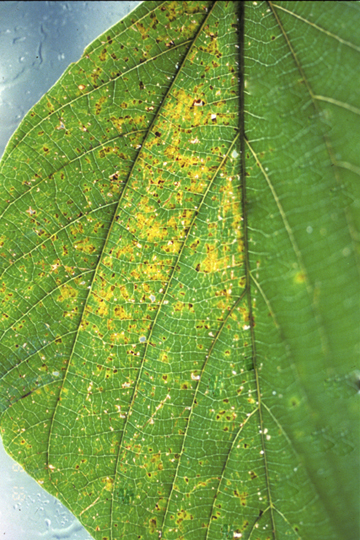
Bacterial brown spot | Mallotus
DISEASE: Bacterial brown spot
HOST: Mallotus (Mallotus japonicus)
PATHOGEN: Xanthomonas campestris pv. malloti
SOURCE: M. Kobayashi, M. Goto
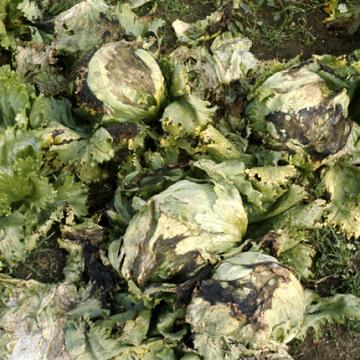
DISEASE: Marginal leaf blight
HOST: Lettuce
Marginal leaf blight first appears as slimy wilting of leaf margins. Small, reddish lesions may be seen on leaf blades. Infected tissues turn brown to black in time.
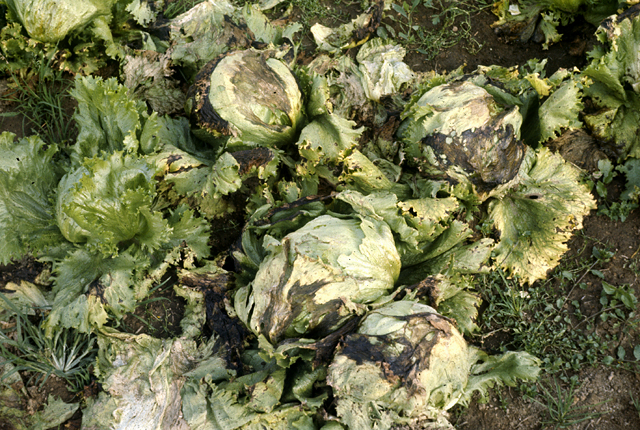
Marginal leaf blight | Lettuce
DISEASE: Marginal leaf blight
HOST: Lettuce (Lactuca sativa)
PATHOGEN: Pseudomonas marginalis
SOURCE: L. Fucikovsky
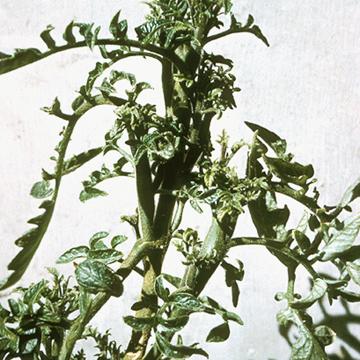
DISEASE: Tomato big bud
HOST: Tomato
Characteristic symptoms are swollen, apical stems and stunted leaves. Apical stems are generally thickened and assume a stiff and erect growth habit. Internodes are shortened and flower buds are greatly enlarged.
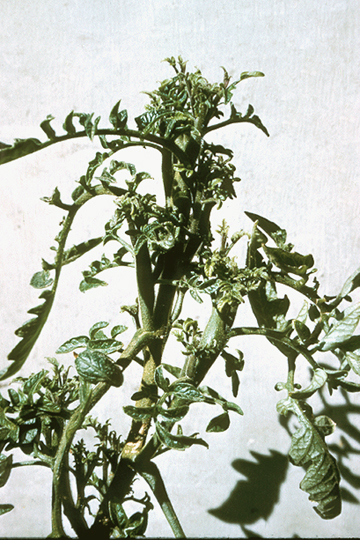
Tomato big bud | Tomato
DISEASE: Tomato big bud
HOST: Tomato (Lycopersicon esculentum)
PATHOGEN: 'Candidatus Phytoplasma asteris'
PATHOGEN SYNONYM: Phytoplasma Aster yellows group
SOURCE: D. Teakle
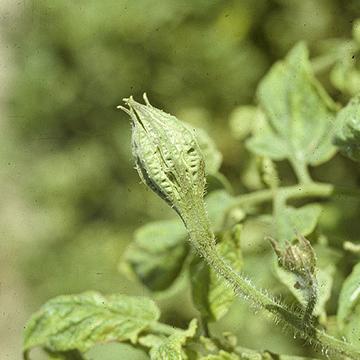
DISEASE: Tomato big bud
HOST: Tomato
Symptoms are enlarge sepals that do not separate. Flower buds stay green and do not develop into fruit. Leaves are small and chlorotic.
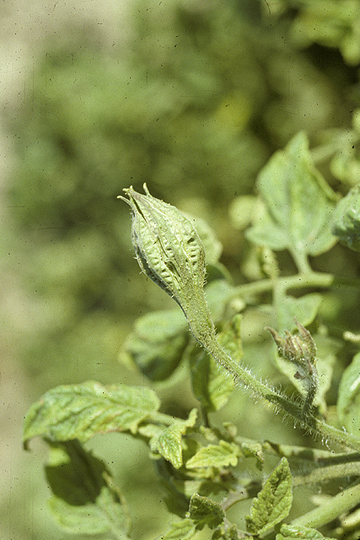
Tomato big bud | Tomato
DISEASE: Tomato big bud
HOST: Tomato (Lycopersicon esculentum)
PATHOGEN: 'Candidatus Phytoplasma asteris'
PATHOGEN SYNONYM: Phytoplasma Aster yellows group
SOURCE: S. Thomson