

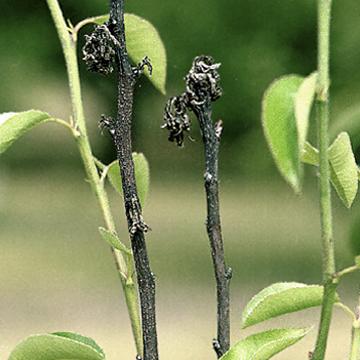
DISEASE: Bacterial blast
HOST: Pear
The bacterium infects all flower parts and may spread and kill the entire spur.
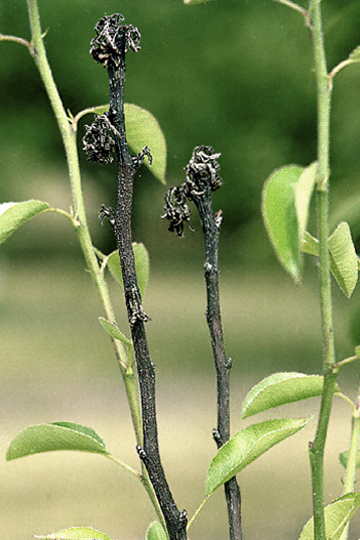
Bacterial blast | Pear
DISEASE: Bacterial blast
HOST: Pear (Pyrus communis)
PATHOGEN: Pseudomonas syringae pv. syringae
SOURCE: W. Sinclair
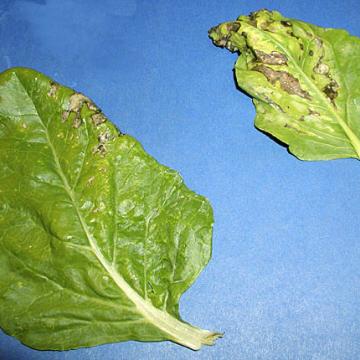
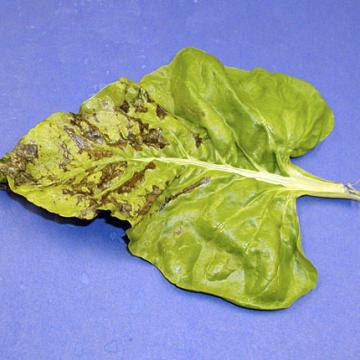
DISEASE: Bacterial leaf spot of chard
HOST: Chard
Chard leaves with necrotic spots.
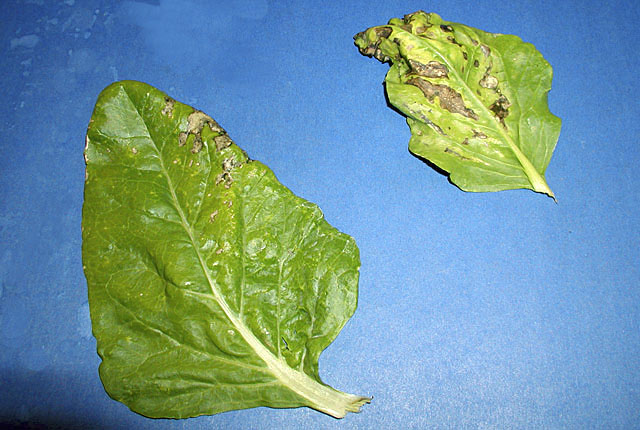
Bacterial leaf spot of chard | Chard
DISEASE: Bacterial leaf spot of chard
HOST: Chard (Beta vulgaris subsp. cicla)
PATHOGEN: Pseudomonas syringae pv. aptata
PATHOGEN SYNONYM: Pseudomonas aptata
SOURCE: P. Brown
DISEASE: Bacterial leaf spot of chard
HOST: Chard
Chard with necrotic, irregular leaf spots.
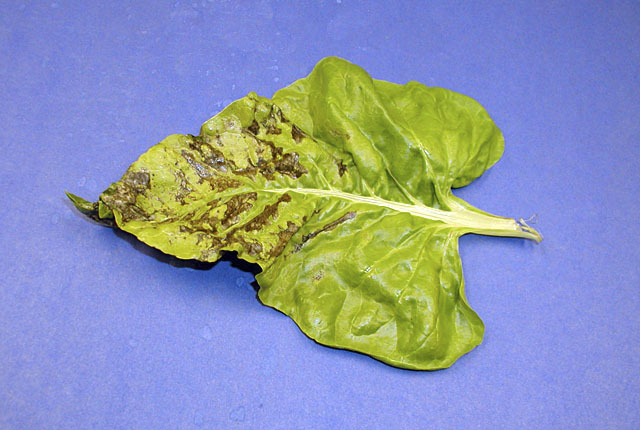
Bacterial leaf spot of chard | Chard
DISEASE: Bacterial leaf spot of chard
HOST: Chard (Beta vulgaris subsp. cicla)
PATHOGEN: Pseudomonas syringae pv. aptata
PATHOGEN SYNONYM: Pseudomonas aptata
SOURCE: P. Brown
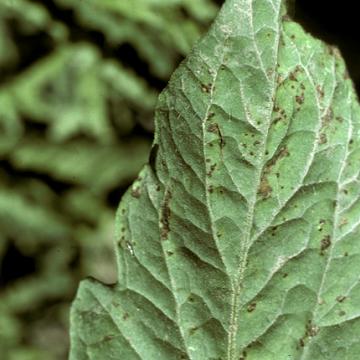
DISEASE: Bacterial speck
HOST: Tomato
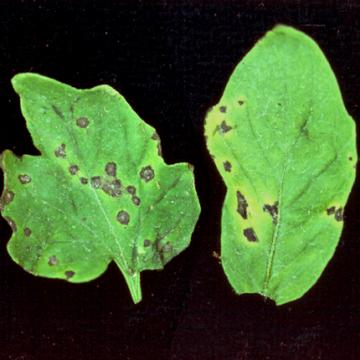
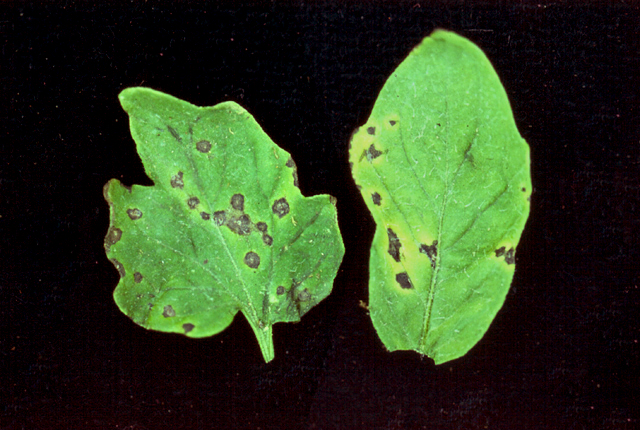
Leaf with typical brown to black lesions without halos, an early stage of disease.
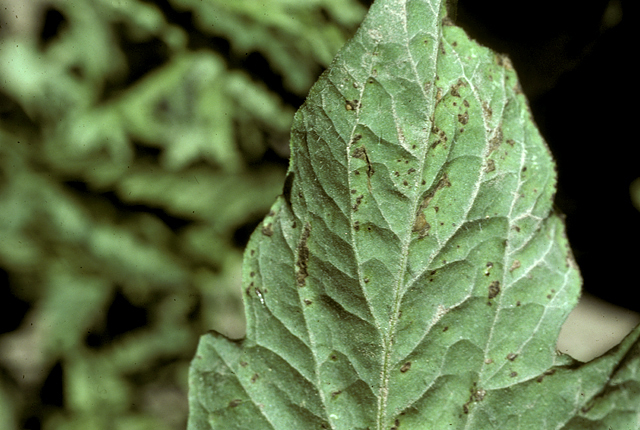
Bacterial speck | Tomato
DISEASE: Bacterial speck
HOST: Tomato (Lycopersicon esculentum)
PATHOGEN: Pseudomonas syringae pv. tomato
SOURCE: S. Thomson
DISEASE: Bacterial speck
HOST: Tomato
Leaves with spots, some surrounded by chlorotic zones.
Bacterial speck | Tomato
DISEASE: Bacterial speck
HOST: Tomato (Lycopersicon esculentum)
PATHOGEN: Pseudomonas syringae pv. tomato
SOURCE: R. Gitaitis
DISEASE: Bacterial speck
HOST: Tomato
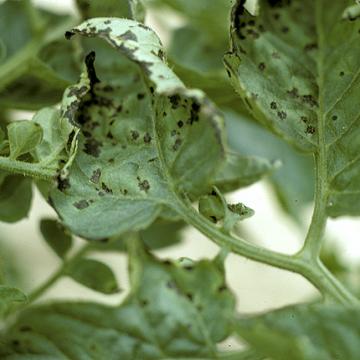
Curling leaves with large, blackish lesions. Later, yellowing occurs around lesions.
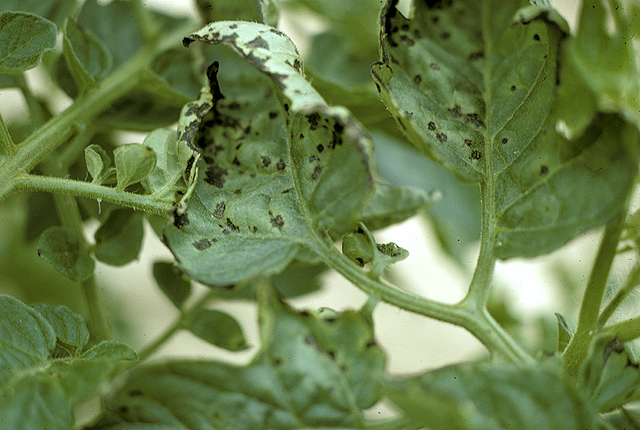
Bacterial speck | Tomato
DISEASE: Bacterial speck
HOST: Tomato (Lycopersicon esculentum)
PATHOGEN: Pseudomonas syringae pv. tomato
SOURCE: M. Schroth
DISEASE: Bacterial speck
HOST: Tomato
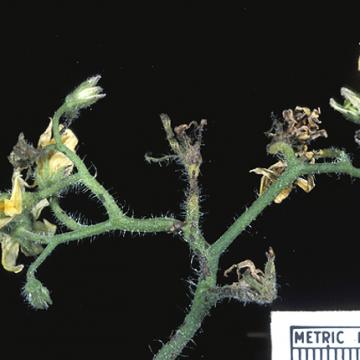
Infection of flowers, peduncles, and stems.
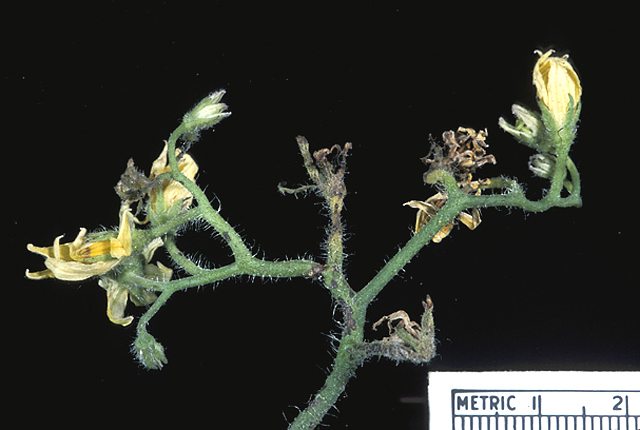
Bacterial speck | Tomato
DISEASE: Bacterial speck
HOST: Tomato (Lycopersicon esculentum)
PATHOGEN: Pseudomonas syringae pv. tomato
SOURCE: D. Cupples
DISEASE: Bacterial speck
HOST: Tomato
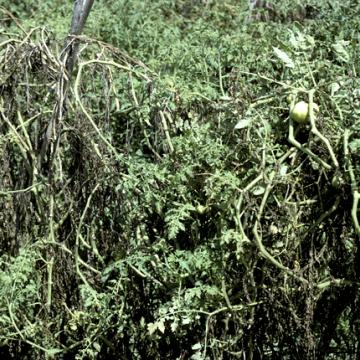
Field view of severely diseased plants.
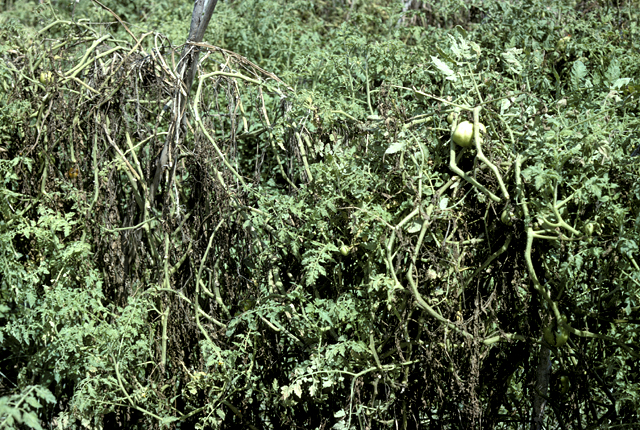
Bacterial speck | Tomato
DISEASE: Bacterial speck
HOST: Tomato (Lycopersicon esculentum)
PATHOGEN: Pseudomonas syringae pv. tomato
SOURCE: M. Schroth
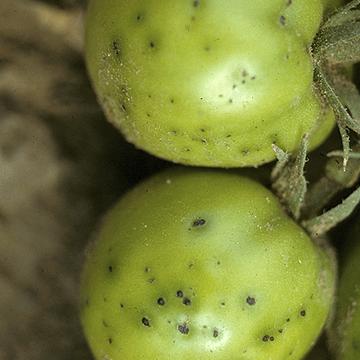
DISEASE: Bacterial speck
HOST: Tomato
Green fruit with small, sunken, black lesions. Raised centers are surrounded by dark green halos.
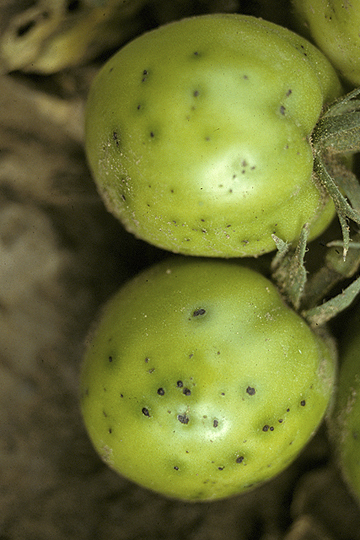
Bacterial speck | Tomato
DISEASE: Bacterial speck
HOST: Tomato (Lycopersicon esculentum)
PATHOGEN: Pseudomonas syringae pv. tomato
SOURCE: S. Thomson