

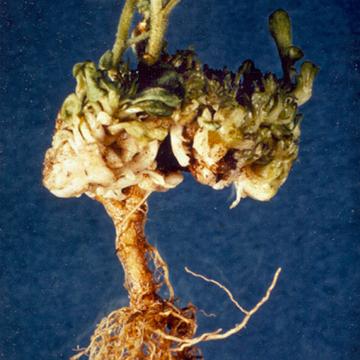
DISEASE: Bacterial fasciation (Leafy gall)
HOST: Petunia
Note hyperplasia and leafy galls.
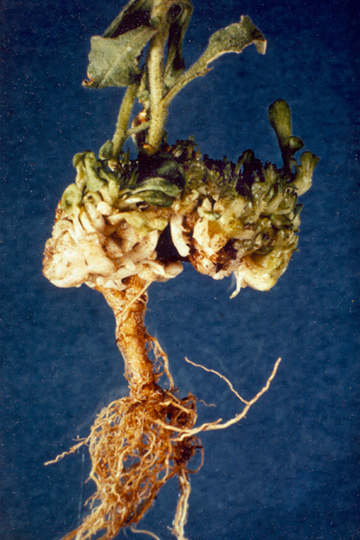
Bacterial fasciation (Leafy gall) | Petunia
DISEASE: Bacterial fasciation (Leafy gall)
HOST: Petunia (Petunia sp.)
PATHOGEN: Rhodococcus fascians
SOURCE: M. Shurtleff
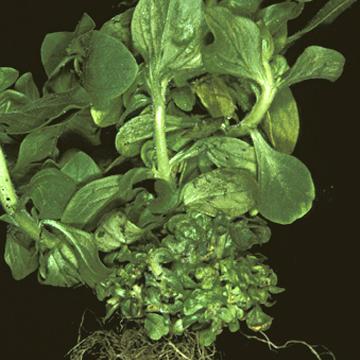
DISEASE: Bacterial fasciation (Leafy gall)
HOST: Petunia
Leaf proliferation at crown region.
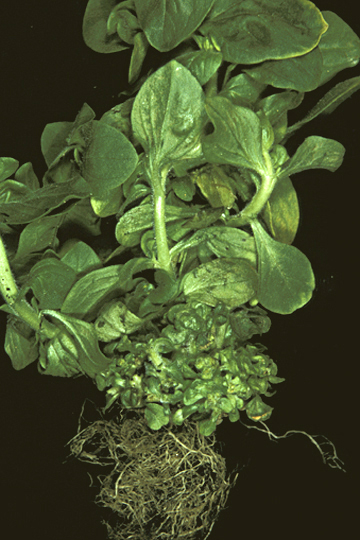
Bacterial fasciation (Leafy gall) | Petunia
DISEASE: Bacterial fasciation (Leafy gall)
HOST: Petunia (Petunia hybrida)
PATHOGEN: Rhodococcus fascians
SOURCE: R. Raabe
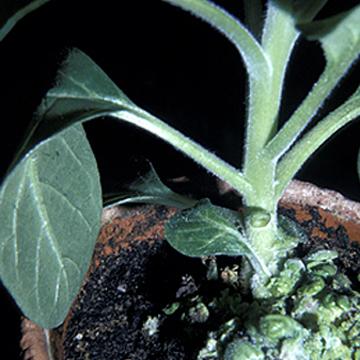
DISEASE: Bacterial fasciation (Leafy gall)
HOST: Tobacco
Bacterial fasciation of tobacco.
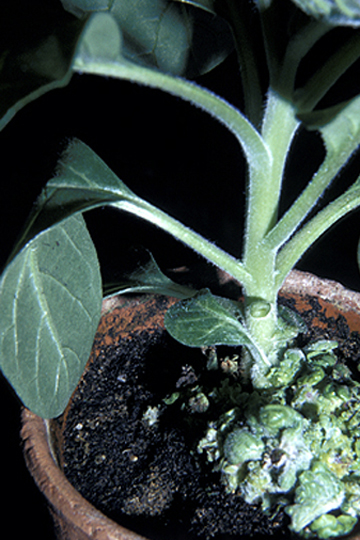
Bacterial fasciation (Leafy gall) | Tobacco
DISEASE: Bacterial fasciation (Leafy gall)
HOST: Tobacco (Nicotiana tabacum)
PATHOGEN: Rhodococcus fascians
SOURCE: R. Raabe
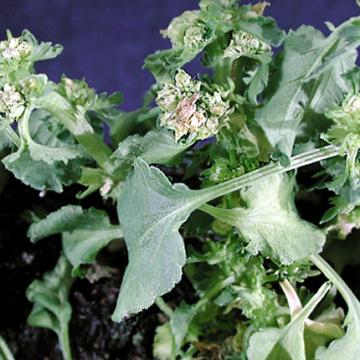
DISEASE: Bacterial fasciation (Leafy gall)
HOST: Viola (Horned violet)
The disease causes distortion and overgrowth of axillary buds.
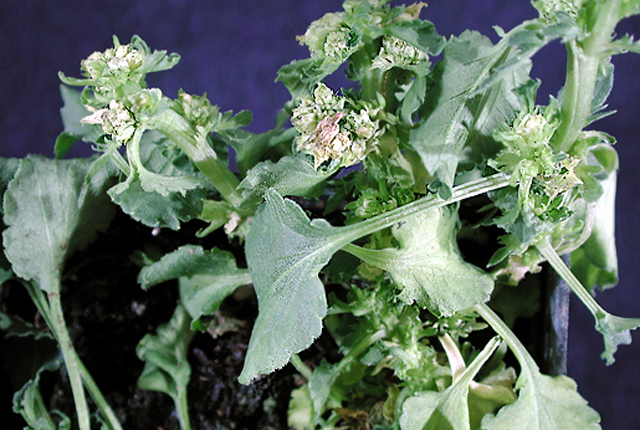
Bacterial fasciation (Leafy gall) | Viola (Horned violet)
DISEASE: Bacterial fasciation (Leafy gall)
HOST: Viola (Horned violet) (Viola cornuta)
PATHOGEN: Rhodococcus fascians
SOURCE: M. Putnam
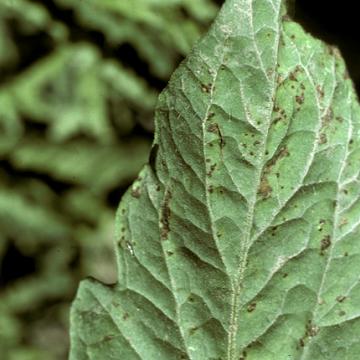
DISEASE: Bacterial speck
HOST: Tomato
Leaf with typical brown to black lesions without halos, an early stage of disease.
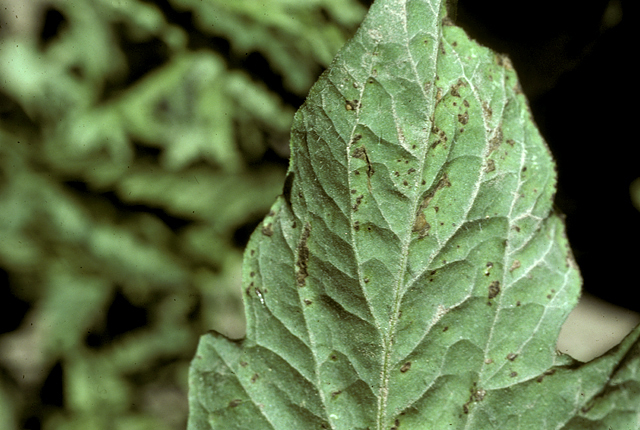
Bacterial speck | Tomato
DISEASE: Bacterial speck
HOST: Tomato (Lycopersicon esculentum)
PATHOGEN: Pseudomonas syringae pv. tomato
SOURCE: S. Thomson
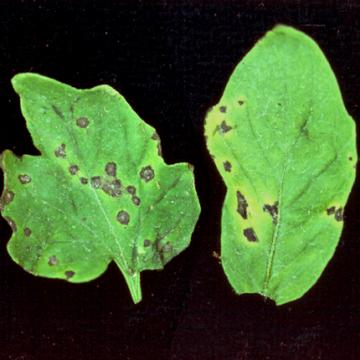
DISEASE: Bacterial speck
HOST: Tomato
Leaves with spots, some surrounded by chlorotic zones.
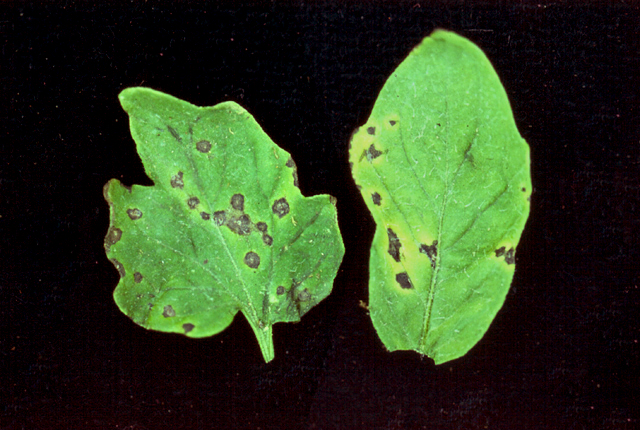
Bacterial speck | Tomato
DISEASE: Bacterial speck
HOST: Tomato (Lycopersicon esculentum)
PATHOGEN: Pseudomonas syringae pv. tomato
SOURCE: R. Gitaitis
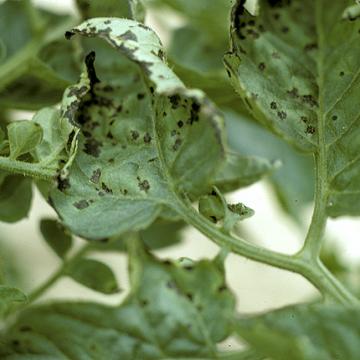
DISEASE: Bacterial speck
HOST: Tomato
Curling leaves with large, blackish lesions. Later, yellowing occurs around lesions.
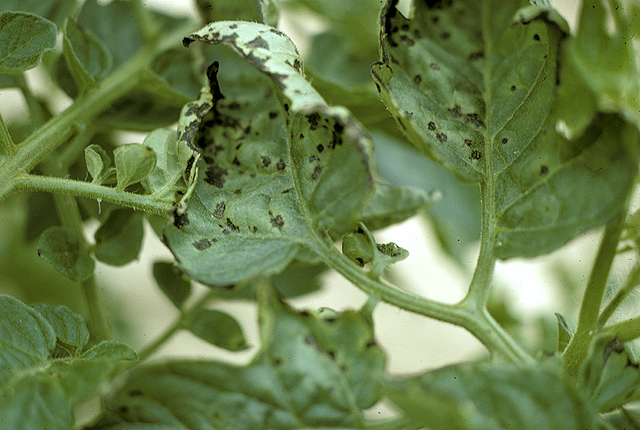
Bacterial speck | Tomato
DISEASE: Bacterial speck
HOST: Tomato (Lycopersicon esculentum)
PATHOGEN: Pseudomonas syringae pv. tomato
SOURCE: M. Schroth
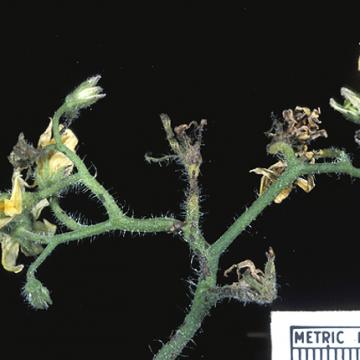
DISEASE: Bacterial speck
HOST: Tomato
Infection of flowers, peduncles, and stems.
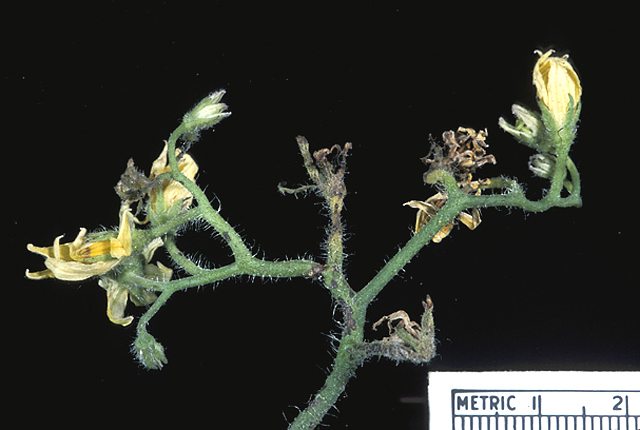
Bacterial speck | Tomato
DISEASE: Bacterial speck
HOST: Tomato (Lycopersicon esculentum)
PATHOGEN: Pseudomonas syringae pv. tomato
SOURCE: D. Cupples
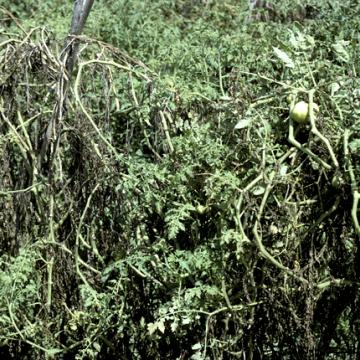
DISEASE: Bacterial speck
HOST: Tomato
Field view of severely diseased plants.
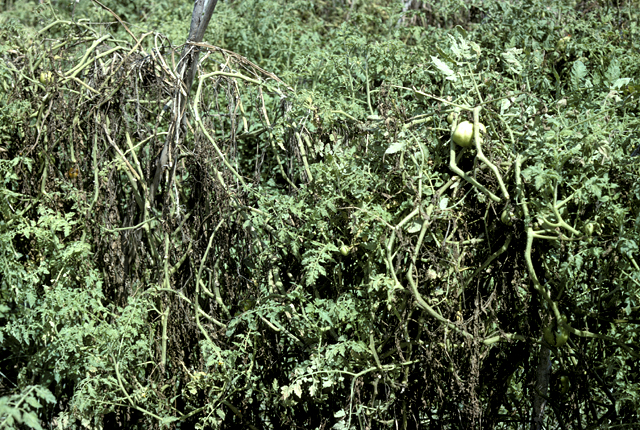
Bacterial speck | Tomato
DISEASE: Bacterial speck
HOST: Tomato (Lycopersicon esculentum)
PATHOGEN: Pseudomonas syringae pv. tomato
SOURCE: M. Schroth