

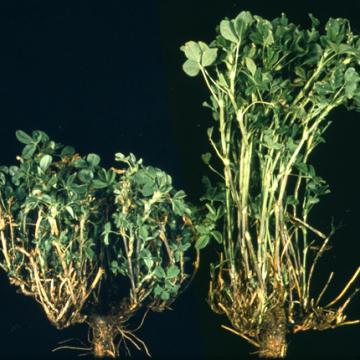
DISEASE: Alfalfa dwarf
HOST: Alfalfa
Alfalfa dwarf is characterized by stunted plants (left), usually dark blue-green in color. Xylem tissues become brown, especially when exposed to air.
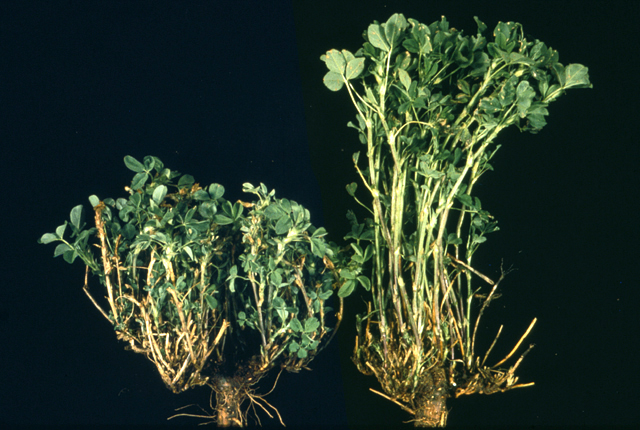
Alfalfa dwarf | Alfalfa
DISEASE: Alfalfa dwarf
HOST: Alfalfa (Medicago sativa)
PATHOGEN: Xylella fastidiosa
SOURCE: R. M. Davis
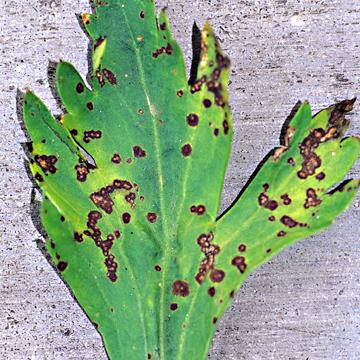
DISEASE: Bacterial blight (Brown stem)
HOST: Celery
Lesions are necrotic and circular to angular. Some have yellowish halos. Older lesions become brown and dry.
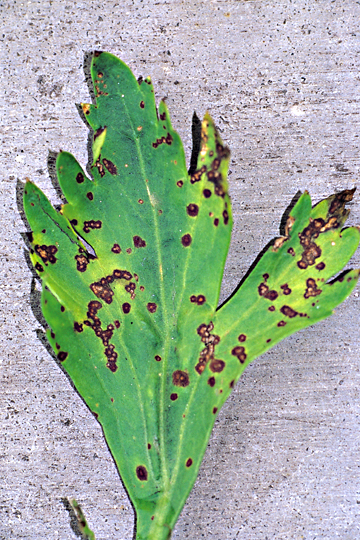
Bacterial blight (Brown stem) | Celery
DISEASE: Bacterial blight (Brown stem)
HOST: Celery (Apium graveolens)
PATHOGEN: Pseudomonas cichorii
SOURCE: R. Raid
DISEASE: Bacterial blight (Brown stem)
HOST: Celery
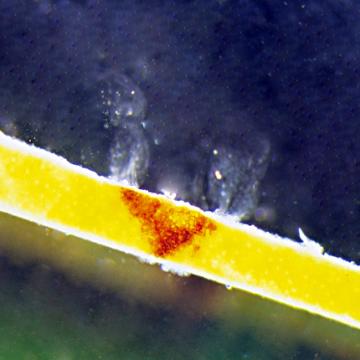
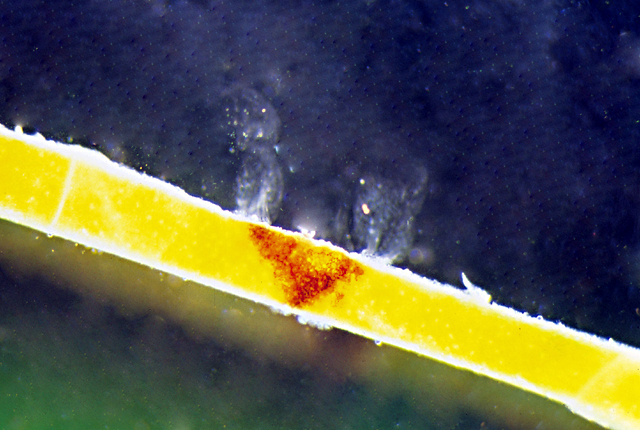
Ooze from lesion on celery leaf.
Bacterial blight (Brown stem) | Celery
DISEASE: Bacterial blight (Brown stem)
HOST: Celery (Apium graveolens)
PATHOGEN: Pseudomonas cichorii
SOURCE: R. Raid
DISEASE: Bacterial blight (Brown stem)
HOST: Celery
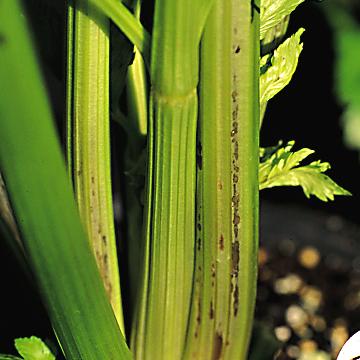
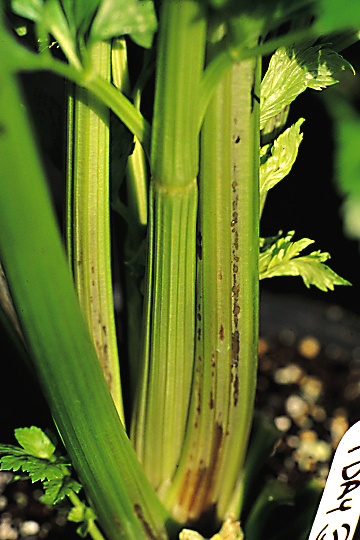
Characteristic brown discoloration of petioles, which is more evident on inside of petiole close to the crown. Parenchyma tissues are firm and brown.
Bacterial blight (Brown stem) | Celery
DISEASE: Bacterial blight (Brown stem)
HOST: Celery (Apium graveolens)
PATHOGEN: Pseudomonas cichorii
SOURCE: K. Pernezny
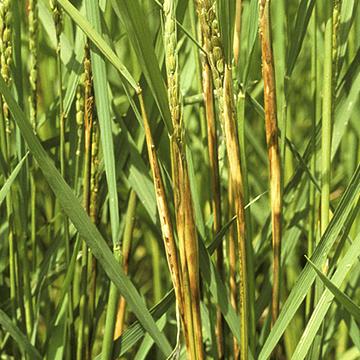
DISEASE: Sheath brown rot
HOST: Rice
Disease symptoms typically occur on flag leaf sheaths from booting to heading stage and also on panicles. Water-soaked lesions on glumes turn light brown.
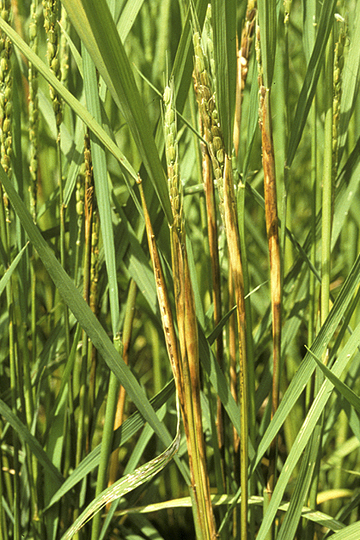
Sheath brown rot | Rice
DISEASE: Sheath brown rot
HOST: Rice (Oryza sativa)
PATHOGEN: Burkholderia fuscovaginae
PATHOGEN SYNONYM: Pseudomonas fuscovaginae
SOURCE: K. Miyajima, M. Goto
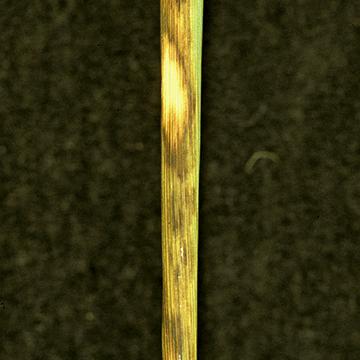
DISEASE: Sheath brown rot
HOST: Rice
Close-up of stem lesions.
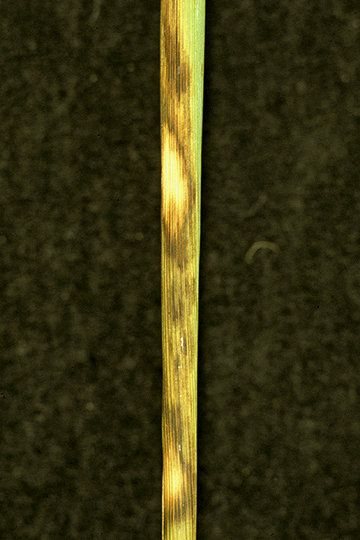
Sheath brown rot | Rice
DISEASE: Sheath brown rot
HOST: Rice (Oryza sativa)
PATHOGEN: Burkholderia fuscovaginae
PATHOGEN SYNONYM: Pseudomonas fuscovaginae
SOURCE: K. Miyajima, M. Goto
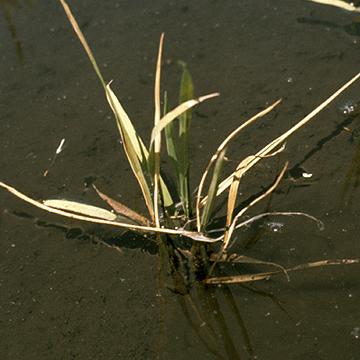
DISEASE: Sheath brown rot
HOST: Rice
Seedling with rot symptoms.
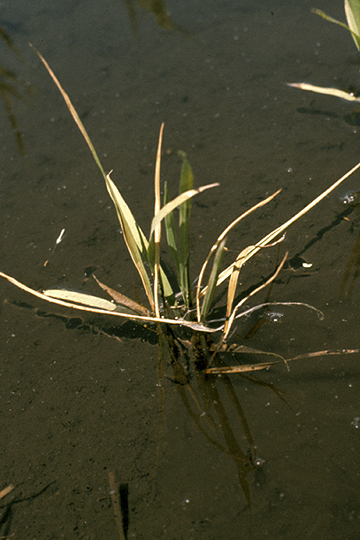
Sheath brown rot | Rice
DISEASE: Sheath brown rot
HOST: Rice (Oryza sativa)
PATHOGEN: Burkholderia fuscovaginae
PATHOGEN SYNONYM: Pseudomonas fuscovaginae
SOURCE: K. Miyajima, M. Goto
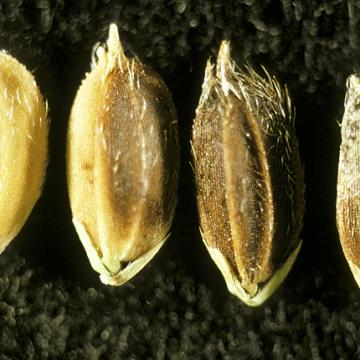
DISEASE: Sheath brown rot
HOST: Rice
Diseased, unhulled grains with brown discoloration. Healthy grain (left).
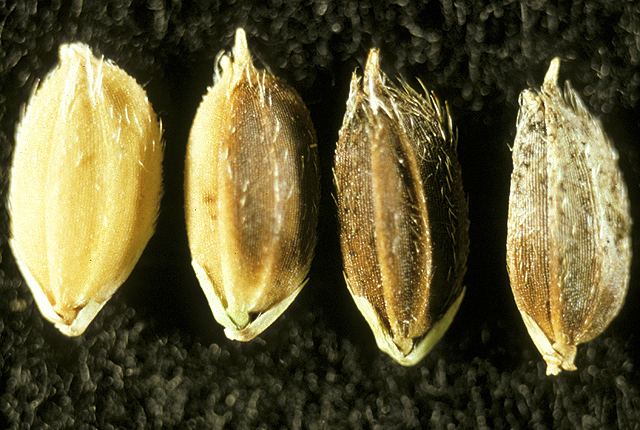
Sheath brown rot | Rice
DISEASE: Sheath brown rot
HOST: Rice (Oryza sativa)
PATHOGEN: Burkholderia fuscovaginae
PATHOGEN SYNONYM: Pseudomonas fuscovaginae
SOURCE: K. Miyajima, M. Goto