

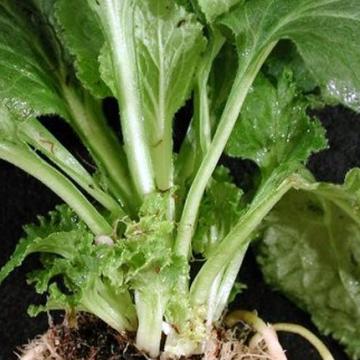
DISEASE: Bacterial fasciation (Shoot proliferation)
HOST: Campanula
Overproduction of new shoots and short, thickened, distorted stems.
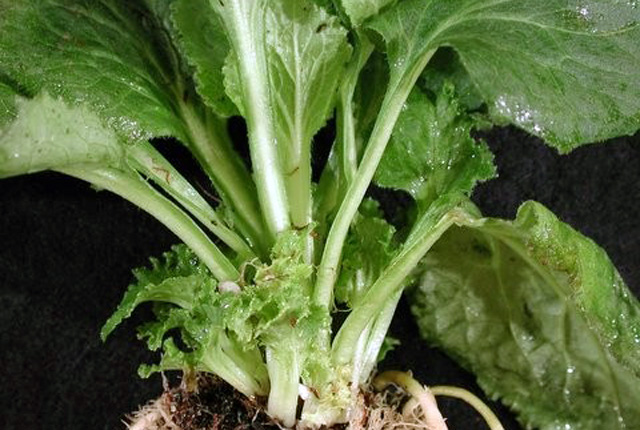
Bacterial fasciation (Shoot proliferation) | Campanula
DISEASE: Bacterial fasciation (Shoot proliferation)
HOST: Campanula (Campanula sp.)
PATHOGEN: Rhodococcus fascians
SOURCE: M. Putnam
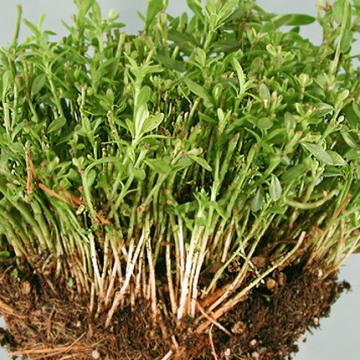
DISEASE: Bacterial fasciation (Shoot proliferation)
HOST: Candytuft
The disease causes production of multiple shoots.
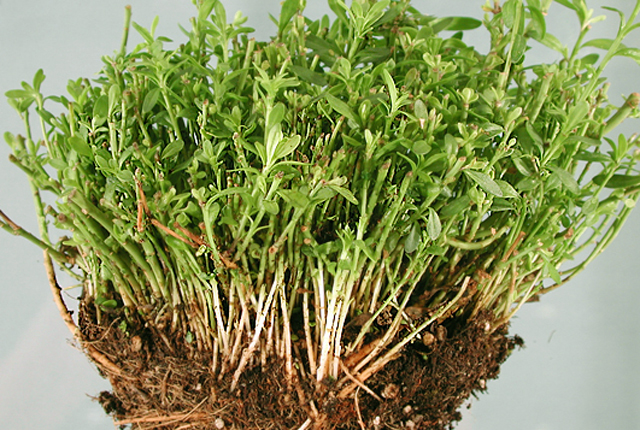
Bacterial fasciation (Shoot proliferation) | Candytuft
DISEASE: Bacterial fasciation (Shoot proliferation)
HOST: Candytuft (Iberis sp.)
PATHOGEN: Rhodococcus fascians
SOURCE: M. Putnam
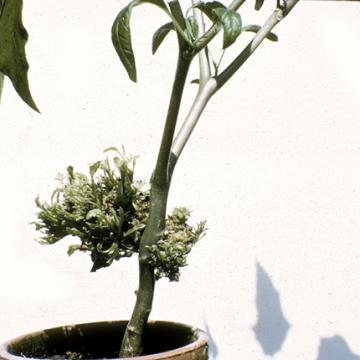
DISEASE: Crown gall (Leafy gall)
HOST: Datura
Crown gall or leafy gall of datura.
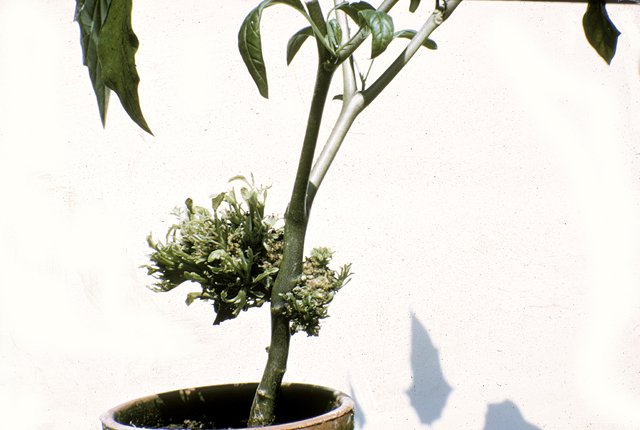
Crown gall (Leafy gall) | Datura
DISEASE: Crown gall (Leafy gall)
HOST: Datura (Datura sp.)
PATHOGEN: Agrobacterium tumefaciens
PATHOGEN SYNONYM: Rhizobium sp.
SOURCE: M. Schroth
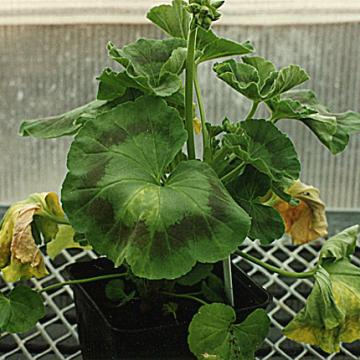
DISEASE: Pith necrosis
HOST: Geranium
Geranium with wilted, yellow necrotic leaves.
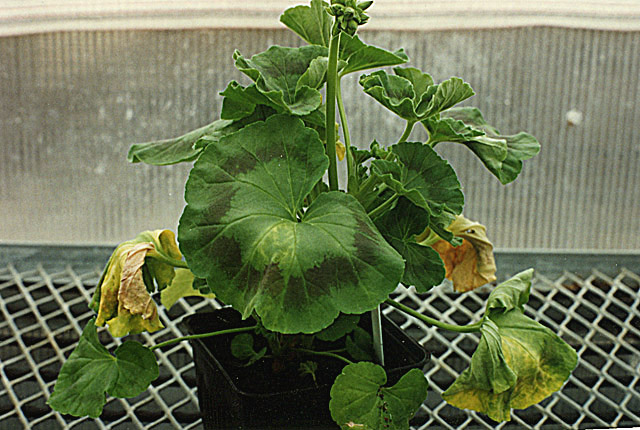
Pith necrosis | Geranium
DISEASE: Pith necrosis
HOST: Geranium (Pelargonium sp.)
PATHOGEN: Pseudomonas corrugata
SOURCE: A. Magyarosy, D. Thomas
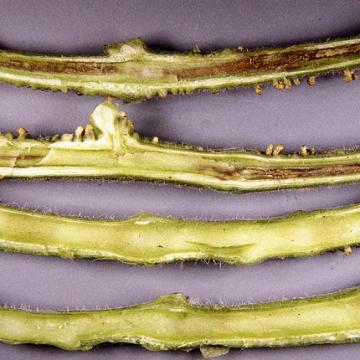
DISEASE: Pith necrosis
HOST: Geranium
Pitted and hollow stems, one of the disease symptoms.
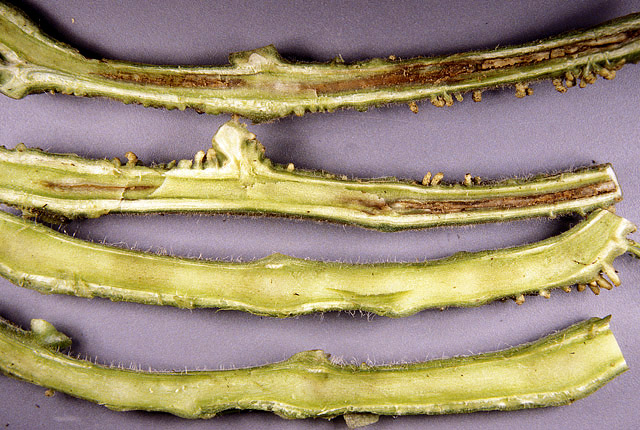
Pith necrosis | Geranium
DISEASE: Pith necrosis
HOST: Geranium (Pelargonium sp.)
PATHOGEN: Pseudomonas corrugata
SOURCE: A. Magyarosy, D. Thomas
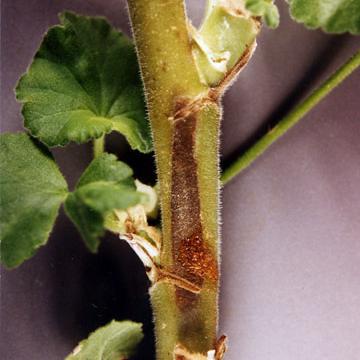
DISEASE: Pith necrosis
HOST: Geranium
Discolored stem caused by systemic infection of the pathogen.
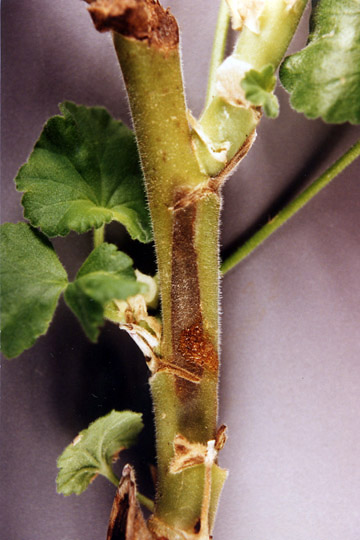
Pith necrosis | Geranium
DISEASE: Pith necrosis
HOST: Geranium (Pelargonium sp.)
PATHOGEN: Pseudomonas corrugata
SOURCE: A. Magyarosy, D. Thomas
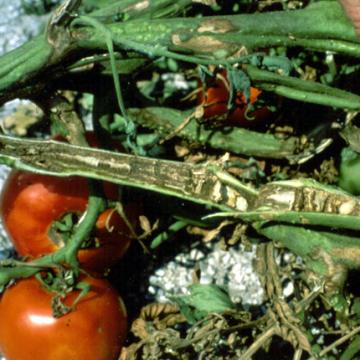
DISEASE: Pith necrosis
HOST: Tomato
Cracked, dry, hollow stems with internal necrosis.
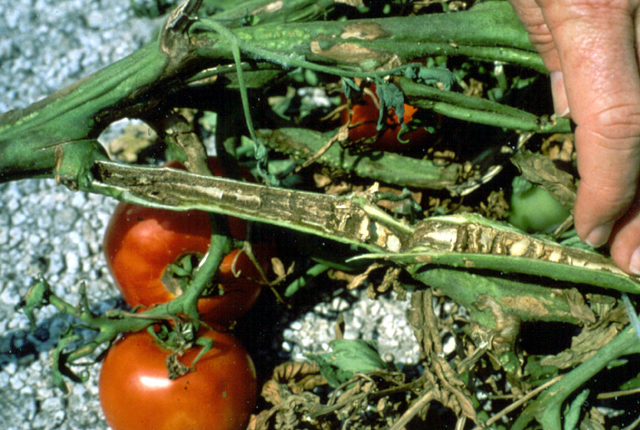
Pith necrosis | Tomato
DISEASE: Pith necrosis
HOST: Tomato (Lycopersicon esculentum)
PATHOGEN: Pseudomonas corrugata
SOURCE: A. Alvarez
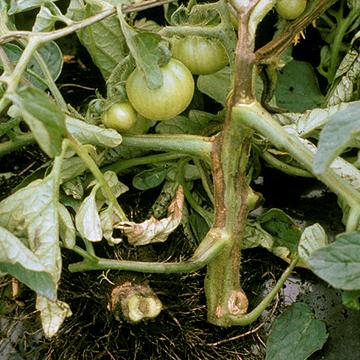
DISEASE: Pith necrosis
HOST: Tomato
External necrotic stem tissues. Initial symptoms include chlorosis of young leaves. Wilting may occur when disease is severe.
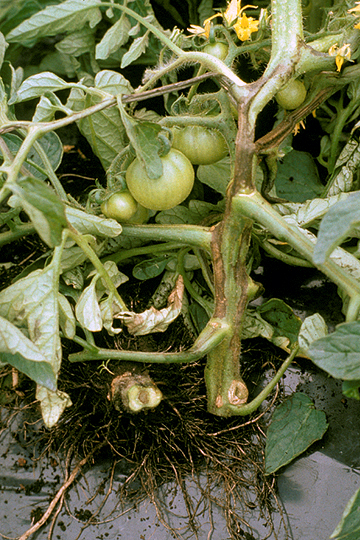
Pith necrosis | Tomato
DISEASE: Pith necrosis
HOST: Tomato (Lycopersicon esculentum)
PATHOGEN: Pseudomonas corrugata
SOURCE: K. Natsuaki, M. Goto