

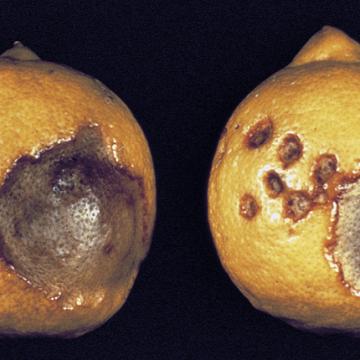
DISEASE: Bacterial blast and black pit
HOST: Citrus (Lemon)
The term "black pit" refers to black lesions on fruit, which may be specks or large, sunken pits as seen here. They also may be light tan, later becoming reddish brown to black.
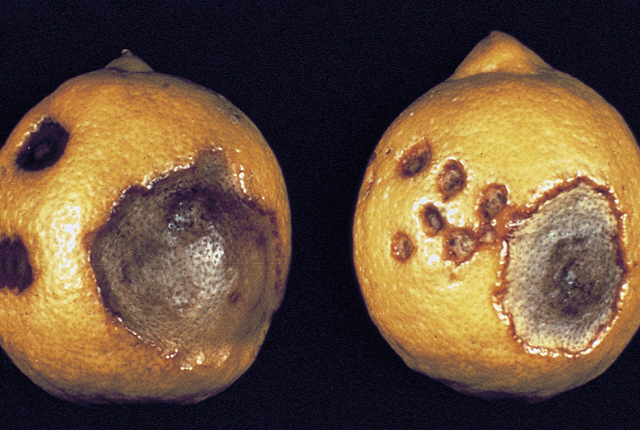
Bacterial blast and black pit | Citrus (Lemon)
DISEASE: Bacterial blast and black pit
HOST: Citrus (Lemon) (Citrus limon)
PATHOGEN: Pseudomonas syringae pv. syringae
SOURCE: J. Menge
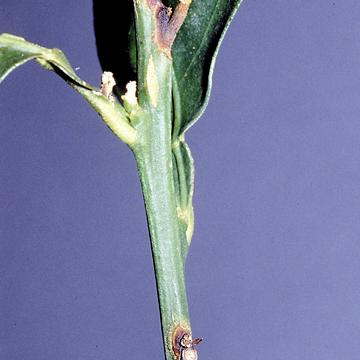
DISEASE: Bacterial blast and black pit
HOST: Citrus (Lime)
Characteristic symptoms of brownish black lesions on twigs and leaves (blast), starting with infection of petioles. Black pit refers to brown to black sunken spots on fruit, 5 to 20 mm in diameter.
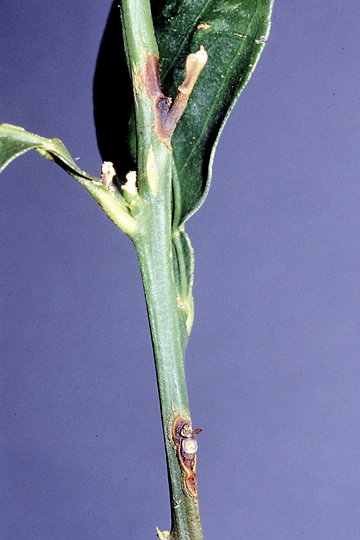
Bacterial blast and black pit | Citrus (Lime)
DISEASE: Bacterial blast and black pit
HOST: Citrus (Lime) (Citrus sp.)
PATHOGEN: Pseudomonas syringae pv. syringae
SOURCE: P. Broadbent
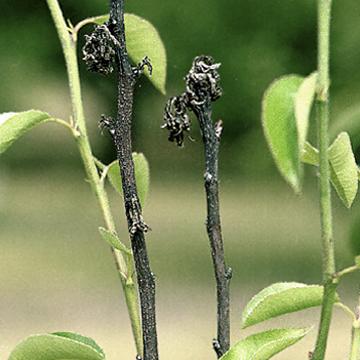
DISEASE: Bacterial blast
HOST: Pear
The bacterium infects all flower parts and may spread and kill the entire spur.
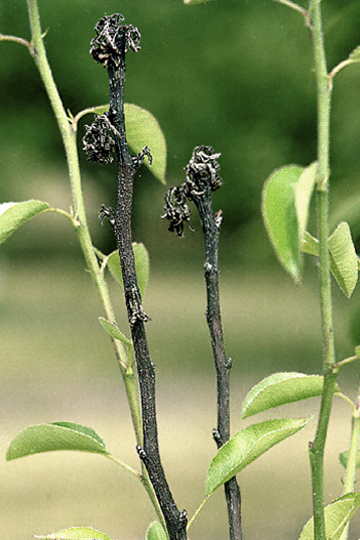
Bacterial blast | Pear
DISEASE: Bacterial blast
HOST: Pear (Pyrus communis)
PATHOGEN: Pseudomonas syringae pv. syringae
SOURCE: W. Sinclair
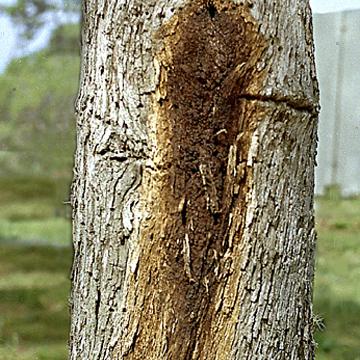
DISEASE: Slime flux
HOST: Casuarina
Slime flux occurs on a number of tree species and is always associated with bacteria and yeast. However, the causal agent has not been identified.
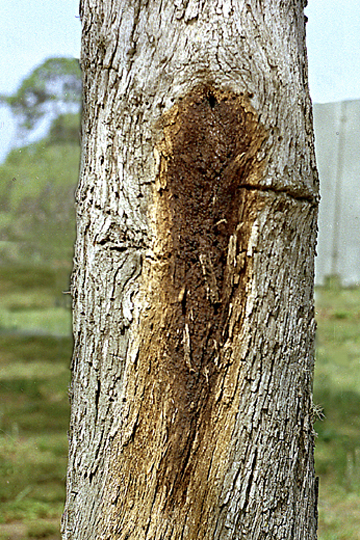
Slime flux | Casuarina
DISEASE: Slime flux
HOST: Casuarina (Casuarina equisetifolia)
PATHOGEN: Causal agent unknown
SOURCE: W. Sinclair
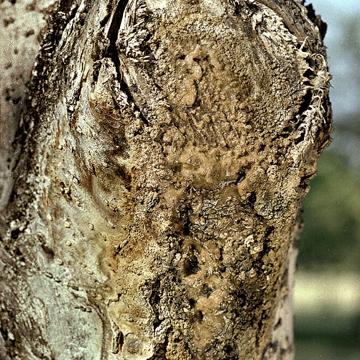
DISEASE: Slime flux
HOST: Elm
Although bacteria are associated with slime fluxes of many trees, the causal agents have not been identified.
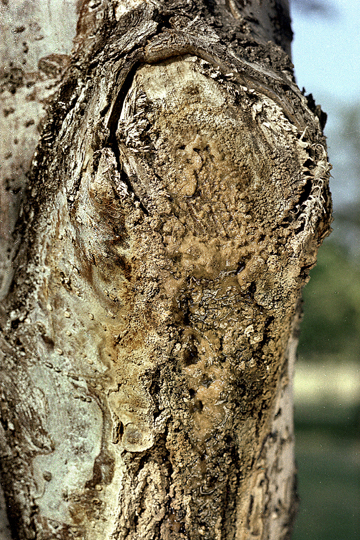
Slime flux | Elm
DISEASE: Slime flux
HOST: Elm (Ulmus pumila)
PATHOGEN: Causal agent unknown
SOURCE: W. Sinclair
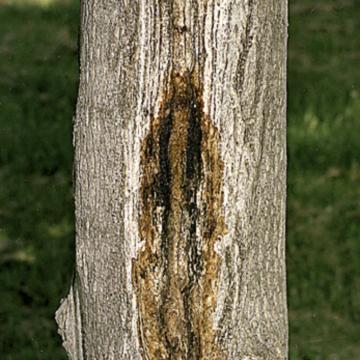
DISEASE: Slime flux
HOST: Maple
The causal agent of slime flux has not been identified.
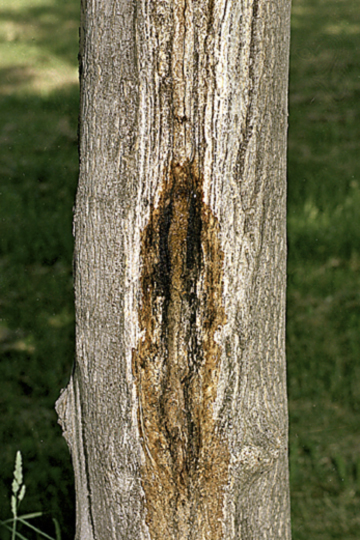
Slime flux | Maple
DISEASE: Slime flux
HOST: Maple (Acer saccharum)
PATHOGEN: Causal agent unknown
SOURCE: W. Sinclair
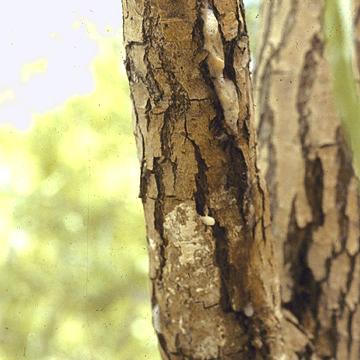
DISEASE: Slime flux
HOST: Willow
Foam at site of infection. Slime fluxes are common but the causal agent has not been identified.
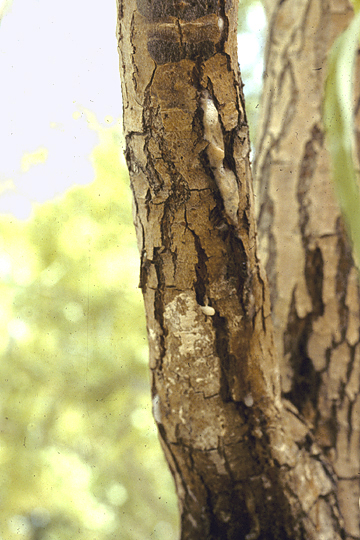
Slime flux | Willow
DISEASE: Slime flux
HOST: Willow (Salix sp.)
PATHOGEN: Causal agent unknown
SOURCE: S. Thomson