

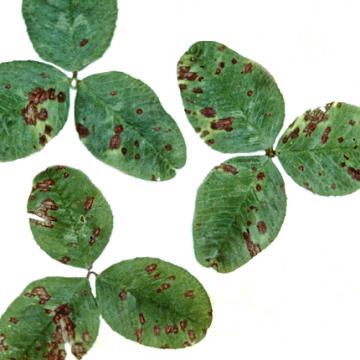
DISEASE: Bacterial black leaf spot
HOST: Clover
White clover with brown necrotic spots.
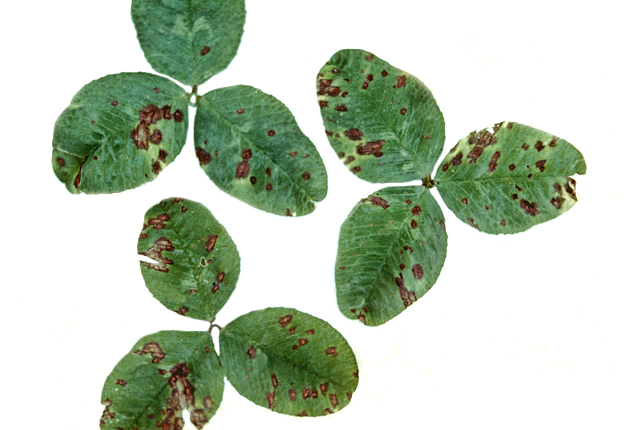
Bacterial black leaf spot | Clover
DISEASE: Bacterial black leaf spot
HOST: Clover (Trifolium repens)
PATHOGEN: Burkholderia andropogonis
PATHOGEN SYNONYM: Pseudomonas andropogonis
SOURCE: M. Goto
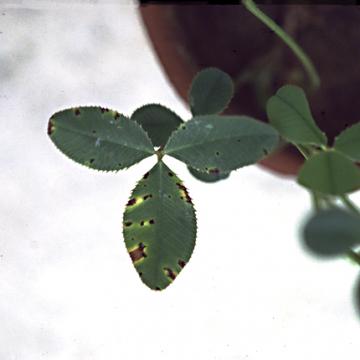
DISEASE: Bacterial black leaf spot
HOST: Clover
White clover leaves with brownish spots and some yellowing occurring at the margins.
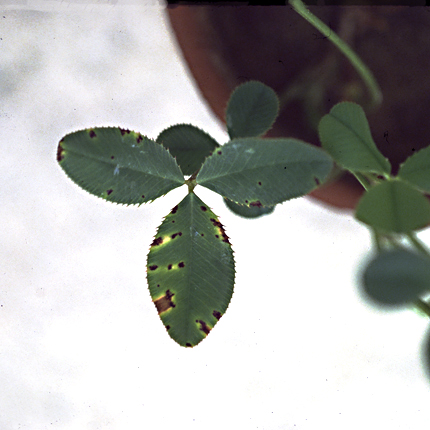
Bacterial black leaf spot | Clover
DISEASE: Bacterial black leaf spot
HOST: Clover (Trifolium repens)
PATHOGEN: Burkholderia andropogonis
PATHOGEN SYNONYM: Pseudomonas andropogonis
SOURCE: R. Gitaitis
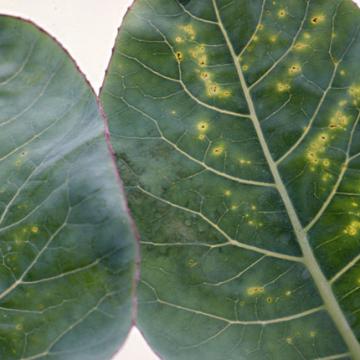
DISEASE: Bacterial leaf spot (Head rot)
HOST: Cauliflower
Leaves with tiny lesions surrounded by large halos.
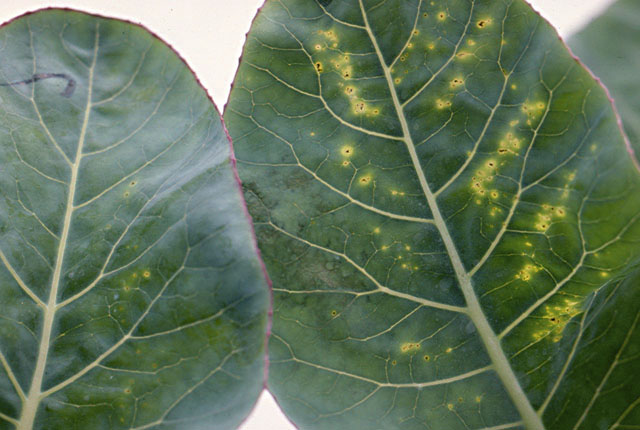
Bacterial leaf spot (Head rot) | Cauliflower
DISEASE: Bacterial leaf spot (Head rot)
HOST: Cauliflower (Brassica oleracea var. botrytis)
PATHOGEN: Pseudomonas syringae pv. maculicola
SOURCE: R. Campbell
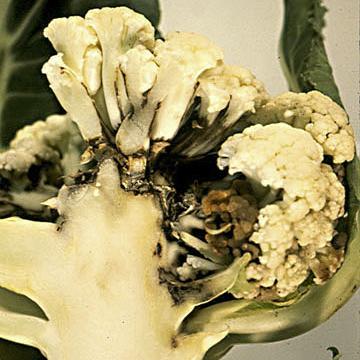
DISEASE: Bacterial leaf spot (Head rot)
HOST: Cauliflower
Section of a cauliflower head with discolored, infected tissues.
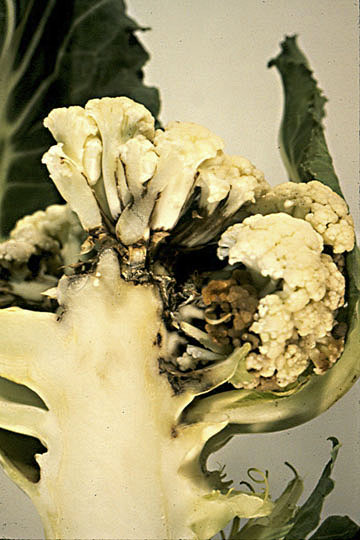
Bacterial leaf spot (Head rot) | Cauliflower
DISEASE: Bacterial leaf spot (Head rot)
HOST: Cauliflower (Brassica oleracea var. botrytis)
PATHOGEN: Pseudomonas syringae pv. maculicola
SOURCE: R. Campbell
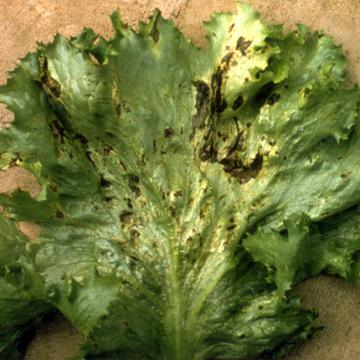
DISEASE: Bacterial leaf spot (Head rot)
HOST: Lettuce
Leaf with black, greasy spots that tend to be vein delimited. Lesions begin as small, angular, water-soaked lesions that coalesce, resulting in large necrotic areas.
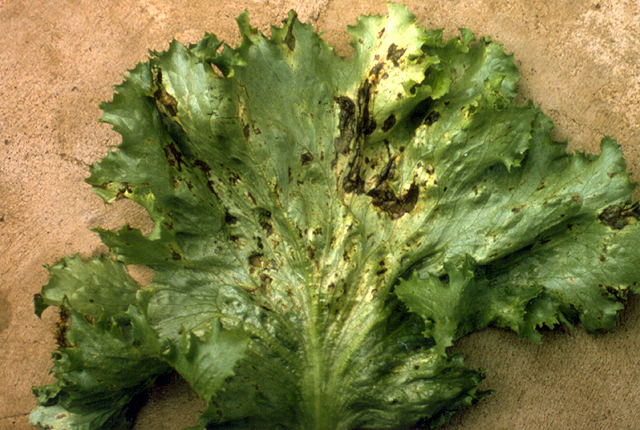
Bacterial leaf spot (Head rot) | Lettuce
DISEASE: Bacterial leaf spot (Head rot)
HOST: Lettuce (Lactuca sativa)
PATHOGEN: Xanthomonas axonopodis pv. vitians
PATHOGEN SYNONYM: Xanthomonas campestris pv. vitians
SOURCE: A. Alvarez
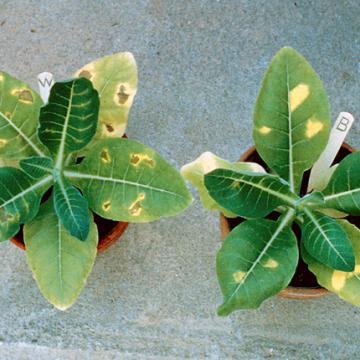
DISEASE: Wildfire (Angular leaf spot)
HOST: Tobacco
Characteristic symptoms are necrotic, brown spots with angular margins surrounded by distinct yellow halos. The halos are caused by the production of tabtoxin.
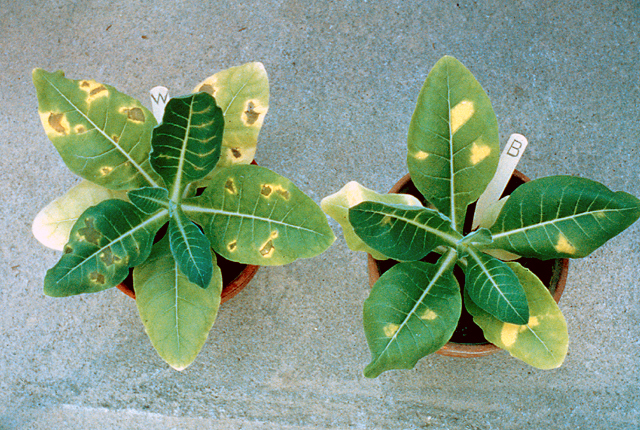
Wildfire (Angular leaf spot) | Tobacco
DISEASE: Wildfire (Angular leaf spot)
HOST: Tobacco (Nicotiana tabacum)
PATHOGEN: Pseudomonas syringae pv. tabaci
SOURCE: G. Lucas