

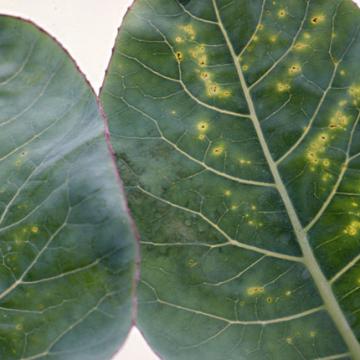
DISEASE: Bacterial leaf spot (Head rot)
HOST: Cauliflower
Leaves with tiny lesions surrounded by large halos.
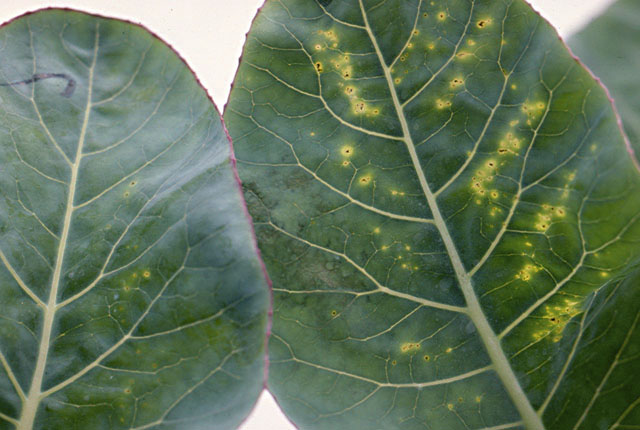
Bacterial leaf spot (Head rot) | Cauliflower
DISEASE: Bacterial leaf spot (Head rot)
HOST: Cauliflower (Brassica oleracea var. botrytis)
PATHOGEN: Pseudomonas syringae pv. maculicola
SOURCE: R. Campbell
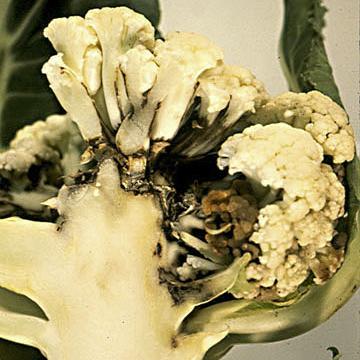
DISEASE: Bacterial leaf spot (Head rot)
HOST: Cauliflower
Section of a cauliflower head with discolored, infected tissues.
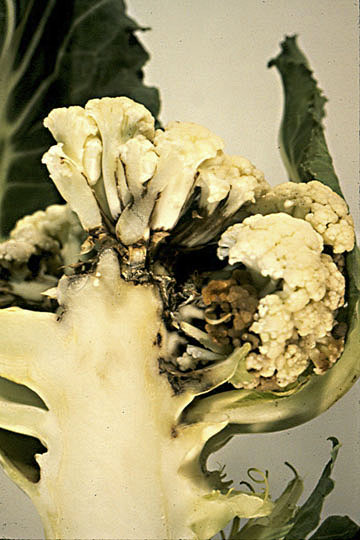
Bacterial leaf spot (Head rot) | Cauliflower
DISEASE: Bacterial leaf spot (Head rot)
HOST: Cauliflower (Brassica oleracea var. botrytis)
PATHOGEN: Pseudomonas syringae pv. maculicola
SOURCE: R. Campbell
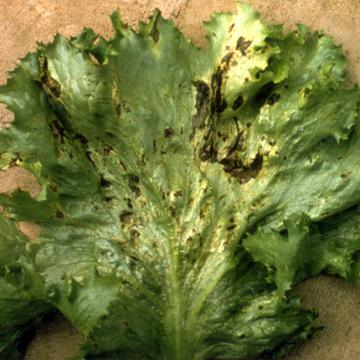
DISEASE: Bacterial leaf spot (Head rot)
HOST: Lettuce
Leaf with black, greasy spots that tend to be vein delimited. Lesions begin as small, angular, water-soaked lesions that coalesce, resulting in large necrotic areas.
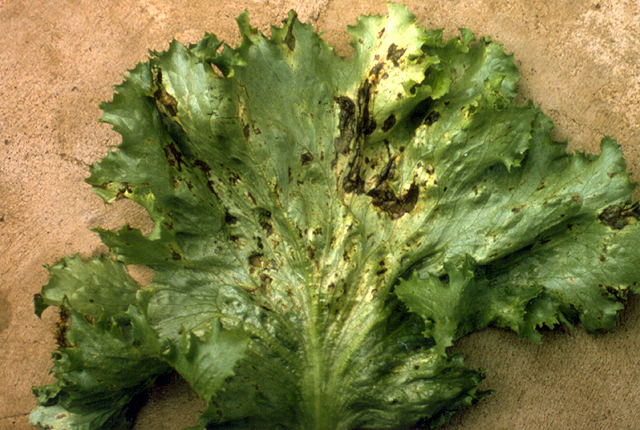
Bacterial leaf spot (Head rot) | Lettuce
DISEASE: Bacterial leaf spot (Head rot)
HOST: Lettuce (Lactuca sativa)
PATHOGEN: Xanthomonas axonopodis pv. vitians
PATHOGEN SYNONYM: Xanthomonas campestris pv. vitians
SOURCE: A. Alvarez
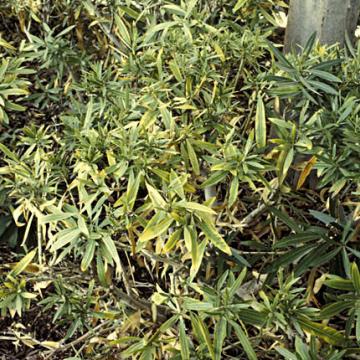
DISEASE: Oleander leaf scorch
HOST: Oleander
Diseased plant with scalloped, yellowish leaves. This usually is followed by dieback of twigs and branches. Plants often die 2 years after infection.
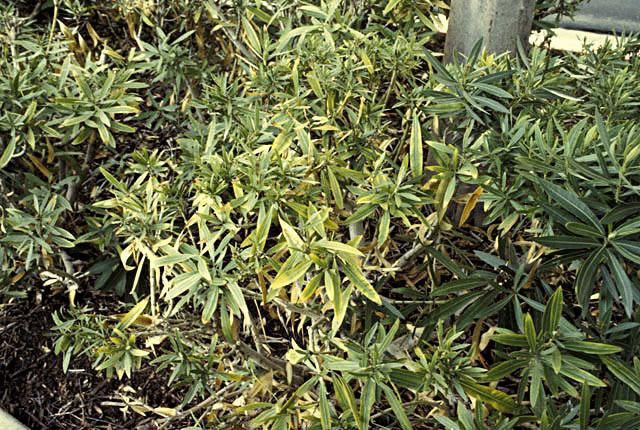
Oleander leaf scorch | Oleander
DISEASE: Oleander leaf scorch
HOST: Oleander (Nerium oleander)
PATHOGEN: Xylella fastidiosa
SOURCE: S. Purcell
DISEASE: Oleander leaf scorch
HOST: Oleander
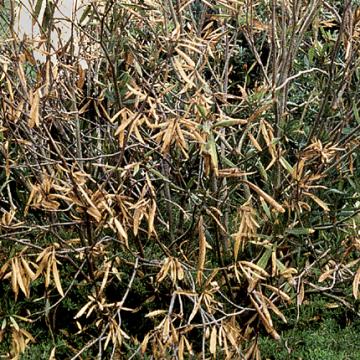
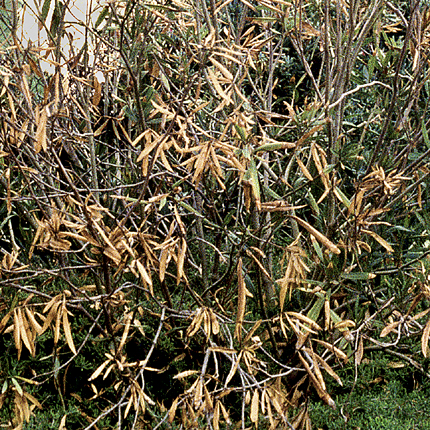
Oleander with symptoms of severe scorch.
Oleander leaf scorch | Oleander
DISEASE: Oleander leaf scorch
HOST: Oleander (Nerium oleander)
PATHOGEN: Xylella fastidiosa
SOURCE: M. Blua
DISEASE: Oleander leaf scorch
HOST: Oleander
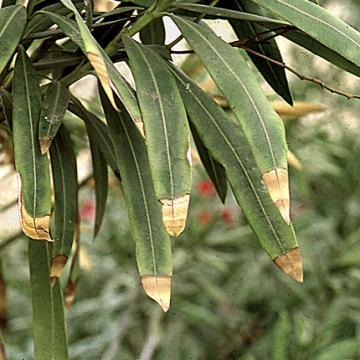
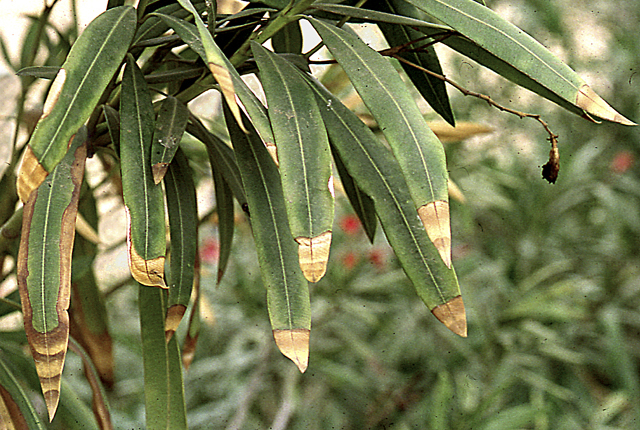
Oleander with scorch symptoms primarily at leaf tips, an early stage of disease.
Oleander leaf scorch | Oleander
DISEASE: Oleander leaf scorch
HOST: Oleander (Nerium oleander)
PATHOGEN: Xylella fastidiosa
SOURCE: M. Blua
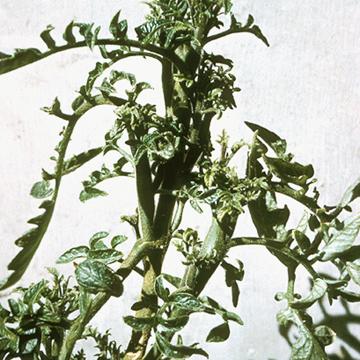
DISEASE: Tomato big bud
HOST: Tomato
Characteristic symptoms are swollen, apical stems and stunted leaves. Apical stems are generally thickened and assume a stiff and erect growth habit. Internodes are shortened and flower buds are greatly enlarged.
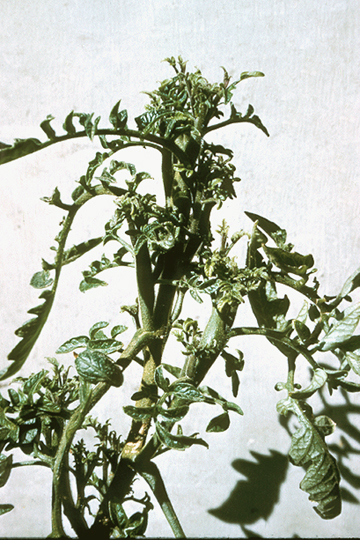
Tomato big bud | Tomato
DISEASE: Tomato big bud
HOST: Tomato (Lycopersicon esculentum)
PATHOGEN: 'Candidatus Phytoplasma asteris'
PATHOGEN SYNONYM: Phytoplasma Aster yellows group
SOURCE: D. Teakle
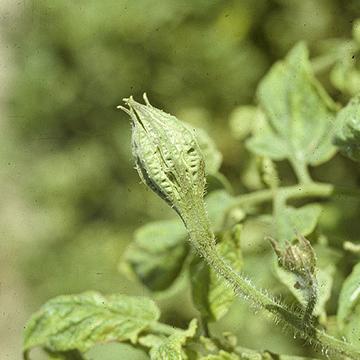
DISEASE: Tomato big bud
HOST: Tomato
Symptoms are enlarge sepals that do not separate. Flower buds stay green and do not develop into fruit. Leaves are small and chlorotic.
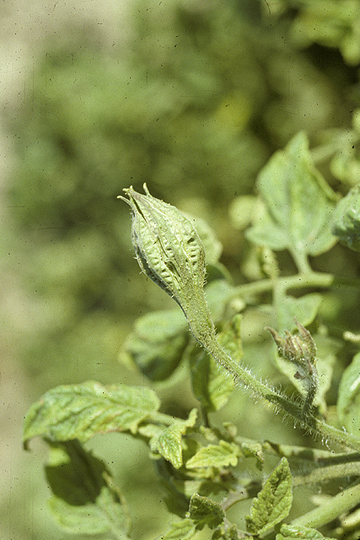
Tomato big bud | Tomato
DISEASE: Tomato big bud
HOST: Tomato (Lycopersicon esculentum)
PATHOGEN: 'Candidatus Phytoplasma asteris'
PATHOGEN SYNONYM: Phytoplasma Aster yellows group
SOURCE: S. Thomson
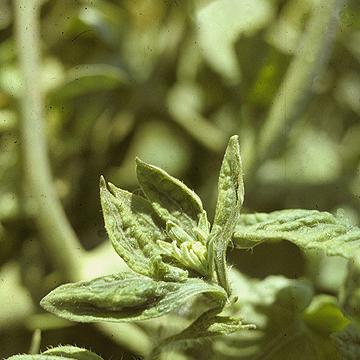
DISEASE: Tomato big bud
HOST: Tomato
Abnormal flower bud with greatly enlarged sepals. Sepals do not separate, fruit is not produced, and apical growth is upright.
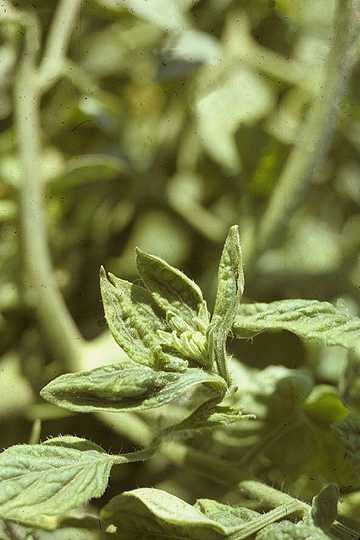
Tomato big bud | Tomato
DISEASE: Tomato big bud
HOST: Tomato (Lycopersicon esculentum)
PATHOGEN: 'Candidatus Phytoplasma asteris'
PATHOGEN SYNONYM: Phytoplasma Aster yellows group
SOURCE: S. Thomson