

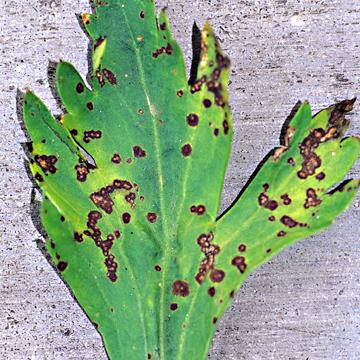
DISEASE: Bacterial blight (Brown stem)
HOST: Celery
Lesions are necrotic and circular to angular. Some have yellowish halos. Older lesions become brown and dry.
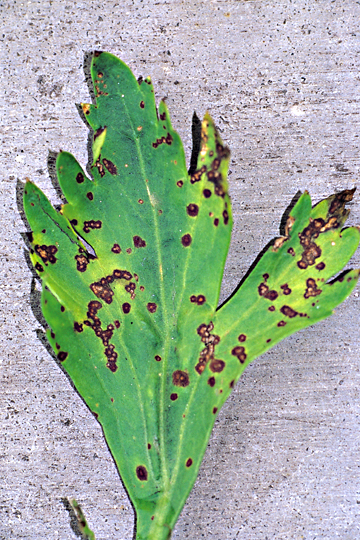
Bacterial blight (Brown stem) | Celery
DISEASE: Bacterial blight (Brown stem)
HOST: Celery (Apium graveolens)
PATHOGEN: Pseudomonas cichorii
SOURCE: R. Raid
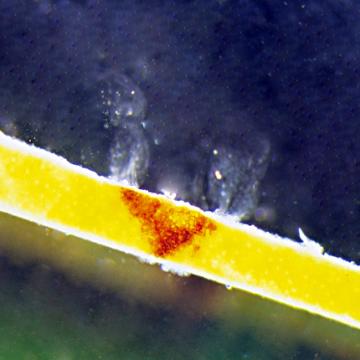
DISEASE: Bacterial blight (Brown stem)
HOST: Celery
Ooze from lesion on celery leaf.
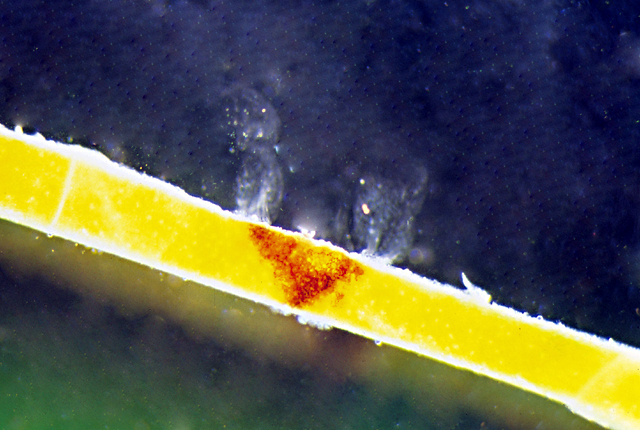
Bacterial blight (Brown stem) | Celery
DISEASE: Bacterial blight (Brown stem)
HOST: Celery (Apium graveolens)
PATHOGEN: Pseudomonas cichorii
SOURCE: R. Raid
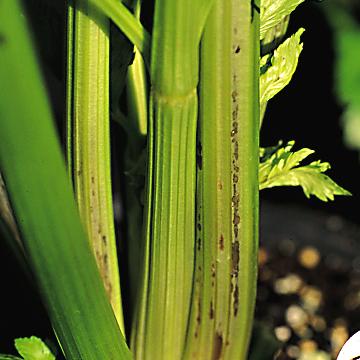
DISEASE: Bacterial blight (Brown stem)
HOST: Celery
Characteristic brown discoloration of petioles, which is more evident on inside of petiole close to the crown. Parenchyma tissues are firm and brown.
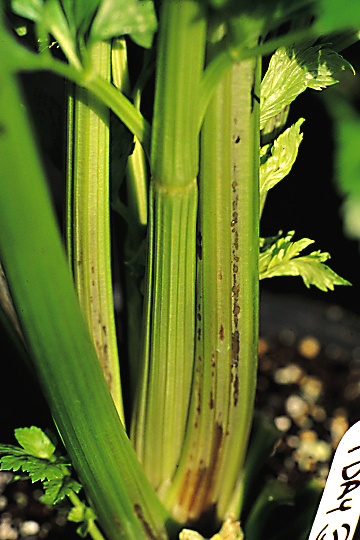
Bacterial blight (Brown stem) | Celery
DISEASE: Bacterial blight (Brown stem)
HOST: Celery (Apium graveolens)
PATHOGEN: Pseudomonas cichorii
SOURCE: K. Pernezny
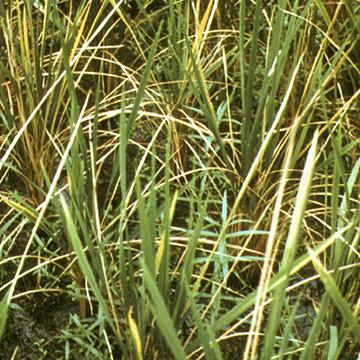
DISEASE: Bacterial foot rot
HOST: Rice
The disease causes sheaths to turn dark brown and rot; dead leaves droop. Nodes, culms, and crowns also decay, and infected tillers are easily detached from the crown. Culms and internodes turn black.
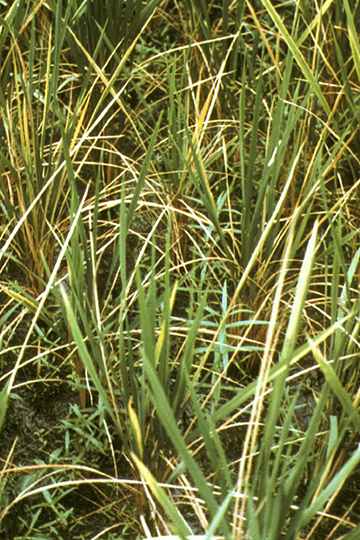
Bacterial foot rot | Rice
DISEASE: Bacterial foot rot
HOST: Rice (Oryza sativa)
PATHOGEN: Dickeya zeae
PATHOGEN SYNONYM: Erwinia chrysanthemi pv. zeae
SOURCE: M. Goto
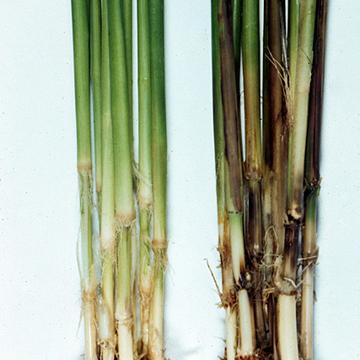
DISEASE: Bacterial foot rot
HOST: Rice
Decayed culms (right) and healthy culms (left). Leaf sheaths of infected plants exhibit dark brown decay and attached leaves turn yellow and wilt.
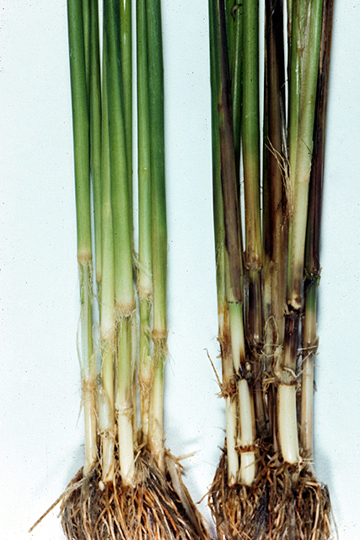
Bacterial foot rot | Rice
DISEASE: Bacterial foot rot
HOST: Rice (Oryza sativa)
PATHOGEN: Dickeya zeae
PATHOGEN SYNONYM: Erwinia chrysanthemi pv. zeae
SOURCE: M. Goto
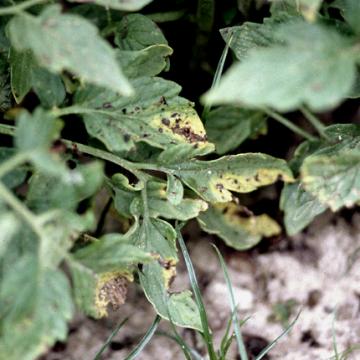
DISEASE: Syringae leaf spot
HOST: Tomato
Leaves with brown necrotic lesions and chlorotic margins. Symptoms vary greatly among cultivars. Some have black or brown lesions with bright yellow, chlorotic areas and others do not have yellowing.
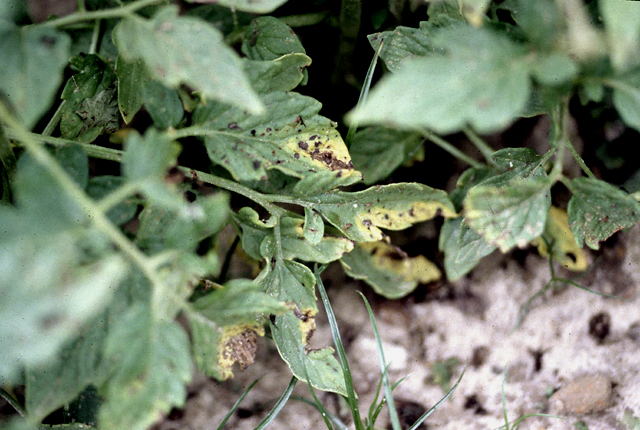
Syringae leaf spot | Tomato
DISEASE: Syringae leaf spot
HOST: Tomato (Lycopersicon esculentum)
PATHOGEN: Pseudomonas syringae pv. syringae
SOURCE: R. Gitaitis