

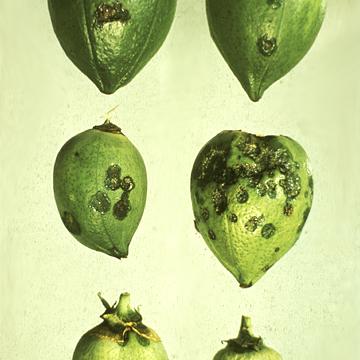
DISEASE: Bacterial blight (Boll rot)
HOST: Cotton
Boll rot first appears as raised, water-soaked lesions, which become sunken and turn brown to black with time.
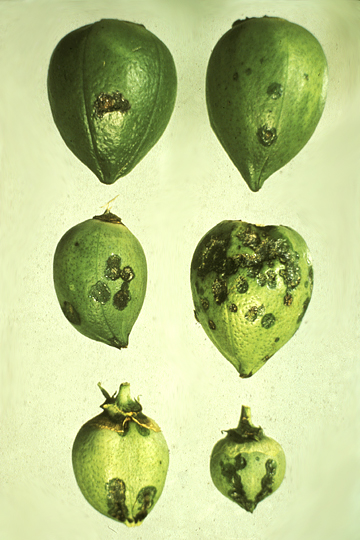
Bacterial blight (Boll rot) | Cotton
DISEASE: Bacterial blight (Boll rot)
HOST: Cotton (Gossypium barbadense)
PATHOGEN: Xanthomonas citri subsp. malvacearum
PATHOGEN SYNONYM: Xanthomonas campestris pv. malvacearum
SOURCE: A. Hayward
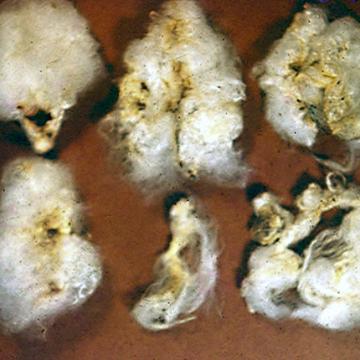
DISEASE: Bacterial blight (Boll rot)
HOST: Cotton
Infection of bolls causes premature opening and increased susceptibility to secondary, saprophytic microorganisms that cause rot. Note discolored cotton.
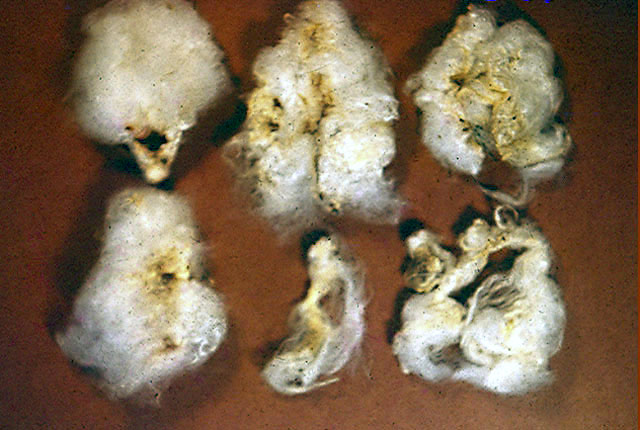
Bacterial blight (Boll rot) | Cotton
DISEASE: Bacterial blight (Boll rot)
HOST: Cotton (Gossypium barbadense)
PATHOGEN: Xanthomonas citri subsp. malvacearum
PATHOGEN SYNONYM: Xanthomonas campestris pv. malvacearum
SOURCE: APS
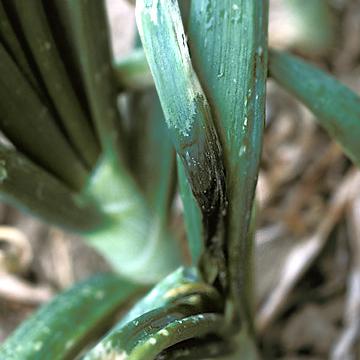
DISEASE: Bacterial flower stalk and leaf necrosis
HOST: Onion
Dark, rotted areas of stalk and leaves caused by systemic invasion of the pathogen.
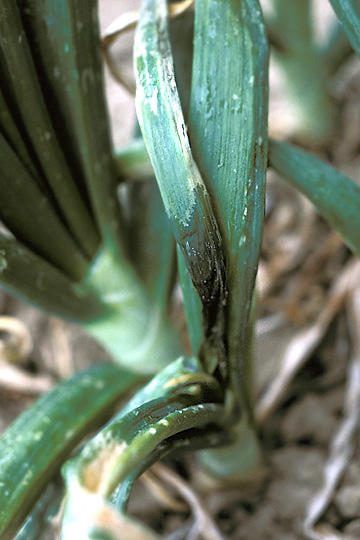
Bacterial flower stalk and leaf necrosis | Onion
DISEASE: Bacterial flower stalk and leaf necrosis
HOST: Onion (Allium cepa)
PATHOGEN: Pseudomonas marginalis pv. marginalis
SOURCE: S. Mohan
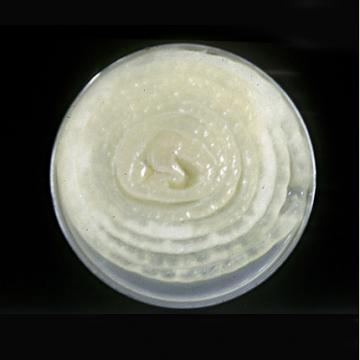
DISEASE: Bacterial flower stalk and leaf necrosis
HOST: Onion
Gray-brown rot of onion after inoculation. Disease starts as small, water-soaked lesions that later develop into slimy, gray-brown rot. The disease progresses downward from the stalk and may rot the entire bulb.
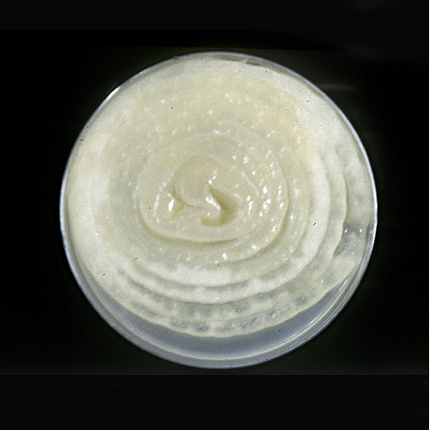
Bacterial flower stalk and leaf necrosis | Onion
DISEASE: Bacterial flower stalk and leaf necrosis
HOST: Onion (Allium cepa)
PATHOGEN: Pseudomonas marginalis pv. marginalis
SOURCE: R. Gitaitis
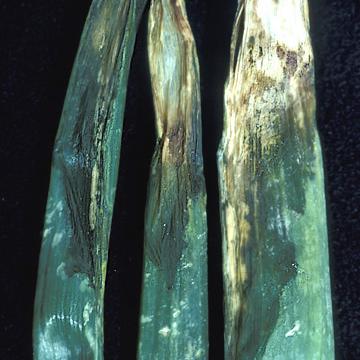
DISEASE: Bacterial flower stalk and leaf necrosis
HOST: Onion
Leaves with necrosis and rot. The common name for this disease is the same as those used for two other diseases. Also, another common name for this disease is bacterial soft rot.
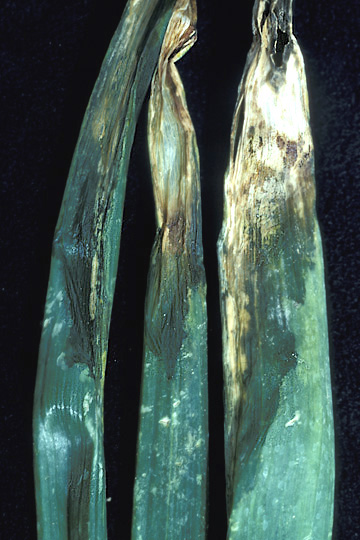
Bacterial flower stalk and leaf necrosis | Onion
DISEASE: Bacterial flower stalk and leaf necrosis
HOST: Onion (Allium cepa)
PATHOGEN: Pseudomonas marginalis pv. marginalis
SOURCE: S. Mohan
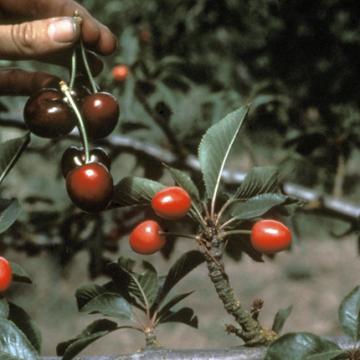
DISEASE: X-disease (Western X) or buckskin
HOST: Cherry
Comparison of normal, dark cherries (in hand) with infected, immature cherries with less pigmentation.
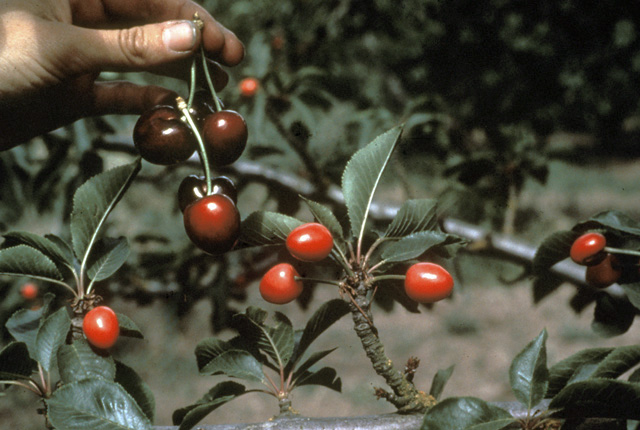
X-disease (Western X) or buckskin | Cherry
DISEASE: X-disease (Western X) or buckskin
HOST: Cherry (Prunus avium)
PATHOGEN: 'Candidatus Phytoplasma pruni'
PATHOGEN SYNONYM: Phytoplasma X-disease group
SOURCE: A. Purcell, M. Davis
DISEASE: X-disease (Western X) or buckskin
HOST: Cherry
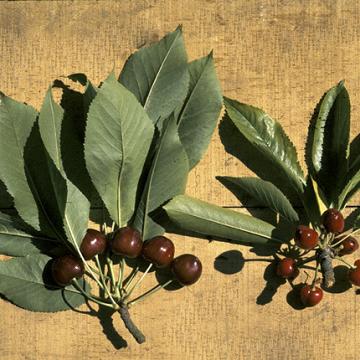
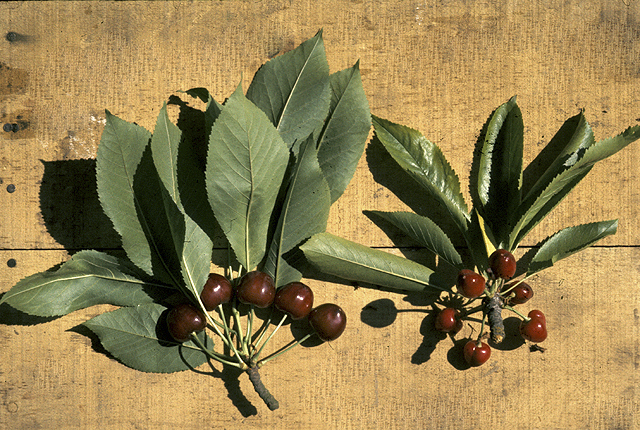
Healthy cherry shoot (left) and stunted shoot (right).
X-disease (Western X) or buckskin | Cherry
DISEASE: X-disease (Western X) or buckskin
HOST: Cherry (Prunus avium)
PATHOGEN: 'Candidatus Phytoplasma pruni'
PATHOGEN SYNONYM: Phytoplasma X-disease group
SOURCE: S. Thomson
DISEASE: X-disease (Western X) or buckskin
HOST: Cherry
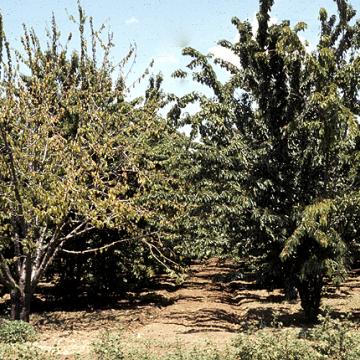
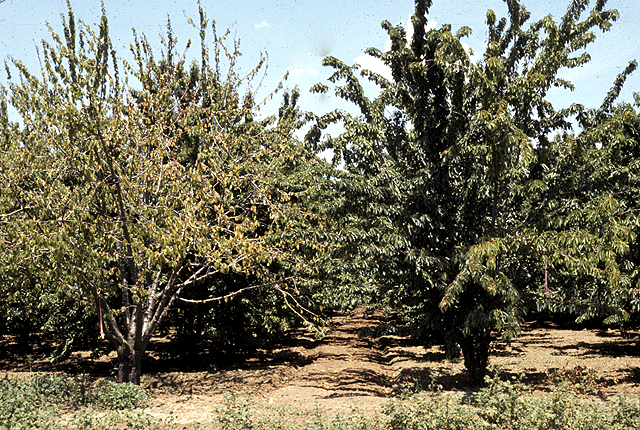
Infected trees on 'Mazzard' rootstock (right) may live for years, producing fruit with symptoms. Trees on 'Mahaleb' rootstock (left) usually die rapidly in year of infection, about time of fruit ripening.
X-disease (Western X) or buckskin | Cherry
DISEASE: X-disease (Western X) or buckskin
HOST: Cherry (Prunus avium)
PATHOGEN: 'Candidatus Phytoplasma pruni'
PATHOGEN SYNONYM: Phytoplasma X-disease group
SOURCE: S. Thomson
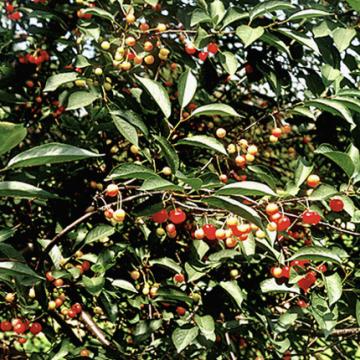
DISEASE: X-disease (Western X) or buckskin
HOST: Cherry
X-disease causes undersized, yellowish fruit. Diseased branches turn rusty red near end of season. Some defoliation occurs on diseased branches.
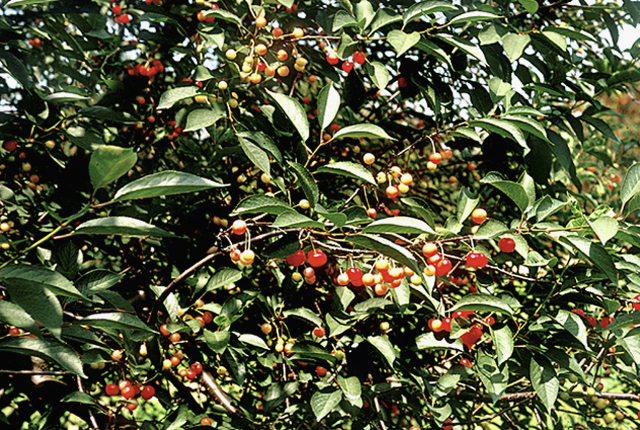
X-disease (Western X) or buckskin | Cherry
DISEASE: X-disease (Western X) or buckskin
HOST: Cherry (Prunus cerasus)
PATHOGEN: 'Candidatus Phytoplasma pruni'
PATHOGEN SYNONYM: Phytoplasma X-disease group
SOURCE: A. Jones