

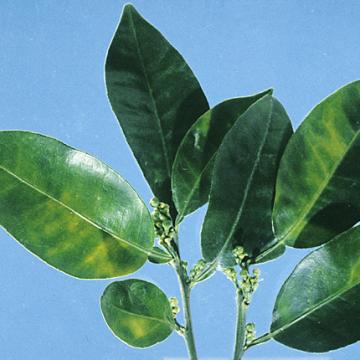
DISEASE: Australian citrus dieback
HOST: Citrus (Grapefruit)
Leaves with mottled chlorosis.
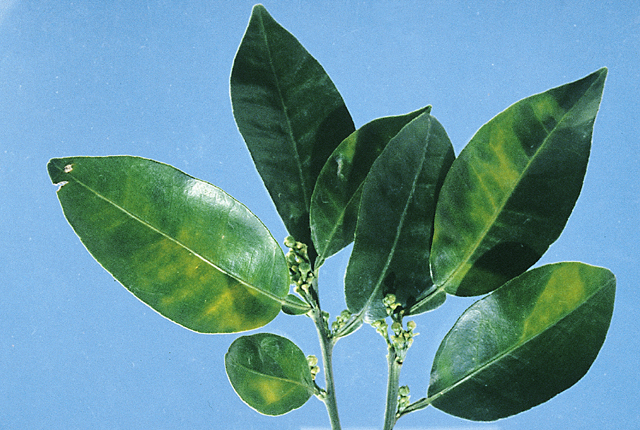
Australian citrus dieback | Citrus (Grapefruit)
DISEASE: Australian citrus dieback
HOST: Citrus (Grapefruit) (Citrus paradisi)
PATHOGEN: 'Candidatus Phytoplasma' sp.
PATHOGEN SYNONYM: Phytoplasma (undefined)
SOURCE: P. Broadbent
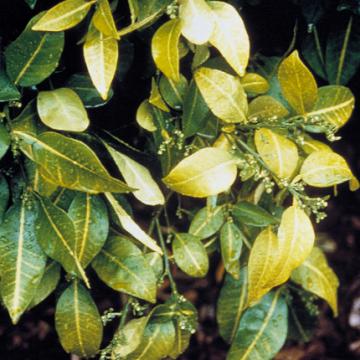
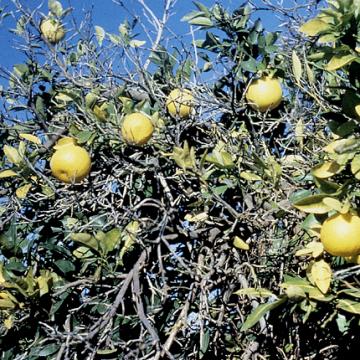
DISEASE: Australian citrus dieback
HOST: Citrus (Grapefruit)
Late stage of disease. Note yellowing of leaf veins and entire leaves.
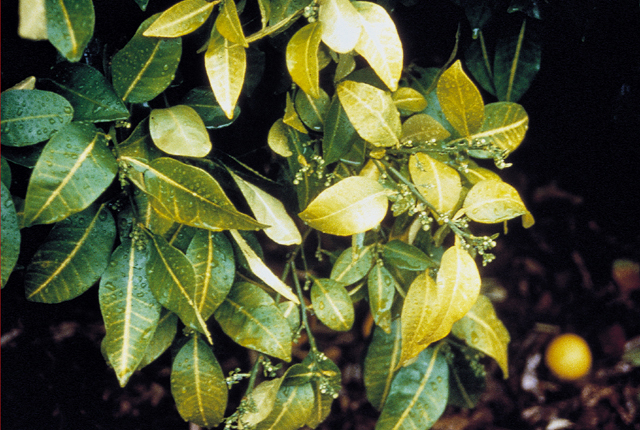
Australian citrus dieback | Citrus (Grapefruit)
DISEASE: Australian citrus dieback
HOST: Citrus (Grapefruit) (Citrus paradisi)
PATHOGEN: 'Candidatus Phytoplasma' sp.
PATHOGEN SYNONYM: Phytoplasma (undefined)
SOURCE: P. Broadbent
DISEASE: Australian citrus dieback
HOST: Citrus (Lime)
Severe decline, a late stage of disease. The disease spreads slowly in mature trees, progressing faster in young trees.
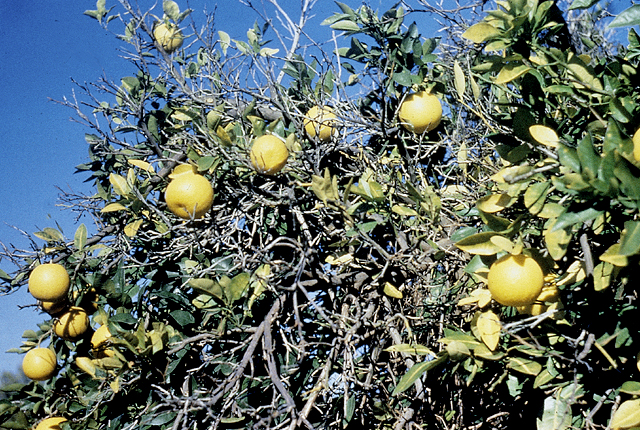
Australian citrus dieback | Citrus (Lime)
DISEASE: Australian citrus dieback
HOST: Citrus (Lime) (Citrus sp.)
PATHOGEN: 'Candidatus Phytoplasma australiense'
PATHOGEN SYNONYM: Phytoplasma Stolbur group
SOURCE: P. Broadbent
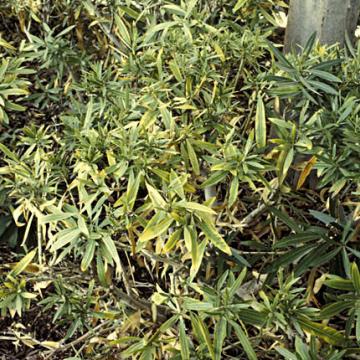
DISEASE: Oleander leaf scorch
HOST: Oleander
Diseased plant with scalloped, yellowish leaves. This usually is followed by dieback of twigs and branches. Plants often die 2 years after infection.
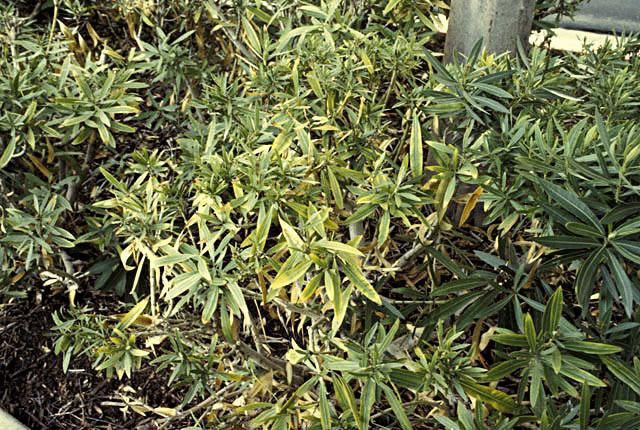
Oleander leaf scorch | Oleander
DISEASE: Oleander leaf scorch
HOST: Oleander (Nerium oleander)
PATHOGEN: Xylella fastidiosa
SOURCE: S. Purcell
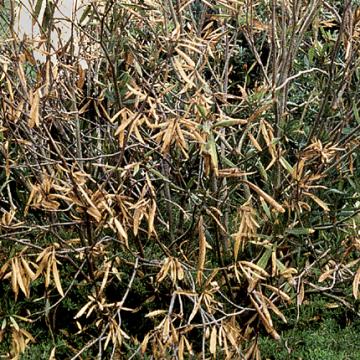
DISEASE: Oleander leaf scorch
HOST: Oleander
Oleander with symptoms of severe scorch.
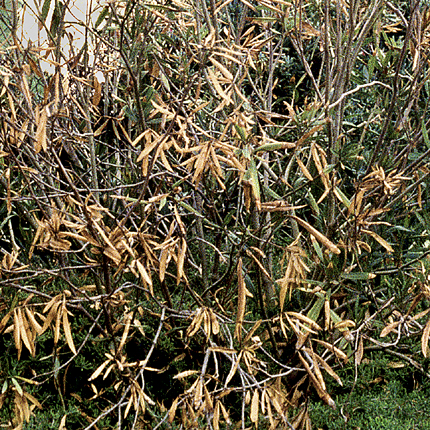
Oleander leaf scorch | Oleander
DISEASE: Oleander leaf scorch
HOST: Oleander (Nerium oleander)
PATHOGEN: Xylella fastidiosa
SOURCE: M. Blua
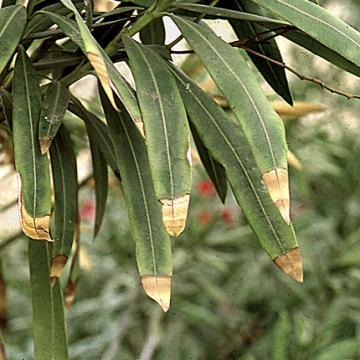
DISEASE: Oleander leaf scorch
HOST: Oleander
Oleander with scorch symptoms primarily at leaf tips, an early stage of disease.
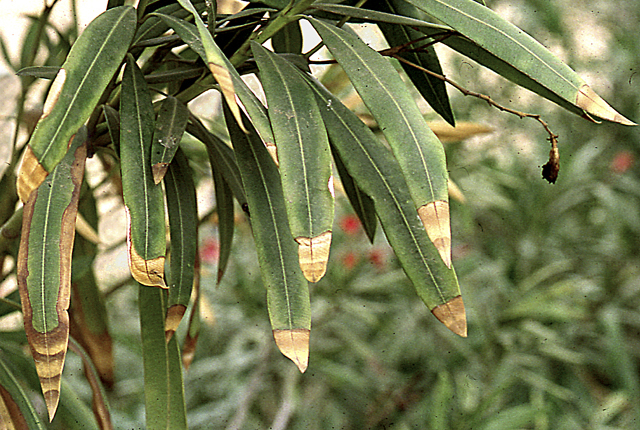
Oleander leaf scorch | Oleander
DISEASE: Oleander leaf scorch
HOST: Oleander (Nerium oleander)
PATHOGEN: Xylella fastidiosa
SOURCE: M. Blua
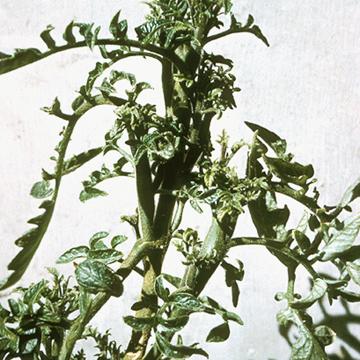
DISEASE: Tomato big bud
HOST: Tomato
Characteristic symptoms are swollen, apical stems and stunted leaves. Apical stems are generally thickened and assume a stiff and erect growth habit. Internodes are shortened and flower buds are greatly enlarged.
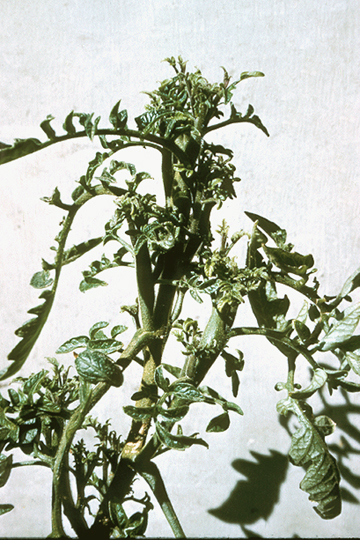
Tomato big bud | Tomato
DISEASE: Tomato big bud
HOST: Tomato (Lycopersicon esculentum)
PATHOGEN: 'Candidatus Phytoplasma asteris'
PATHOGEN SYNONYM: Phytoplasma Aster yellows group
SOURCE: D. Teakle
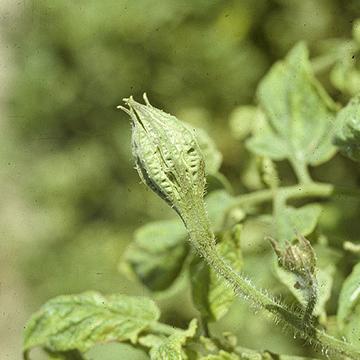
DISEASE: Tomato big bud
HOST: Tomato
Symptoms are enlarge sepals that do not separate. Flower buds stay green and do not develop into fruit. Leaves are small and chlorotic.
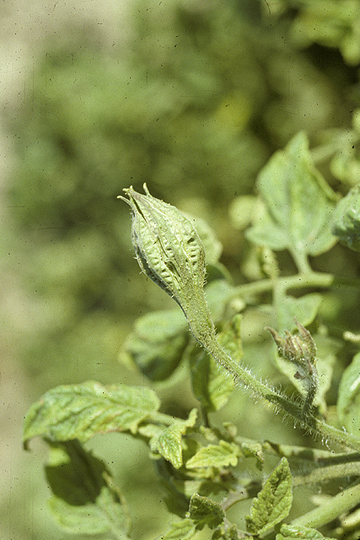
Tomato big bud | Tomato
DISEASE: Tomato big bud
HOST: Tomato (Lycopersicon esculentum)
PATHOGEN: 'Candidatus Phytoplasma asteris'
PATHOGEN SYNONYM: Phytoplasma Aster yellows group
SOURCE: S. Thomson
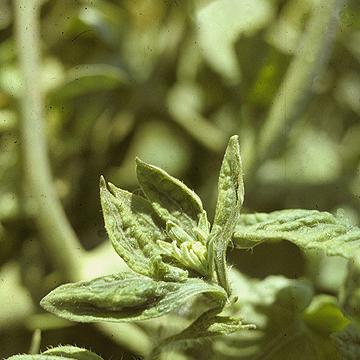
DISEASE: Tomato big bud
HOST: Tomato
Abnormal flower bud with greatly enlarged sepals. Sepals do not separate, fruit is not produced, and apical growth is upright.
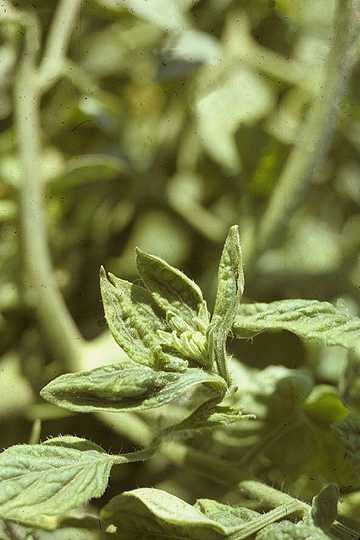
Tomato big bud | Tomato
DISEASE: Tomato big bud
HOST: Tomato (Lycopersicon esculentum)
PATHOGEN: 'Candidatus Phytoplasma asteris'
PATHOGEN SYNONYM: Phytoplasma Aster yellows group
SOURCE: S. Thomson