

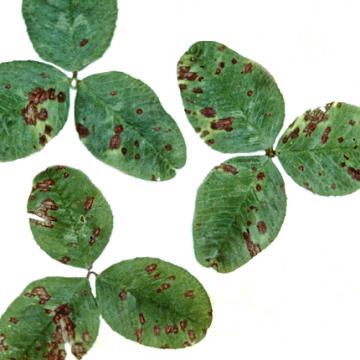
DISEASE: Bacterial black leaf spot
HOST: Clover
White clover with brown necrotic spots.
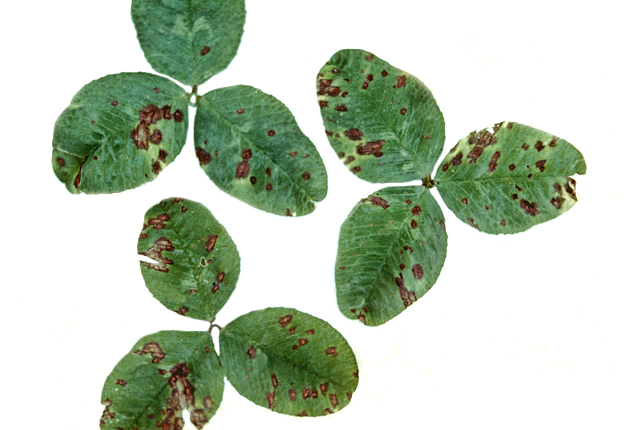
Bacterial black leaf spot | Clover
DISEASE: Bacterial black leaf spot
HOST: Clover (Trifolium repens)
PATHOGEN: Burkholderia andropogonis
PATHOGEN SYNONYM: Pseudomonas andropogonis
SOURCE: M. Goto
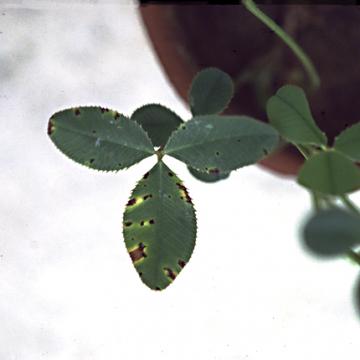
DISEASE: Bacterial black leaf spot
HOST: Clover
White clover leaves with brownish spots and some yellowing occurring at the margins.
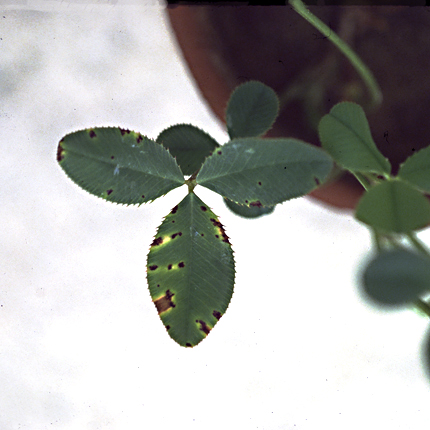
Bacterial black leaf spot | Clover
DISEASE: Bacterial black leaf spot
HOST: Clover (Trifolium repens)
PATHOGEN: Burkholderia andropogonis
PATHOGEN SYNONYM: Pseudomonas andropogonis
SOURCE: R. Gitaitis
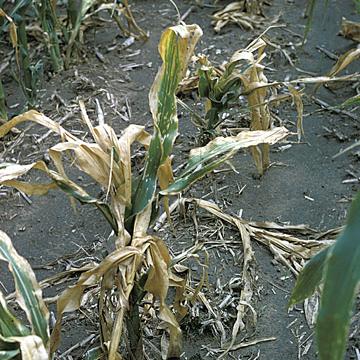
DISEASE: Goss's bacterial wilt and blight
HOST: Corn (Maize)
Wilted, dying plants. Leaves have gray to light yellow stripes and irregular margins that follow leaf veins. Systemically infected plants usually have orange vascular bundles.
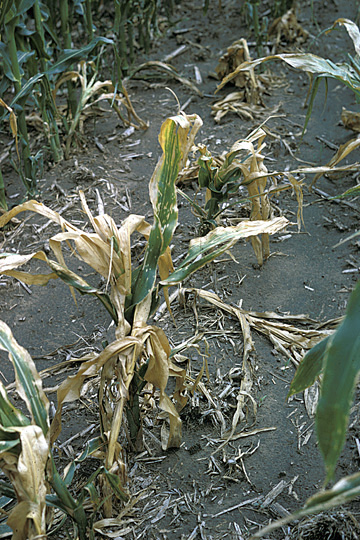
Goss's bacterial wilt and blight | Corn (Maize)
DISEASE: Goss's bacterial wilt and blight
HOST: Corn (Maize) (Zea mays)
PATHOGEN: Clavibacter michiganensis subsp. nebraskensis
PATHOGEN SYNONYM: Corynebacterium nebraskense
SOURCE: A. Vidaver
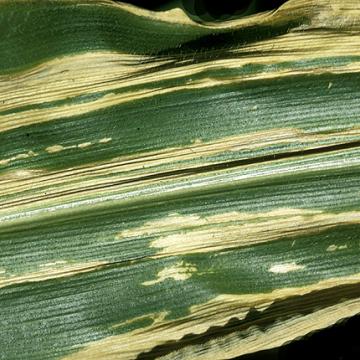
DISEASE: Goss's bacterial wilt and blight
HOST: Corn (Maize)
The disease causes necrotic leaf lesions, which typically have dark flecks (freckles) within the lesions (not seen here).
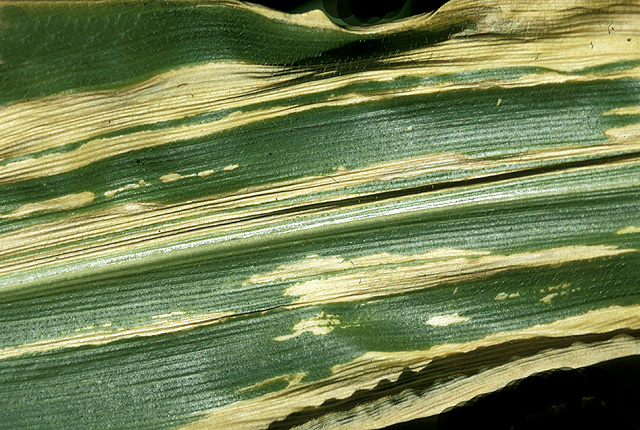
Goss's bacterial wilt and blight | Corn (Maize)
DISEASE: Goss's bacterial wilt and blight
HOST: Corn (Maize) (Zea mays)
PATHOGEN: Clavibacter michiganensis subsp. nebraskensis
PATHOGEN SYNONYM: Corynebacterium nebraskense
SOURCE: A. Vidaver
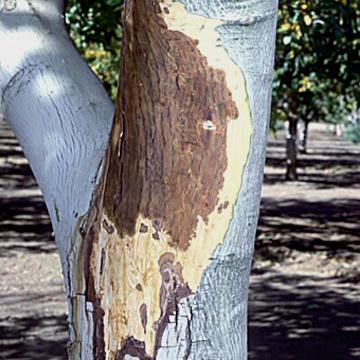
DISEASE: Shallow bark canker
HOST: Walnut
Diseased, discolored tissues revealed by removing external bark.
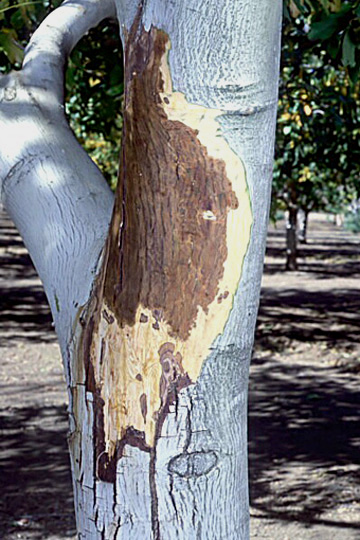
Shallow bark canker | Walnut
DISEASE: Shallow bark canker
HOST: Walnut (Juglans regia 'Hartley')
PATHOGEN: Brenneria nigrifluens
PATHOGEN SYNONYM: Erwinia nigrifluens
SOURCE: B. Teviotdale
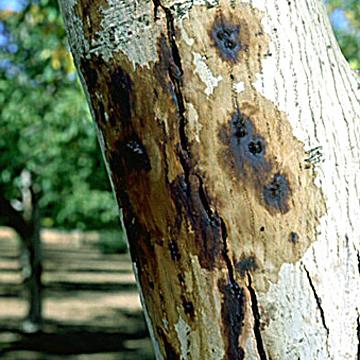
DISEASE: Shallow bark canker
HOST: Walnut
Trunk with brown exudate shallow cankers.
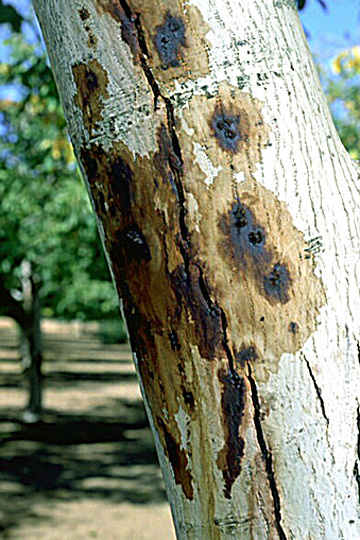
Shallow bark canker | Walnut
DISEASE: Shallow bark canker
HOST: Walnut (Juglans regia 'Hartley')
PATHOGEN: Brenneria nigrifluens
PATHOGEN SYNONYM: Erwinia nigrifluens
SOURCE: B. Teviotdale
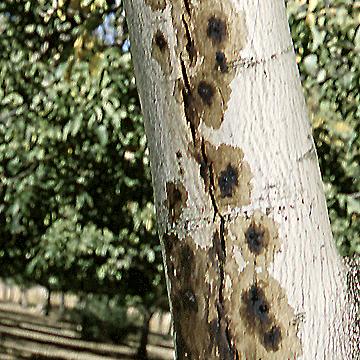
DISEASE: Shallow bark canker
HOST: Walnut
Multiple cankers with brown exudate. Cankers on trunk are shallow.
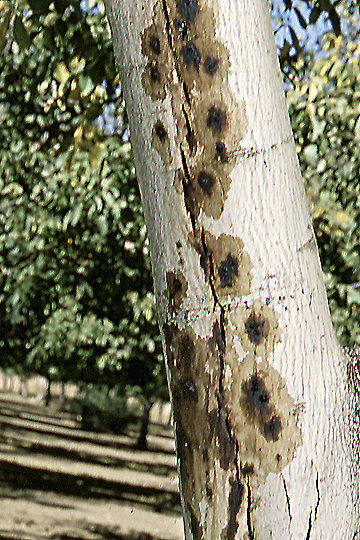
Shallow bark canker | Walnut
DISEASE: Shallow bark canker
HOST: Walnut (Juglans regia 'Hartley')
PATHOGEN: Brenneria nigrifluens
PATHOGEN SYNONYM: Erwinia nigrifluens
SOURCE: B. Teviotdale