

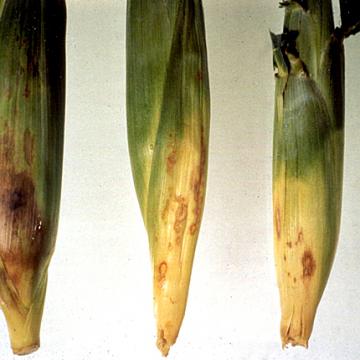
DISEASE: Bacterial leaf blight and stalk rot
HOST: Corn (Maize)
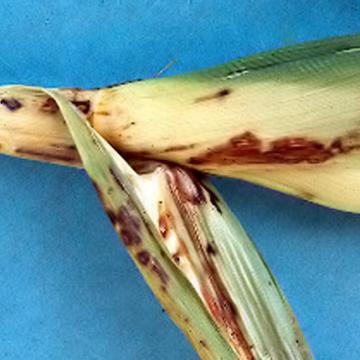
Corn husk leaves with brownish red streaks and blotches. The leaves turn brown but may later become gray or white. Symptoms vary depending upon genotype.
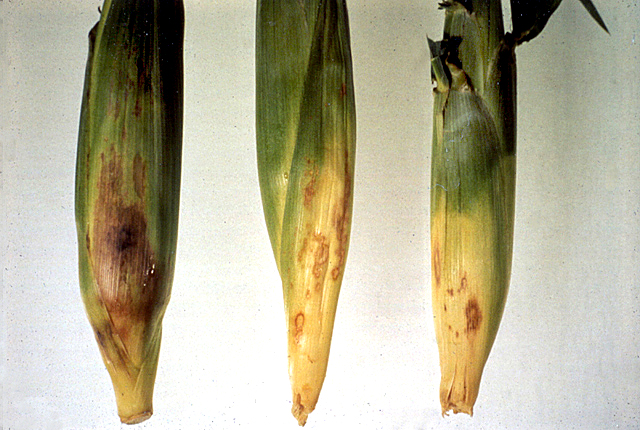
Bacterial leaf blight and stalk rot | Corn (Maize)
DISEASE: Bacterial leaf blight and stalk rot
HOST: Corn (Maize) (Zea mays)
PATHOGEN: Acidovorax avenae
PATHOGEN SYNONYM: Acidovorax avenae subsp. avenae
SOURCE: A. Alvarez
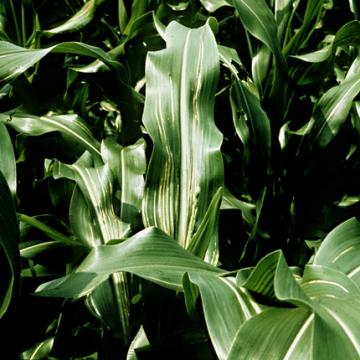
DISEASE: Bacterial leaf blight and stalk rot
HOST: Corn (Maize)
Leaves with whitish streaks.
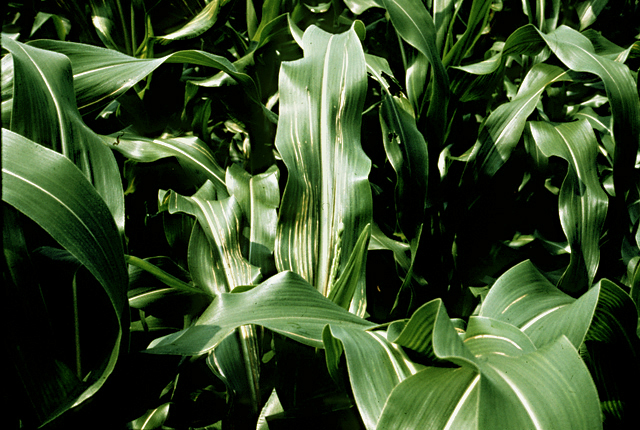
Bacterial leaf blight and stalk rot | Corn (Maize)
DISEASE: Bacterial leaf blight and stalk rot
HOST: Corn (Maize) (Zea mays)
PATHOGEN: Acidovorax avenae
PATHOGEN SYNONYM: Acidovorax avenae subsp. avenae
SOURCE: R. Gitaitis
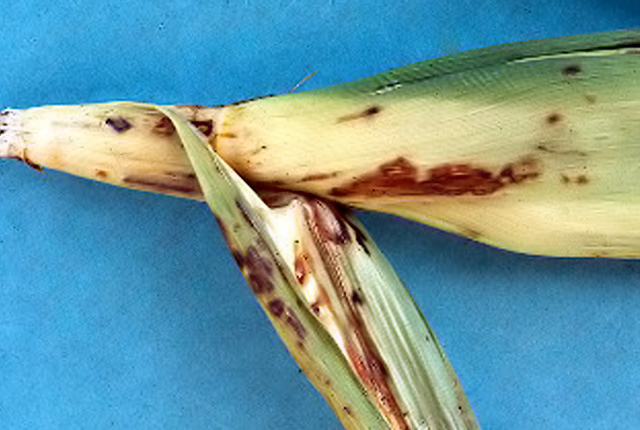
DISEASE: Bacterial leaf blight and stalk rot
HOST: Corn (Maize)
Lesions may vary from brown to red, sometimes gray or white, and some genotypes have red borders around lesions.
Bacterial leaf blight and stalk rot | Corn (Maize)
DISEASE: Bacterial leaf blight and stalk rot
HOST: Corn (Maize) (Zea mays)
PATHOGEN: Acidovorax avenae
PATHOGEN SYNONYM: Acidovorax avenae subsp. avenae
SOURCE: R. Gitaitis
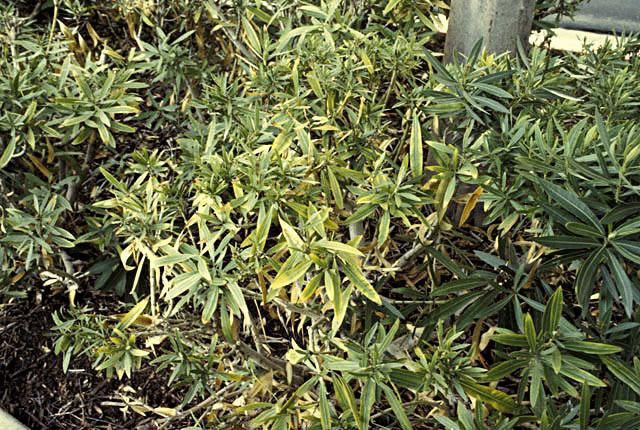
DISEASE: Oleander leaf scorch
HOST: Oleander
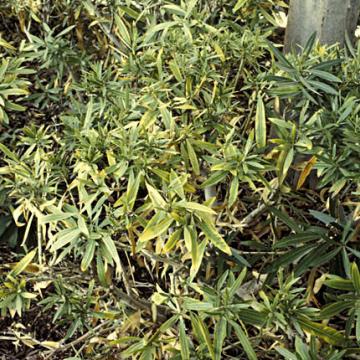
Diseased plant with scalloped, yellowish leaves. This usually is followed by dieback of twigs and branches. Plants often die 2 years after infection.
Oleander leaf scorch | Oleander
DISEASE: Oleander leaf scorch
HOST: Oleander (Nerium oleander)
PATHOGEN: Xylella fastidiosa
SOURCE: S. Purcell
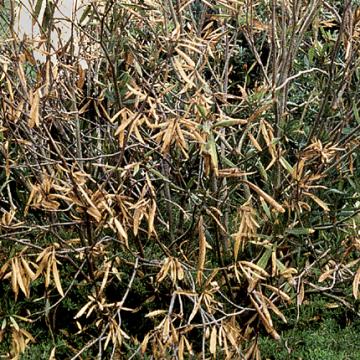
DISEASE: Oleander leaf scorch
HOST: Oleander
Oleander with symptoms of severe scorch.
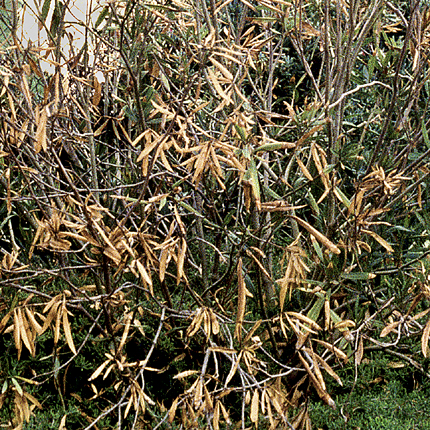
Oleander leaf scorch | Oleander
DISEASE: Oleander leaf scorch
HOST: Oleander (Nerium oleander)
PATHOGEN: Xylella fastidiosa
SOURCE: M. Blua
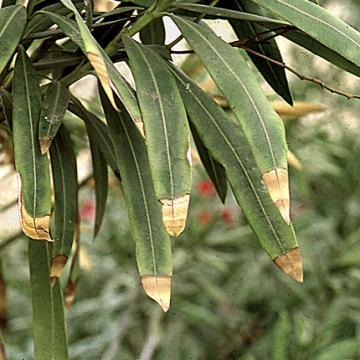
DISEASE: Oleander leaf scorch
HOST: Oleander
Oleander with scorch symptoms primarily at leaf tips, an early stage of disease.
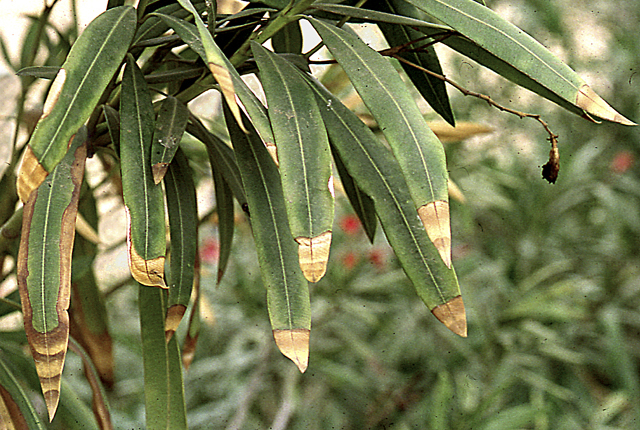
Oleander leaf scorch | Oleander
DISEASE: Oleander leaf scorch
HOST: Oleander (Nerium oleander)
PATHOGEN: Xylella fastidiosa
SOURCE: M. Blua
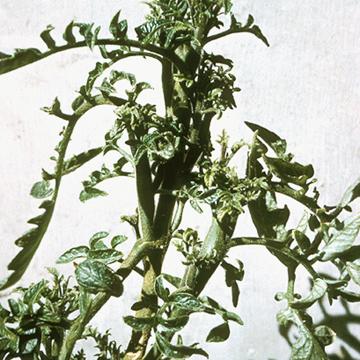
DISEASE: Tomato big bud
HOST: Tomato
Characteristic symptoms are swollen, apical stems and stunted leaves. Apical stems are generally thickened and assume a stiff and erect growth habit. Internodes are shortened and flower buds are greatly enlarged.
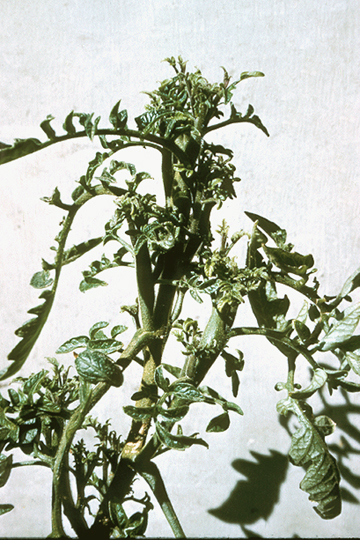
Tomato big bud | Tomato
DISEASE: Tomato big bud
HOST: Tomato (Lycopersicon esculentum)
PATHOGEN: 'Candidatus Phytoplasma asteris'
PATHOGEN SYNONYM: Phytoplasma Aster yellows group
SOURCE: D. Teakle
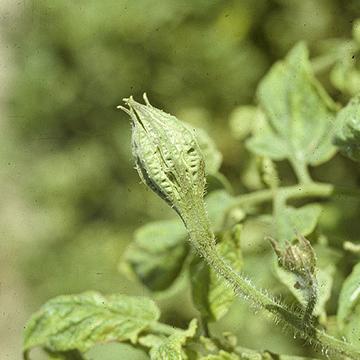
DISEASE: Tomato big bud
HOST: Tomato
Symptoms are enlarge sepals that do not separate. Flower buds stay green and do not develop into fruit. Leaves are small and chlorotic.
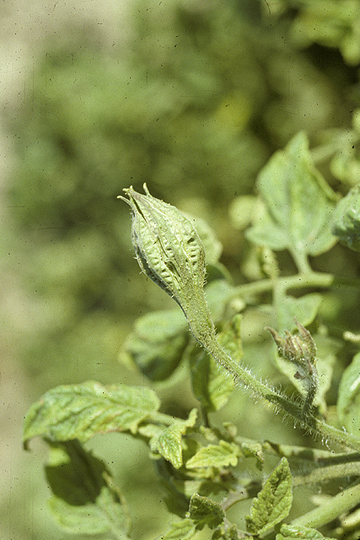
Tomato big bud | Tomato
DISEASE: Tomato big bud
HOST: Tomato (Lycopersicon esculentum)
PATHOGEN: 'Candidatus Phytoplasma asteris'
PATHOGEN SYNONYM: Phytoplasma Aster yellows group
SOURCE: S. Thomson
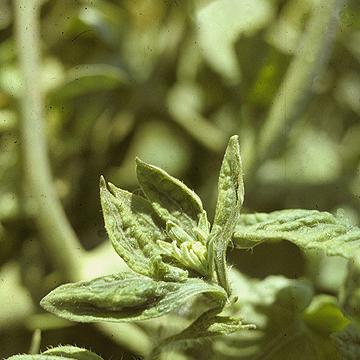
DISEASE: Tomato big bud
HOST: Tomato
Abnormal flower bud with greatly enlarged sepals. Sepals do not separate, fruit is not produced, and apical growth is upright.
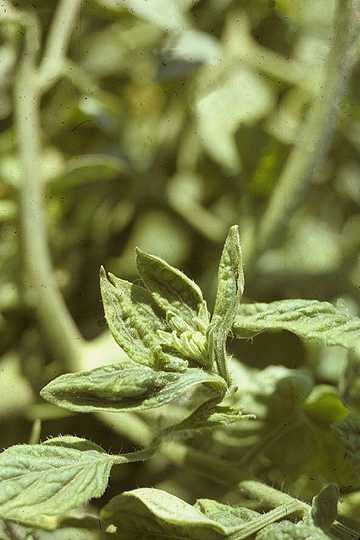
Tomato big bud | Tomato
DISEASE: Tomato big bud
HOST: Tomato (Lycopersicon esculentum)
PATHOGEN: 'Candidatus Phytoplasma asteris'
PATHOGEN SYNONYM: Phytoplasma Aster yellows group
SOURCE: S. Thomson