

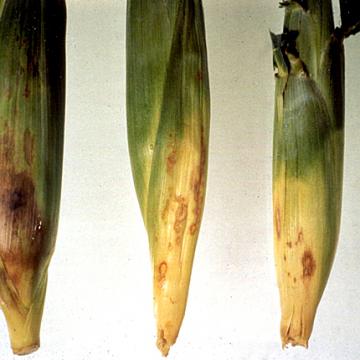
DISEASE: Bacterial leaf blight and stalk rot
HOST: Corn (Maize)
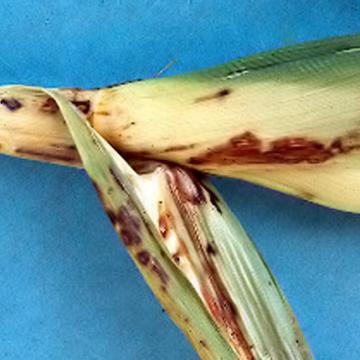
Corn husk leaves with brownish red streaks and blotches. The leaves turn brown but may later become gray or white. Symptoms vary depending upon genotype.
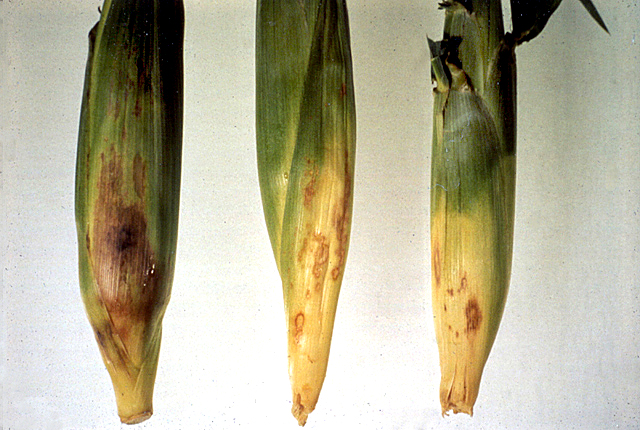
Bacterial leaf blight and stalk rot | Corn (Maize)
DISEASE: Bacterial leaf blight and stalk rot
HOST: Corn (Maize) (Zea mays)
PATHOGEN: Acidovorax avenae
PATHOGEN SYNONYM: Acidovorax avenae subsp. avenae
SOURCE: A. Alvarez
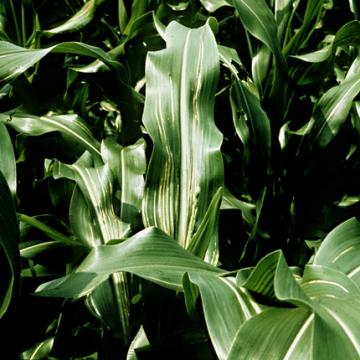
DISEASE: Bacterial leaf blight and stalk rot
HOST: Corn (Maize)
Leaves with whitish streaks.
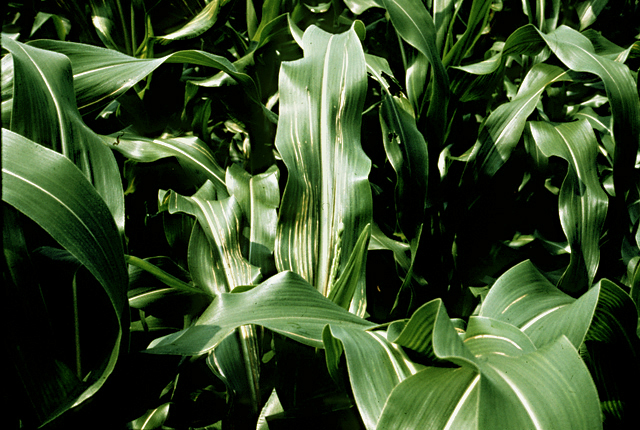
Bacterial leaf blight and stalk rot | Corn (Maize)
DISEASE: Bacterial leaf blight and stalk rot
HOST: Corn (Maize) (Zea mays)
PATHOGEN: Acidovorax avenae
PATHOGEN SYNONYM: Acidovorax avenae subsp. avenae
SOURCE: R. Gitaitis
DISEASE: Bacterial leaf blight and stalk rot
HOST: Corn (Maize)
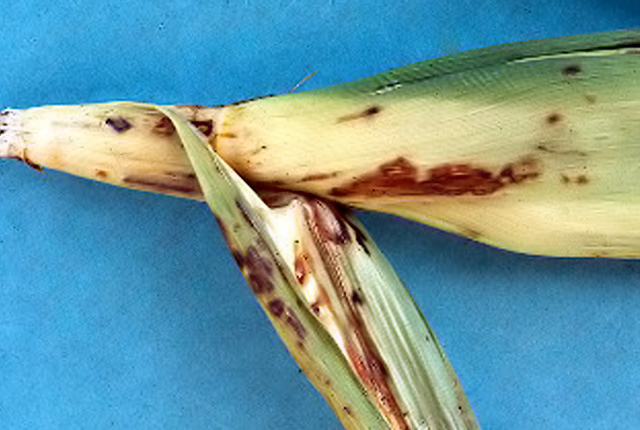
Lesions may vary from brown to red, sometimes gray or white, and some genotypes have red borders around lesions.
Bacterial leaf blight and stalk rot | Corn (Maize)
DISEASE: Bacterial leaf blight and stalk rot
HOST: Corn (Maize) (Zea mays)
PATHOGEN: Acidovorax avenae
PATHOGEN SYNONYM: Acidovorax avenae subsp. avenae
SOURCE: R. Gitaitis
DISEASE: Olive knot
HOST: Olive
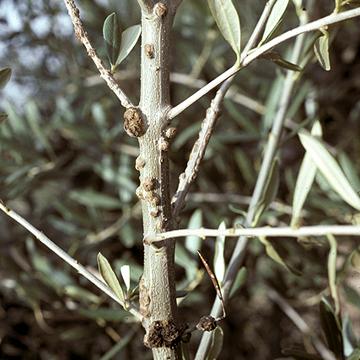
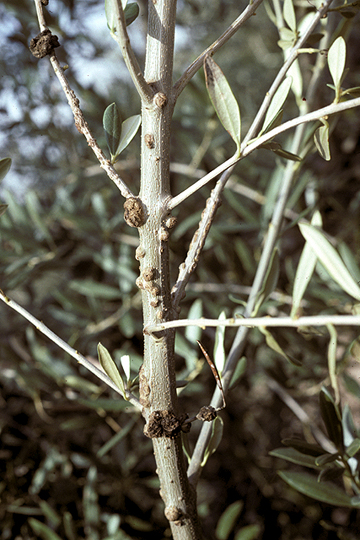
Multiple infections of young stems. The bacterium invades vascular tissues during certain times of the year and may be isolated from branches that appear healthy.
Olive knot | Olive
DISEASE: Olive knot
HOST: Olive (Olea europaea)
PATHOGEN: Pseudomonas savastanoi pv. savastanoi
SOURCE: M. Schroth
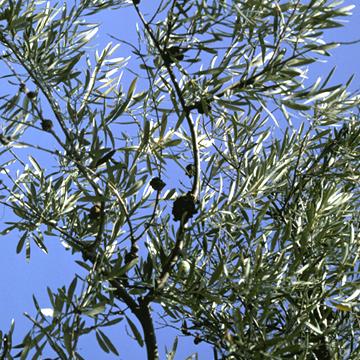
DISEASE: Olive knot
HOST: Olive
Tree with knots/galls on branches along with twig dieback, which is associated with knots. Fusarium and Diplodia spp. infect through knots and are thought to be main reason for dieback.
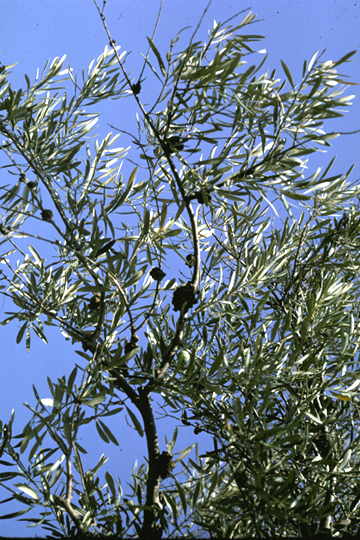
Olive knot | Olive
DISEASE: Olive knot
HOST: Olive (Olea europaea)
PATHOGEN: Pseudomonas savastanoi pv. savastanoi
SOURCE: M. Schroth
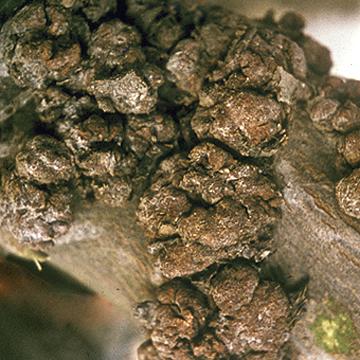
DISEASE: Olive knot
HOST: Olive
Multiple infections on olive branch. Knots at this stage begin to die from the outside in and are infected by several fungi.
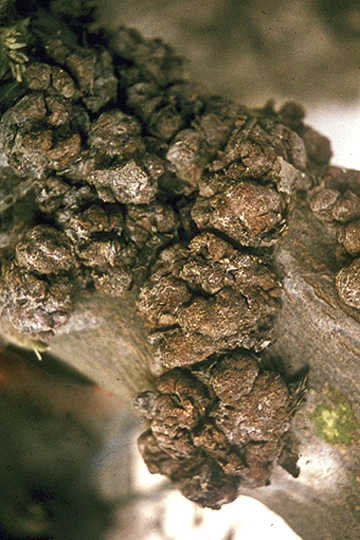
Olive knot | Olive
DISEASE: Olive knot
HOST: Olive (Olea europaea)
PATHOGEN: Pseudomonas savastanoi pv. savastanoi
SOURCE: M. Schroth
DISEASE: Tomato big bud
HOST: Tomato
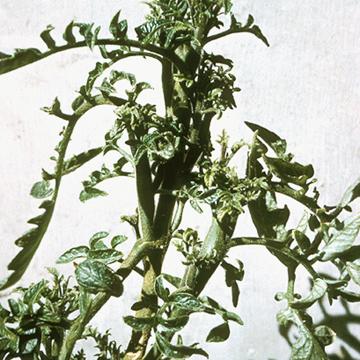
Characteristic symptoms are swollen, apical stems and stunted leaves. Apical stems are generally thickened and assume a stiff and erect growth habit. Internodes are shortened and flower buds are greatly enlarged.
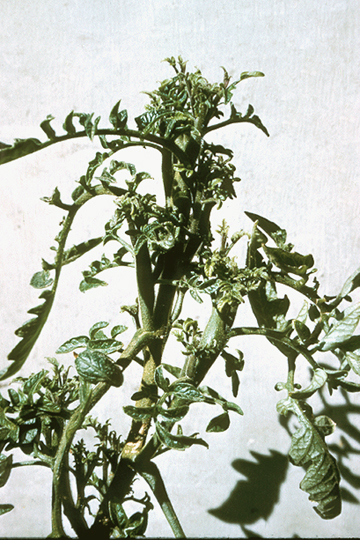
Tomato big bud | Tomato
DISEASE: Tomato big bud
HOST: Tomato (Lycopersicon esculentum)
PATHOGEN: 'Candidatus Phytoplasma asteris'
PATHOGEN SYNONYM: Phytoplasma Aster yellows group
SOURCE: D. Teakle
DISEASE: Tomato big bud
HOST: Tomato
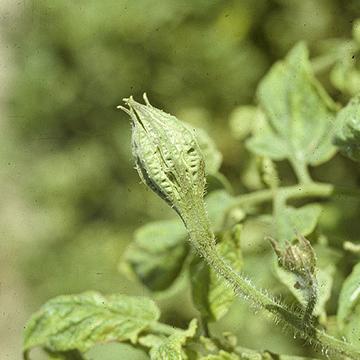
Symptoms are enlarge sepals that do not separate. Flower buds stay green and do not develop into fruit. Leaves are small and chlorotic.
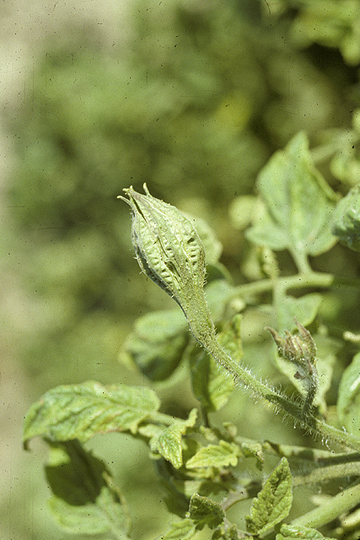
Tomato big bud | Tomato
DISEASE: Tomato big bud
HOST: Tomato (Lycopersicon esculentum)
PATHOGEN: 'Candidatus Phytoplasma asteris'
PATHOGEN SYNONYM: Phytoplasma Aster yellows group
SOURCE: S. Thomson
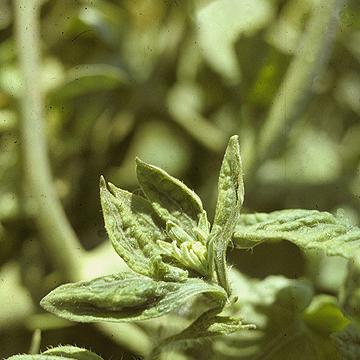
DISEASE: Tomato big bud
HOST: Tomato
Abnormal flower bud with greatly enlarged sepals. Sepals do not separate, fruit is not produced, and apical growth is upright.
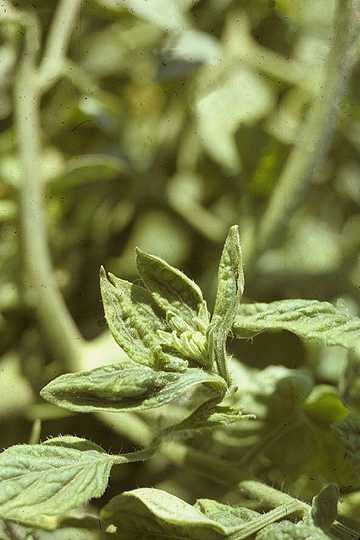
Tomato big bud | Tomato
DISEASE: Tomato big bud
HOST: Tomato (Lycopersicon esculentum)
PATHOGEN: 'Candidatus Phytoplasma asteris'
PATHOGEN SYNONYM: Phytoplasma Aster yellows group
SOURCE: S. Thomson