

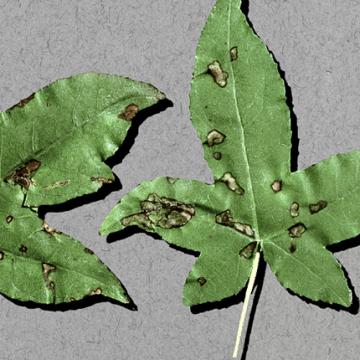
DISEASE: Bacterial leaf spot and canker
HOST: Sweetgum
Leaves with irregular necrotic lesions.
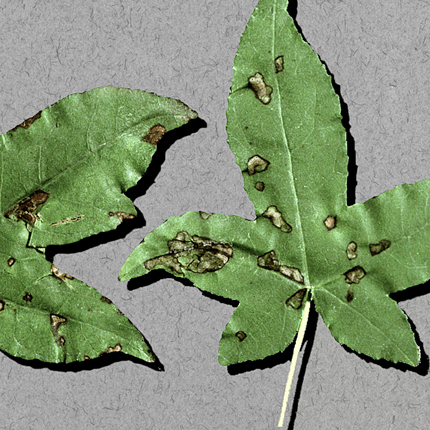
Bacterial leaf spot and canker | Sweetgum
DISEASE: Bacterial leaf spot and canker
HOST: Sweetgum (Liquidambar styraciflua)
PATHOGEN: Pseudomonas syringae pv. syringae
SOURCE: A. Bishop
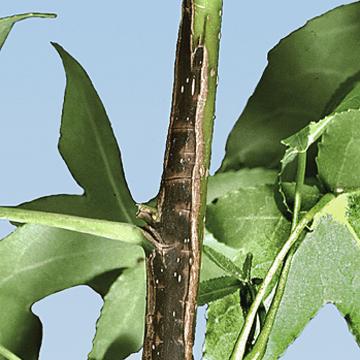
DISEASE: Bacterial leaf spot and canker
HOST: Sweetgum
Stem canker of sweetgum.
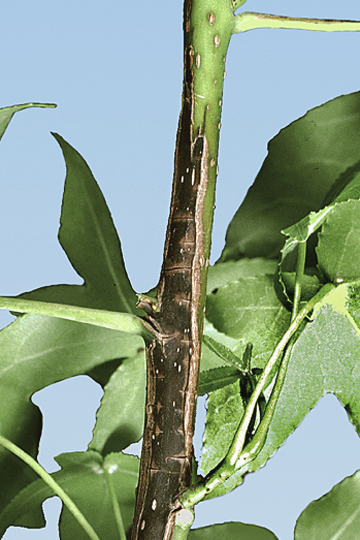
Bacterial leaf spot and canker | Sweetgum
DISEASE: Bacterial leaf spot and canker
HOST: Sweetgum (Liquidambar styraciflua)
PATHOGEN: Pseudomonas syringae pv. syringae
SOURCE: A. Bishop
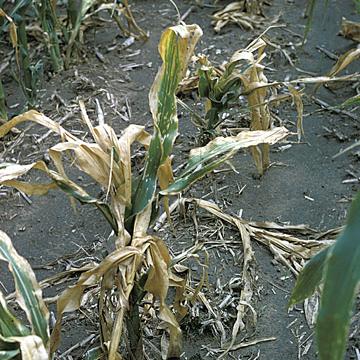
DISEASE: Goss's bacterial wilt and blight
HOST: Corn (Maize)
Wilted, dying plants. Leaves have gray to light yellow stripes and irregular margins that follow leaf veins. Systemically infected plants usually have orange vascular bundles.
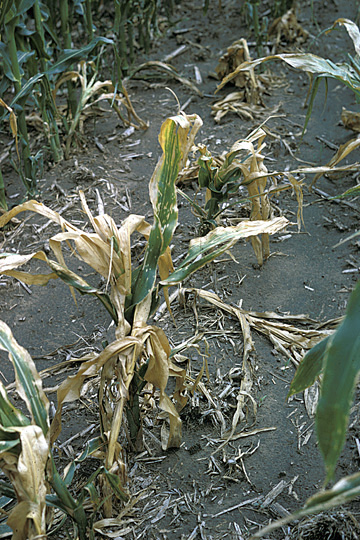
Goss's bacterial wilt and blight | Corn (Maize)
DISEASE: Goss's bacterial wilt and blight
HOST: Corn (Maize) (Zea mays)
PATHOGEN: Clavibacter michiganensis subsp. nebraskensis
PATHOGEN SYNONYM: Corynebacterium nebraskense
SOURCE: A. Vidaver
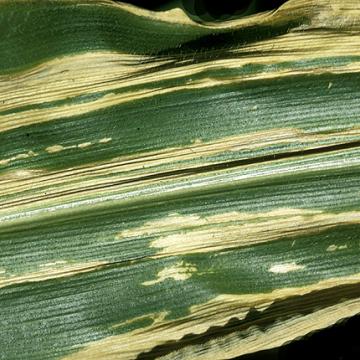
DISEASE: Goss's bacterial wilt and blight
HOST: Corn (Maize)
The disease causes necrotic leaf lesions, which typically have dark flecks (freckles) within the lesions (not seen here).
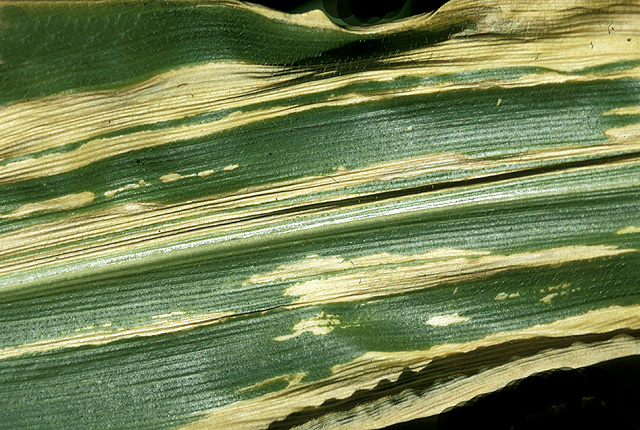
Goss's bacterial wilt and blight | Corn (Maize)
DISEASE: Goss's bacterial wilt and blight
HOST: Corn (Maize) (Zea mays)
PATHOGEN: Clavibacter michiganensis subsp. nebraskensis
PATHOGEN SYNONYM: Corynebacterium nebraskense
SOURCE: A. Vidaver
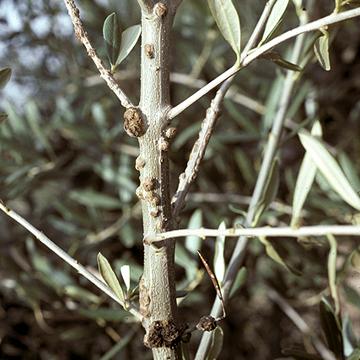
DISEASE: Olive knot
HOST: Olive
Multiple infections of young stems. The bacterium invades vascular tissues during certain times of the year and may be isolated from branches that appear healthy.
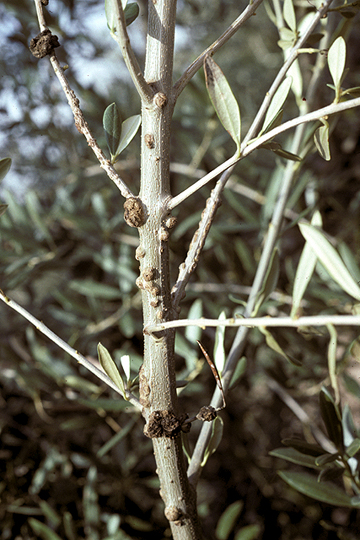
Olive knot | Olive
DISEASE: Olive knot
HOST: Olive (Olea europaea)
PATHOGEN: Pseudomonas savastanoi pv. savastanoi
SOURCE: M. Schroth
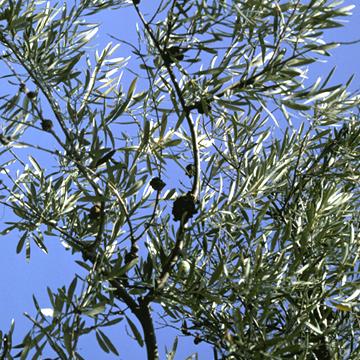
DISEASE: Olive knot
HOST: Olive
Tree with knots/galls on branches along with twig dieback, which is associated with knots. Fusarium and Diplodia spp. infect through knots and are thought to be main reason for dieback.
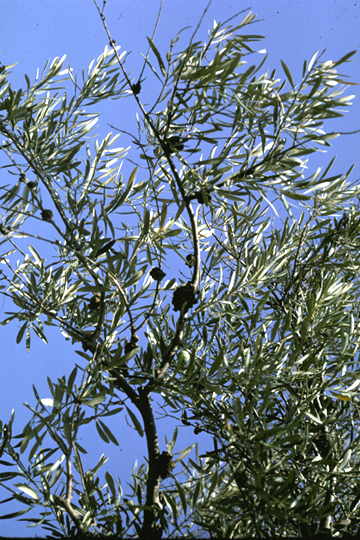
Olive knot | Olive
DISEASE: Olive knot
HOST: Olive (Olea europaea)
PATHOGEN: Pseudomonas savastanoi pv. savastanoi
SOURCE: M. Schroth
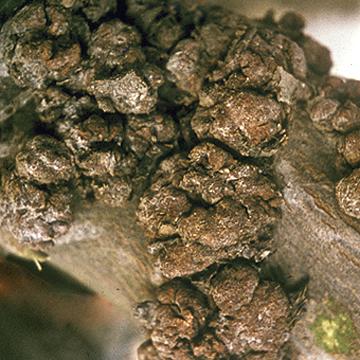
DISEASE: Olive knot
HOST: Olive
Multiple infections on olive branch. Knots at this stage begin to die from the outside in and are infected by several fungi.
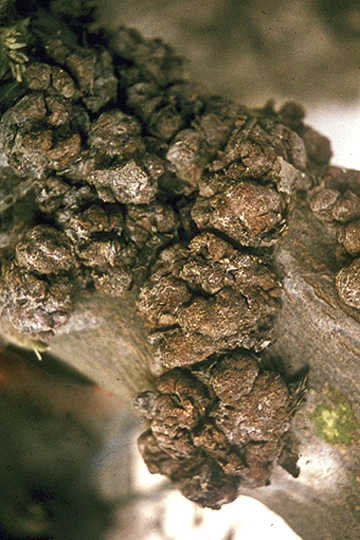
Olive knot | Olive
DISEASE: Olive knot
HOST: Olive (Olea europaea)
PATHOGEN: Pseudomonas savastanoi pv. savastanoi
SOURCE: M. Schroth