

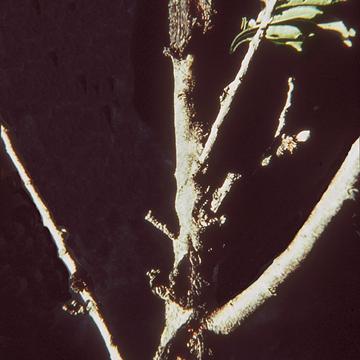
DISEASE: Bacterial hyperplastic canker
HOST: Almond
Diseased tree with multiple cankers. Margins of cankers are rough, soft, cheesy, dark brown, and have scalloped water-soaked spots that turn brown. Multiple cankers may girdle and kill small twigs.
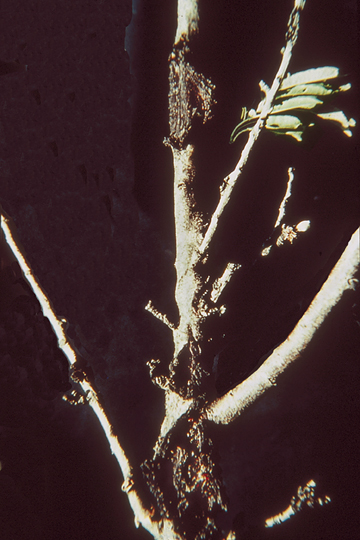
Bacterial hyperplastic canker | Almond
DISEASE: Bacterial hyperplastic canker
HOST: Almond (Prunus dulcis)
PATHOGEN: Pseudomonas amygdali
SOURCE: P. Psallidas
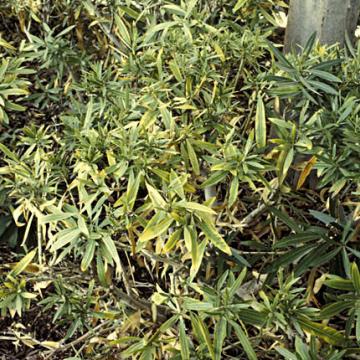
DISEASE: Oleander leaf scorch
HOST: Oleander
Diseased plant with scalloped, yellowish leaves. This usually is followed by dieback of twigs and branches. Plants often die 2 years after infection.
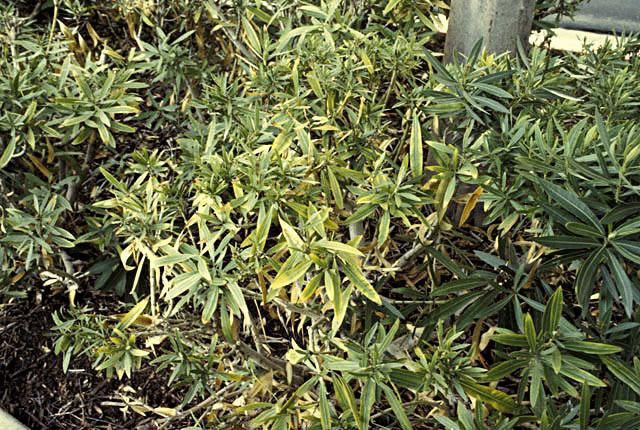
Oleander leaf scorch | Oleander
DISEASE: Oleander leaf scorch
HOST: Oleander (Nerium oleander)
PATHOGEN: Xylella fastidiosa
SOURCE: S. Purcell
DISEASE: Oleander leaf scorch
HOST: Oleander
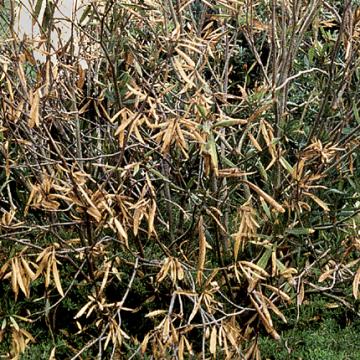
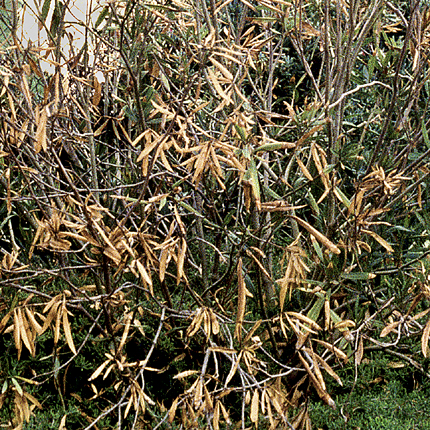
Oleander with symptoms of severe scorch.
Oleander leaf scorch | Oleander
DISEASE: Oleander leaf scorch
HOST: Oleander (Nerium oleander)
PATHOGEN: Xylella fastidiosa
SOURCE: M. Blua
DISEASE: Oleander leaf scorch
HOST: Oleander
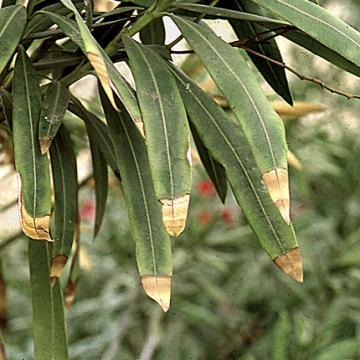
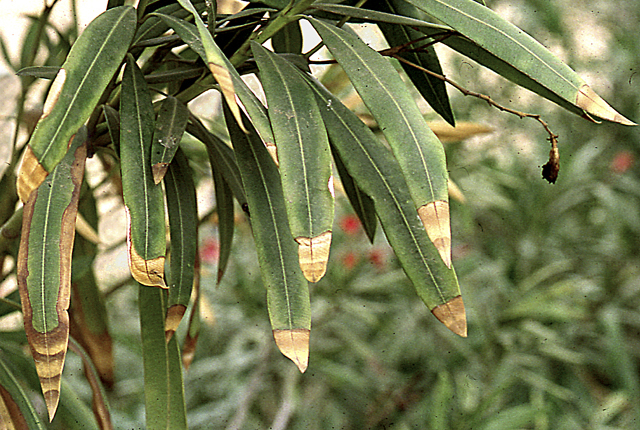
Oleander with scorch symptoms primarily at leaf tips, an early stage of disease.
Oleander leaf scorch | Oleander
DISEASE: Oleander leaf scorch
HOST: Oleander (Nerium oleander)
PATHOGEN: Xylella fastidiosa
SOURCE: M. Blua
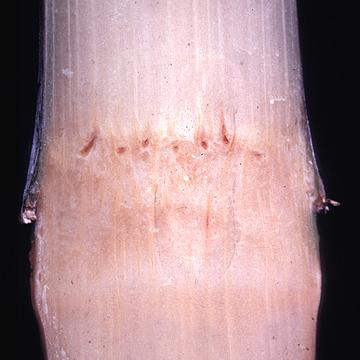
DISEASE: Ratoon stunt
HOST: Sugarcane
Necrotic, reddish vascular bundles in node of sliced stalk, a diagnostic symptom.
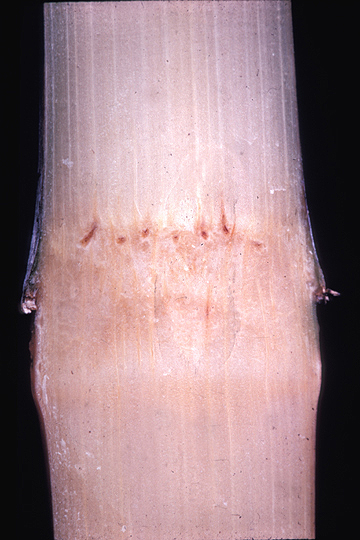
Ratoon stunt | Sugarcane
DISEASE: Ratoon stunt
HOST: Sugarcane (Saccharum officinarum)
PATHOGEN: Leifsonia xyli subsp. xyli
SOURCE: D. Teakle
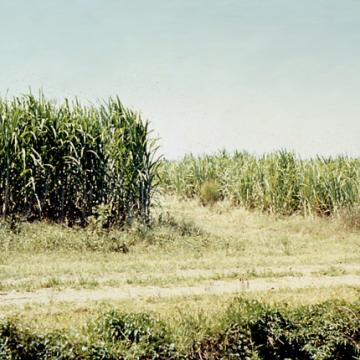
DISEASE: Ratoon stunt
HOST: Sugarcane
Disease of susceptible cultivar L62-96 (right). External symptoms are characterized by stunting and poor growth.
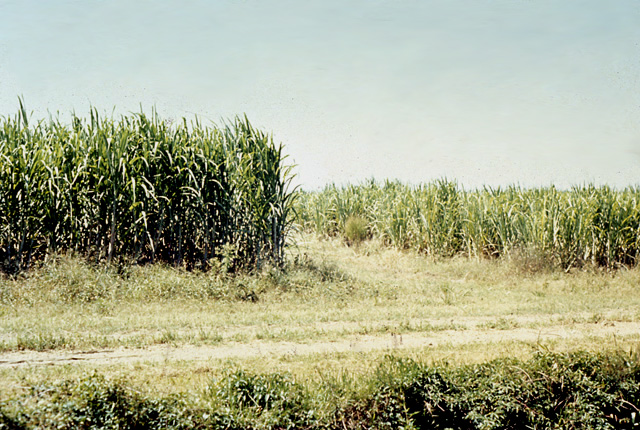
Ratoon stunt | Sugarcane
DISEASE: Ratoon stunt
HOST: Sugarcane (Saccharum officinarum)
PATHOGEN: Leifsonia xyli subsp. xyli
SOURCE: A. Gillaspie, M. Davis
DISEASE: Ratoon stunt
HOST: Sugarcane
Red discoloration just below nodal tissues is a symptom in mature stalks of 'L41-233'.
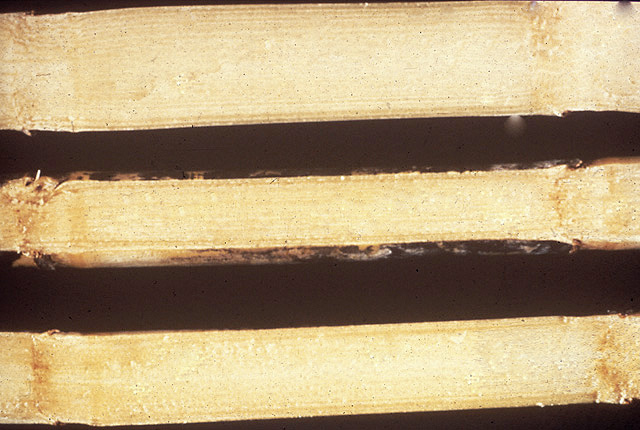
Ratoon stunt | Sugarcane
DISEASE: Ratoon stunt
HOST: Sugarcane (Saccharum officinarum)
PATHOGEN: Leifsonia xyli subsp. xyli
SOURCE: A. Gillaspie, M. Davis
DISEASE: Ratoon stunt
HOST: Sugarcane
Row of disease 'Trojan' plants (left). Healthy row (right).
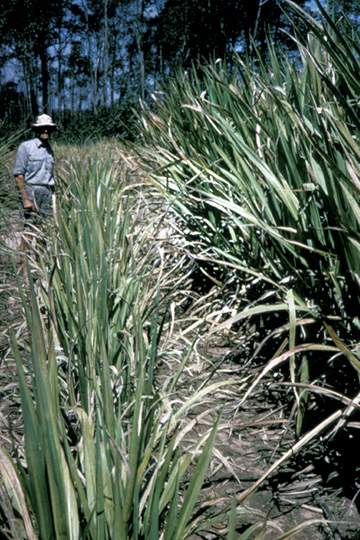
Ratoon stunt | Sugarcane
DISEASE: Ratoon stunt
HOST: Sugarcane (Saccharum officinarum 'Trojan')
PATHOGEN: Leifsonia xyli subsp. xyli
SOURCE: D. Teakle