

DISEASE: Bacterial blight (Boll rot)
HOST: Cotton
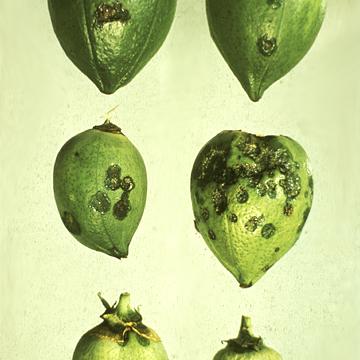
Boll rot first appears as raised, water-soaked lesions, which become sunken and turn brown to black with time.
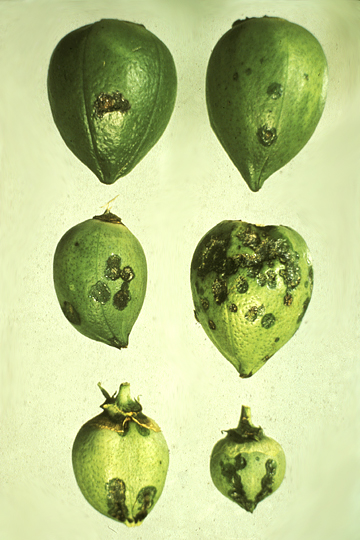
Bacterial blight (Boll rot) | Cotton
DISEASE: Bacterial blight (Boll rot)
HOST: Cotton (Gossypium barbadense)
PATHOGEN: Xanthomonas citri subsp. malvacearum
PATHOGEN SYNONYM: Xanthomonas campestris pv. malvacearum
SOURCE: A. Hayward
DISEASE: Bacterial blight (Boll rot)
HOST: Cotton
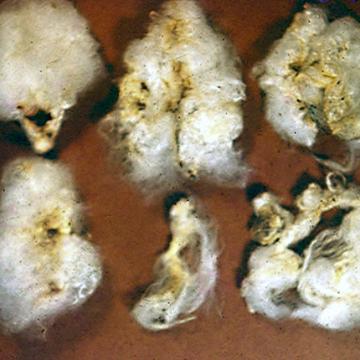
Infection of bolls causes premature opening and increased susceptibility to secondary, saprophytic microorganisms that cause rot. Note discolored cotton.
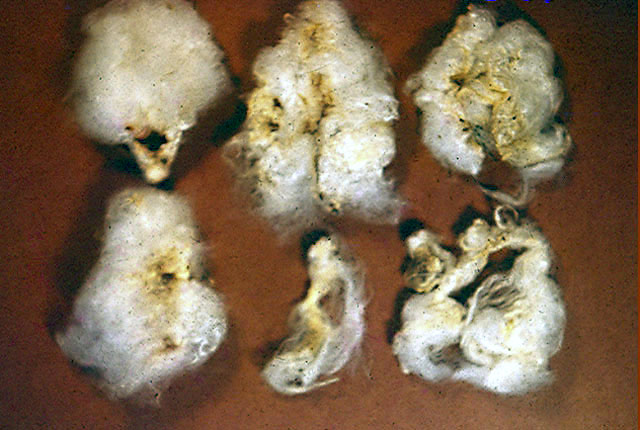
Bacterial blight (Boll rot) | Cotton
DISEASE: Bacterial blight (Boll rot)
HOST: Cotton (Gossypium barbadense)
PATHOGEN: Xanthomonas citri subsp. malvacearum
PATHOGEN SYNONYM: Xanthomonas campestris pv. malvacearum
SOURCE: APS
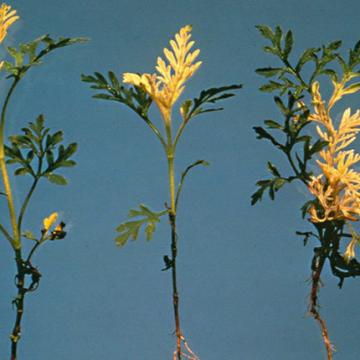
DISEASE: Pseudomonas leaf spot
HOST: Marigold
Marigolds with yellow apical chlorosis attributed to toxin production by the pathogen.
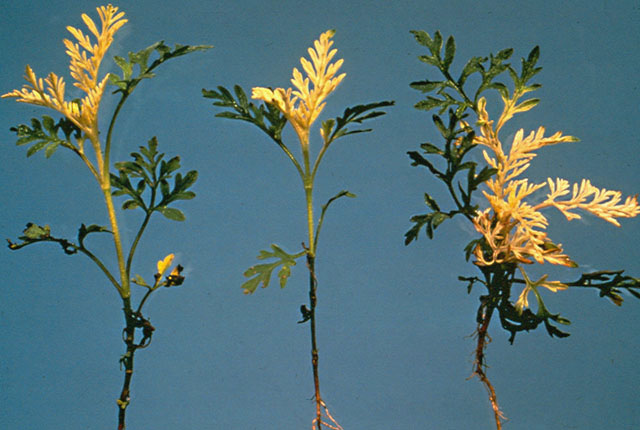
Pseudomonas leaf spot | Marigold
DISEASE: Pseudomonas leaf spot
HOST: Marigold (Tagetes erecta)
PATHOGEN: Pseudomonas syringae pv. tagetis
SOURCE: R. Durbin
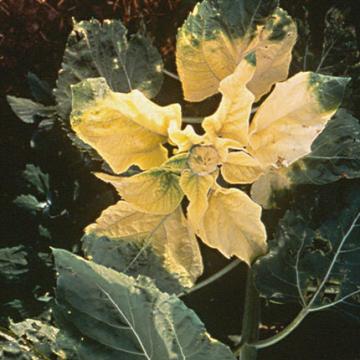
DISEASE: Pseudomonas leaf spot
HOST: Marigold
Chlorotic leaves with total loss of chlorophyll. Disease is also known as toxic chlorosis.
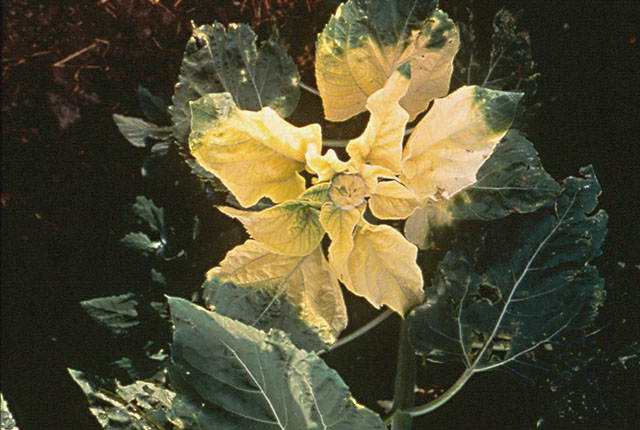
Pseudomonas leaf spot | Marigold
DISEASE: Pseudomonas leaf spot
HOST: Marigold (Tagetes erecta)
PATHOGEN: Pseudomonas syringae pv. tagetis
SOURCE: R. Durbin
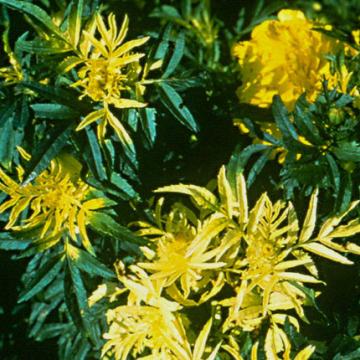
DISEASE: Pseudomonas leaf spot
HOST: Marigold
Plants with bright yellow apical chlorosis.
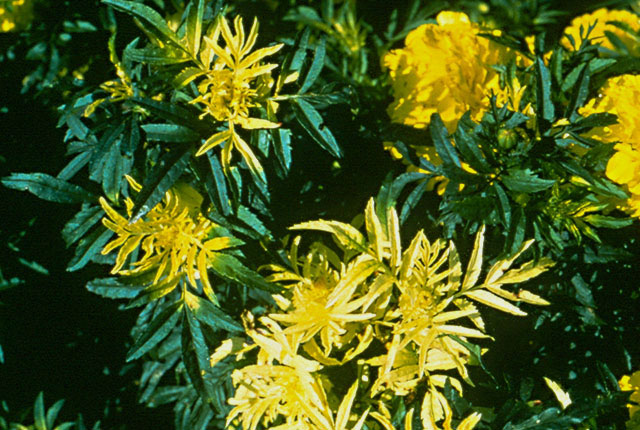
Pseudomonas leaf spot | Marigold
DISEASE: Pseudomonas leaf spot
HOST: Marigold (Tagetes patula)
PATHOGEN: Pseudomonas syringae pv. tagetis
SOURCE: R. Durbin
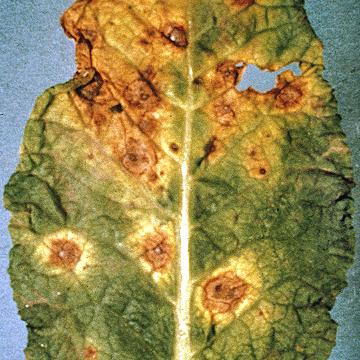
DISEASE: Pseudomonas leaf spot
HOST: Primrose
Leaf with brownish red spots and reddening of adjacent areas. Disease begins as small, water-soaked lesions that later coalesce into large necrotic spots.
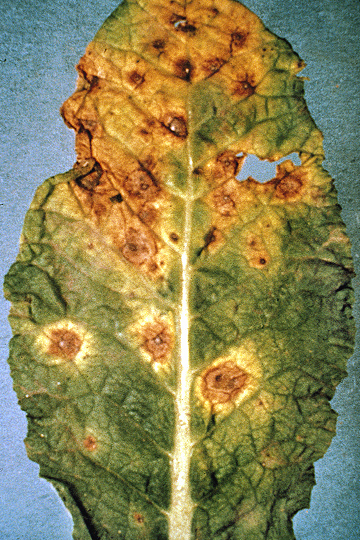
Pseudomonas leaf spot | Primrose
DISEASE: Pseudomonas leaf spot
HOST: Primrose (Primula sp.)
PATHOGEN: Pseudomonas syringae pv. primulae
SOURCE: APS
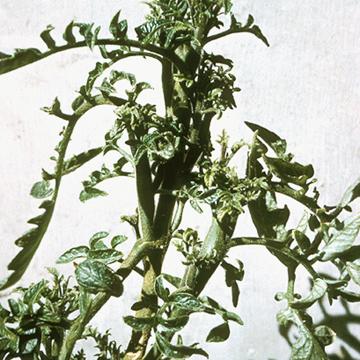
DISEASE: Tomato big bud
HOST: Tomato
Characteristic symptoms are swollen, apical stems and stunted leaves. Apical stems are generally thickened and assume a stiff and erect growth habit. Internodes are shortened and flower buds are greatly enlarged.
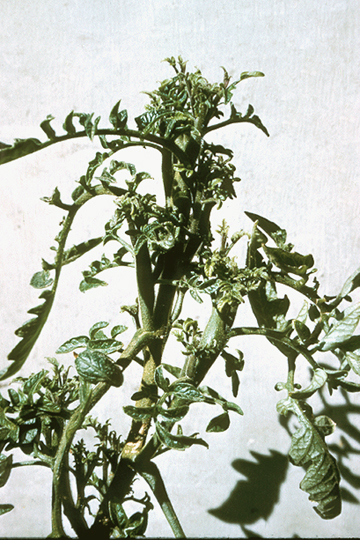
Tomato big bud | Tomato
DISEASE: Tomato big bud
HOST: Tomato (Lycopersicon esculentum)
PATHOGEN: 'Candidatus Phytoplasma asteris'
PATHOGEN SYNONYM: Phytoplasma Aster yellows group
SOURCE: D. Teakle
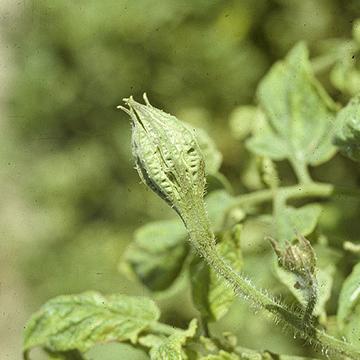
DISEASE: Tomato big bud
HOST: Tomato
Symptoms are enlarge sepals that do not separate. Flower buds stay green and do not develop into fruit. Leaves are small and chlorotic.
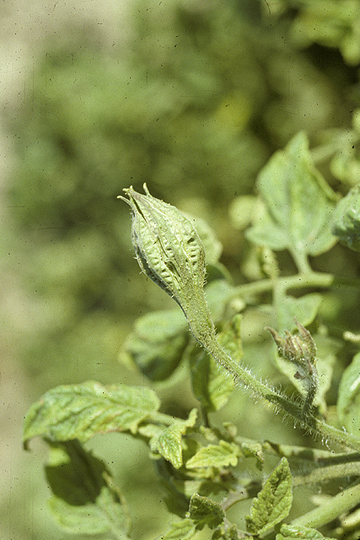
Tomato big bud | Tomato
DISEASE: Tomato big bud
HOST: Tomato (Lycopersicon esculentum)
PATHOGEN: 'Candidatus Phytoplasma asteris'
PATHOGEN SYNONYM: Phytoplasma Aster yellows group
SOURCE: S. Thomson
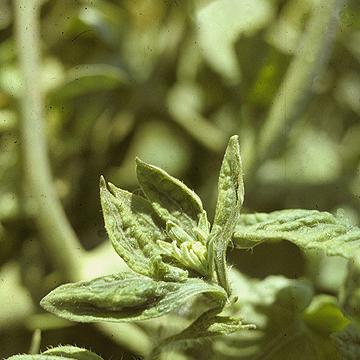
DISEASE: Tomato big bud
HOST: Tomato
Abnormal flower bud with greatly enlarged sepals. Sepals do not separate, fruit is not produced, and apical growth is upright.
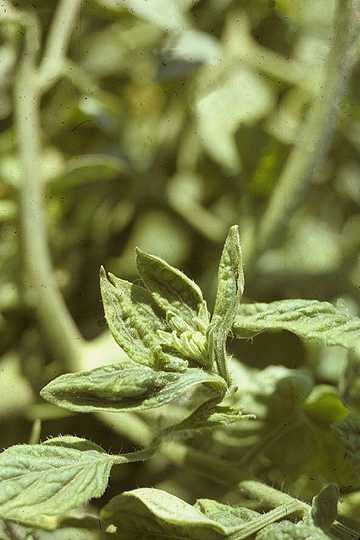
Tomato big bud | Tomato
DISEASE: Tomato big bud
HOST: Tomato (Lycopersicon esculentum)
PATHOGEN: 'Candidatus Phytoplasma asteris'
PATHOGEN SYNONYM: Phytoplasma Aster yellows group
SOURCE: S. Thomson