

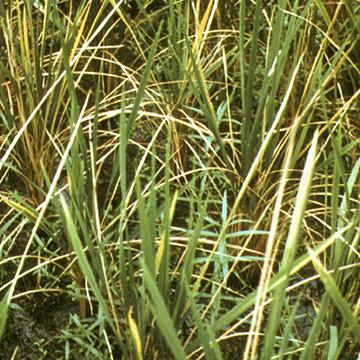
DISEASE: Bacterial foot rot
HOST: Rice
The disease causes sheaths to turn dark brown and rot; dead leaves droop. Nodes, culms, and crowns also decay, and infected tillers are easily detached from the crown. Culms and internodes turn black.
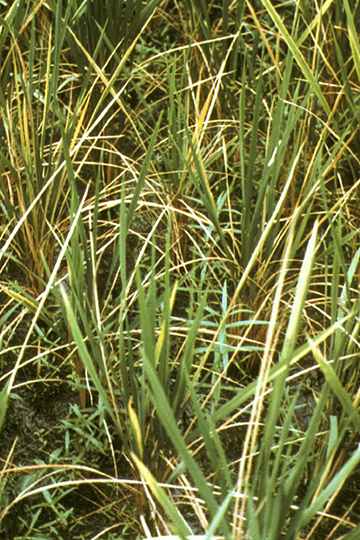
Bacterial foot rot | Rice
DISEASE: Bacterial foot rot
HOST: Rice (Oryza sativa)
PATHOGEN: Dickeya zeae
PATHOGEN SYNONYM: Erwinia chrysanthemi pv. zeae
SOURCE: M. Goto
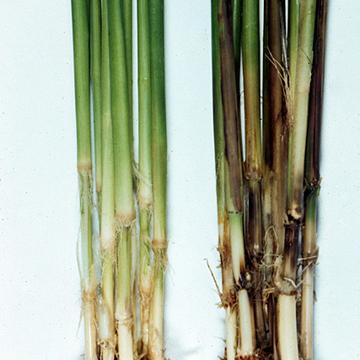
DISEASE: Bacterial foot rot
HOST: Rice
Decayed culms (right) and healthy culms (left). Leaf sheaths of infected plants exhibit dark brown decay and attached leaves turn yellow and wilt.
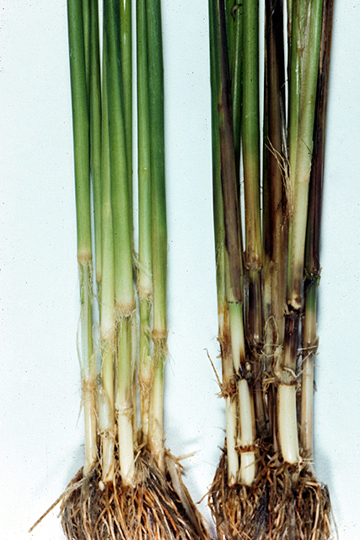
Bacterial foot rot | Rice
DISEASE: Bacterial foot rot
HOST: Rice (Oryza sativa)
PATHOGEN: Dickeya zeae
PATHOGEN SYNONYM: Erwinia chrysanthemi pv. zeae
SOURCE: M. Goto
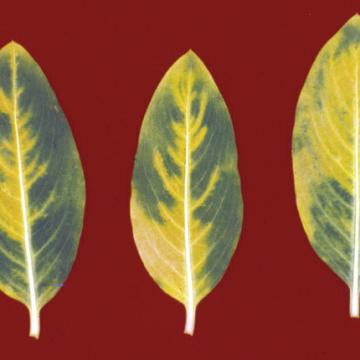
DISEASE: Periwinkle yellows
HOST: Periwinkle
Leaves with characteristic yellow and chlorotic appearance. Yellowing is first associated with veins.
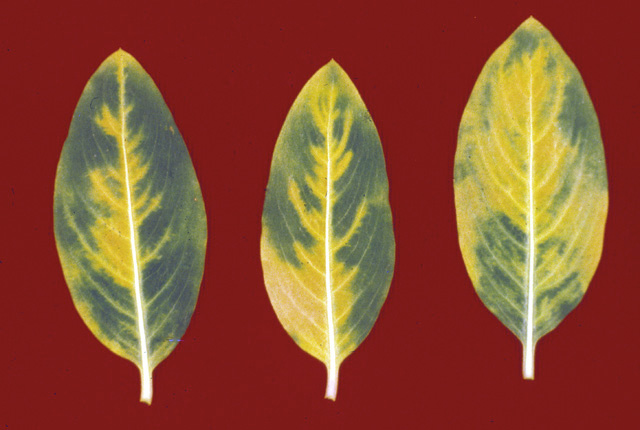
Periwinkle yellows | Periwinkle
DISEASE: Periwinkle yellows
HOST: Periwinkle (Vinca sp.)
PATHOGEN: 'Candidatus Phytoplasma' sp.
PATHOGEN SYNONYM: Phytoplasma (undefined)
SOURCE: R. McCoy, M. Davis
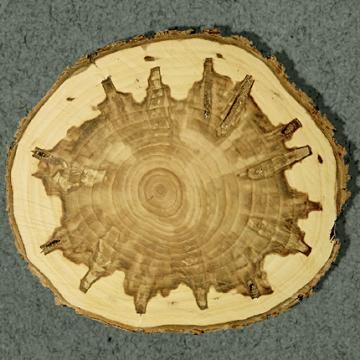
DISEASE: Western wetwood
HOST: Elm
Spokelike, discolored extensions that expanded into sapwood, following an injection with a fungicide. The causal agent is not known but symptoms are associated with bacteria and yeast.
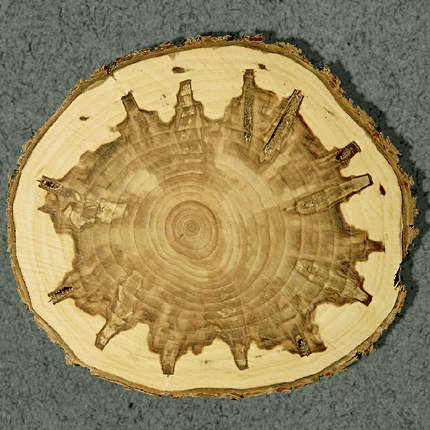
Western wetwood | Elm
DISEASE: Western wetwood
HOST: Elm (Ulmus americana)
PATHOGEN: Causal agent unknown
SOURCE: W. Sinclair