

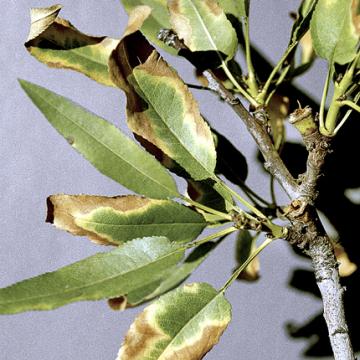
DISEASE: Almond leaf scorch
HOST: Almond
Light brown necrotic (scorched) areas on curling leaves.
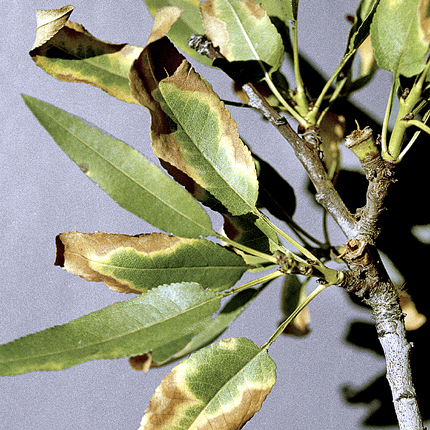
Almond leaf scorch | Almond
DISEASE: Almond leaf scorch
HOST: Almond (Prunus dulcis)
PATHOGEN: Xylella fastidiosa
SOURCE: W. Sinclair
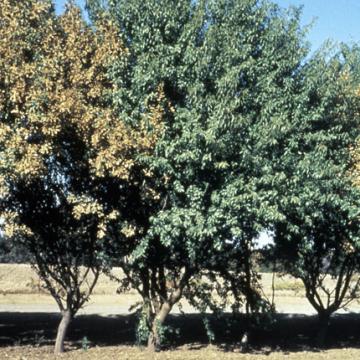
DISEASE: Almond leaf scorch
HOST: Almond
Dying almond trees with scorched appearance. Initial symptoms are marginal chlorosis, usually late in the year. Scorch often is first noted at leaf tips, symptoms worsen, and terminal branches may die.
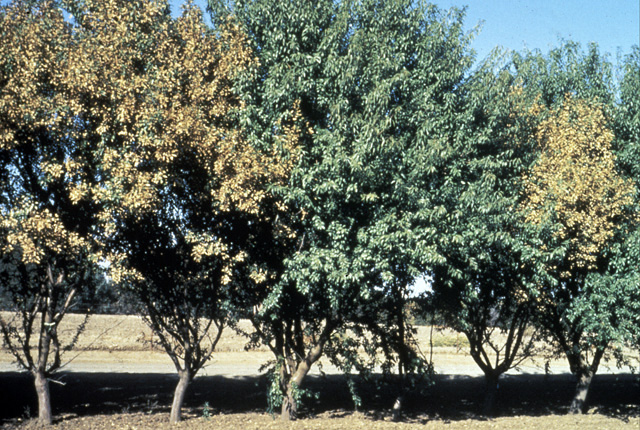
Almond leaf scorch | Almond
DISEASE: Almond leaf scorch
HOST: Almond (Prunus dulcis)
PATHOGEN: Xylella fastidiosa
SOURCE: R. Davis, M. Davis
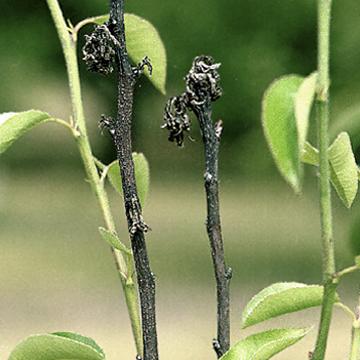
DISEASE: Bacterial blast
HOST: Pear
The bacterium infects all flower parts and may spread and kill the entire spur.
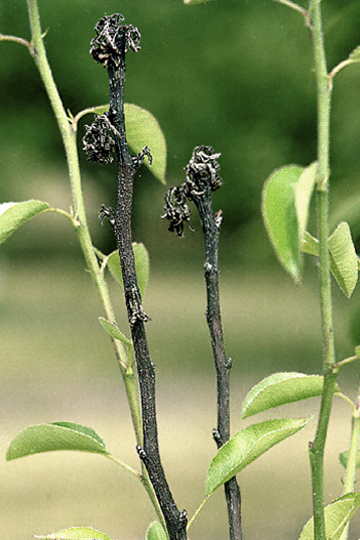
Bacterial blast | Pear
DISEASE: Bacterial blast
HOST: Pear (Pyrus communis)
PATHOGEN: Pseudomonas syringae pv. syringae
SOURCE: W. Sinclair
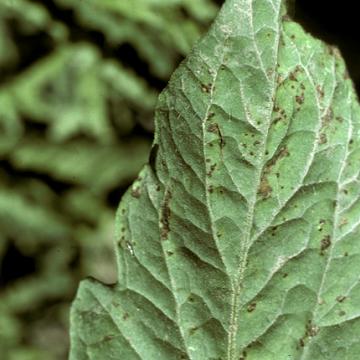
DISEASE: Bacterial speck
HOST: Tomato
Leaf with typical brown to black lesions without halos, an early stage of disease.
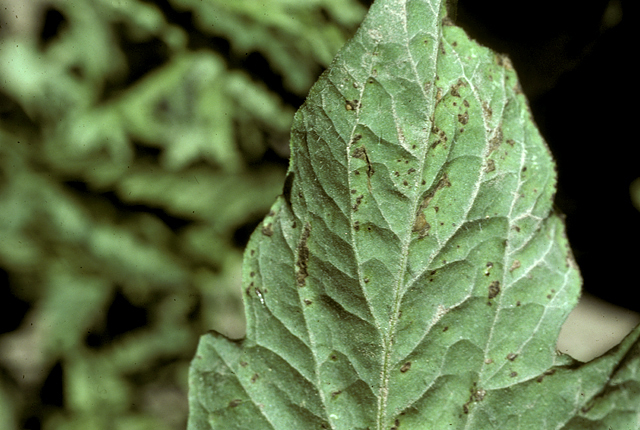
Bacterial speck | Tomato
DISEASE: Bacterial speck
HOST: Tomato (Lycopersicon esculentum)
PATHOGEN: Pseudomonas syringae pv. tomato
SOURCE: S. Thomson
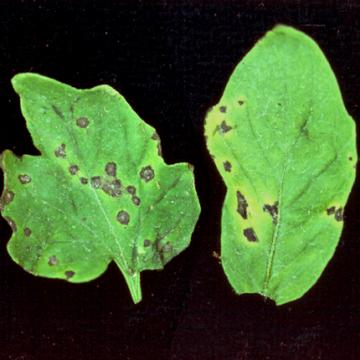
DISEASE: Bacterial speck
HOST: Tomato
Leaves with spots, some surrounded by chlorotic zones.
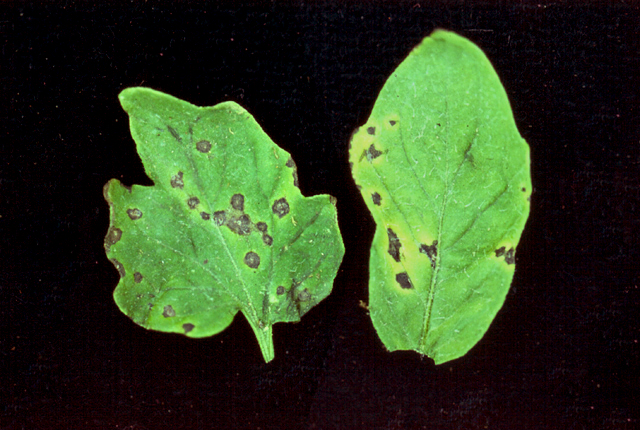
Bacterial speck | Tomato
DISEASE: Bacterial speck
HOST: Tomato (Lycopersicon esculentum)
PATHOGEN: Pseudomonas syringae pv. tomato
SOURCE: R. Gitaitis
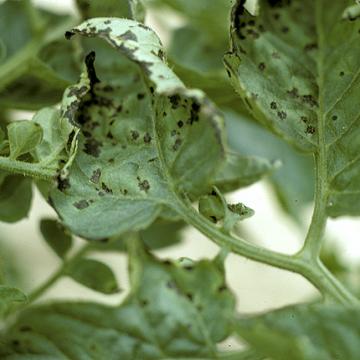
DISEASE: Bacterial speck
HOST: Tomato
Curling leaves with large, blackish lesions. Later, yellowing occurs around lesions.
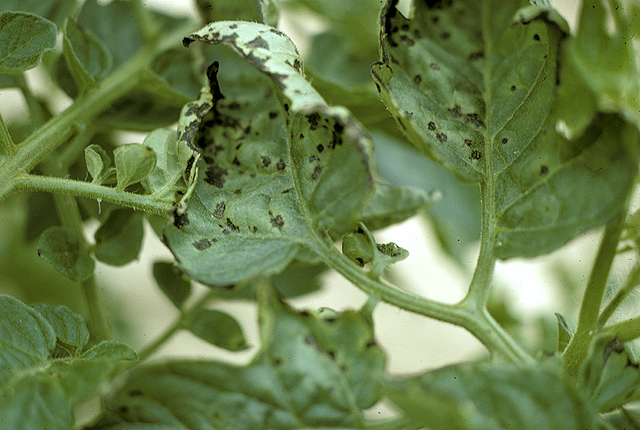
Bacterial speck | Tomato
DISEASE: Bacterial speck
HOST: Tomato (Lycopersicon esculentum)
PATHOGEN: Pseudomonas syringae pv. tomato
SOURCE: M. Schroth
DISEASE: Bacterial speck
HOST: Tomato
Infection of flowers, peduncles, and stems.
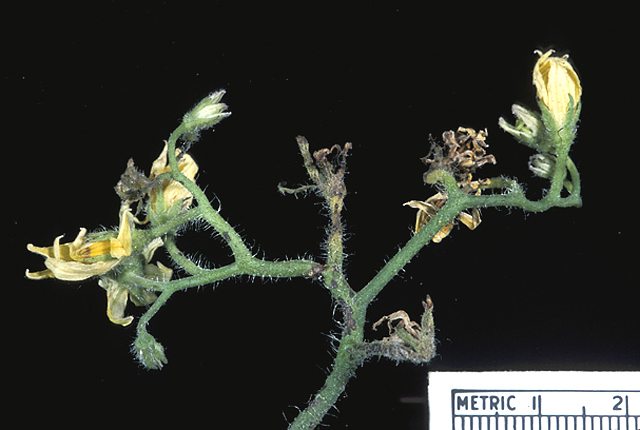
Bacterial speck | Tomato
DISEASE: Bacterial speck
HOST: Tomato (Lycopersicon esculentum)
PATHOGEN: Pseudomonas syringae pv. tomato
SOURCE: D. Cupples
DISEASE: Bacterial speck
HOST: Tomato
Field view of severely diseased plants.
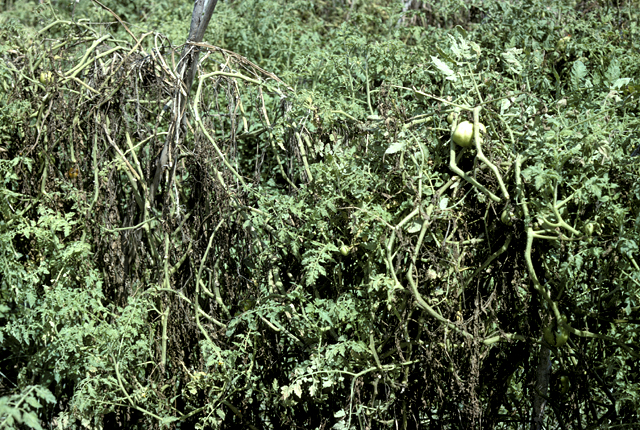
Bacterial speck | Tomato
DISEASE: Bacterial speck
HOST: Tomato (Lycopersicon esculentum)
PATHOGEN: Pseudomonas syringae pv. tomato
SOURCE: M. Schroth
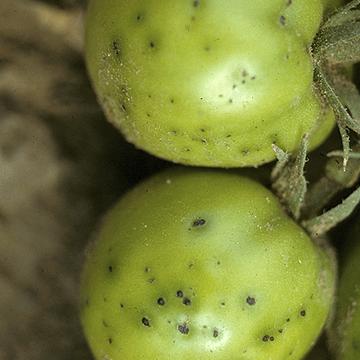
DISEASE: Bacterial speck
HOST: Tomato
Green fruit with small, sunken, black lesions. Raised centers are surrounded by dark green halos.
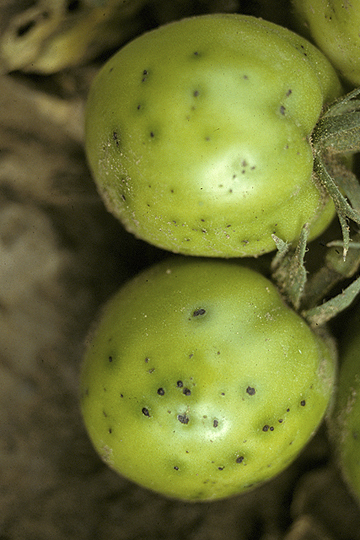
Bacterial speck | Tomato
DISEASE: Bacterial speck
HOST: Tomato (Lycopersicon esculentum)
PATHOGEN: Pseudomonas syringae pv. tomato
SOURCE: S. Thomson