

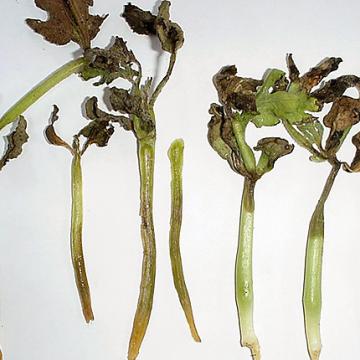
DISEASE: Bacterial leaf and stem necrosis
HOST: Watermelon
Seedlings with necrotic leaves and water-soaked stems.
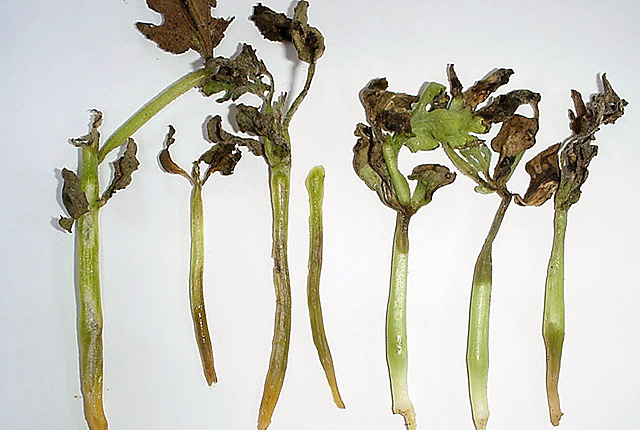
Bacterial leaf and stem necrosis | Watermelon
DISEASE: Bacterial leaf and stem necrosis
HOST: Watermelon (Citrullus lanatus)
PATHOGEN: Pseudomonas viridiflava
SOURCE: Y. Aysan
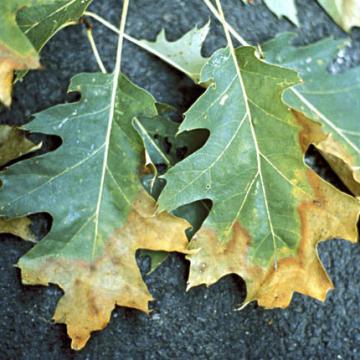
DISEASE: Oak leaf scorch
HOST: Oak
Oak with scorched leaf tips.
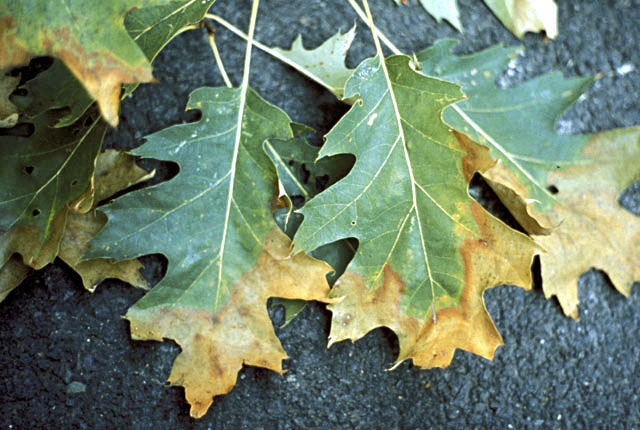
Oak leaf scorch | Oak
DISEASE: Oak leaf scorch
HOST: Oak (Quercus kelloggii)
PATHOGEN: Xylella fastidiosa
SOURCE: S. Kostka
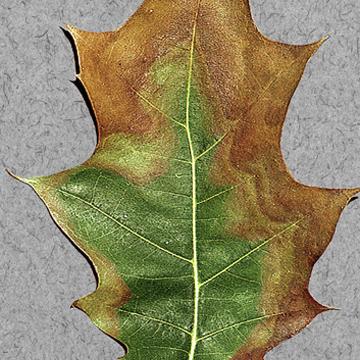
DISEASE: Oak leaf scorch
HOST: Oak
Leaf with brown, marginal necrosis resembling a burn.
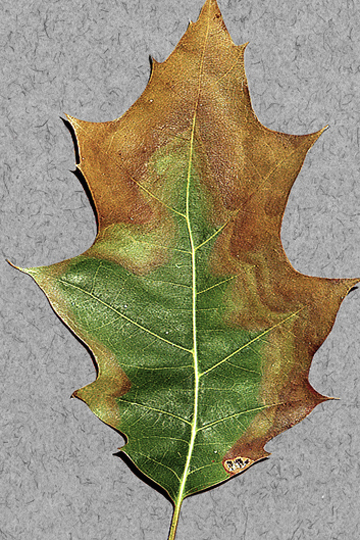
Oak leaf scorch | Oak
DISEASE: Oak leaf scorch
HOST: Oak (Quercus rubra)
PATHOGEN: Xylella fastidiosa
SOURCE: W. Sinclair
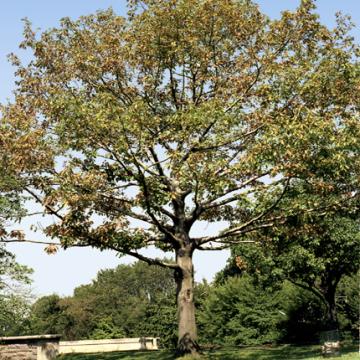
DISEASE: Oak leaf scorch
HOST: Oak
Diseased tree with brownish, scorched leaves.
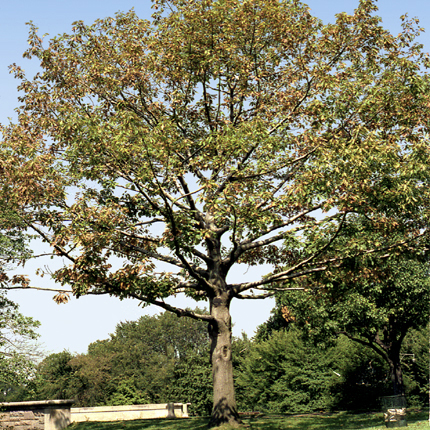
Oak leaf scorch | Oak
DISEASE: Oak leaf scorch
HOST: Oak (Quercus rubra)
PATHOGEN: Xylella fastidiosa
SOURCE: W. Sinclair
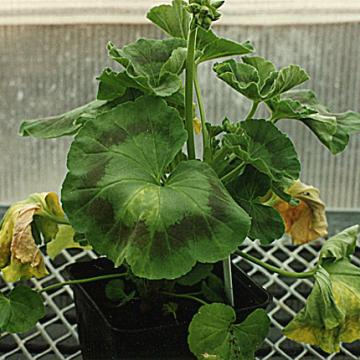
DISEASE: Pith necrosis
HOST: Geranium
Geranium with wilted, yellow necrotic leaves.
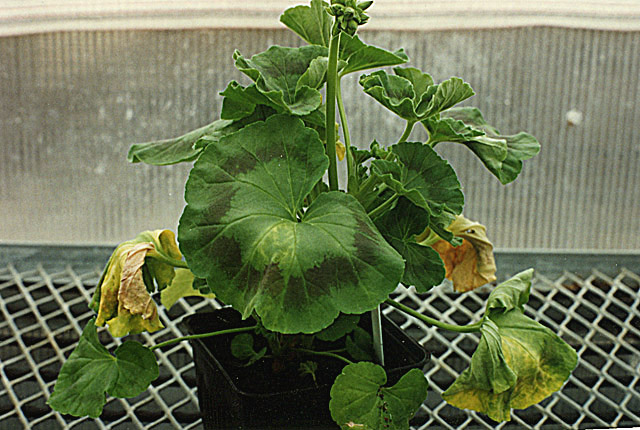
Pith necrosis | Geranium
DISEASE: Pith necrosis
HOST: Geranium (Pelargonium sp.)
PATHOGEN: Pseudomonas corrugata
SOURCE: A. Magyarosy, D. Thomas
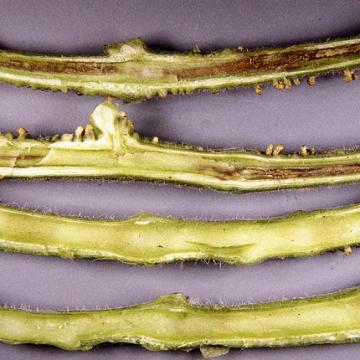
DISEASE: Pith necrosis
HOST: Geranium
Pitted and hollow stems, one of the disease symptoms.
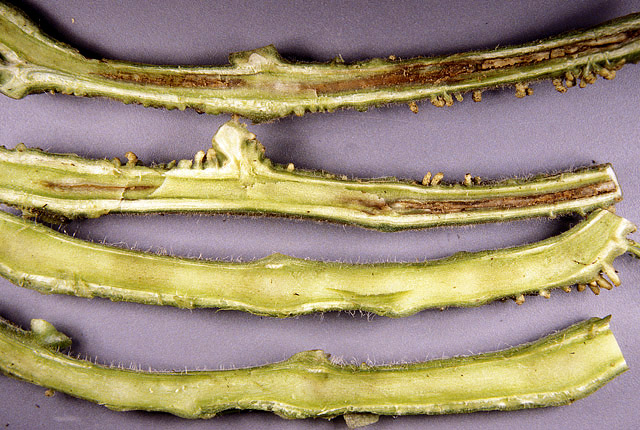
Pith necrosis | Geranium
DISEASE: Pith necrosis
HOST: Geranium (Pelargonium sp.)
PATHOGEN: Pseudomonas corrugata
SOURCE: A. Magyarosy, D. Thomas
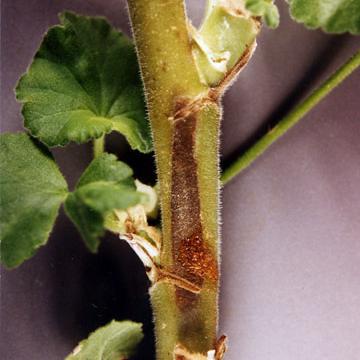
DISEASE: Pith necrosis
HOST: Geranium
Discolored stem caused by systemic infection of the pathogen.
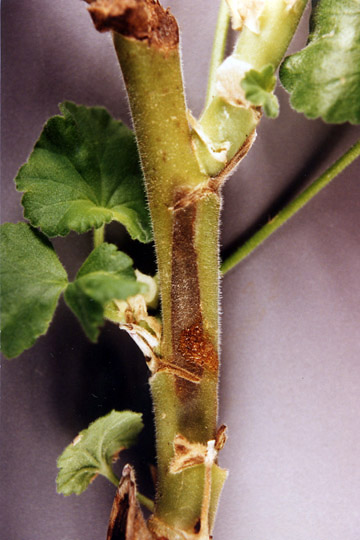
Pith necrosis | Geranium
DISEASE: Pith necrosis
HOST: Geranium (Pelargonium sp.)
PATHOGEN: Pseudomonas corrugata
SOURCE: A. Magyarosy, D. Thomas
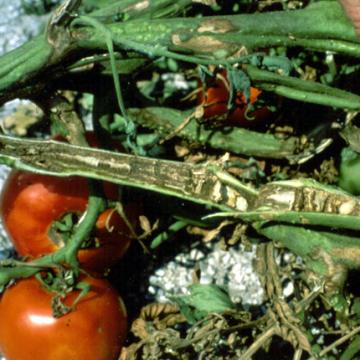
DISEASE: Pith necrosis
HOST: Tomato
Cracked, dry, hollow stems with internal necrosis.
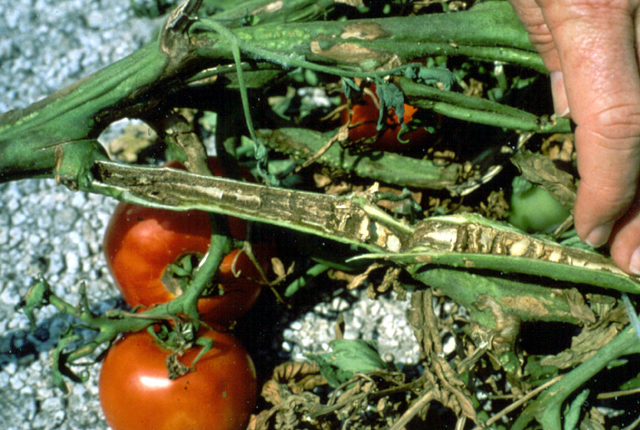
Pith necrosis | Tomato
DISEASE: Pith necrosis
HOST: Tomato (Lycopersicon esculentum)
PATHOGEN: Pseudomonas corrugata
SOURCE: A. Alvarez
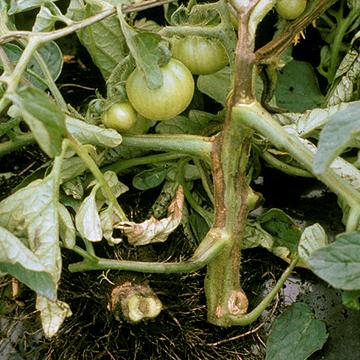
DISEASE: Pith necrosis
HOST: Tomato
External necrotic stem tissues. Initial symptoms include chlorosis of young leaves. Wilting may occur when disease is severe.
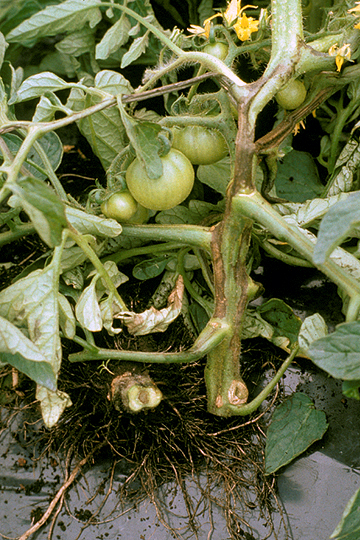
Pith necrosis | Tomato
DISEASE: Pith necrosis
HOST: Tomato (Lycopersicon esculentum)
PATHOGEN: Pseudomonas corrugata
SOURCE: K. Natsuaki, M. Goto