

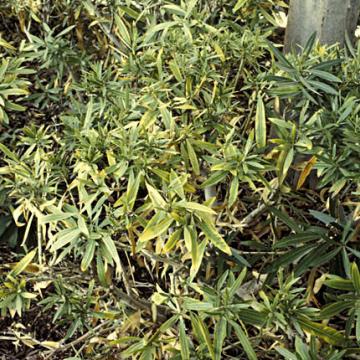
DISEASE: Oleander leaf scorch
HOST: Oleander
Diseased plant with scalloped, yellowish leaves. This usually is followed by dieback of twigs and branches. Plants often die 2 years after infection.
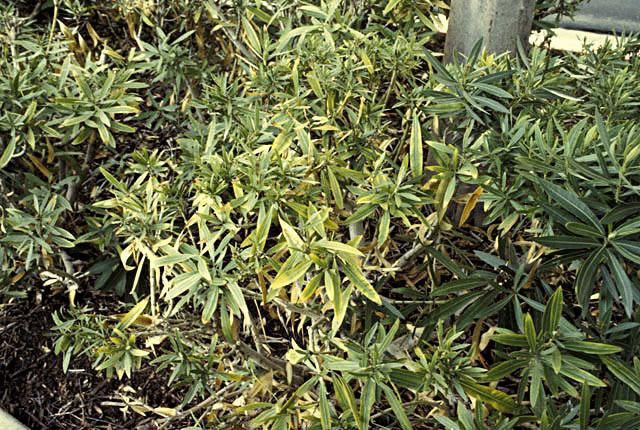
Oleander leaf scorch | Oleander
DISEASE: Oleander leaf scorch
HOST: Oleander (Nerium oleander)
PATHOGEN: Xylella fastidiosa
SOURCE: S. Purcell
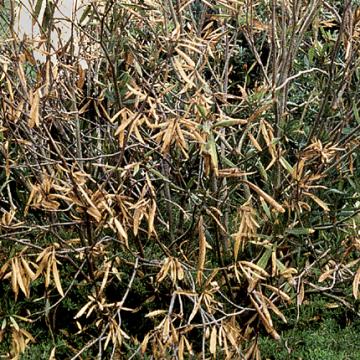
DISEASE: Oleander leaf scorch
HOST: Oleander
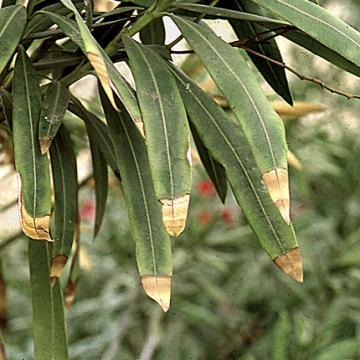
Oleander with symptoms of severe scorch.
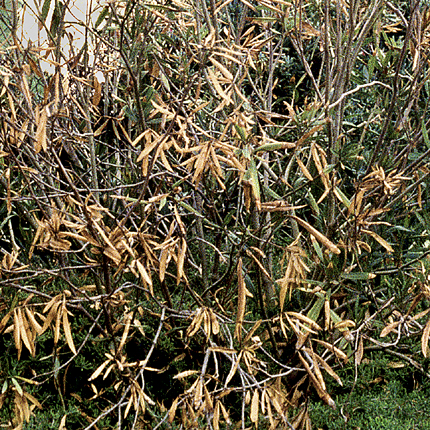
Oleander leaf scorch | Oleander
DISEASE: Oleander leaf scorch
HOST: Oleander (Nerium oleander)
PATHOGEN: Xylella fastidiosa
SOURCE: M. Blua
DISEASE: Oleander leaf scorch
HOST: Oleander
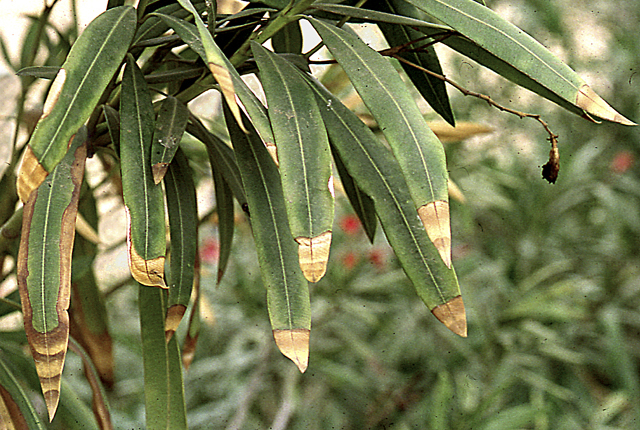
Oleander with scorch symptoms primarily at leaf tips, an early stage of disease.
Oleander leaf scorch | Oleander
DISEASE: Oleander leaf scorch
HOST: Oleander (Nerium oleander)
PATHOGEN: Xylella fastidiosa
SOURCE: M. Blua
DISEASE: Periwinkle yellows
HOST: Periwinkle
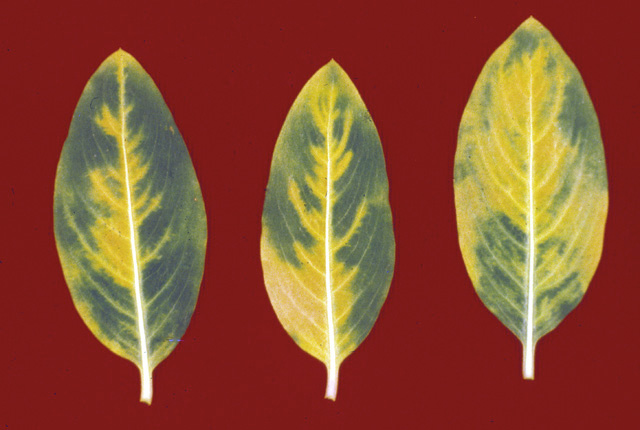
Leaves with characteristic yellow and chlorotic appearance. Yellowing is first associated with veins.
Periwinkle yellows | Periwinkle
DISEASE: Periwinkle yellows
HOST: Periwinkle (Vinca sp.)
PATHOGEN: 'Candidatus Phytoplasma' sp.
PATHOGEN SYNONYM: Phytoplasma (undefined)
SOURCE: R. McCoy, M. Davis
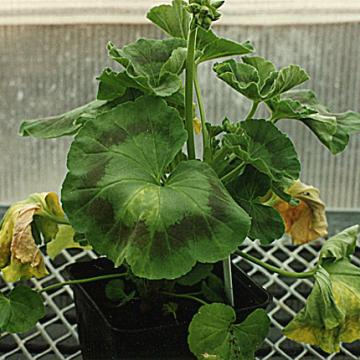
DISEASE: Pith necrosis
HOST: Geranium
Geranium with wilted, yellow necrotic leaves.
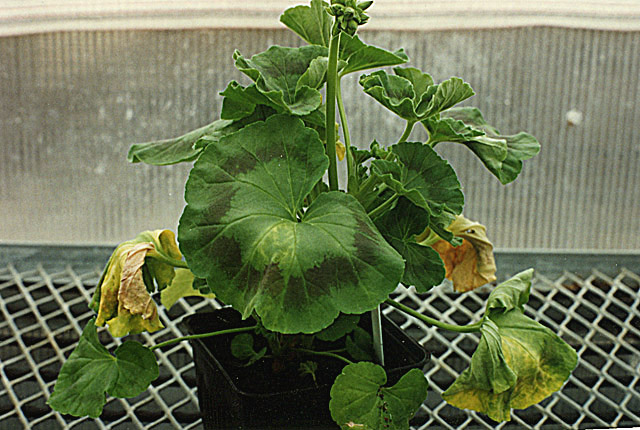
Pith necrosis | Geranium
DISEASE: Pith necrosis
HOST: Geranium (Pelargonium sp.)
PATHOGEN: Pseudomonas corrugata
SOURCE: A. Magyarosy, D. Thomas
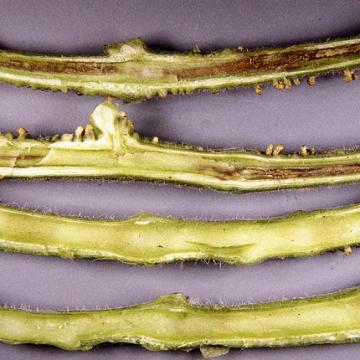
DISEASE: Pith necrosis
HOST: Geranium
Pitted and hollow stems, one of the disease symptoms.
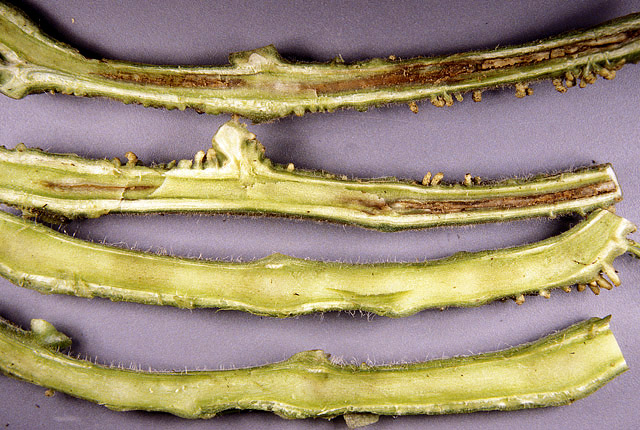
Pith necrosis | Geranium
DISEASE: Pith necrosis
HOST: Geranium (Pelargonium sp.)
PATHOGEN: Pseudomonas corrugata
SOURCE: A. Magyarosy, D. Thomas
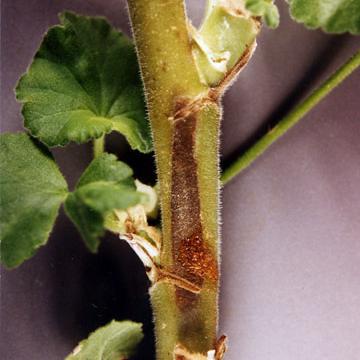
DISEASE: Pith necrosis
HOST: Geranium
Discolored stem caused by systemic infection of the pathogen.
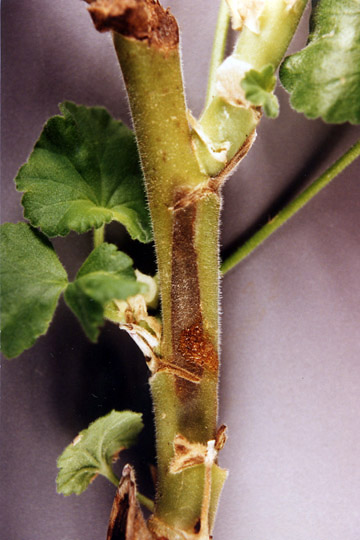
Pith necrosis | Geranium
DISEASE: Pith necrosis
HOST: Geranium (Pelargonium sp.)
PATHOGEN: Pseudomonas corrugata
SOURCE: A. Magyarosy, D. Thomas
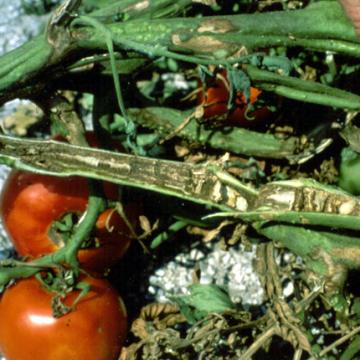
DISEASE: Pith necrosis
HOST: Tomato
Cracked, dry, hollow stems with internal necrosis.
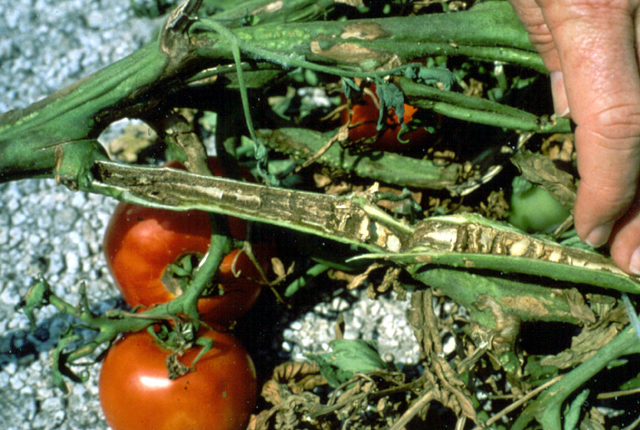
Pith necrosis | Tomato
DISEASE: Pith necrosis
HOST: Tomato (Lycopersicon esculentum)
PATHOGEN: Pseudomonas corrugata
SOURCE: A. Alvarez
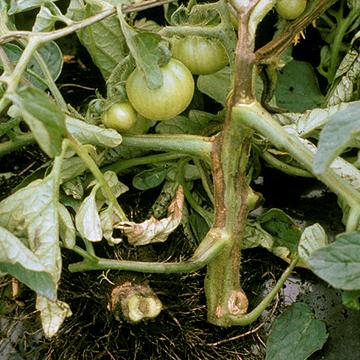
DISEASE: Pith necrosis
HOST: Tomato
External necrotic stem tissues. Initial symptoms include chlorosis of young leaves. Wilting may occur when disease is severe.
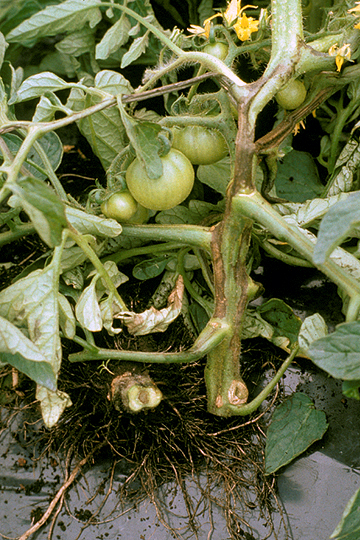
Pith necrosis | Tomato
DISEASE: Pith necrosis
HOST: Tomato (Lycopersicon esculentum)
PATHOGEN: Pseudomonas corrugata
SOURCE: K. Natsuaki, M. Goto