


DISEASE: Bacterial heart rot
HOST: Palm
Palm with advanced stage of heart rot. Symptoms of mature palms include rapid browning and desiccation of foliage, rot of roots and buds, and aborted fruits.
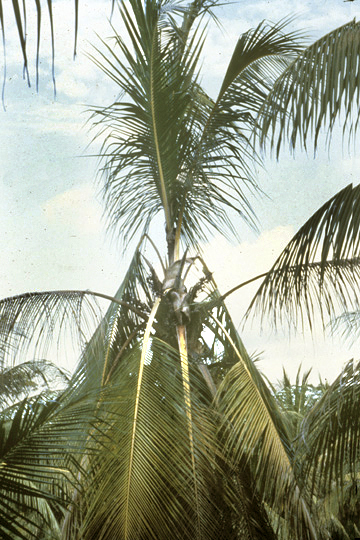
Bacterial heart rot | Palm
DISEASE: Bacterial heart rot
HOST: Palm (Cocos nucifera)
PATHOGEN: Phytomonas sp.
SOURCE: R. McCoy, M. Davis
DISEASE: Bacterial leaf spot (Canker)
HOST: Ginkgo
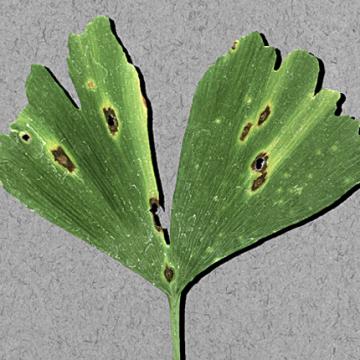
Ginkgo leaf with dark brown, elongated necrotic spots.
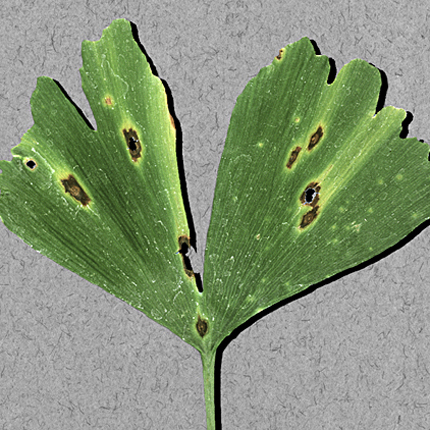
Bacterial leaf spot (Canker) | Ginkgo
DISEASE: Bacterial leaf spot (Canker)
HOST: Ginkgo (Ginkgo biloba)
PATHOGEN: Pseudomonas syringae pv. syringae
SOURCE: A. Bishop
DISEASE: Bacterial leaf spot (Canker)
HOST: Ginkgo
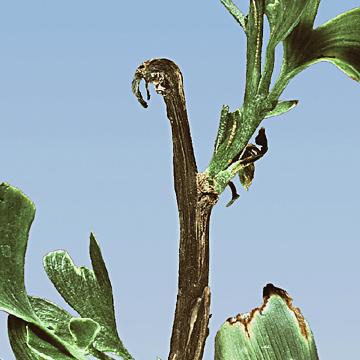
Ginkgo with leaf spots and canker on stem.
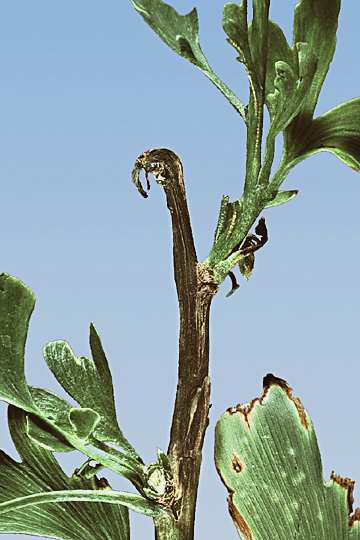
Bacterial leaf spot (Canker) | Ginkgo
DISEASE: Bacterial leaf spot (Canker)
HOST: Ginkgo (Ginkgo biloba)
PATHOGEN: Pseudomonas syringae pv. syringae
SOURCE: A. Bishop
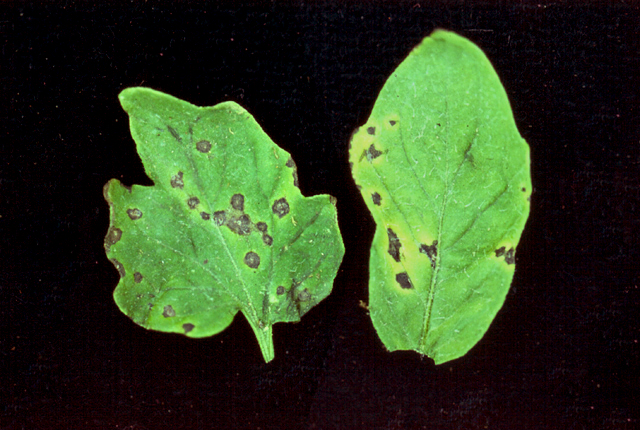
DISEASE: Bacterial speck
HOST: Tomato
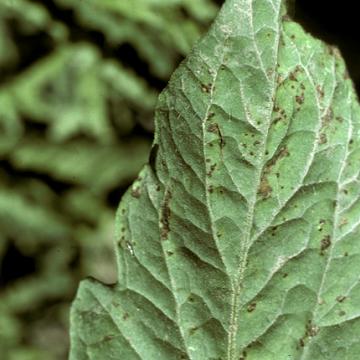
Leaf with typical brown to black lesions without halos, an early stage of disease.
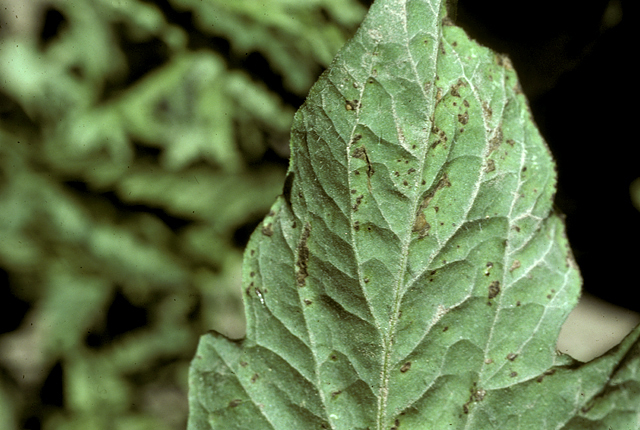
Bacterial speck | Tomato
DISEASE: Bacterial speck
HOST: Tomato (Lycopersicon esculentum)
PATHOGEN: Pseudomonas syringae pv. tomato
SOURCE: S. Thomson
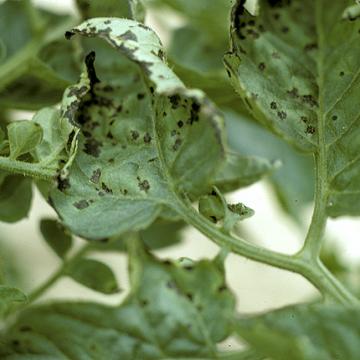
DISEASE: Bacterial speck
HOST: Tomato
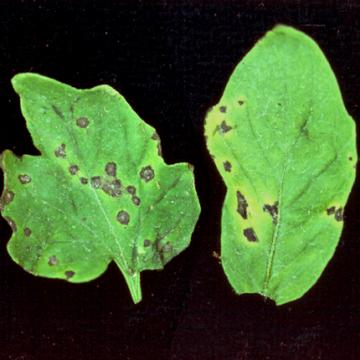
Leaves with spots, some surrounded by chlorotic zones.
Bacterial speck | Tomato
DISEASE: Bacterial speck
HOST: Tomato (Lycopersicon esculentum)
PATHOGEN: Pseudomonas syringae pv. tomato
SOURCE: R. Gitaitis
DISEASE: Bacterial speck
HOST: Tomato
Curling leaves with large, blackish lesions. Later, yellowing occurs around lesions.
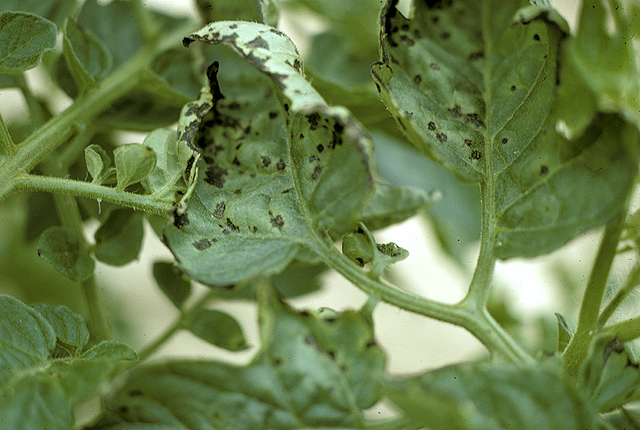
Bacterial speck | Tomato
DISEASE: Bacterial speck
HOST: Tomato (Lycopersicon esculentum)
PATHOGEN: Pseudomonas syringae pv. tomato
SOURCE: M. Schroth
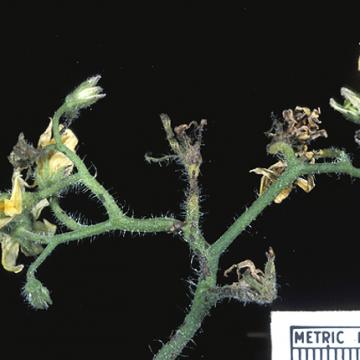
DISEASE: Bacterial speck
HOST: Tomato
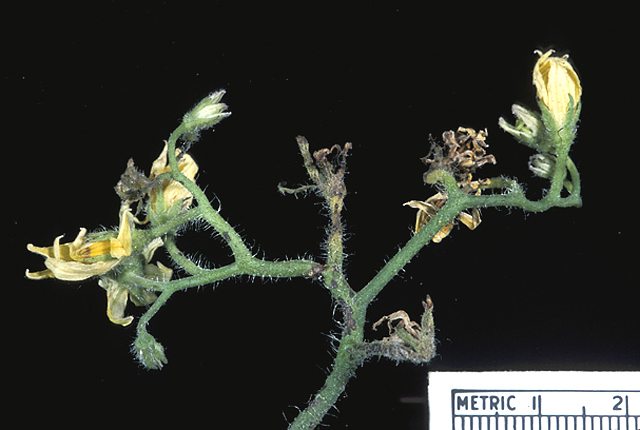
Infection of flowers, peduncles, and stems.
Bacterial speck | Tomato
DISEASE: Bacterial speck
HOST: Tomato (Lycopersicon esculentum)
PATHOGEN: Pseudomonas syringae pv. tomato
SOURCE: D. Cupples
DISEASE: Bacterial speck
HOST: Tomato
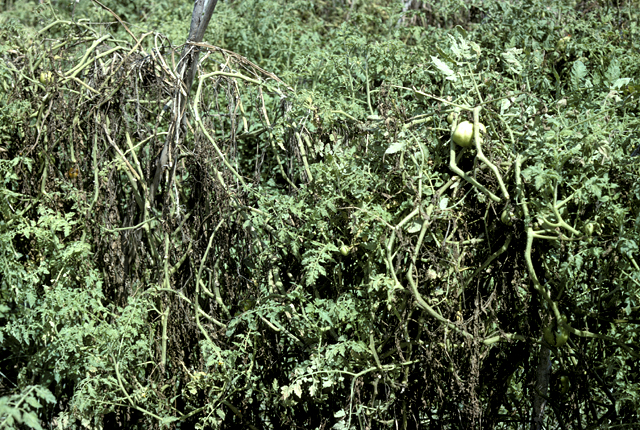
Field view of severely diseased plants.
Bacterial speck | Tomato
DISEASE: Bacterial speck
HOST: Tomato (Lycopersicon esculentum)
PATHOGEN: Pseudomonas syringae pv. tomato
SOURCE: M. Schroth
DISEASE: Bacterial speck
HOST: Tomato
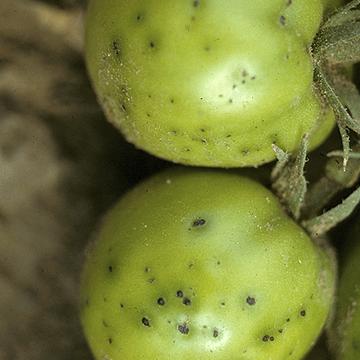
Green fruit with small, sunken, black lesions. Raised centers are surrounded by dark green halos.
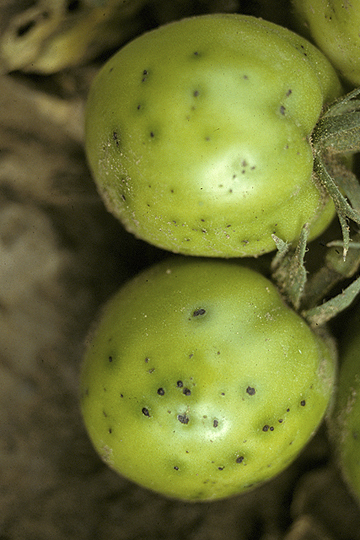
Bacterial speck | Tomato
DISEASE: Bacterial speck
HOST: Tomato (Lycopersicon esculentum)
PATHOGEN: Pseudomonas syringae pv. tomato
SOURCE: S. Thomson