

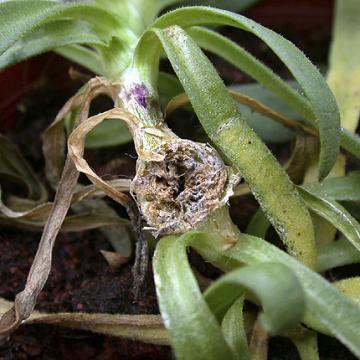
DISEASE: Gypsophila gall
HOST: Gypsophila (Baby's breath)
Gall on gypsophila stem.
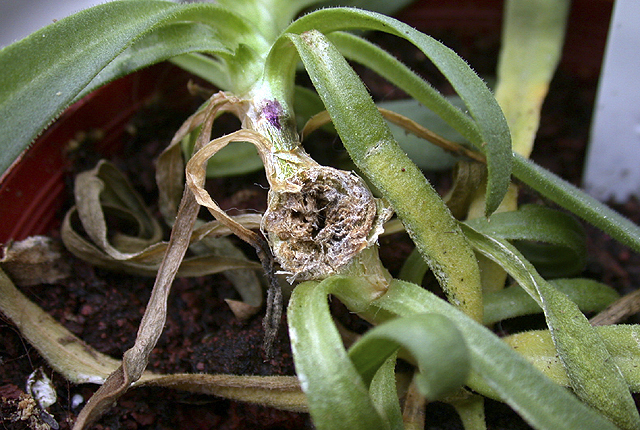
Gypsophila gall | Gypsophila (Baby's breath)
DISEASE: Gypsophila gall
HOST: Gypsophila (Baby's breath) (Gypsophila elegans)
PATHOGEN: Pantoea agglomerans pv. agglomerans
SOURCE: S. Manulis
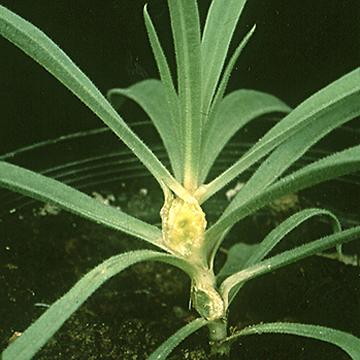
DISEASE: Gypsophila gall
HOST: Gypsophila (Baby's breath)
Gall 1 month after inoculation of stem.
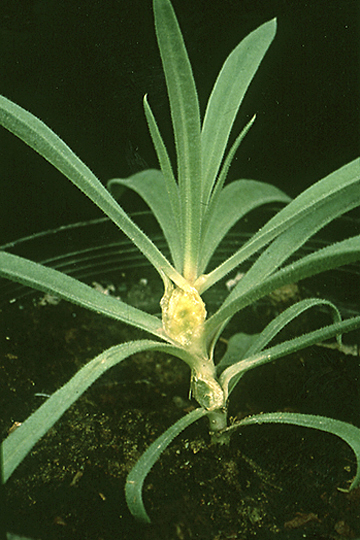
Gypsophila gall | Gypsophila (Baby's breath)
DISEASE: Gypsophila gall
HOST: Gypsophila (Baby's breath) (Gypsophila elegans)
PATHOGEN: Pantoea agglomerans pv. agglomerans
SOURCE: S. Manulis
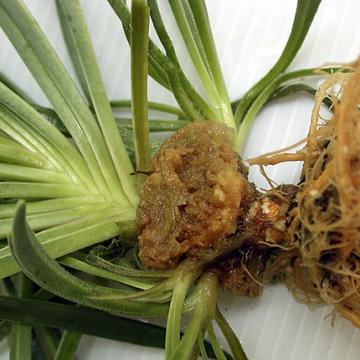
DISEASE: Gypsophila gall
HOST: Gypsophila (Baby's breath)
Brown gall on crown of gypsophila.
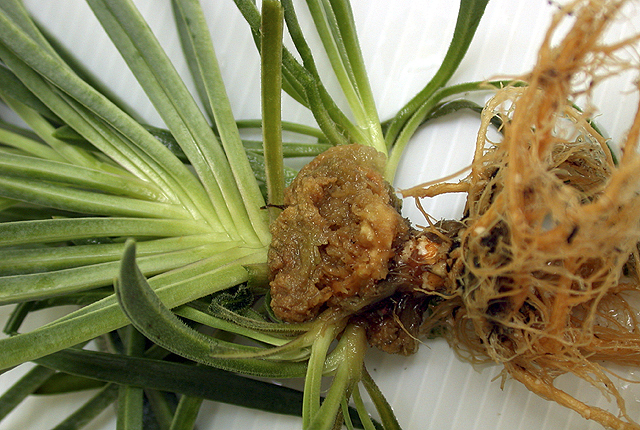
Gypsophila gall | Gypsophila (Baby's breath)
DISEASE: Gypsophila gall
HOST: Gypsophila (Baby's breath) (Gypsophila elegans)
PATHOGEN: Pantoea agglomerans pv. agglomerans
SOURCE: S. Manulis
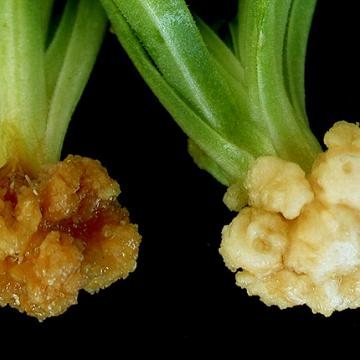
DISEASE: Gypsophila gall
HOST: Gypsophila (Baby's breath)
Galls (left) caused by Pantoea agglomerans pv. agglomerans tend to be brownish, and those (right) caused by P. agglomerans pv. betae are white.
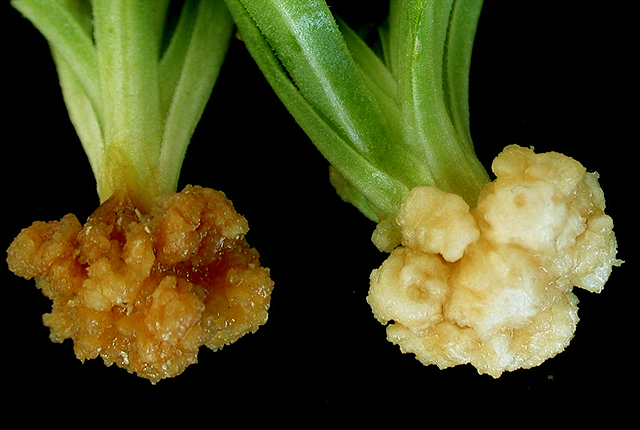
Gypsophila gall | Gypsophila (Baby's breath)
DISEASE: Gypsophila gall
HOST: Gypsophila (Baby's breath) (Gypsophila elegans)
PATHOGEN: Pantoea agglomerans pv. agglomerans
SOURCE: S. Manulis
DISEASE: Pink disease
HOST: Pineapple
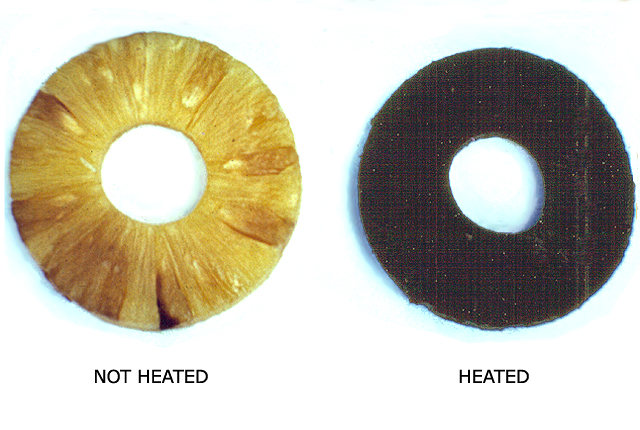
Infected pineapple slices; effect of heating (right) and not heating (left).
Pink disease | Pineapple
DISEASE: Pink disease
HOST: Pineapple (Ananas comosus)
PATHOGEN: Tatumella citrea
PATHOGEN SYNONYM: Pantoea citrea
SOURCE: K. Rohrbach, A. Alvarez
DISEASE: Pink disease
HOST: Pineapple
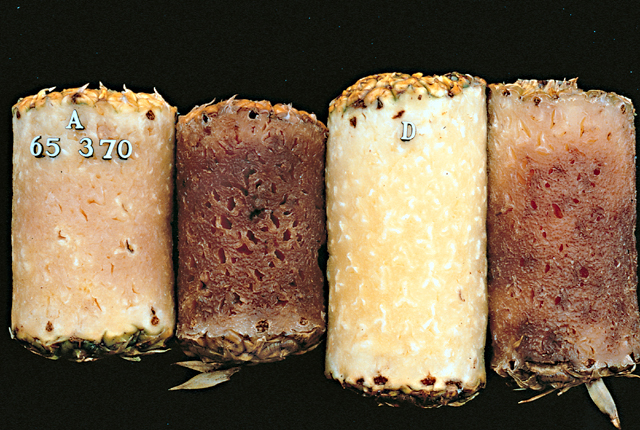
Two clones (A and D) showing different stages of infection. Second and fourth fruits (left to right) have been heated. Disease originally attributed to Gluconobacter oxydans and Enterobacter agglomerans and later to Pantoea citrea.
Pink disease | Pineapple
DISEASE: Pink disease
HOST: Pineapple (Ananas comosus)
PATHOGEN: Tatumella citrea
PATHOGEN SYNONYM: Pantoea citrea
SOURCE: K. Rohrbach
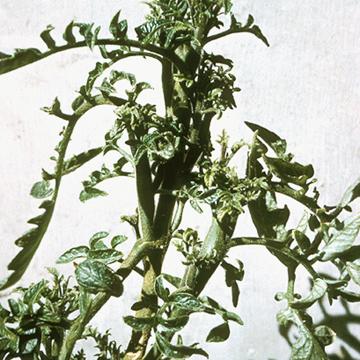
DISEASE: Tomato big bud
HOST: Tomato
Characteristic symptoms are swollen, apical stems and stunted leaves. Apical stems are generally thickened and assume a stiff and erect growth habit. Internodes are shortened and flower buds are greatly enlarged.
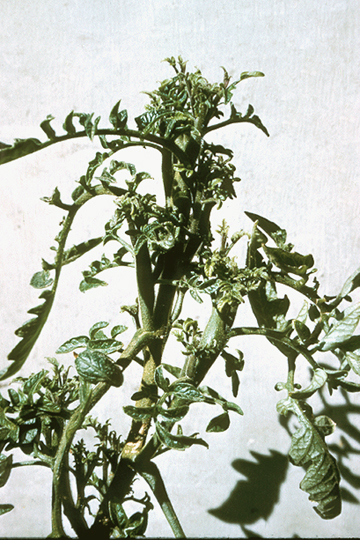
Tomato big bud | Tomato
DISEASE: Tomato big bud
HOST: Tomato (Lycopersicon esculentum)
PATHOGEN: 'Candidatus Phytoplasma asteris'
PATHOGEN SYNONYM: Phytoplasma Aster yellows group
SOURCE: D. Teakle
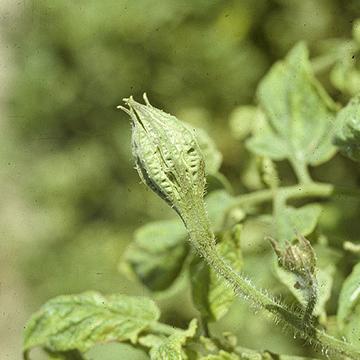
DISEASE: Tomato big bud
HOST: Tomato
Symptoms are enlarge sepals that do not separate. Flower buds stay green and do not develop into fruit. Leaves are small and chlorotic.
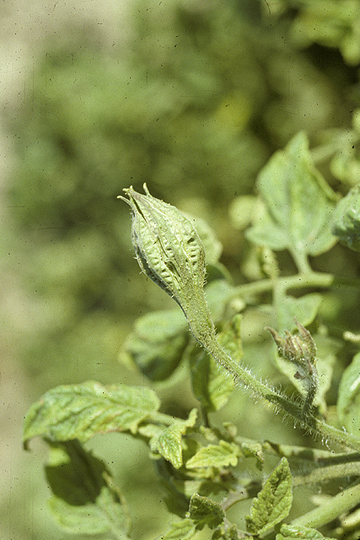
Tomato big bud | Tomato
DISEASE: Tomato big bud
HOST: Tomato (Lycopersicon esculentum)
PATHOGEN: 'Candidatus Phytoplasma asteris'
PATHOGEN SYNONYM: Phytoplasma Aster yellows group
SOURCE: S. Thomson
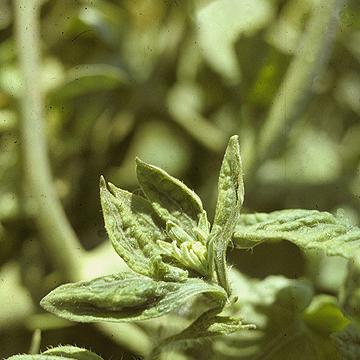
DISEASE: Tomato big bud
HOST: Tomato
Abnormal flower bud with greatly enlarged sepals. Sepals do not separate, fruit is not produced, and apical growth is upright.
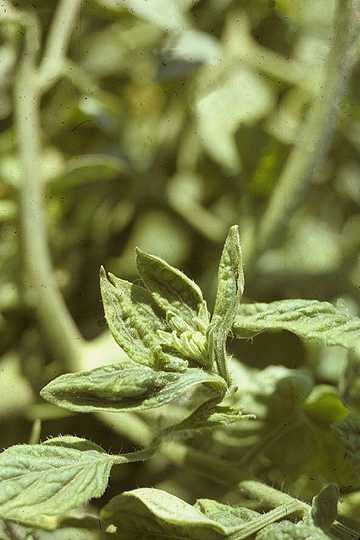
Tomato big bud | Tomato
DISEASE: Tomato big bud
HOST: Tomato (Lycopersicon esculentum)
PATHOGEN: 'Candidatus Phytoplasma asteris'
PATHOGEN SYNONYM: Phytoplasma Aster yellows group
SOURCE: S. Thomson