

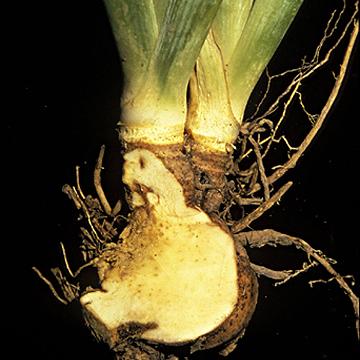
DISEASE: Bacterial stem and rhizome rot
HOST: Iris
Iris stem and rhizome with brown, discolored, rotted portions.
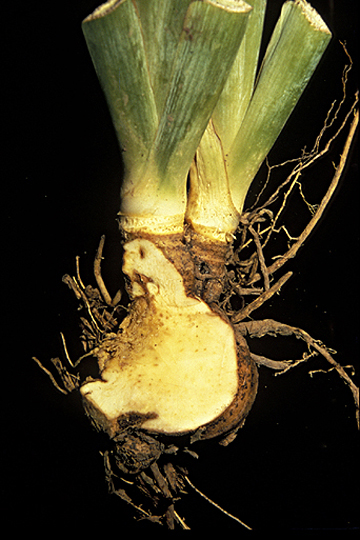
Bacterial stem and rhizome rot | Iris
DISEASE: Bacterial stem and rhizome rot
HOST: Iris (Iris sp.)
PATHOGEN: Burkholderia gladioli pv. gladioli
PATHOGEN SYNONYM: Pseudomonas gladioli pv. gladioli
SOURCE: R. Raabe
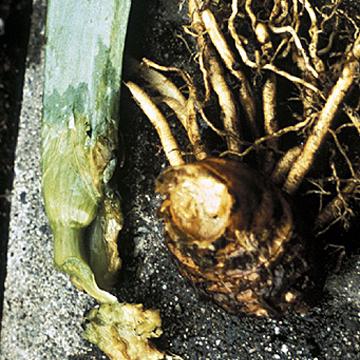
DISEASE: Bacterial stem and rhizome rot
HOST: Iris
Mushy rot of stems and rhizomes are characteristic of advanced stage of the disease.
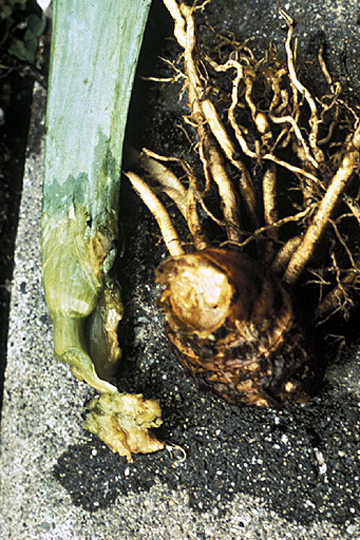
Bacterial stem and rhizome rot | Iris
DISEASE: Bacterial stem and rhizome rot
HOST: Iris (Iris sp.)
PATHOGEN: Burkholderia gladioli pv. gladioli
PATHOGEN SYNONYM: Pseudomonas gladioli pv. gladioli
SOURCE: R. Raabe
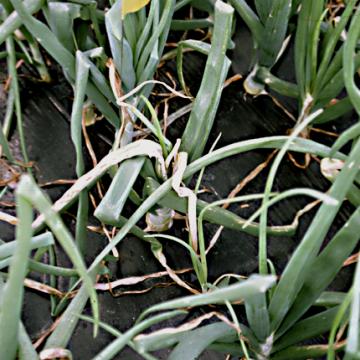
DISEASE: Center rot
HOST: Onion
Early symptoms of disease are necrotic, bleached areas on young leaves that typically wilt.
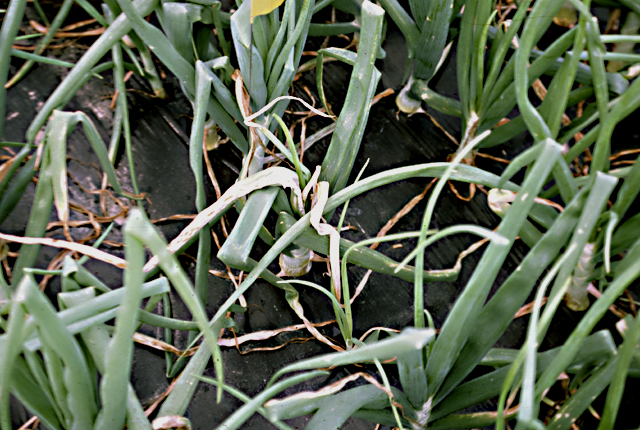
Center rot | Onion
DISEASE: Center rot
HOST: Onion (Allium cepa)
PATHOGEN: Pantoea ananatis
SOURCE: R. Gitaitis
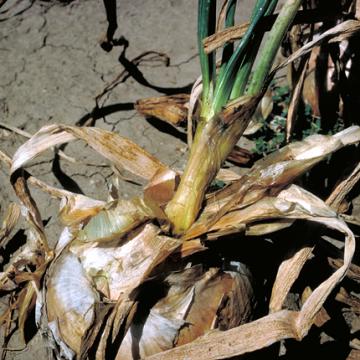
DISEASE: Center rot
HOST: Onion
Advanced stage of center rot. The bacterium has moved down from leaves into the bulb.
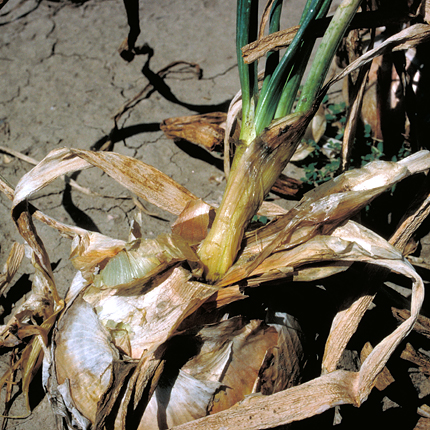
Center rot | Onion
DISEASE: Center rot
HOST: Onion (Allium cepa)
PATHOGEN: Pantoea ananatis
SOURCE: H. Schwartz
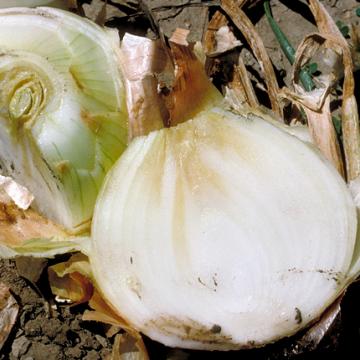
DISEASE: Center rot
HOST: Onion
Bulb with pale yellow, discolored decayed area.
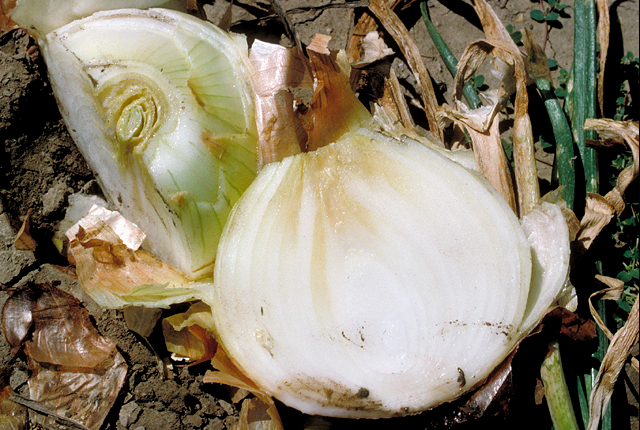
Center rot | Onion
DISEASE: Center rot
HOST: Onion (Allium cepa)
PATHOGEN: Pantoea ananatis
SOURCE: H. Schwartz
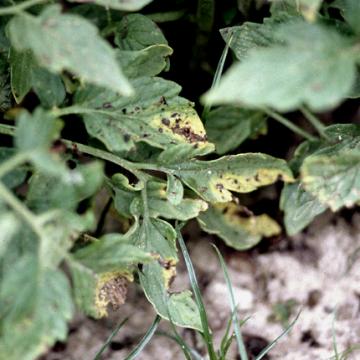
DISEASE: Syringae leaf spot
HOST: Tomato
Leaves with brown necrotic lesions and chlorotic margins. Symptoms vary greatly among cultivars. Some have black or brown lesions with bright yellow, chlorotic areas and others do not have yellowing.
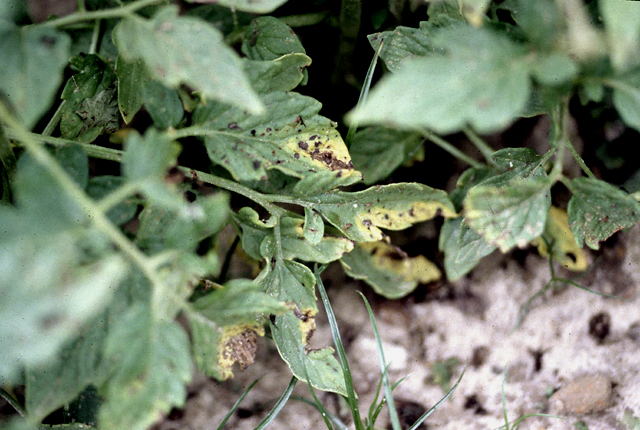
Syringae leaf spot | Tomato
DISEASE: Syringae leaf spot
HOST: Tomato (Lycopersicon esculentum)
PATHOGEN: Pseudomonas syringae pv. syringae
SOURCE: R. Gitaitis