

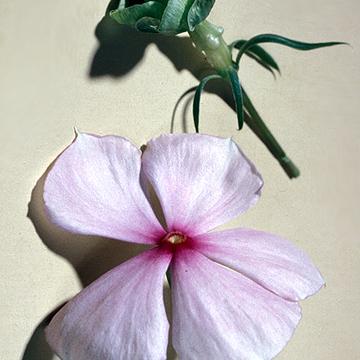
DISEASE: Greening disease
HOST: Periwinkle
Healthy flower and infected flower.

Greening disease | Periwinkle
DISEASE: Greening disease
HOST: Periwinkle (Vinca sp.)
PATHOGEN: 'Candidatus Phytoplasma asteris'
PATHOGEN SYNONYM: Phytoplasma Aster yellows group
SOURCE: D. Teakle
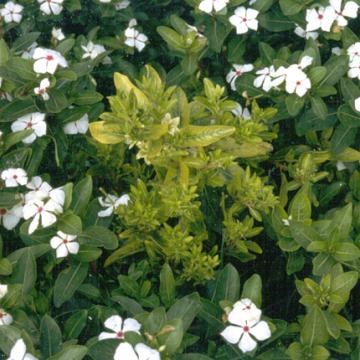
DISEASE: Greening disease
HOST: Periwinkle
Diseased plants with phyllody and greenish yellow leaves.
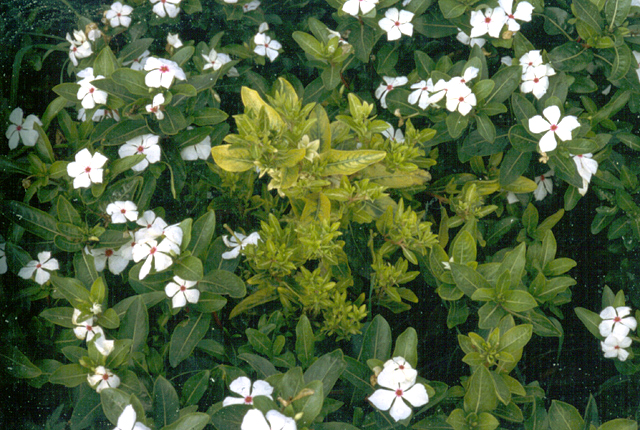
Greening disease | Periwinkle
DISEASE: Greening disease
HOST: Periwinkle (Vinca minor)
PATHOGEN: 'Candidatus Phytoplasma asteris'
PATHOGEN SYNONYM: Phytoplasma Aster yellows group
SOURCE: E. Braun
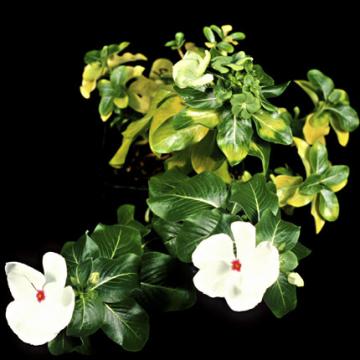
DISEASE: Greening disease
HOST: Periwinkle
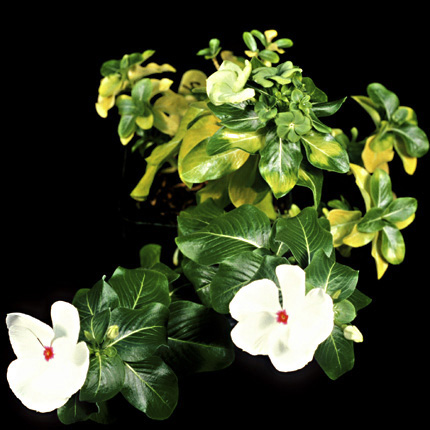
The disease causes virescence and phyllody, distorted and discolored leaves, and greening of flowers.
Greening disease | Periwinkle
DISEASE: Greening disease
HOST: Periwinkle (Catharanthus roseus)
PATHOGEN: 'Candidatus Phytoplasma asteris'
PATHOGEN SYNONYM: Phytoplasma Aster yellows group
SOURCE: W. Borth
DISEASE: Head rot (Jelly rot)
HOST: Lettuce
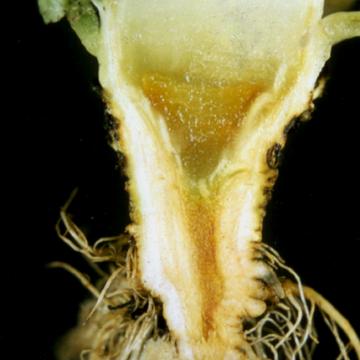
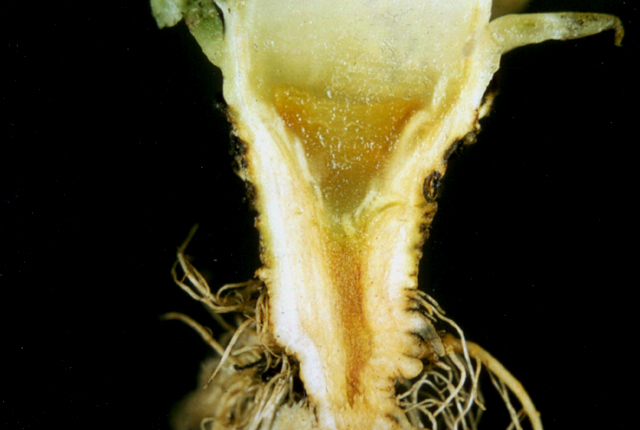
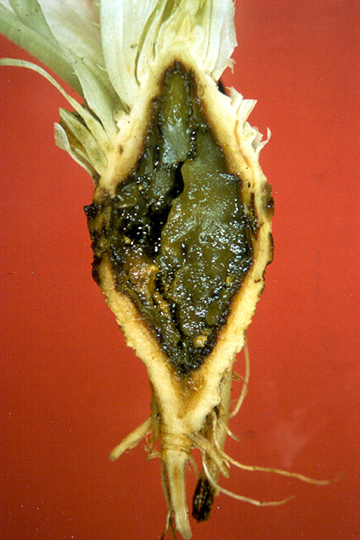
Sliced head of lettuce. Typical symptoms are a translucent appearance and browning or jelly rot of the stalk (crown).
Head rot (Jelly rot) | Lettuce
DISEASE: Head rot (Jelly rot)
HOST: Lettuce (Lactuca sativa)
PATHOGEN: Pectobacterium carotovorum
PATHOGEN SYNONYM: Erwinia carotovora subsp. carotovora
SOURCE: J. Cho, A. Alvarez
DISEASE: Head rot (Jelly rot)
HOST: Lettuce
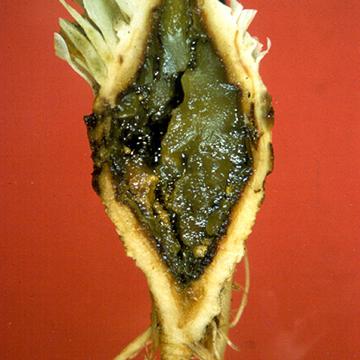
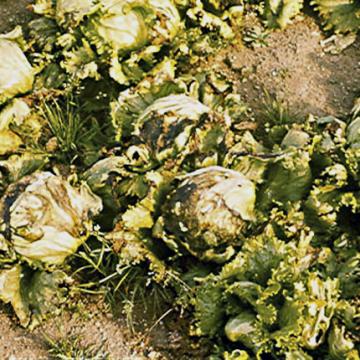
Advanced stage of lettuce stalk rot (crown).
Head rot (Jelly rot) | Lettuce
DISEASE: Head rot (Jelly rot)
HOST: Lettuce (Lactuca sativa)
PATHOGEN: Pectobacterium carotovorum
PATHOGEN SYNONYM: Erwinia carotovora subsp. carotovora
SOURCE: J. Cho, A. Alvarez
DISEASE: Head rot (Jelly rot)
HOST: Lettuce
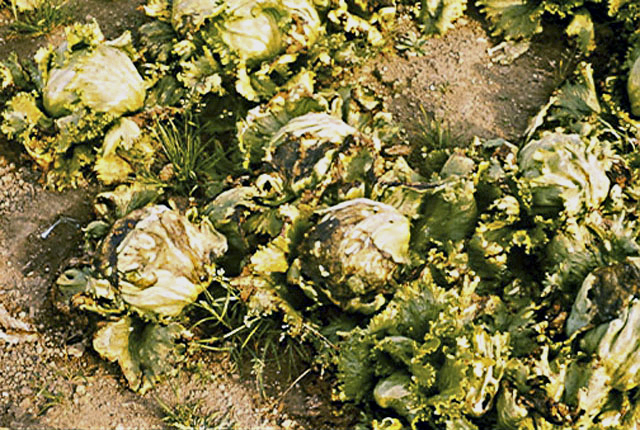
Head rot of lettuce first appears as rapid wilt of outer wrapper leaves. Wilt is caused by collapse of vascular tissues, which develop a pinkish to brown discoloration.
Head rot (Jelly rot) | Lettuce
DISEASE: Head rot (Jelly rot)
HOST: Lettuce (Lactuca sativa)
PATHOGEN: Pectobacterium carotovorum
PATHOGEN SYNONYM: Erwinia carotovora subsp. carotovora
SOURCE: L. Fucikovsky
DISEASE: Tomato big bud
HOST: Tomato
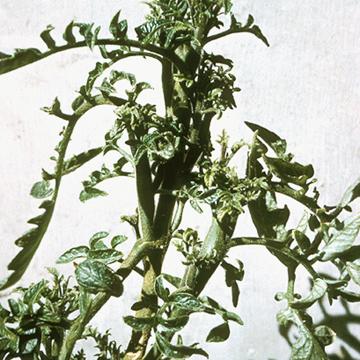
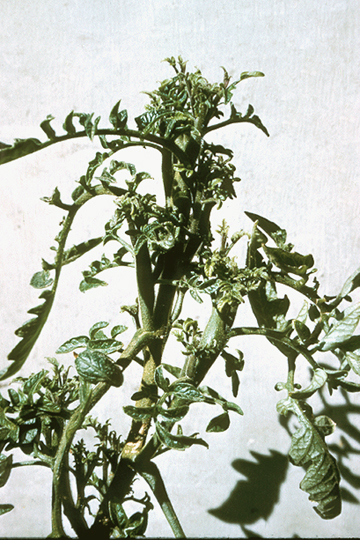
Characteristic symptoms are swollen, apical stems and stunted leaves. Apical stems are generally thickened and assume a stiff and erect growth habit. Internodes are shortened and flower buds are greatly enlarged.
Tomato big bud | Tomato
DISEASE: Tomato big bud
HOST: Tomato (Lycopersicon esculentum)
PATHOGEN: 'Candidatus Phytoplasma asteris'
PATHOGEN SYNONYM: Phytoplasma Aster yellows group
SOURCE: D. Teakle
DISEASE: Tomato big bud
HOST: Tomato
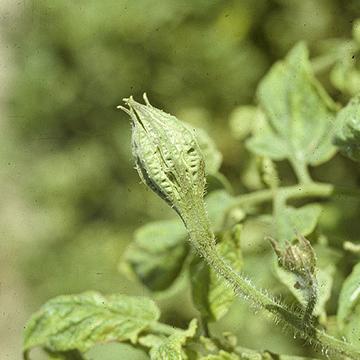
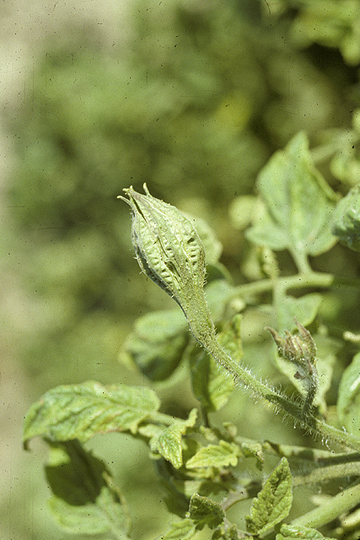
Symptoms are enlarge sepals that do not separate. Flower buds stay green and do not develop into fruit. Leaves are small and chlorotic.
Tomato big bud | Tomato
DISEASE: Tomato big bud
HOST: Tomato (Lycopersicon esculentum)
PATHOGEN: 'Candidatus Phytoplasma asteris'
PATHOGEN SYNONYM: Phytoplasma Aster yellows group
SOURCE: S. Thomson
DISEASE: Tomato big bud
HOST: Tomato
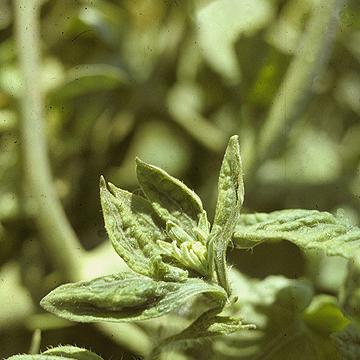
Abnormal flower bud with greatly enlarged sepals. Sepals do not separate, fruit is not produced, and apical growth is upright.
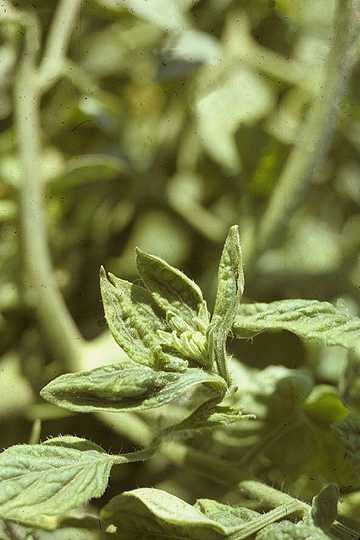
Tomato big bud | Tomato
DISEASE: Tomato big bud
HOST: Tomato (Lycopersicon esculentum)
PATHOGEN: 'Candidatus Phytoplasma asteris'
PATHOGEN SYNONYM: Phytoplasma Aster yellows group
SOURCE: S. Thomson