

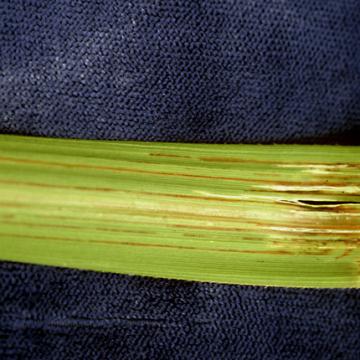
DISEASE: Bacterial leaf stripe
HOST: Millet
Leaf with long reddish stripes, usually vein delimited.
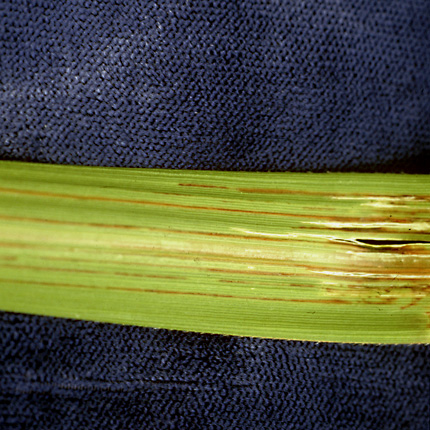
Bacterial leaf stripe | Millet
DISEASE: Bacterial leaf stripe
HOST: Millet (Pennisetum glaucum)
PATHOGEN: Acidovorax avenae
PATHOGEN SYNONYM: Acidovorax avenae subsp. avenae
SOURCE: L. Claflin
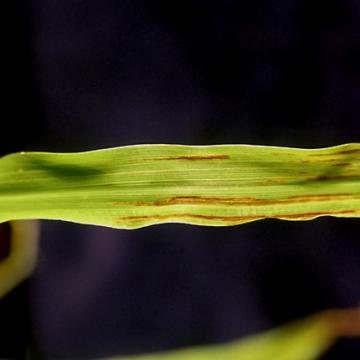
DISEASE: Bacterial leaf stripe
HOST: Millet
Leaf with reddish stripes delimited by veins.
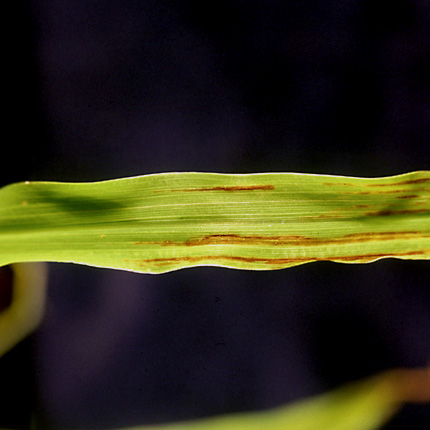
Bacterial leaf stripe | Millet
DISEASE: Bacterial leaf stripe
HOST: Millet (Pennisetum glaucum)
PATHOGEN: Acidovorax avenae
PATHOGEN SYNONYM: Acidovorax avenae subsp. avenae
SOURCE: L. Claflin
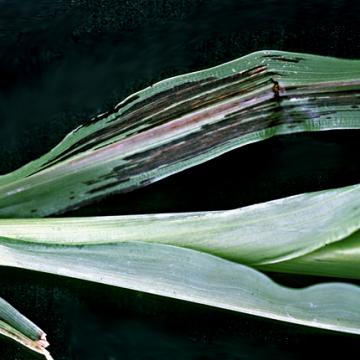
DISEASE: Bacterial leaf stripe
HOST: Sorghum
Diseased leaf with linear, interveinal stripes that are purplish red. They also can be yellow, tan, or purple depending upon host reaction.
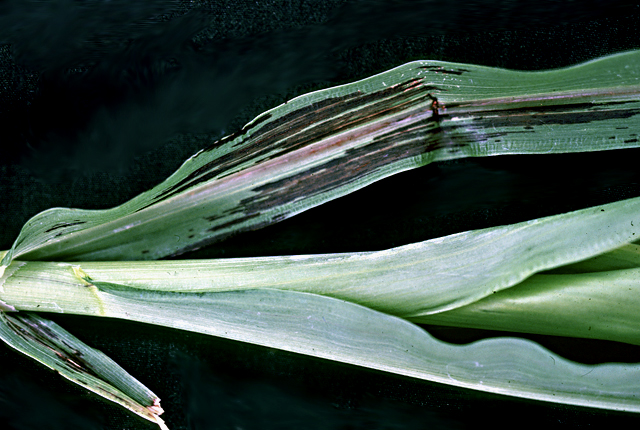
Bacterial leaf stripe | Sorghum
DISEASE: Bacterial leaf stripe
HOST: Sorghum (Sorghum bicolor)
PATHOGEN: Burkholderia andropogonis
PATHOGEN SYNONYM: Pseudomonas andropogonis
SOURCE: R. Gitaitis
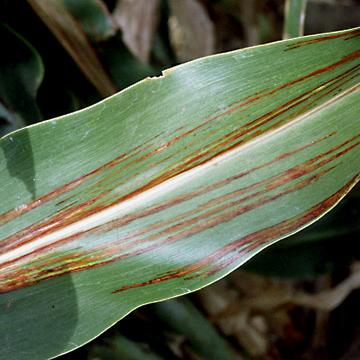
DISEASE: Bacterial leaf stripe
HOST: Sorghum
Leaf with reddish brown stripes between veins.
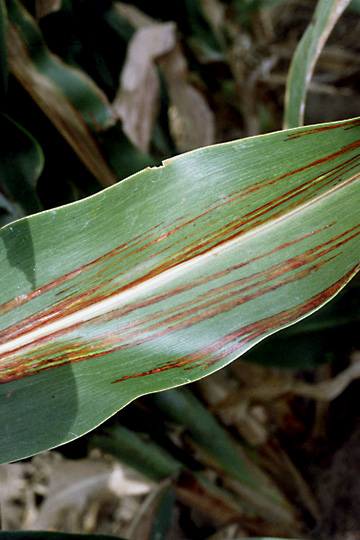
Bacterial leaf stripe | Sorghum
DISEASE: Bacterial leaf stripe
HOST: Sorghum (Sorghum bicolor)
PATHOGEN: Burkholderia andropogonis
PATHOGEN SYNONYM: Pseudomonas andropogonis
SOURCE: L. Claflin
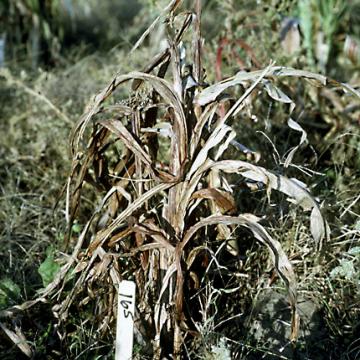
DISEASE: Bacterial leaf stripe
HOST: Sorghum
Highly susceptible cultivar with severe symptoms.
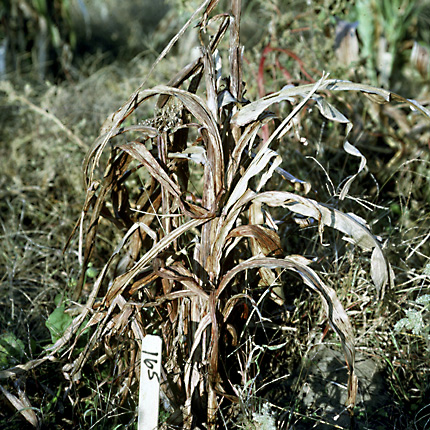
Bacterial leaf stripe | Sorghum
DISEASE: Bacterial leaf stripe
HOST: Sorghum (Sorghum bicolor)
PATHOGEN: Burkholderia andropogonis
PATHOGEN SYNONYM: Pseudomonas andropogonis
SOURCE: L. Claflin
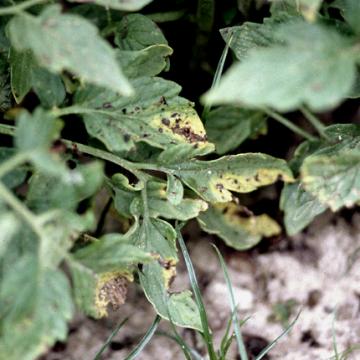
DISEASE: Syringae leaf spot
HOST: Tomato
Leaves with brown necrotic lesions and chlorotic margins. Symptoms vary greatly among cultivars. Some have black or brown lesions with bright yellow, chlorotic areas and others do not have yellowing.
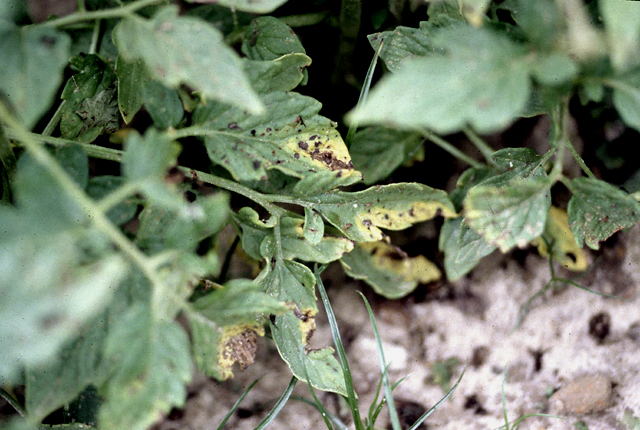
Syringae leaf spot | Tomato
DISEASE: Syringae leaf spot
HOST: Tomato (Lycopersicon esculentum)
PATHOGEN: Pseudomonas syringae pv. syringae
SOURCE: R. Gitaitis
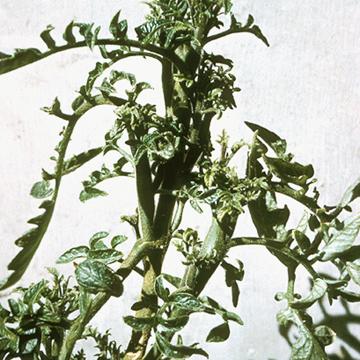
DISEASE: Tomato big bud
HOST: Tomato
Characteristic symptoms are swollen, apical stems and stunted leaves. Apical stems are generally thickened and assume a stiff and erect growth habit. Internodes are shortened and flower buds are greatly enlarged.
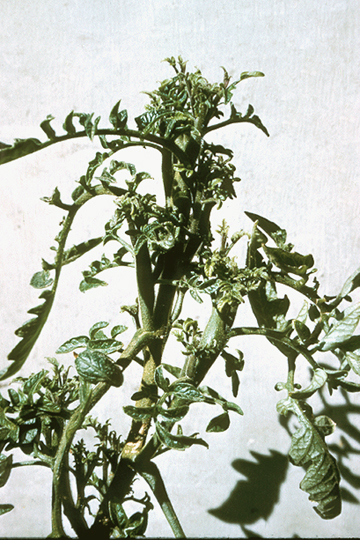
Tomato big bud | Tomato
DISEASE: Tomato big bud
HOST: Tomato (Lycopersicon esculentum)
PATHOGEN: 'Candidatus Phytoplasma asteris'
PATHOGEN SYNONYM: Phytoplasma Aster yellows group
SOURCE: D. Teakle
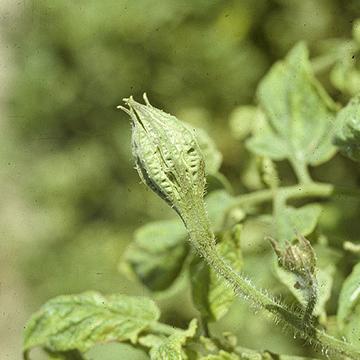
DISEASE: Tomato big bud
HOST: Tomato
Symptoms are enlarge sepals that do not separate. Flower buds stay green and do not develop into fruit. Leaves are small and chlorotic.
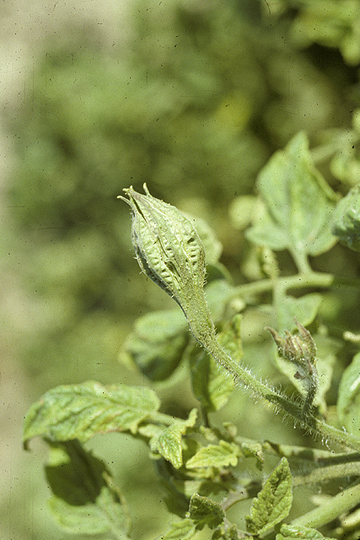
Tomato big bud | Tomato
DISEASE: Tomato big bud
HOST: Tomato (Lycopersicon esculentum)
PATHOGEN: 'Candidatus Phytoplasma asteris'
PATHOGEN SYNONYM: Phytoplasma Aster yellows group
SOURCE: S. Thomson
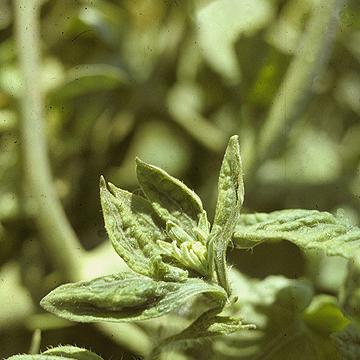
DISEASE: Tomato big bud
HOST: Tomato
Abnormal flower bud with greatly enlarged sepals. Sepals do not separate, fruit is not produced, and apical growth is upright.
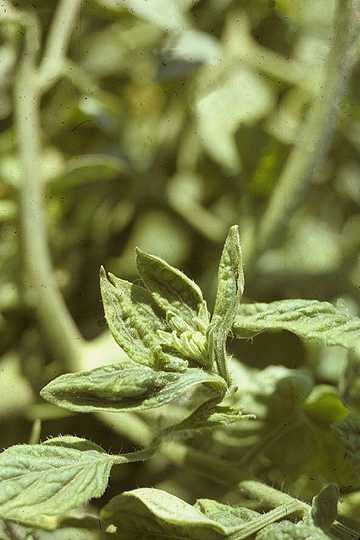
Tomato big bud | Tomato
DISEASE: Tomato big bud
HOST: Tomato (Lycopersicon esculentum)
PATHOGEN: 'Candidatus Phytoplasma asteris'
PATHOGEN SYNONYM: Phytoplasma Aster yellows group
SOURCE: S. Thomson