

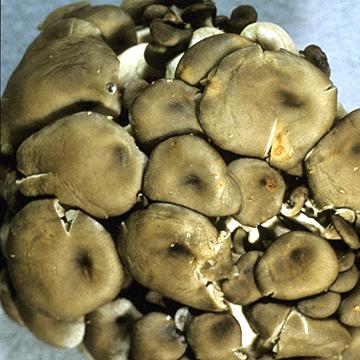
DISEASE: Brown blotch
HOST: Mushroom
Stunted fruit bodies, initial stage of disease.
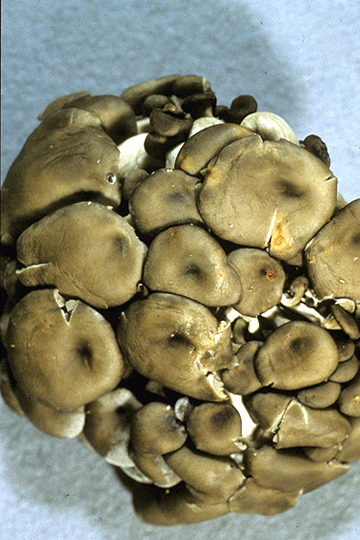
Brown blotch | Mushroom
DISEASE: Brown blotch
HOST: Mushroom (Pleurotus ostreatus)
PATHOGEN: Pseudomonas tolaasii
SOURCE: K. Suyama, M. Goto
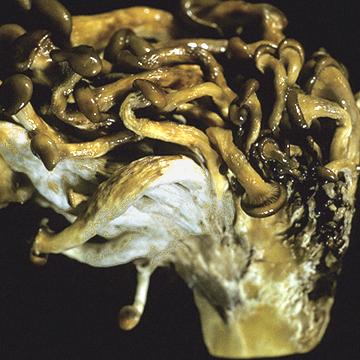
DISEASE: Brown blotch
HOST: Mushroom
Fruit bodies at advanced stage of disease.
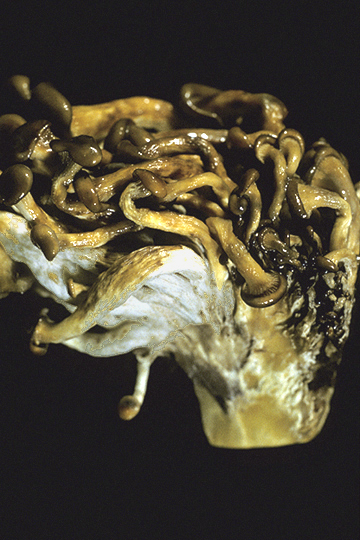
Brown blotch | Mushroom
DISEASE: Brown blotch
HOST: Mushroom (Pleurotus ostreatus)
PATHOGEN: Pseudomonas tolaasii
SOURCE: K. Suyama, M. Goto
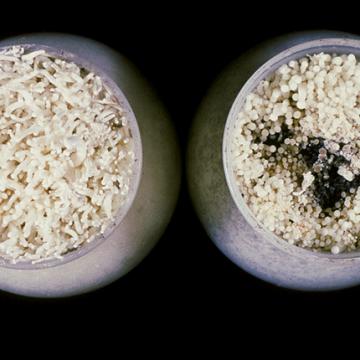
DISEASE: Brown blotch
HOST: Mushroom
Black discoloration of basal portions of fruit bodies. Healthy (left).
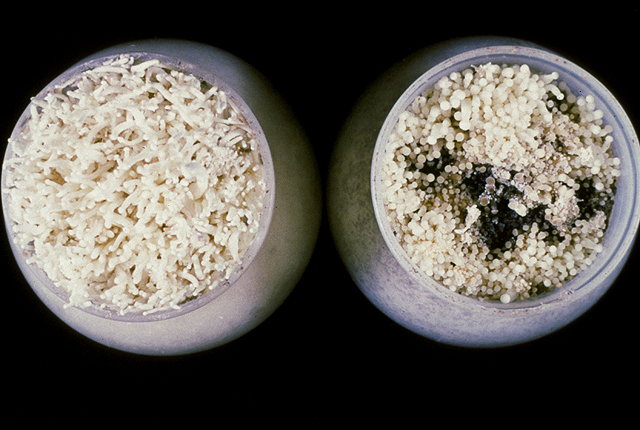
Brown blotch | Mushroom
DISEASE: Brown blotch
HOST: Mushroom (Flammulina velutipes)
PATHOGEN: Pseudomonas tolaasii
SOURCE: K. Suyama, M. Goto
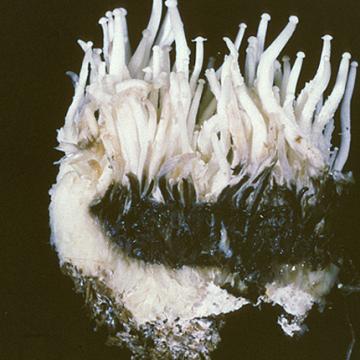
DISEASE: Brown blotch
HOST: Mushroom
Black discoloration of basal portion of fruit bodies.
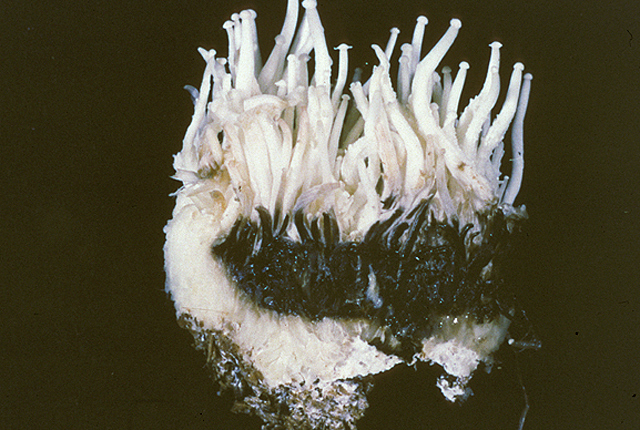
Brown blotch | Mushroom
DISEASE: Brown blotch
HOST: Mushroom (Flammulina velutipes)
PATHOGEN: Pseudomonas tolaasii
SOURCE: K. Suyama, M. Goto
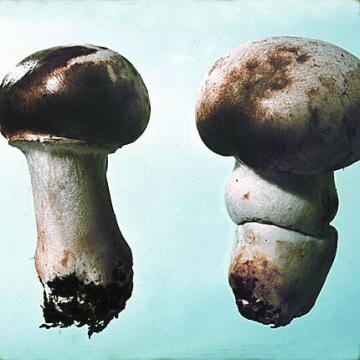
DISEASE: Brown blotch
HOST: Mushroom
Mushrooms with rotted, brownish discoloration of infected areas.
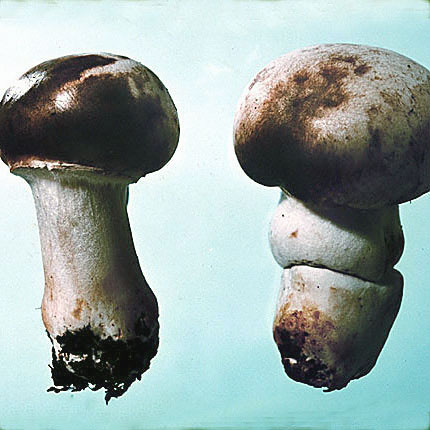
Brown blotch | Mushroom
DISEASE: Brown blotch
HOST: Mushroom (Agaricus campestris)
PATHOGEN: Pseudomonas tolaasii
SOURCE: J. Young
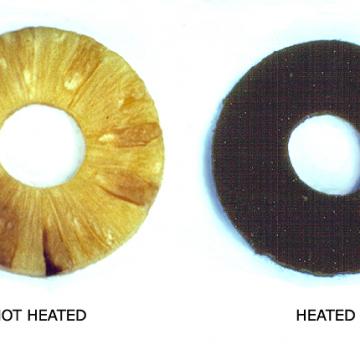
DISEASE: Pink disease
HOST: Pineapple
Infected pineapple slices; effect of heating (right) and not heating (left).
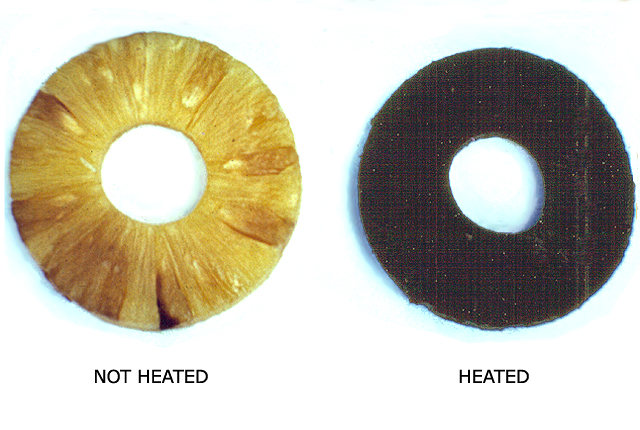
Pink disease | Pineapple
DISEASE: Pink disease
HOST: Pineapple (Ananas comosus)
PATHOGEN: Tatumella citrea
PATHOGEN SYNONYM: Pantoea citrea
SOURCE: K. Rohrbach, A. Alvarez
DISEASE: Pink disease
HOST: Pineapple
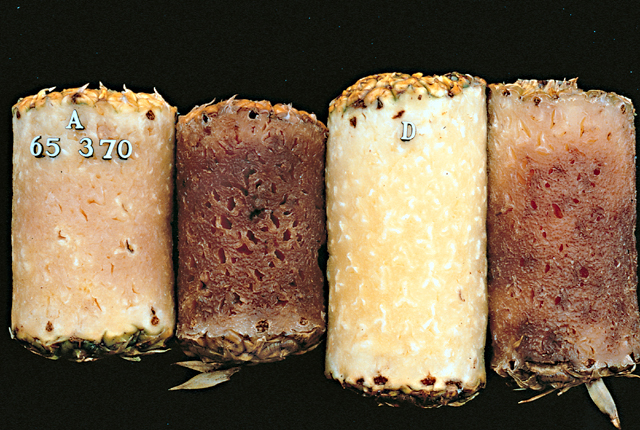
Two clones (A and D) showing different stages of infection. Second and fourth fruits (left to right) have been heated. Disease originally attributed to Gluconobacter oxydans and Enterobacter agglomerans and later to Pantoea citrea.
Pink disease | Pineapple
DISEASE: Pink disease
HOST: Pineapple (Ananas comosus)
PATHOGEN: Tatumella citrea
PATHOGEN SYNONYM: Pantoea citrea
SOURCE: K. Rohrbach
DISEASE: Tomato big bud
HOST: Tomato
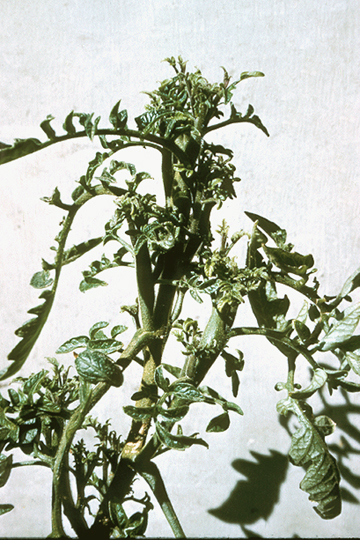
Characteristic symptoms are swollen, apical stems and stunted leaves. Apical stems are generally thickened and assume a stiff and erect growth habit. Internodes are shortened and flower buds are greatly enlarged.
Tomato big bud | Tomato
DISEASE: Tomato big bud
HOST: Tomato (Lycopersicon esculentum)
PATHOGEN: 'Candidatus Phytoplasma asteris'
PATHOGEN SYNONYM: Phytoplasma Aster yellows group
SOURCE: D. Teakle
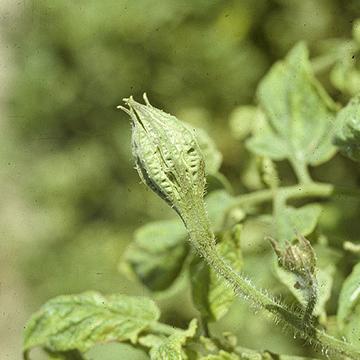
DISEASE: Tomato big bud
HOST: Tomato
Symptoms are enlarge sepals that do not separate. Flower buds stay green and do not develop into fruit. Leaves are small and chlorotic.
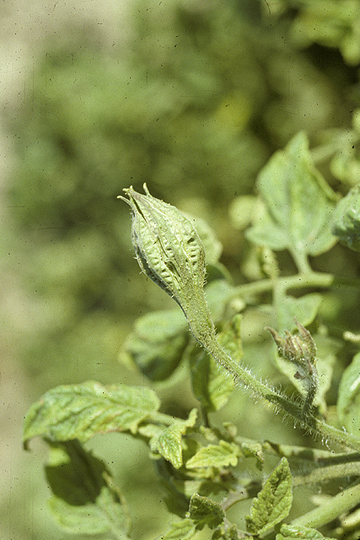
Tomato big bud | Tomato
DISEASE: Tomato big bud
HOST: Tomato (Lycopersicon esculentum)
PATHOGEN: 'Candidatus Phytoplasma asteris'
PATHOGEN SYNONYM: Phytoplasma Aster yellows group
SOURCE: S. Thomson