

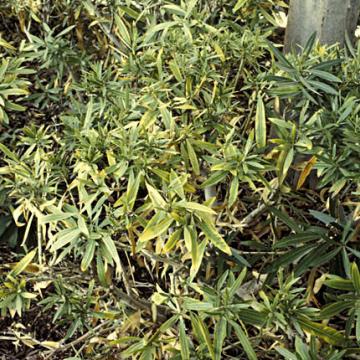
DISEASE: Oleander leaf scorch
HOST: Oleander
Diseased plant with scalloped, yellowish leaves. This usually is followed by dieback of twigs and branches. Plants often die 2 years after infection.
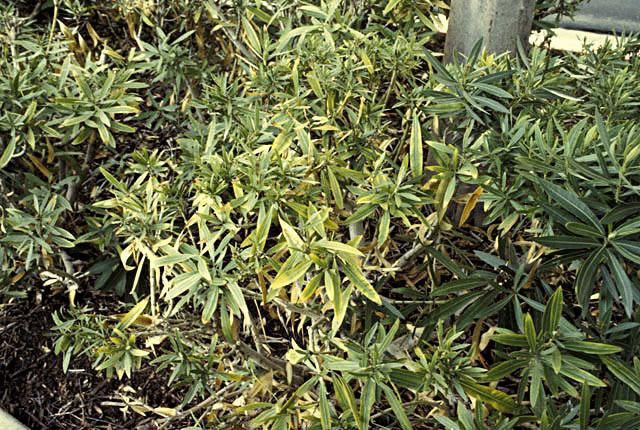
Oleander leaf scorch | Oleander
DISEASE: Oleander leaf scorch
HOST: Oleander (Nerium oleander)
PATHOGEN: Xylella fastidiosa
SOURCE: S. Purcell
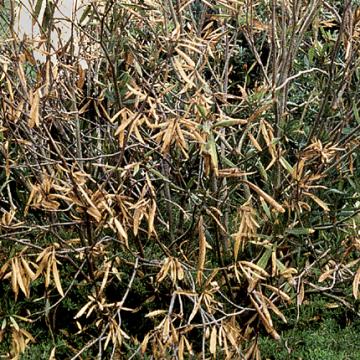
DISEASE: Oleander leaf scorch
HOST: Oleander
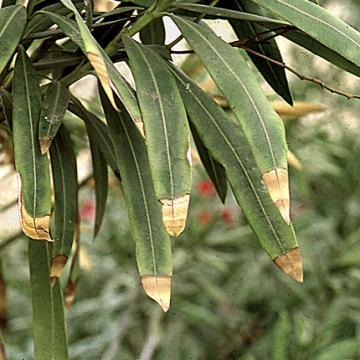
Oleander with symptoms of severe scorch.
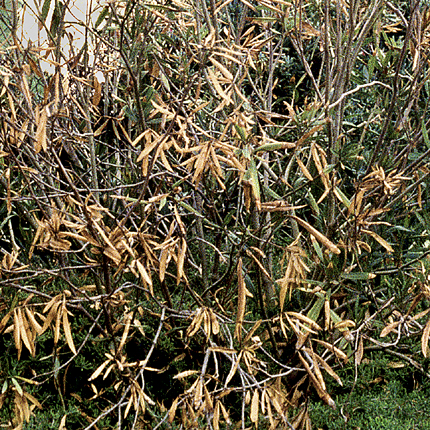
Oleander leaf scorch | Oleander
DISEASE: Oleander leaf scorch
HOST: Oleander (Nerium oleander)
PATHOGEN: Xylella fastidiosa
SOURCE: M. Blua
DISEASE: Oleander leaf scorch
HOST: Oleander
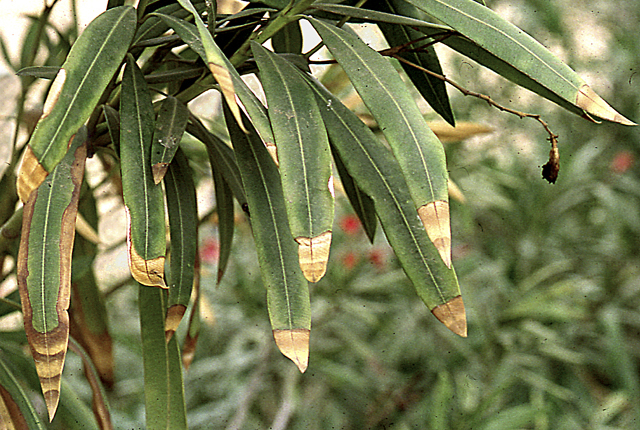
Oleander with scorch symptoms primarily at leaf tips, an early stage of disease.
Oleander leaf scorch | Oleander
DISEASE: Oleander leaf scorch
HOST: Oleander (Nerium oleander)
PATHOGEN: Xylella fastidiosa
SOURCE: M. Blua
DISEASE: Ratoon stunt
HOST: Sugarcane
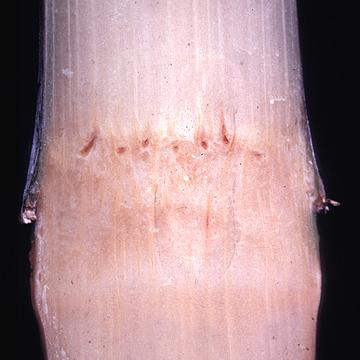
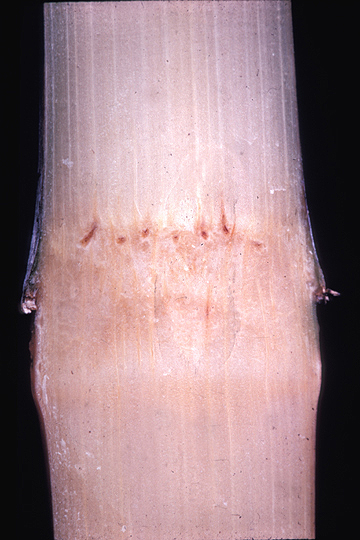
Necrotic, reddish vascular bundles in node of sliced stalk, a diagnostic symptom.
Ratoon stunt | Sugarcane
DISEASE: Ratoon stunt
HOST: Sugarcane (Saccharum officinarum)
PATHOGEN: Leifsonia xyli subsp. xyli
SOURCE: D. Teakle
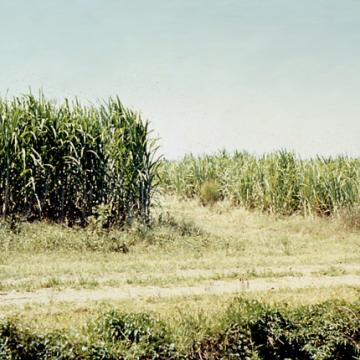
DISEASE: Ratoon stunt
HOST: Sugarcane
Disease of susceptible cultivar L62-96 (right). External symptoms are characterized by stunting and poor growth.
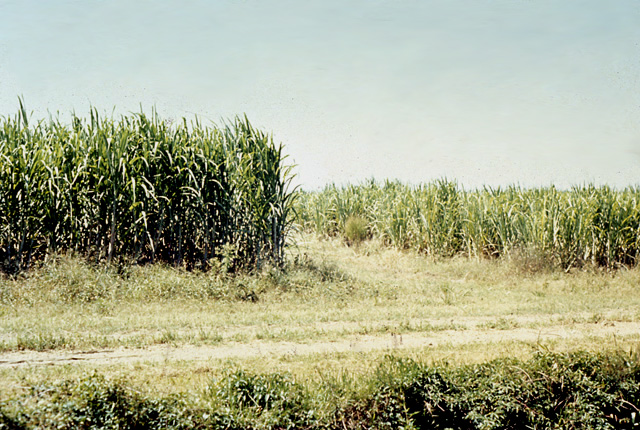
Ratoon stunt | Sugarcane
DISEASE: Ratoon stunt
HOST: Sugarcane (Saccharum officinarum)
PATHOGEN: Leifsonia xyli subsp. xyli
SOURCE: A. Gillaspie, M. Davis
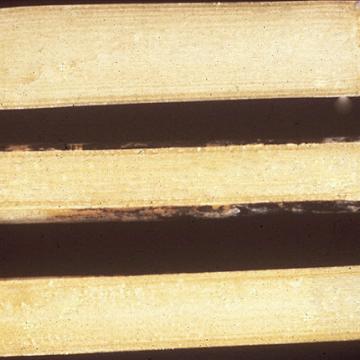
DISEASE: Ratoon stunt
HOST: Sugarcane
Red discoloration just below nodal tissues is a symptom in mature stalks of 'L41-233'.
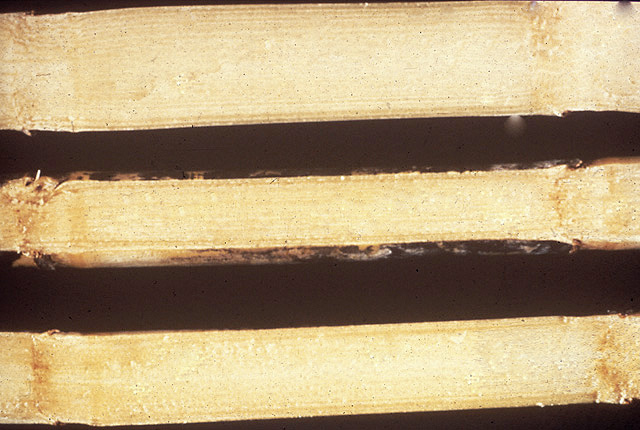
Ratoon stunt | Sugarcane
DISEASE: Ratoon stunt
HOST: Sugarcane (Saccharum officinarum)
PATHOGEN: Leifsonia xyli subsp. xyli
SOURCE: A. Gillaspie, M. Davis
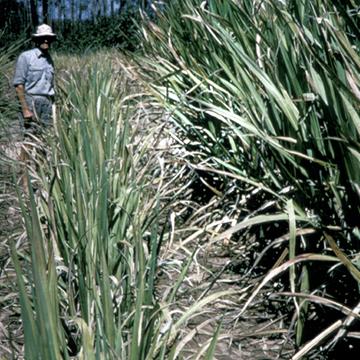
DISEASE: Ratoon stunt
HOST: Sugarcane
Row of disease 'Trojan' plants (left). Healthy row (right).
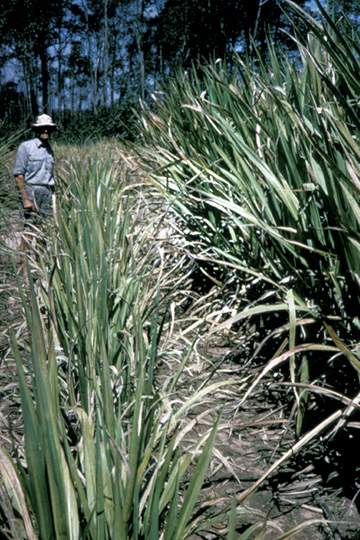
Ratoon stunt | Sugarcane
DISEASE: Ratoon stunt
HOST: Sugarcane (Saccharum officinarum 'Trojan')
PATHOGEN: Leifsonia xyli subsp. xyli
SOURCE: D. Teakle
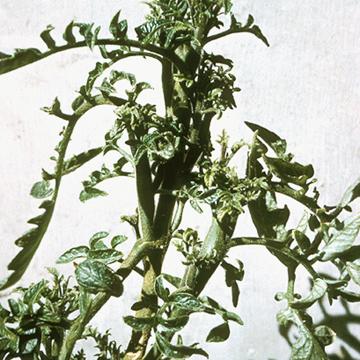
DISEASE: Tomato big bud
HOST: Tomato
Characteristic symptoms are swollen, apical stems and stunted leaves. Apical stems are generally thickened and assume a stiff and erect growth habit. Internodes are shortened and flower buds are greatly enlarged.
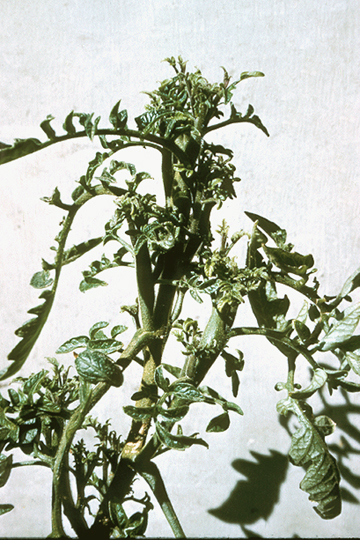
Tomato big bud | Tomato
DISEASE: Tomato big bud
HOST: Tomato (Lycopersicon esculentum)
PATHOGEN: 'Candidatus Phytoplasma asteris'
PATHOGEN SYNONYM: Phytoplasma Aster yellows group
SOURCE: D. Teakle
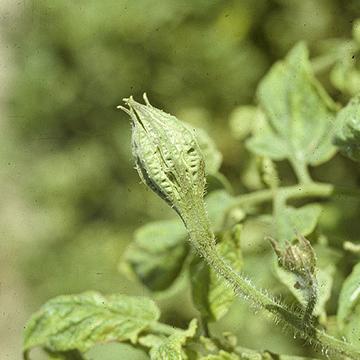
DISEASE: Tomato big bud
HOST: Tomato
Symptoms are enlarge sepals that do not separate. Flower buds stay green and do not develop into fruit. Leaves are small and chlorotic.
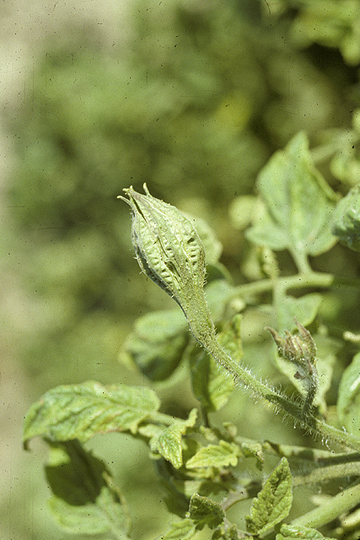
Tomato big bud | Tomato
DISEASE: Tomato big bud
HOST: Tomato (Lycopersicon esculentum)
PATHOGEN: 'Candidatus Phytoplasma asteris'
PATHOGEN SYNONYM: Phytoplasma Aster yellows group
SOURCE: S. Thomson