

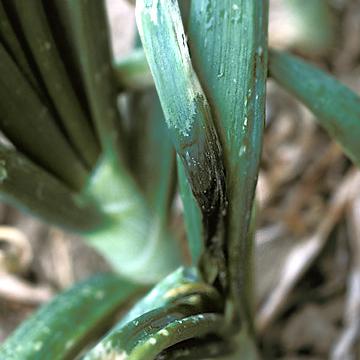
DISEASE: Bacterial flower stalk and leaf necrosis
HOST: Onion
Dark, rotted areas of stalk and leaves caused by systemic invasion of the pathogen.
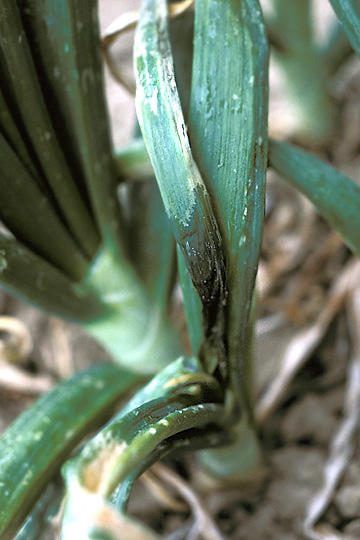
Bacterial flower stalk and leaf necrosis | Onion
DISEASE: Bacterial flower stalk and leaf necrosis
HOST: Onion (Allium cepa)
PATHOGEN: Pseudomonas marginalis pv. marginalis
SOURCE: S. Mohan
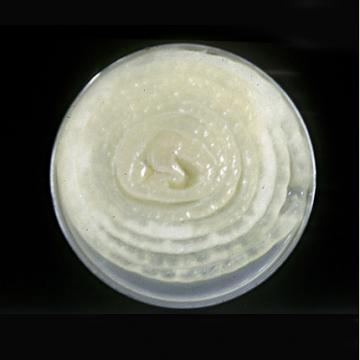
DISEASE: Bacterial flower stalk and leaf necrosis
HOST: Onion
Gray-brown rot of onion after inoculation. Disease starts as small, water-soaked lesions that later develop into slimy, gray-brown rot. The disease progresses downward from the stalk and may rot the entire bulb.
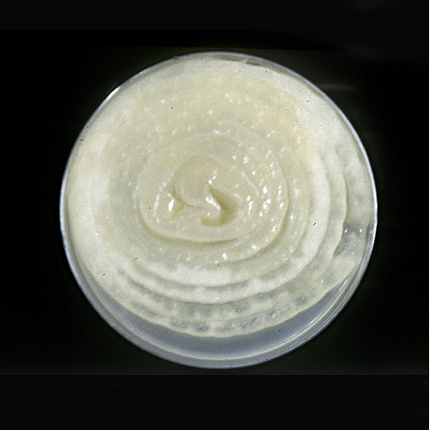
Bacterial flower stalk and leaf necrosis | Onion
DISEASE: Bacterial flower stalk and leaf necrosis
HOST: Onion (Allium cepa)
PATHOGEN: Pseudomonas marginalis pv. marginalis
SOURCE: R. Gitaitis
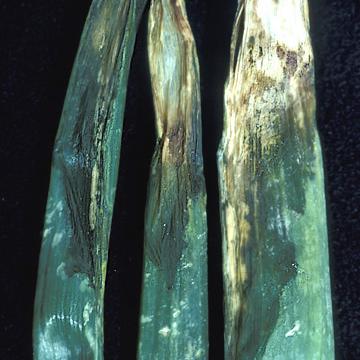
DISEASE: Bacterial flower stalk and leaf necrosis
HOST: Onion
Leaves with necrosis and rot. The common name for this disease is the same as those used for two other diseases. Also, another common name for this disease is bacterial soft rot.
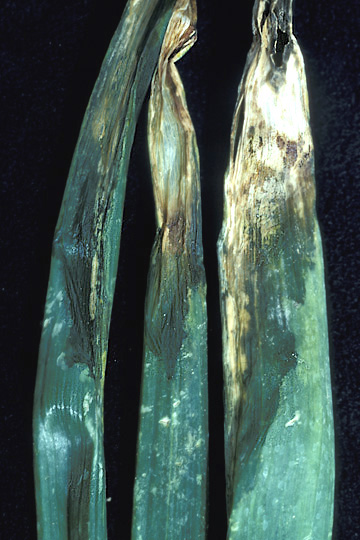
Bacterial flower stalk and leaf necrosis | Onion
DISEASE: Bacterial flower stalk and leaf necrosis
HOST: Onion (Allium cepa)
PATHOGEN: Pseudomonas marginalis pv. marginalis
SOURCE: S. Mohan
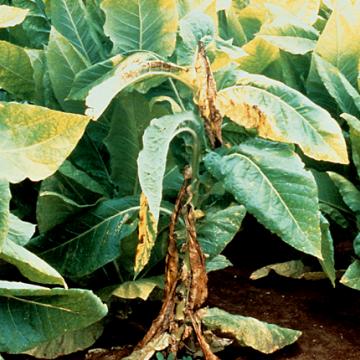
DISEASE: Hollow stalk
HOST: Tobacco
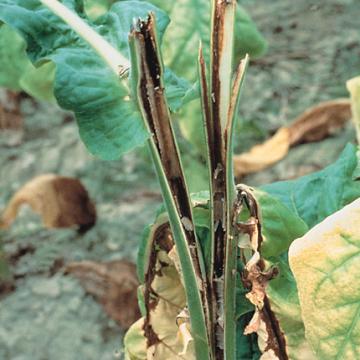
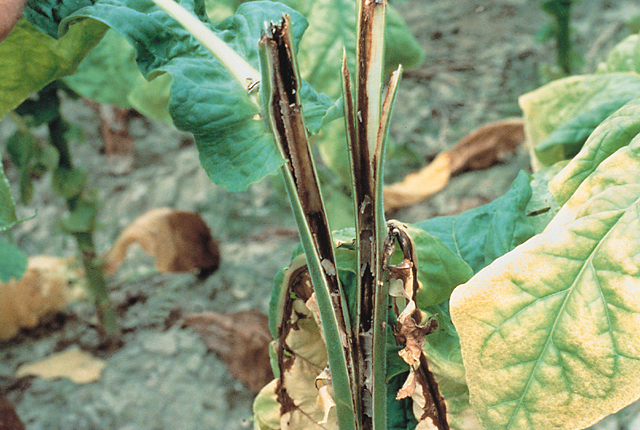
Hollow stalk may appear at time of topping and suckering. Top leaves wilt and the stalk becomes bare as the disease moves downward.
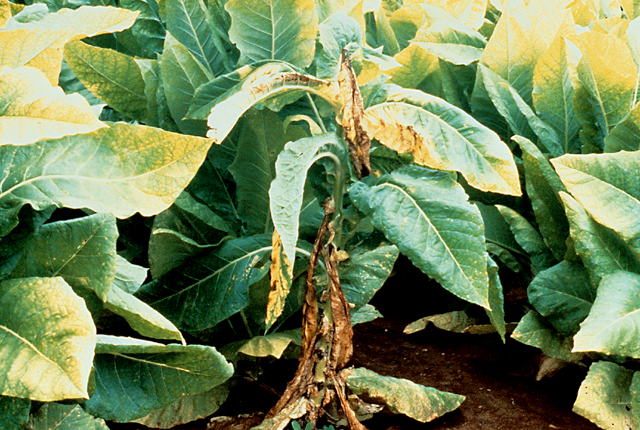
Hollow stalk | Tobacco
DISEASE: Hollow stalk
HOST: Tobacco (Nicotiana tabacum)
PATHOGEN: Pectobacterium carotovorum
PATHOGEN SYNONYM: Erwinia carotovora subsp. carotovora
SOURCE: P. Shoemaker
DISEASE: Hollow stalk
HOST: Tobacco
Infection of flue-cured tobacco stalks occur at wound sites caused by topping. After top infection, browning of pith occurs and tissues rot.
Hollow stalk | Tobacco
DISEASE: Hollow stalk
HOST: Tobacco (Nicotiana tabacum)
PATHOGEN: Pectobacterium carotovorum
PATHOGEN SYNONYM: Erwinia carotovora subsp. carotovora
SOURCE: APS
DISEASE: Tomato big bud
HOST: Tomato
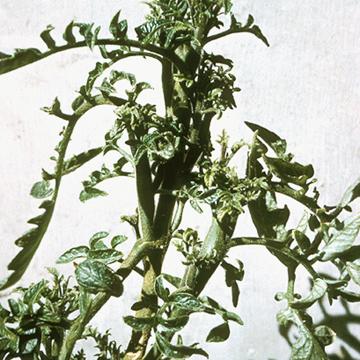
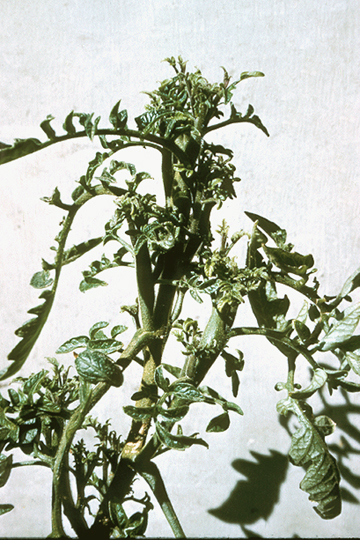
Characteristic symptoms are swollen, apical stems and stunted leaves. Apical stems are generally thickened and assume a stiff and erect growth habit. Internodes are shortened and flower buds are greatly enlarged.
Tomato big bud | Tomato
DISEASE: Tomato big bud
HOST: Tomato (Lycopersicon esculentum)
PATHOGEN: 'Candidatus Phytoplasma asteris'
PATHOGEN SYNONYM: Phytoplasma Aster yellows group
SOURCE: D. Teakle
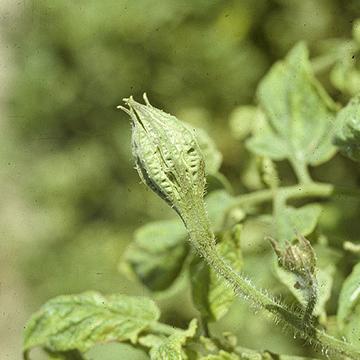
DISEASE: Tomato big bud
HOST: Tomato
Symptoms are enlarge sepals that do not separate. Flower buds stay green and do not develop into fruit. Leaves are small and chlorotic.
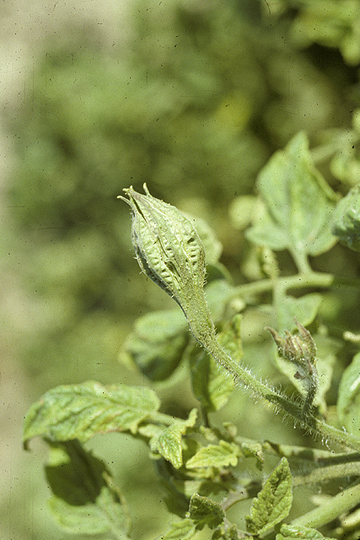
Tomato big bud | Tomato
DISEASE: Tomato big bud
HOST: Tomato (Lycopersicon esculentum)
PATHOGEN: 'Candidatus Phytoplasma asteris'
PATHOGEN SYNONYM: Phytoplasma Aster yellows group
SOURCE: S. Thomson
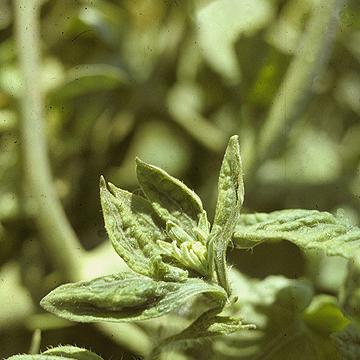
DISEASE: Tomato big bud
HOST: Tomato
Abnormal flower bud with greatly enlarged sepals. Sepals do not separate, fruit is not produced, and apical growth is upright.
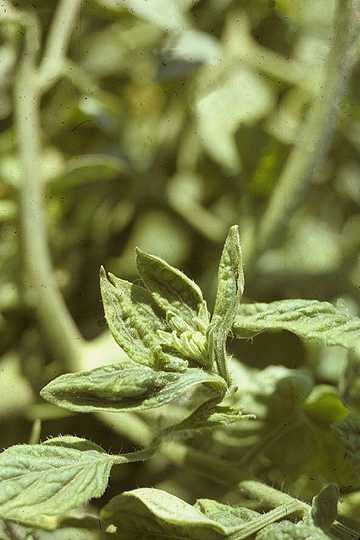
Tomato big bud | Tomato
DISEASE: Tomato big bud
HOST: Tomato (Lycopersicon esculentum)
PATHOGEN: 'Candidatus Phytoplasma asteris'
PATHOGEN SYNONYM: Phytoplasma Aster yellows group
SOURCE: S. Thomson
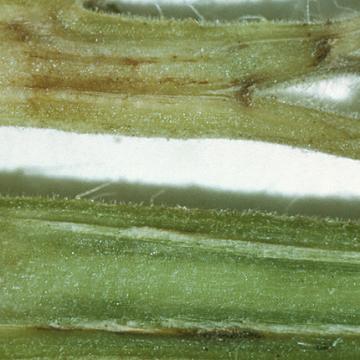
DISEASE: Tomato big bud
HOST: Tomato
Sliced stems with phloem necrosis and brown discoloration.
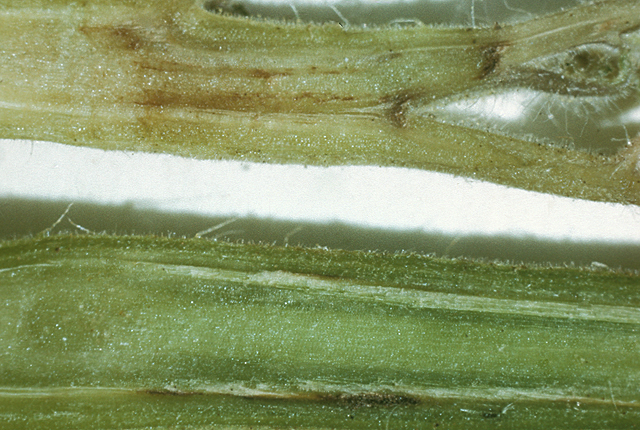
Tomato big bud | Tomato
DISEASE: Tomato big bud
HOST: Tomato (Lycopersicon esculentum)
PATHOGEN: 'Candidatus Phytoplasma asteris'
PATHOGEN SYNONYM: Phytoplasma Aster yellows group
SOURCE: D. Teakle