

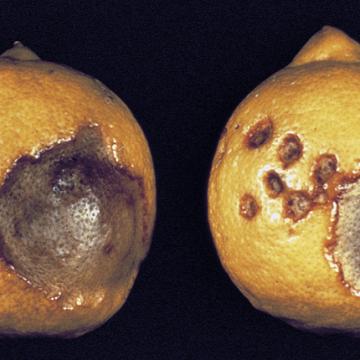
DISEASE: Bacterial blast and black pit
HOST: Citrus (Lemon)
The term "black pit" refers to black lesions on fruit, which may be specks or large, sunken pits as seen here. They also may be light tan, later becoming reddish brown to black.
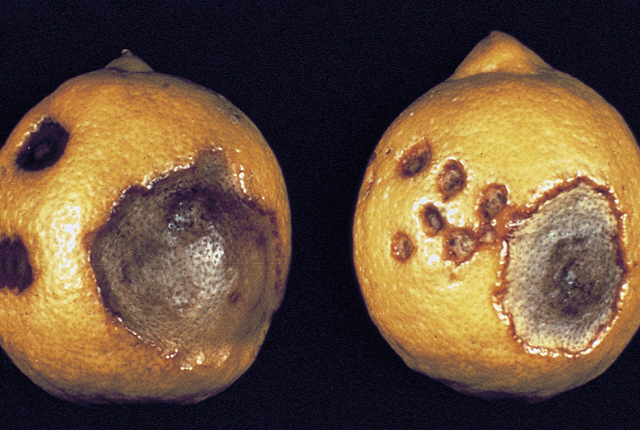
Bacterial blast and black pit | Citrus (Lemon)
DISEASE: Bacterial blast and black pit
HOST: Citrus (Lemon) (Citrus limon)
PATHOGEN: Pseudomonas syringae pv. syringae
SOURCE: J. Menge
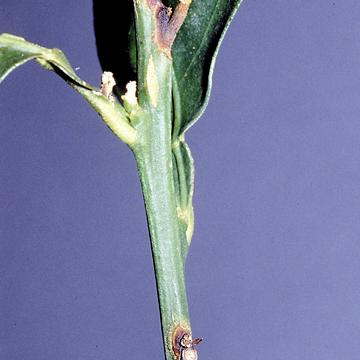
DISEASE: Bacterial blast and black pit
HOST: Citrus (Lime)
Characteristic symptoms of brownish black lesions on twigs and leaves (blast), starting with infection of petioles. Black pit refers to brown to black sunken spots on fruit, 5 to 20 mm in diameter.
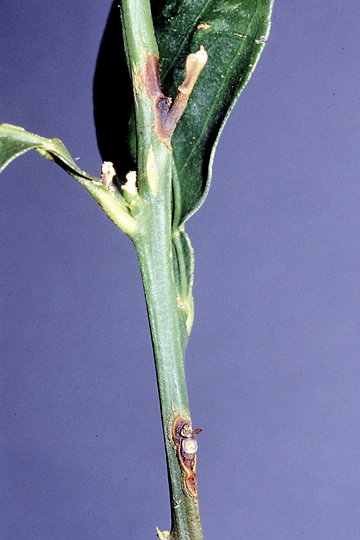
Bacterial blast and black pit | Citrus (Lime)
DISEASE: Bacterial blast and black pit
HOST: Citrus (Lime) (Citrus sp.)
PATHOGEN: Pseudomonas syringae pv. syringae
SOURCE: P. Broadbent
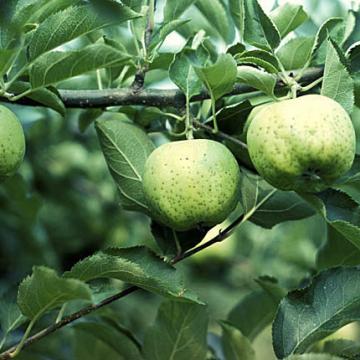
DISEASE: Blister spot
HOST: Apple
Fruit with water-soaked spots.
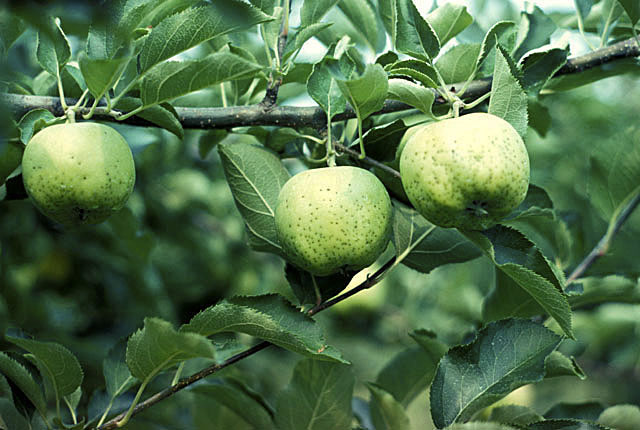
Blister spot | Apple
DISEASE: Blister spot
HOST: Apple (Malus domestica)
PATHOGEN: Pseudomonas syringae pv. papulans
SOURCE: T. Burr
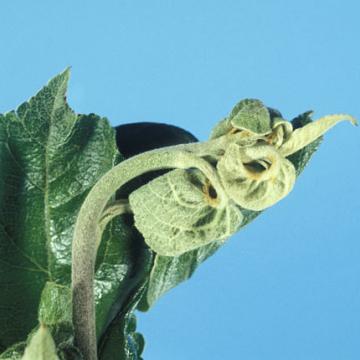
DISEASE: Blister spot
HOST: Apple
Water-soaked blister spots on leaves of blighted twig.
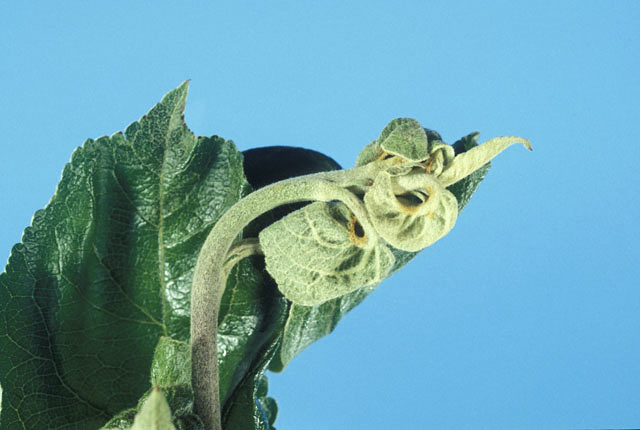
Blister spot | Apple
DISEASE: Blister spot
HOST: Apple (Malus domestica)
PATHOGEN: Pseudomonas syringae pv. papulans
SOURCE: T. Burr
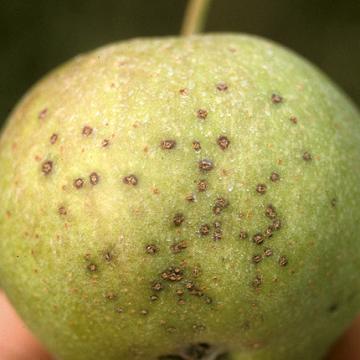
DISEASE: Blister spot
HOST: Apple
Apple with brownish blister spots.
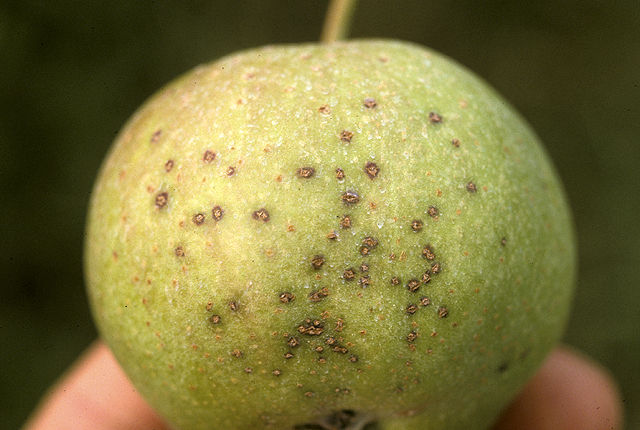
Blister spot | Apple
DISEASE: Blister spot
HOST: Apple (Malus domestica 'Mutsu')
PATHOGEN: Pseudomonas syringae pv. papulans
SOURCE: S. Thomson
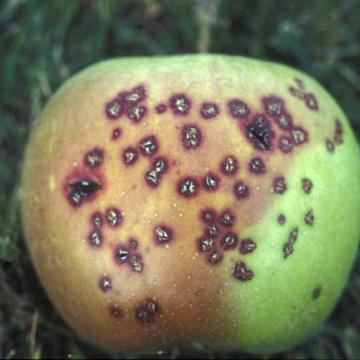
DISEASE: Blister spot
HOST: Apple
Late stage of blister spot. The purplish black lesions are associated with lenticels and stomata.
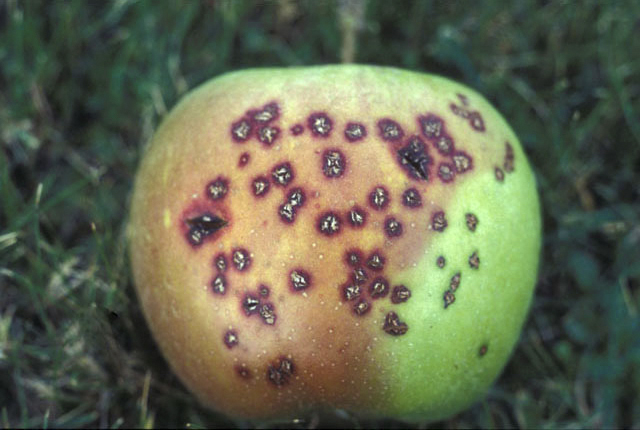
Blister spot | Apple
DISEASE: Blister spot
HOST: Apple (Malus domestica 'Crispin')
PATHOGEN: Pseudomonas syringae pv. papulans
SOURCE: T. Burr
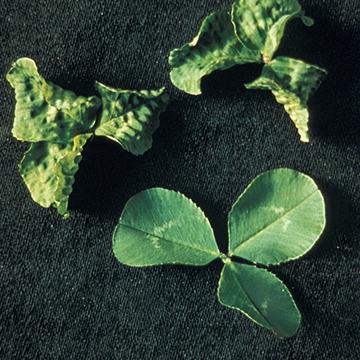
DISEASE: Rugose leaf curl
HOST: Clover
Two rugose, distorted white clover leaves and a healthy leaf. Rugose leaf curl is caused by an unidentified phloem-infecting bacterium.
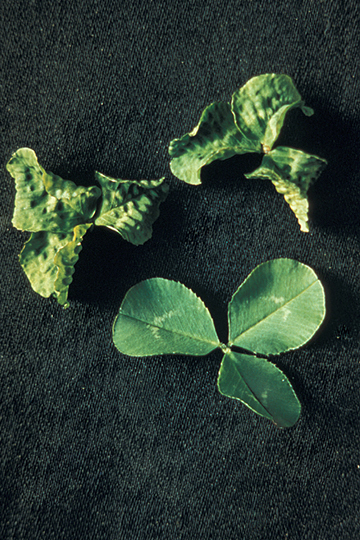
Rugose leaf curl | Clover
DISEASE: Rugose leaf curl
HOST: Clover (Trifolium repens)
PATHOGEN: Phloem-infecting bacterium
SOURCE: D. Teakle