

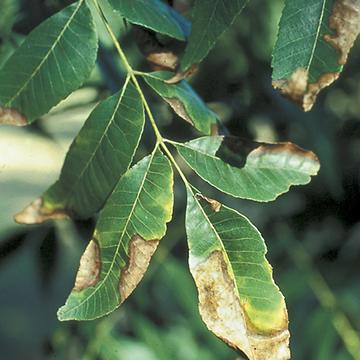
DISEASE: Bacterial leaf scorch
HOST: Pecan
Pecan with necrotic scorched leaves with distinct dark lines between healthy and diseased tissues.
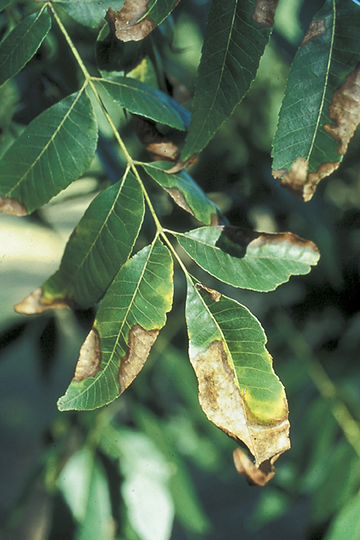
Bacterial leaf scorch | Pecan
DISEASE: Bacterial leaf scorch
HOST: Pecan (Carya illinoinensis)
PATHOGEN: Xylella fastidiosa
SOURCE: T. Brenneman
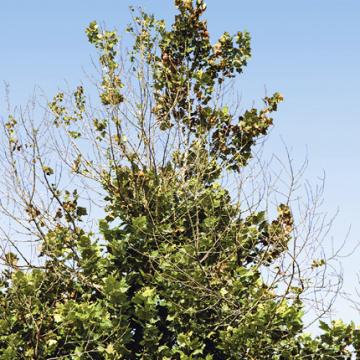
DISEASE: Bacterial leaf scorch
HOST: Sycamore
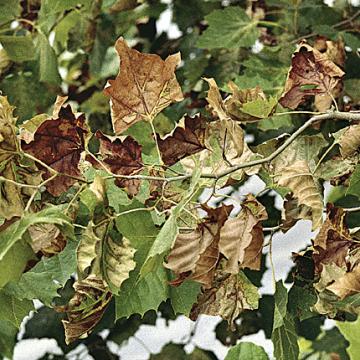
Sycamore with scorched leaves and dieback of small branches.
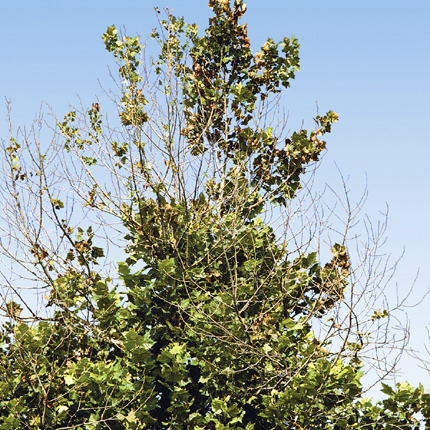
Bacterial leaf scorch | Sycamore
DISEASE: Bacterial leaf scorch
HOST: Sycamore (Platanus occidentalis)
PATHOGEN: Xylella fastidiosa
SOURCE: W. Sinclair
DISEASE: Bacterial leaf scorch
HOST: Sycamore
Close-up of scorched leaves.
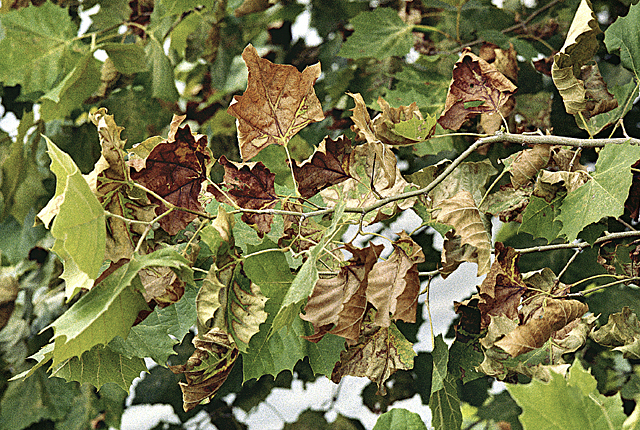
Bacterial leaf scorch | Sycamore
DISEASE: Bacterial leaf scorch
HOST: Sycamore (Platanus occidentalis)
PATHOGEN: Xylella fastidiosa
SOURCE: W. Sinclair
DISEASE: Common scab (Potato scab)
HOST: Potato
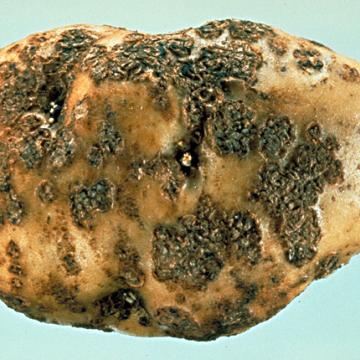
Symptoms of common scab vary depending upon the cultivar. The lesions can be shallow or deep, erumpent and corky, and vary in color.
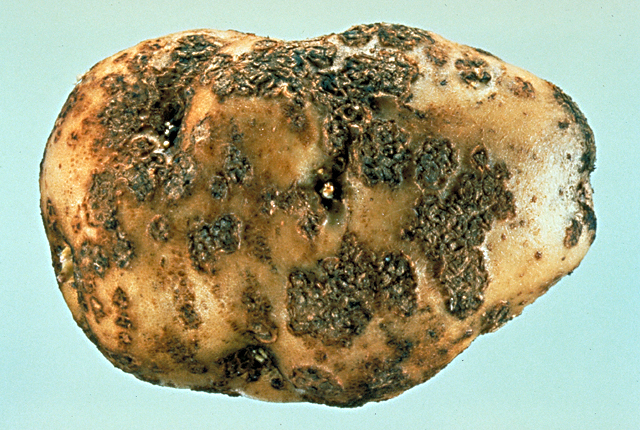
Common scab (Potato scab) | Potato
DISEASE: Common scab (Potato scab)
HOST: Potato (Solanum tuberosum)
PATHOGEN: Streptomyces scabiei
PATHOGEN SYNONYM: Streptomyces scabies
SOURCE: A. Secor
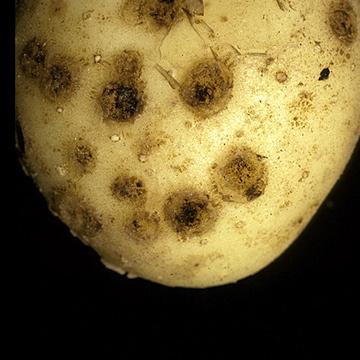
DISEASE: Common scab (Potato scab)
HOST: Potato
White-skinned tuber with sunken and superficial scab lesions.
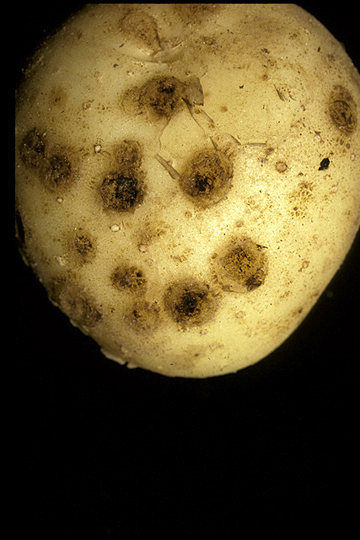
Common scab (Potato scab) | Potato
DISEASE: Common scab (Potato scab)
HOST: Potato (Solanum tuberosum)
PATHOGEN: Streptomyces scabiei
PATHOGEN SYNONYM: Streptomyces scabies
SOURCE: S. Thomson
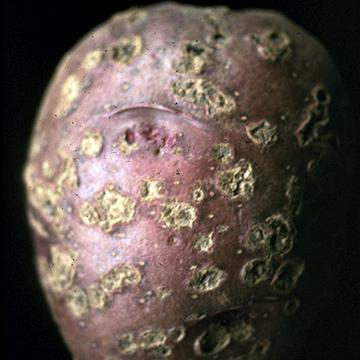
DISEASE: Common scab (Potato scab)
HOST: Potato
Red-skinned tuber with lesions that usually penetrate less than 1 mm.
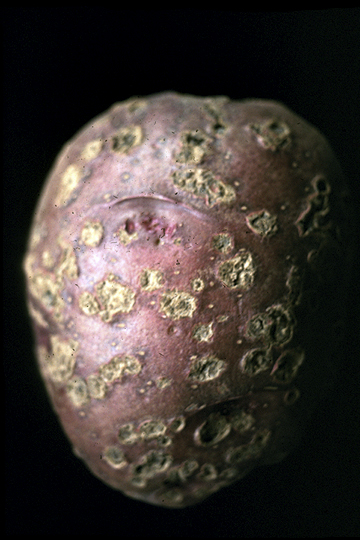
Common scab (Potato scab) | Potato
DISEASE: Common scab (Potato scab)
HOST: Potato (Solanum tuberosum)
PATHOGEN: Streptomyces scabiei
PATHOGEN SYNONYM: Streptomyces scabies
SOURCE: S. Thomson
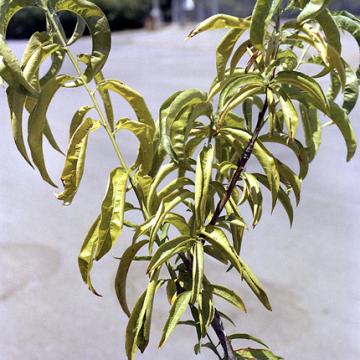
DISEASE: X-disease (Peach yellow leaf roll)
HOST: Peach
Peach twig with yellow, curled (rolled) leaves.
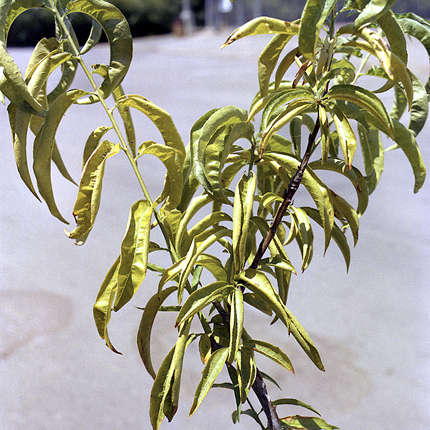
X-disease (Peach yellow leaf roll) | Peach
DISEASE: X-disease (Peach yellow leaf roll)
HOST: Peach (Prunus persica)
PATHOGEN: 'Candidatus Phytoplasma mali'
PATHOGEN SYNONYM: Phytoplasma Apple proliferation group
SOURCE: W. Sinclair