

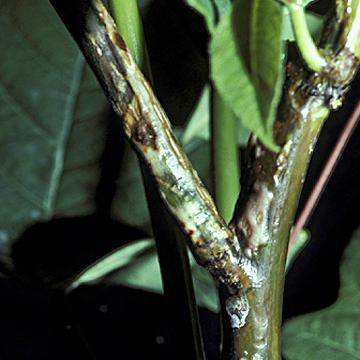
DISEASE: Greasy center
HOST: Poinsettia
Stem with dark cankers and copious ooze. Necrotic areas are greasy in appearance and eventually turn light tan to brown with a papery texture as the cuticle becomes detached.
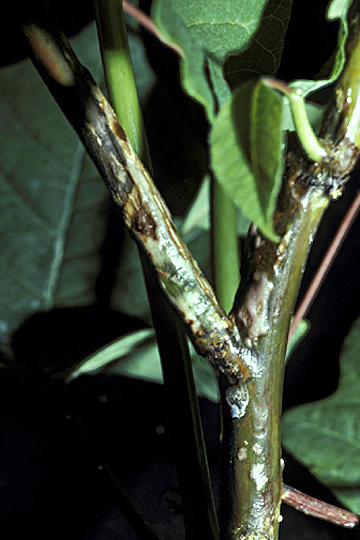
Greasy center | Poinsettia
DISEASE: Greasy center
HOST: Poinsettia (Euphorbia pulcherrima)
PATHOGEN: Pseudomonas viridiflava
SOURCE: R. Raabe
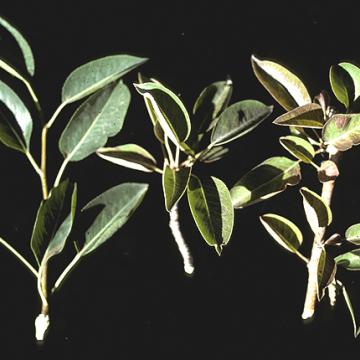
DISEASE: Pear decline
HOST: Pear
Healthy pear shoot (left) and diseased shoots (center and right). Leaves are reddish and growth is stunted.
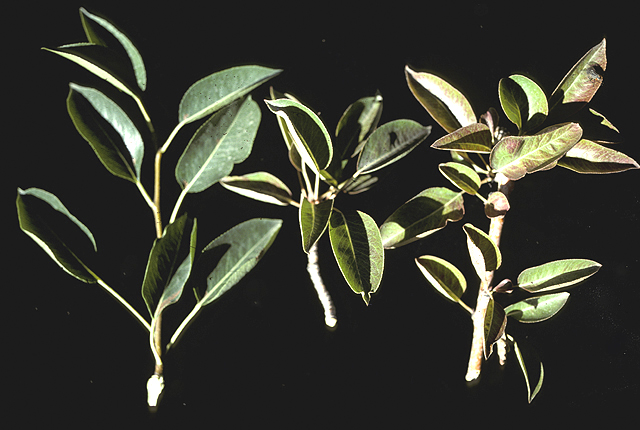
Pear decline | Pear
DISEASE: Pear decline
HOST: Pear (Pyrus communis)
PATHOGEN: 'Candidatus Phytoplasma pyri'
PATHOGEN SYNONYM: Phytoplasma Apple proliferation group
SOURCE: S. Thomson
DISEASE: Pear decline
HOST: Pear
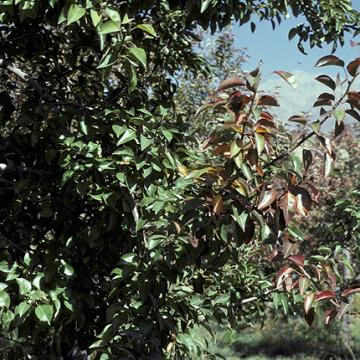
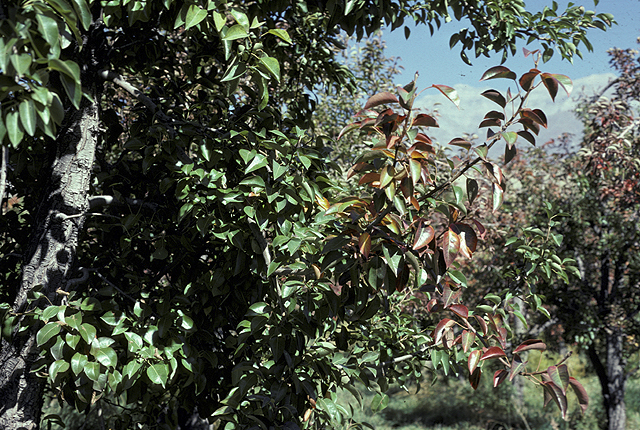
Close-up of infected pear branch showing premature reddish coloration of leaves and cupped, stunted leaves.
Pear decline | Pear
DISEASE: Pear decline
HOST: Pear (Pyrus communis)
PATHOGEN: 'Candidatus Phytoplasma pyri'
PATHOGEN SYNONYM: Phytoplasma Apple proliferation group
SOURCE: S. Thomson
DISEASE: Pear decline
HOST: Pear
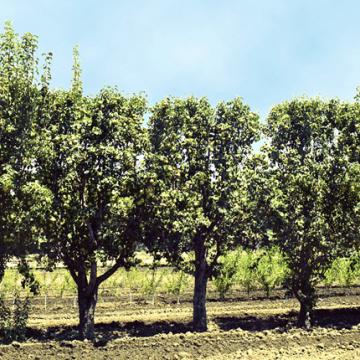
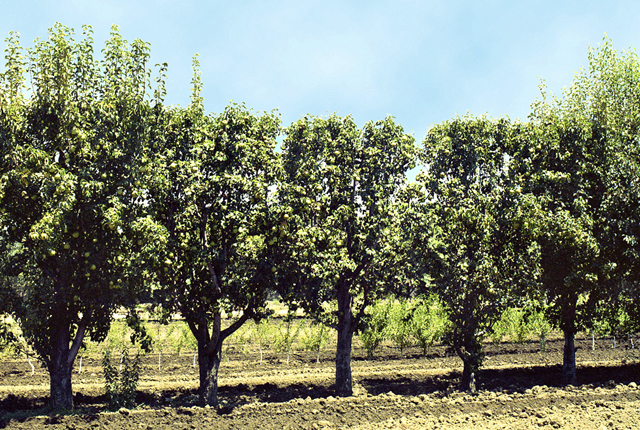
Reduced growth of infected trees in center of image.
Pear decline | Pear
DISEASE: Pear decline
HOST: Pear (Pyrus communis)
PATHOGEN: 'Candidatus Phytoplasma pyri'
PATHOGEN SYNONYM: Phytoplasma Apple proliferation group
SOURCE: W. Sinclair
DISEASE: Pear decline
HOST: Pear
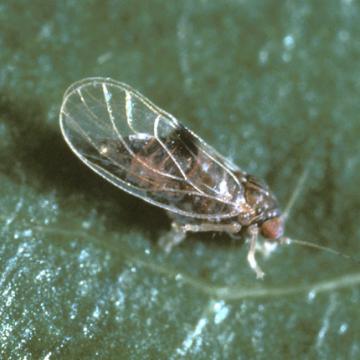
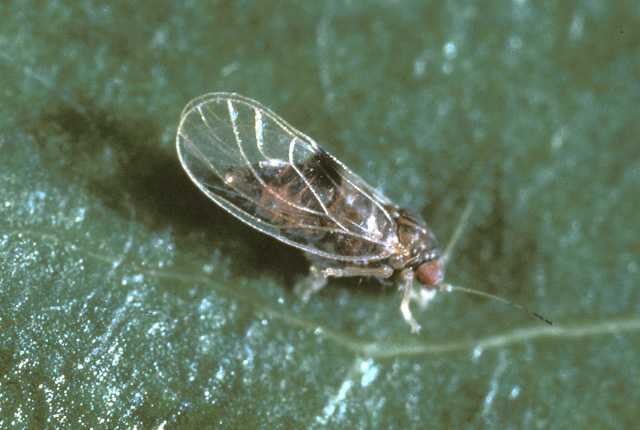
Psylla pyricola, the psyllid vector of pear decline phytoplasma.
Pear decline | Pear
DISEASE: Pear decline
HOST: Pear (Pyrus communis)
PATHOGEN: 'Candidatus Phytoplasma pyri'
PATHOGEN SYNONYM: Phytoplasma Apple proliferation group
SOURCE: J. Clark, A. Purcell, M. Davis
DISEASE: Pear decline
HOST: Pear
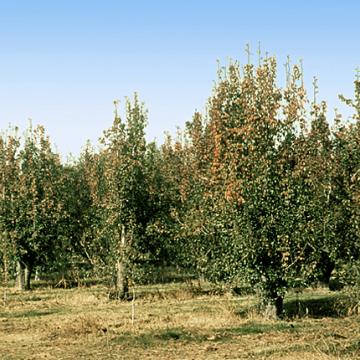
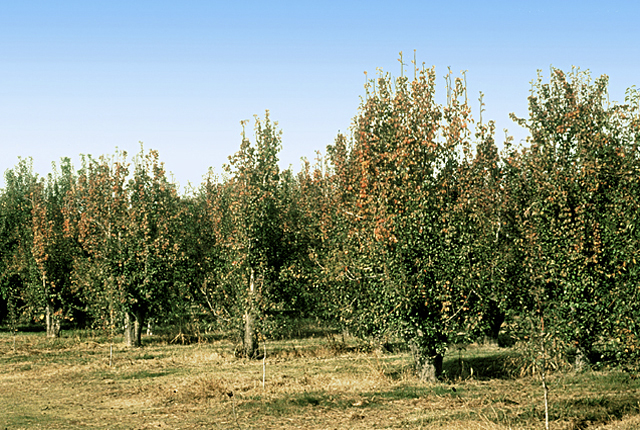
'Bartlett' pears were grafted onto tolerant rootstock. All trees are infected. Note yellowish, diseased branches.
Pear decline | Pear
DISEASE: Pear decline
HOST: Pear (Pyrus communis 'Bartlett')
PATHOGEN: 'Candidatus Phytoplasma pyri'
PATHOGEN SYNONYM: Phytoplasma Apple proliferation group
SOURCE: C. Smart
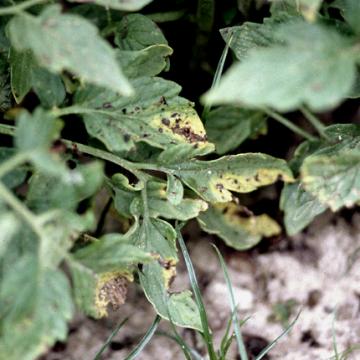
DISEASE: Syringae leaf spot
HOST: Tomato
Leaves with brown necrotic lesions and chlorotic margins. Symptoms vary greatly among cultivars. Some have black or brown lesions with bright yellow, chlorotic areas and others do not have yellowing.
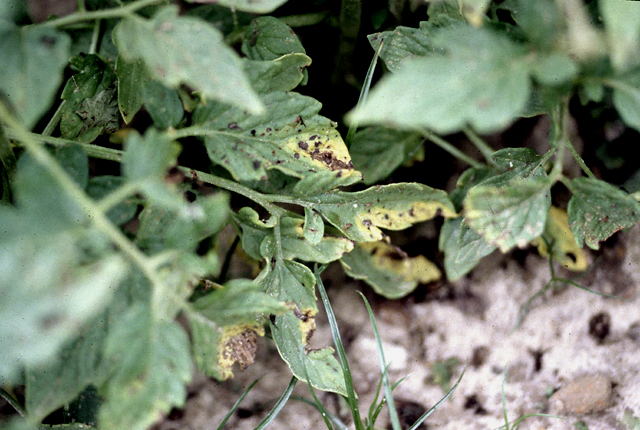
Syringae leaf spot | Tomato
DISEASE: Syringae leaf spot
HOST: Tomato (Lycopersicon esculentum)
PATHOGEN: Pseudomonas syringae pv. syringae
SOURCE: R. Gitaitis