

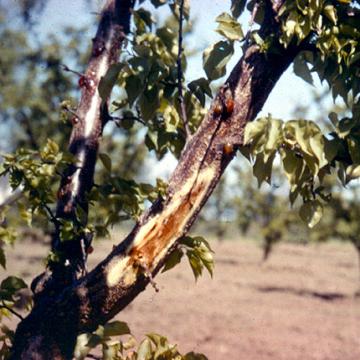
DISEASE: Bacterial canker and blast
HOST: Apricot
Apricot with typical reddish brown-discolored tissues beneath the bark and gumming around infected areas.
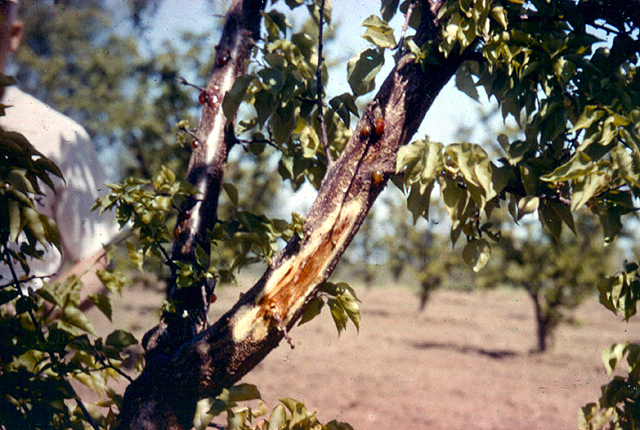
Bacterial canker and blast | Apricot
DISEASE: Bacterial canker and blast
HOST: Apricot (Prunus armeniaca)
PATHOGEN: Pseudomonas syringae pv. syringae
SOURCE: S. Sampson, M. Shurtleff
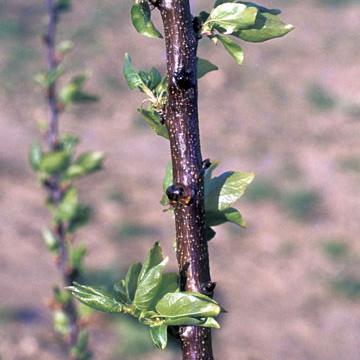
DISEASE: Bacterial canker and blast
HOST: Apricot
Young infected twig with droplets of bacterial ooze on stem.
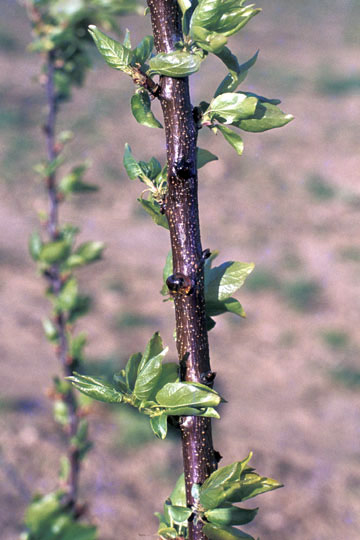
Bacterial canker and blast | Apricot
DISEASE: Bacterial canker and blast
HOST: Apricot (Prunus armeniaca 'Moorpark')
PATHOGEN: Pseudomonas syringae pv. syringae
SOURCE: J. Young
DISEASE: Bacterial canker and blast
HOST: Apricot
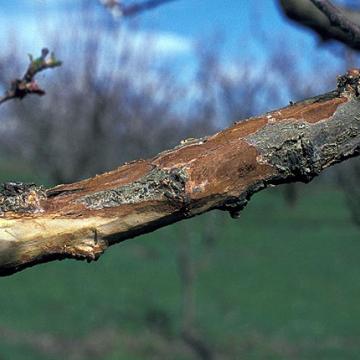
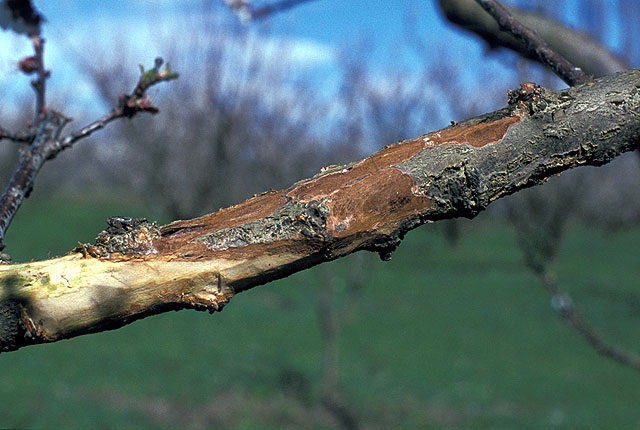
Bacterial canker has many symptoms. Typical symptoms are brown, sometimes reddish brown, internal tissues and rough, cracked bark.
Bacterial canker and blast | Apricot
DISEASE: Bacterial canker and blast
HOST: Apricot (Prunus armeniaca 'Moorpark')
PATHOGEN: Pseudomonas syringae pv. syringae
SOURCE: J. Young
DISEASE: Bacterial canker and blast
HOST: Apricot
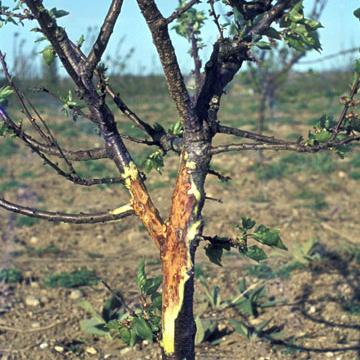
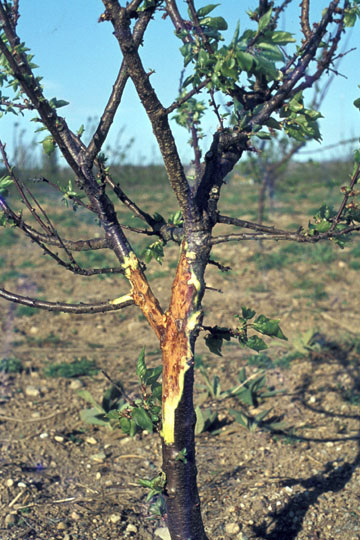
Infected apricot with sparse foliage (some twigs with no foliage) and a discolored area exposed where bark was removed.
Bacterial canker and blast | Apricot
DISEASE: Bacterial canker and blast
HOST: Apricot (Prunus armeniaca 'Moorpark')
PATHOGEN: Pseudomonas syringae pv. syringae
SOURCE: J. Young
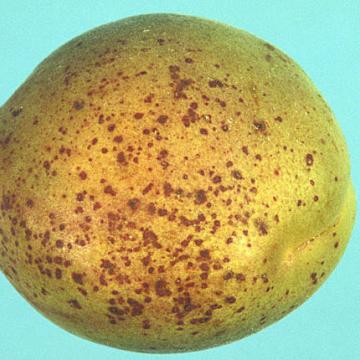
DISEASE: Bacterial canker and blast
HOST: Apricot
Fruit spot phase with numerous reddish necrotic spots.
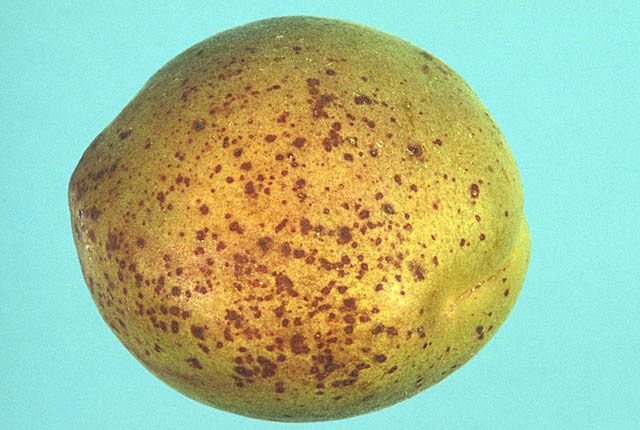
Bacterial canker and blast | Apricot
DISEASE: Bacterial canker and blast
HOST: Apricot (Prunus armeniaca 'Moorpark')
PATHOGEN: Pseudomonas syringae pv. syringae
SOURCE: J. Young
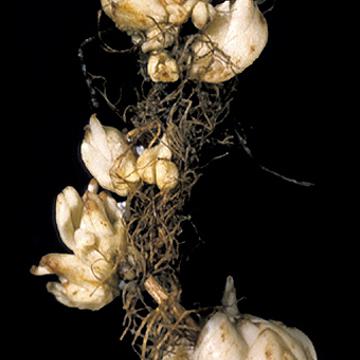
DISEASE: Saber tooth
HOST: Lily
Lily with deformed growth that resembles a saber tooth.
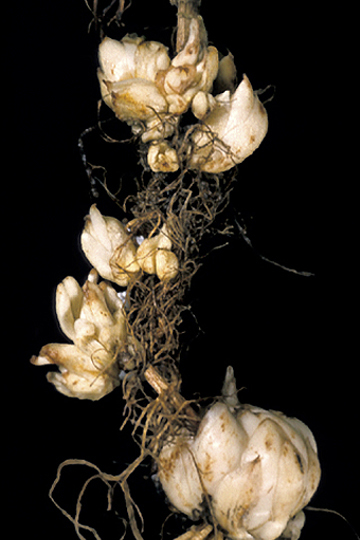
Saber tooth | Lily
DISEASE: Saber tooth
HOST: Lily (Lilium sp. 'Enchantment')
PATHOGEN: Curtobacterium flaccumfaciens pv. oortii
PATHOGEN SYNONYM: Corynebacterium flaccumfaciens subsp. oortii
SOURCE: H. van Hoof, J. van der Wolf
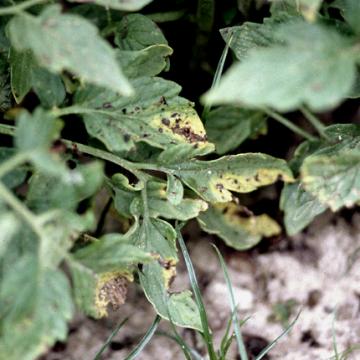
DISEASE: Syringae leaf spot
HOST: Tomato
Leaves with brown necrotic lesions and chlorotic margins. Symptoms vary greatly among cultivars. Some have black or brown lesions with bright yellow, chlorotic areas and others do not have yellowing.
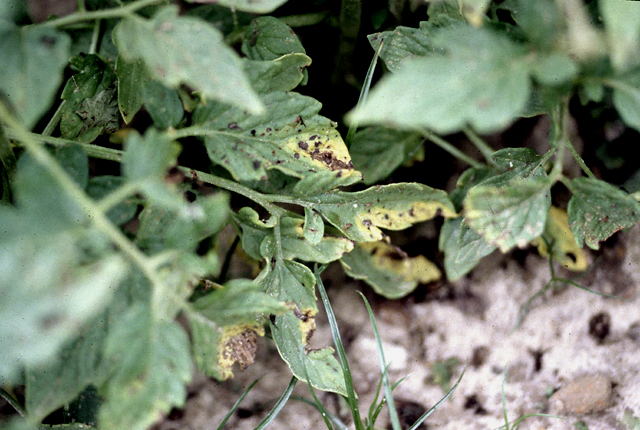
Syringae leaf spot | Tomato
DISEASE: Syringae leaf spot
HOST: Tomato (Lycopersicon esculentum)
PATHOGEN: Pseudomonas syringae pv. syringae
SOURCE: R. Gitaitis