

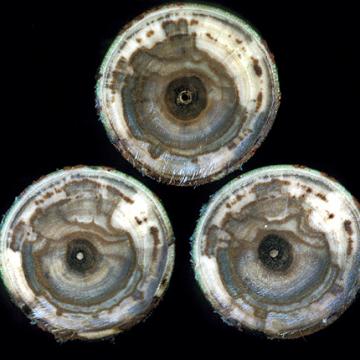
DISEASE: Bacterial wilt and dieback
HOST: Willow
Cross sections of the characteristic "watermark stain" of diseased wood. Wilt and dieback occur as disease progresses.
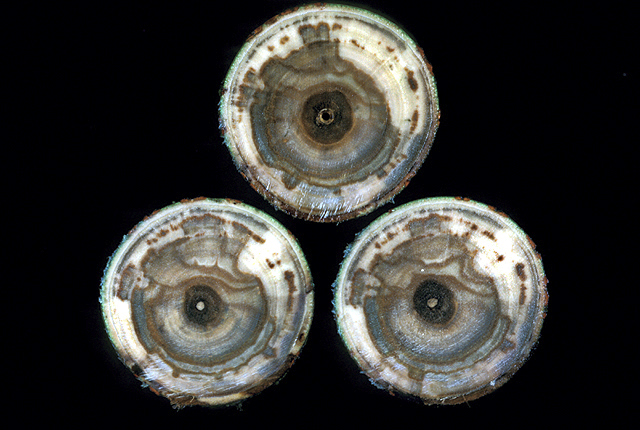
Bacterial wilt and dieback | Willow
DISEASE: Bacterial wilt and dieback
HOST: Willow (Salix sp.)
PATHOGEN: Brenneria salicis
PATHOGEN SYNONYM: Erwinia salicis
SOURCE: Y. Sakamoto, M. Goto
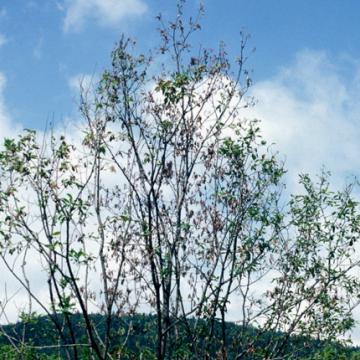
DISEASE: Bacterial wilt and dieback
HOST: Willow
Severely diseased tree with dieback symptoms.
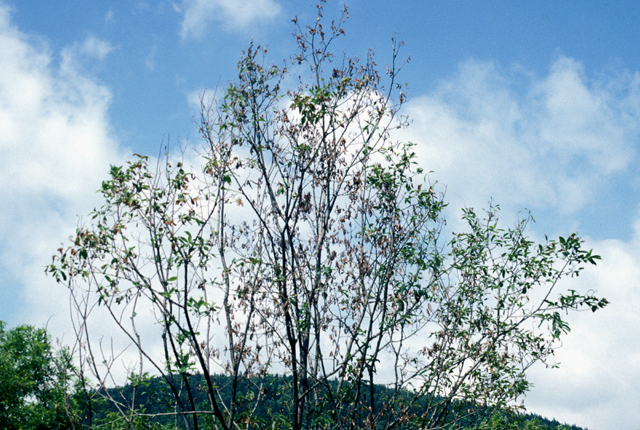
Bacterial wilt and dieback | Willow
DISEASE: Bacterial wilt and dieback
HOST: Willow (Salix sp.)
PATHOGEN: Brenneria salicis
PATHOGEN SYNONYM: Erwinia salicis
SOURCE: Y. Sakamoto, M. Goto
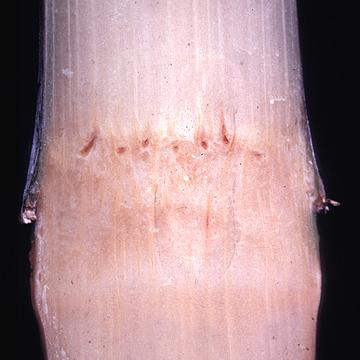
DISEASE: Ratoon stunt
HOST: Sugarcane
Necrotic, reddish vascular bundles in node of sliced stalk, a diagnostic symptom.
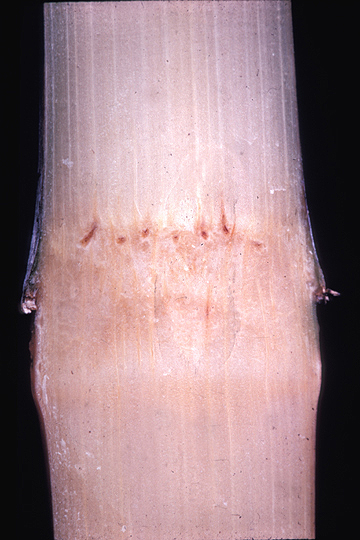
Ratoon stunt | Sugarcane
DISEASE: Ratoon stunt
HOST: Sugarcane (Saccharum officinarum)
PATHOGEN: Leifsonia xyli subsp. xyli
SOURCE: D. Teakle
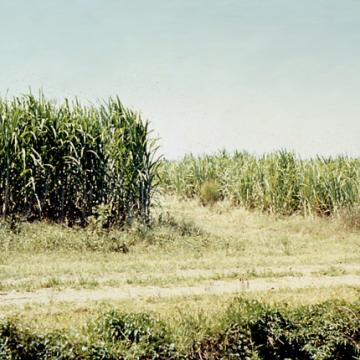
DISEASE: Ratoon stunt
HOST: Sugarcane
Disease of susceptible cultivar L62-96 (right). External symptoms are characterized by stunting and poor growth.
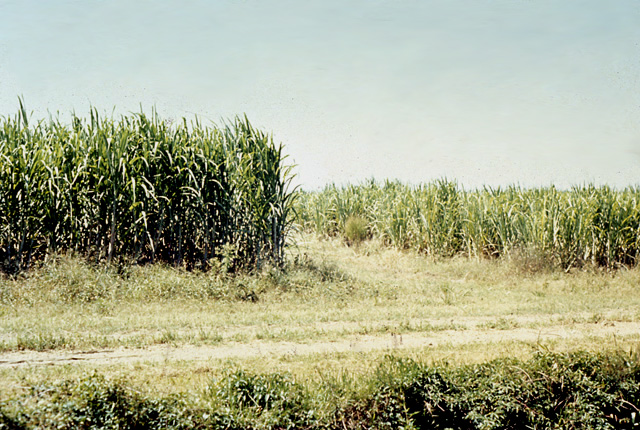
Ratoon stunt | Sugarcane
DISEASE: Ratoon stunt
HOST: Sugarcane (Saccharum officinarum)
PATHOGEN: Leifsonia xyli subsp. xyli
SOURCE: A. Gillaspie, M. Davis
DISEASE: Ratoon stunt
HOST: Sugarcane
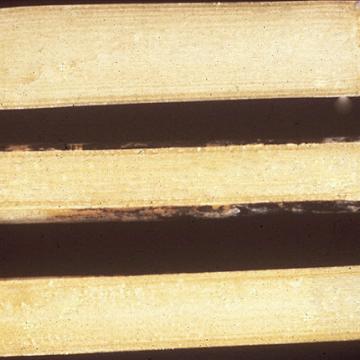
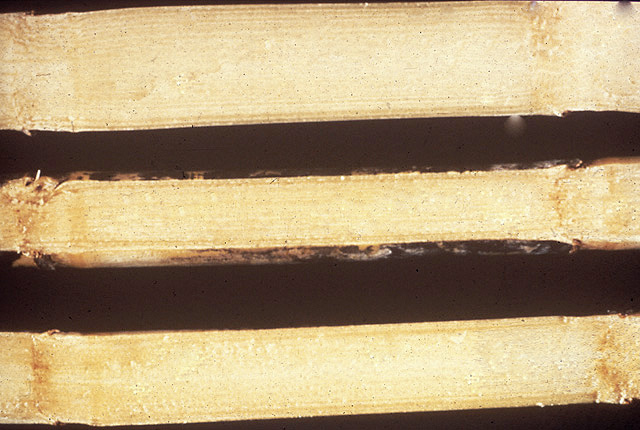
Red discoloration just below nodal tissues is a symptom in mature stalks of 'L41-233'.
Ratoon stunt | Sugarcane
DISEASE: Ratoon stunt
HOST: Sugarcane (Saccharum officinarum)
PATHOGEN: Leifsonia xyli subsp. xyli
SOURCE: A. Gillaspie, M. Davis
DISEASE: Ratoon stunt
HOST: Sugarcane
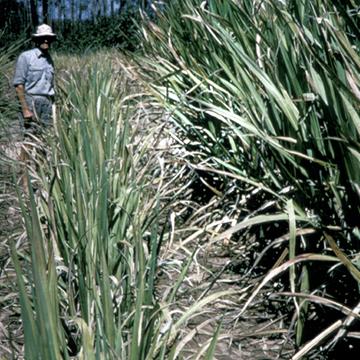
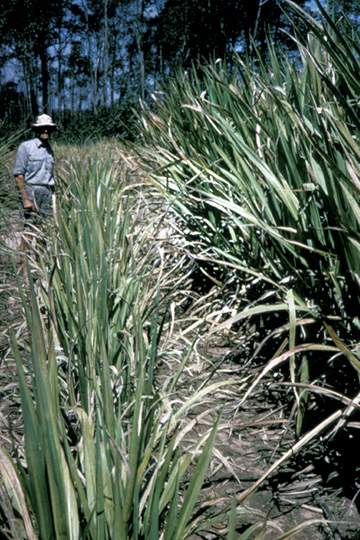
Row of disease 'Trojan' plants (left). Healthy row (right).
Ratoon stunt | Sugarcane
DISEASE: Ratoon stunt
HOST: Sugarcane (Saccharum officinarum 'Trojan')
PATHOGEN: Leifsonia xyli subsp. xyli
SOURCE: D. Teakle
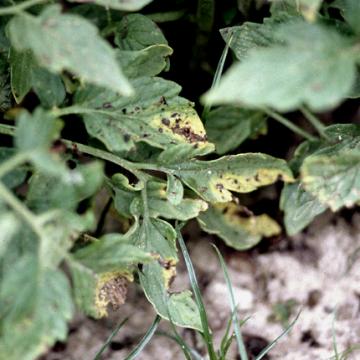
DISEASE: Syringae leaf spot
HOST: Tomato
Leaves with brown necrotic lesions and chlorotic margins. Symptoms vary greatly among cultivars. Some have black or brown lesions with bright yellow, chlorotic areas and others do not have yellowing.
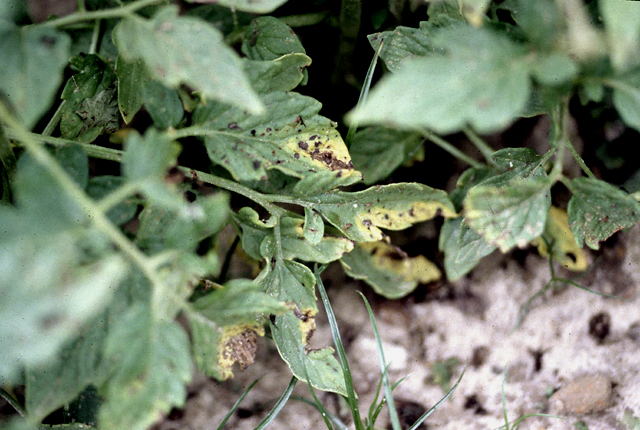
Syringae leaf spot | Tomato
DISEASE: Syringae leaf spot
HOST: Tomato (Lycopersicon esculentum)
PATHOGEN: Pseudomonas syringae pv. syringae
SOURCE: R. Gitaitis