

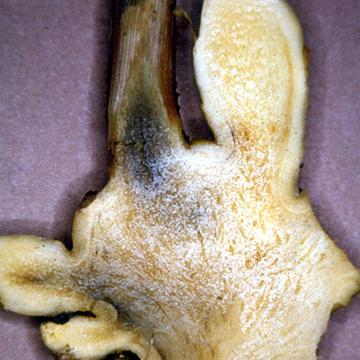
DISEASE: Bacterial wilt
HOST: Ginger
Blackening of pith and cortex of rhizome.
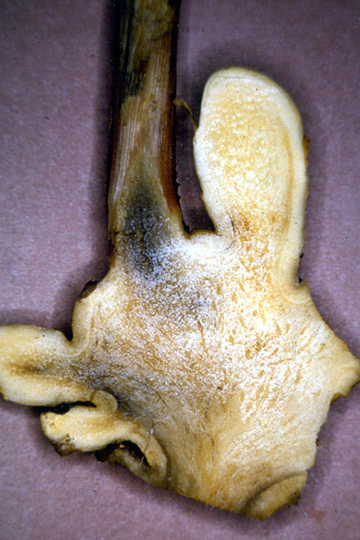
Bacterial wilt | Ginger
DISEASE: Bacterial wilt
HOST: Ginger (Zingiber officinale)
PATHOGEN: Ralstonia solanacearum
PATHOGEN SYNONYM: Pseudomonas solanacearum
SOURCE: A. Alvarez
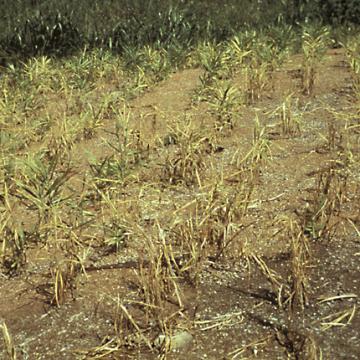
DISEASE: Bacterial wilt
HOST: Ginger
Field of wilted ginger plants.
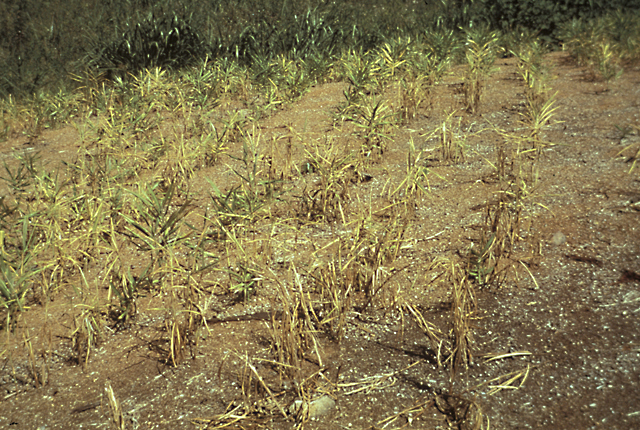
Bacterial wilt | Ginger
DISEASE: Bacterial wilt
HOST: Ginger (Zingiber officinale)
PATHOGEN: Ralstonia solanacearum
PATHOGEN SYNONYM: Pseudomonas solanacearum
SOURCE: A. Hayward
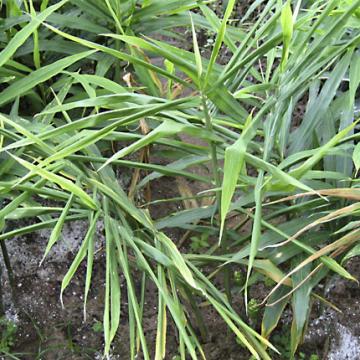
DISEASE: Bacterial wilt
HOST: Ginger
Ginger plants with yellowing, marginal necrosis, and downward curling of infected leaves, in contrast to darker, fully expanded healthy leaves.
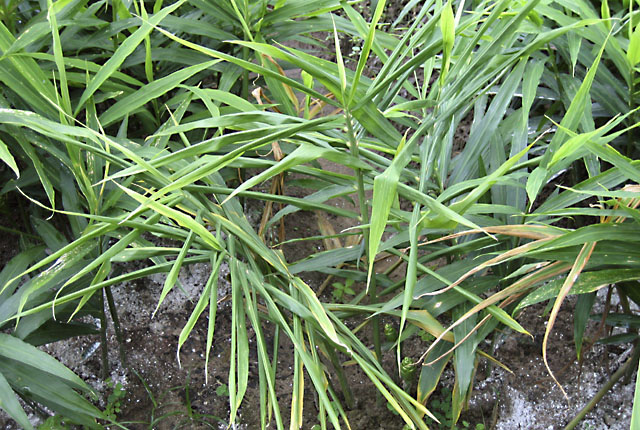
Bacterial wilt | Ginger
DISEASE: Bacterial wilt
HOST: Ginger (Zingiber officinale)
PATHOGEN: Ralstonia solanacearum
PATHOGEN SYNONYM: Pseudomonas solanacearum
SOURCE: M. Paret, N. Joy
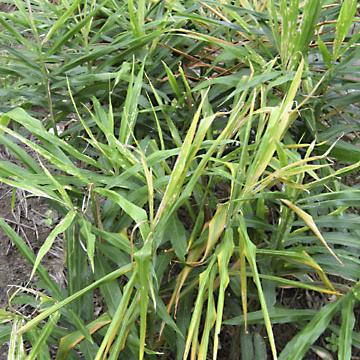
DISEASE: Bacterial wilt
HOST: Ginger
Cupping and leaf necrosis precedes wilt and death of plants.
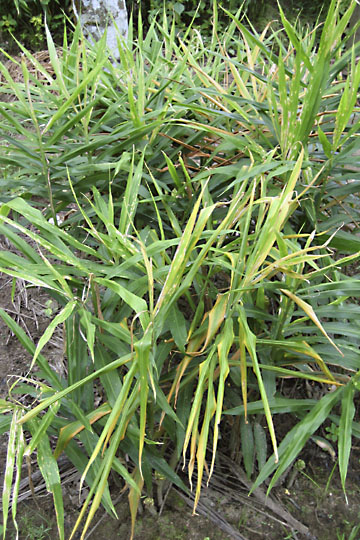
Bacterial wilt | Ginger
DISEASE: Bacterial wilt
HOST: Ginger (Zingiber officinale)
PATHOGEN: Ralstonia solanacearum
PATHOGEN SYNONYM: Pseudomonas solanacearum
SOURCE: M. Paret, N. Joy
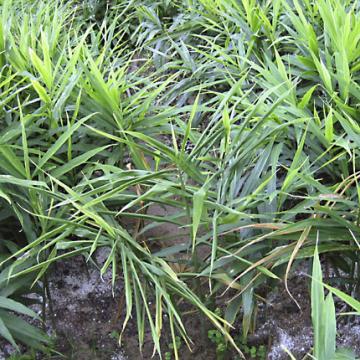
DISEASE: Bacterial wilt
HOST: Ginger
Typical symptoms of bacterial wilt in ginger plantations, Kerala, India.
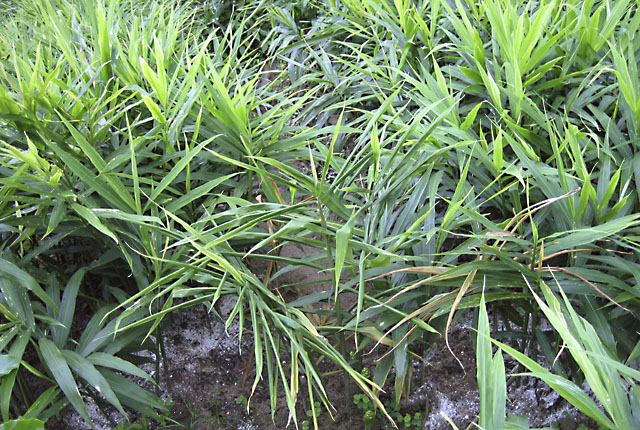
Bacterial wilt | Ginger
DISEASE: Bacterial wilt
HOST: Ginger (Zingiber officinale)
PATHOGEN: Ralstonia solanacearum
PATHOGEN SYNONYM: Pseudomonas solanacearum
SOURCE: M. Paret, N. Joy
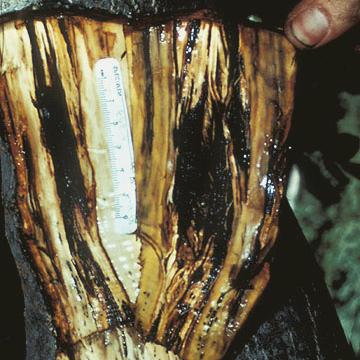
DISEASE: Deep bark canker
HOST: Walnut
Pits in the wood and black streaks in inner bark are key diagnostic symptoms.
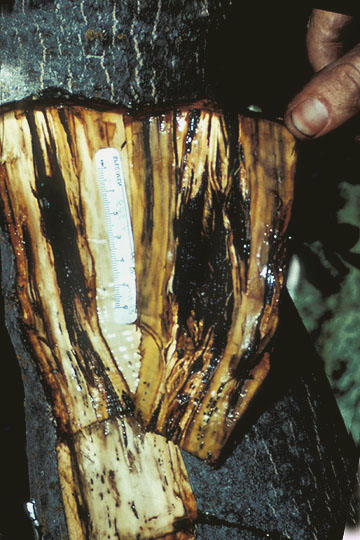
Deep bark canker | Walnut
DISEASE: Deep bark canker
HOST: Walnut (Juglans regia)
PATHOGEN: Brenneria rubrifaciens
PATHOGEN SYNONYM: Erwinia rubrifaciens
SOURCE: N. Schaad, M. Schroth
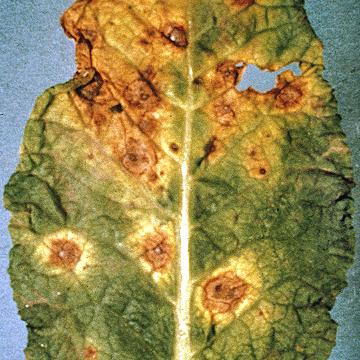
DISEASE: Pseudomonas leaf spot
HOST: Primrose
Leaf with brownish red spots and reddening of adjacent areas. Disease begins as small, water-soaked lesions that later coalesce into large necrotic spots.
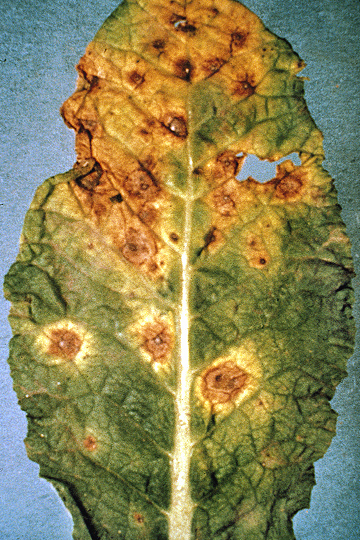
Pseudomonas leaf spot | Primrose
DISEASE: Pseudomonas leaf spot
HOST: Primrose (Primula sp.)
PATHOGEN: Pseudomonas syringae pv. primulae
SOURCE: APS