

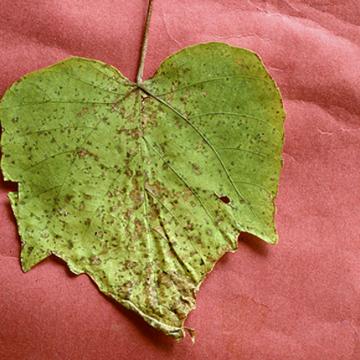
DISEASE: Bacterial brown spot
HOST: Mallotus
Leaf with small, rustylike lesions.
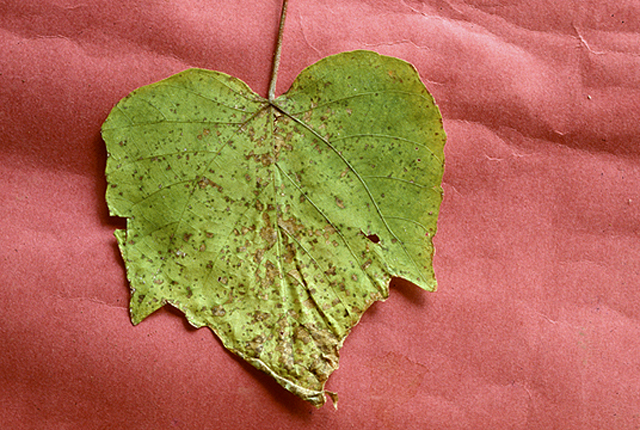
Bacterial brown spot | Mallotus
DISEASE: Bacterial brown spot
HOST: Mallotus (Mallotus japonicus)
PATHOGEN: Xanthomonas campestris pv. malloti
SOURCE: M. Goto
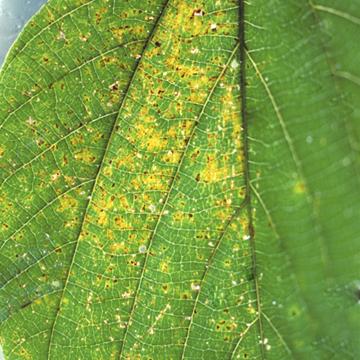
DISEASE: Bacterial brown spot
HOST: Mallotus
Leaf with tiny, light brown spots surrounded by chlorotic zones.
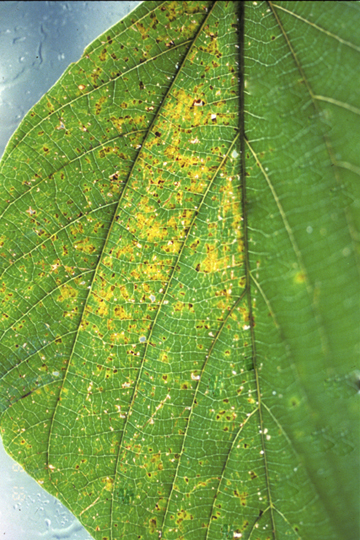
Bacterial brown spot | Mallotus
DISEASE: Bacterial brown spot
HOST: Mallotus (Mallotus japonicus)
PATHOGEN: Xanthomonas campestris pv. malloti
SOURCE: M. Kobayashi, M. Goto
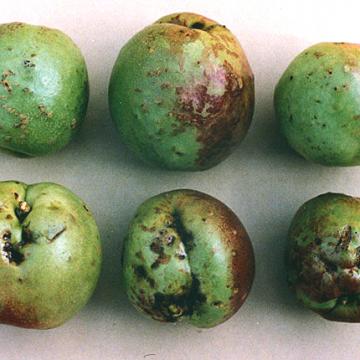
DISEASE: Bacterial dieback of nectarine
HOST: Nectarine
Fruit lesions is another symptom of this disease.
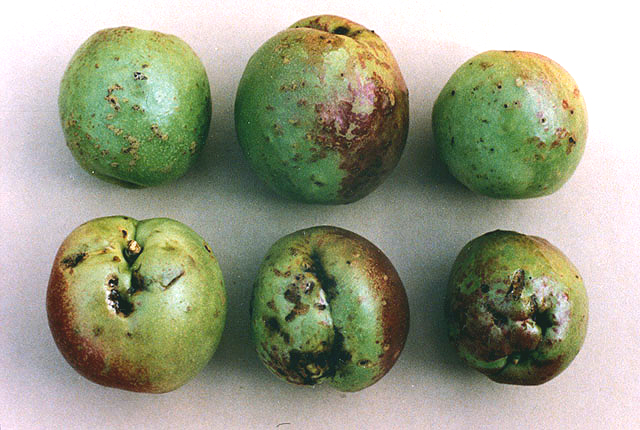
Bacterial dieback of nectarine | Nectarine
DISEASE: Bacterial dieback of nectarine
HOST: Nectarine (Prunus persica var. nucipersica 'Redgold')
PATHOGEN: Pseudomonas syringae pv. persicae
SOURCE: J. Young
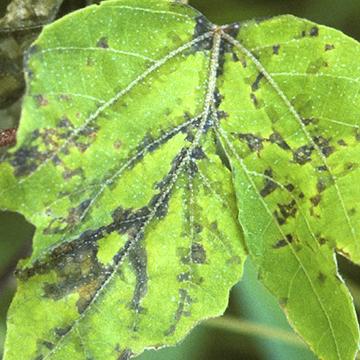
DISEASE: Bacterial leaf spot
HOST: Mallotus
Leaf with dark and water-soaked lesions along veins.
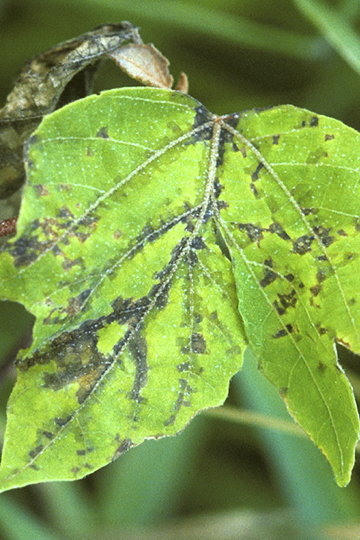
Bacterial leaf spot | Mallotus
DISEASE: Bacterial leaf spot
HOST: Mallotus (Mallotus japonicus)
PATHOGEN: Erwinia mallotivora
SOURCE: M. Kobayashi, M. Goto
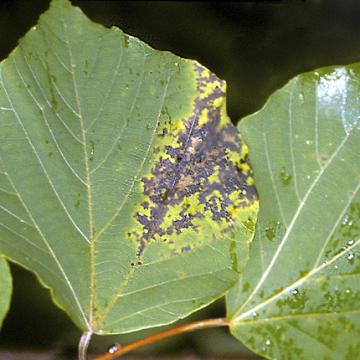
DISEASE: Bacterial leaf spot
HOST: Mallotus
Leaves with water-soaking, and one also with dark spots surrounded by chlorotic tissues.
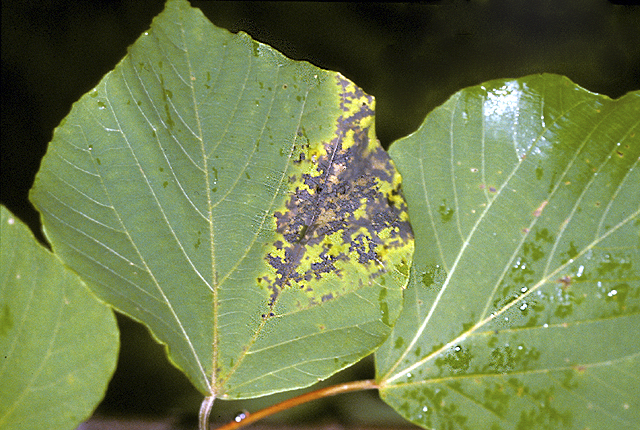
Bacterial leaf spot | Mallotus
DISEASE: Bacterial leaf spot
HOST: Mallotus (Mallotus japonicus)
PATHOGEN: Erwinia mallotivora
SOURCE: M. Kobayashi, M. Goto
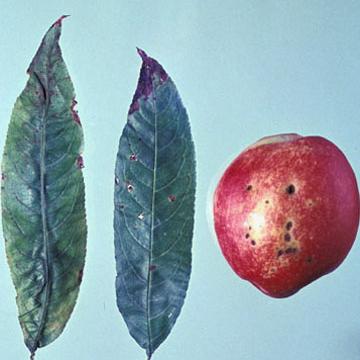
DISEASE: Bacterial spot
HOST: Nectarine
Nectarine with necrotic spots on leaves and dark necrotic spots on fruit.
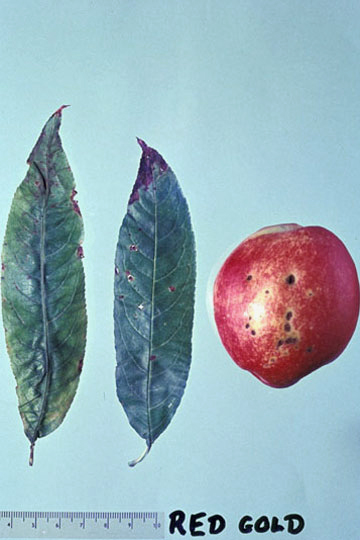
Bacterial spot | Nectarine
DISEASE: Bacterial spot
HOST: Nectarine (Prunus persica var. nucipersica 'Redgold')
PATHOGEN: Xanthomonas arboricola pv. pruni
PATHOGEN SYNONYM: Xanthomonas campestris pv. pruni
SOURCE: J. Young
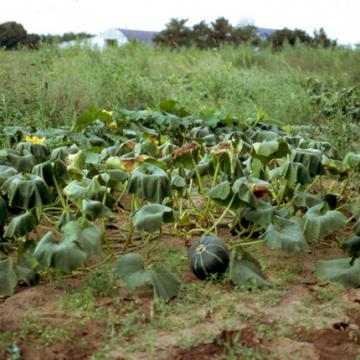
DISEASE: Bacterial wilt
HOST: Squash
Field with severe symptoms of wilt. Foliage often is chlorotic and leaf margins may be chlorotic and necrotic before plant death. Bacterial ooze may be seen streaming from the xylem when infected stems are cut.
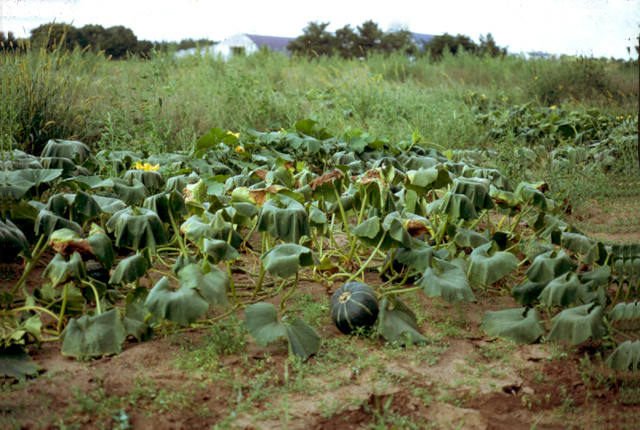
Bacterial wilt | Squash
DISEASE: Bacterial wilt
HOST: Squash (Cucurbita maxima)
PATHOGEN: Erwinia tracheiphila
SOURCE: B. Jacobsen, M. Shurtleff