


DISEASE: Lethal yellowing
HOST: Palm
Lethal yellowing of palms in Florida. This image was taken shortly after initial outbreak.

Lethal yellowing | Palm
DISEASE: Lethal yellowing
HOST: Palm (Cocos nucifera)
PATHOGEN: 'Candidatus Phytoplasma palmae'
PATHOGEN SYNONYM: Phytoplasma Coconut lethal yellowing group
SOURCE: M. Shurtleff
DISEASE: Lethal yellowing
HOST: Palm
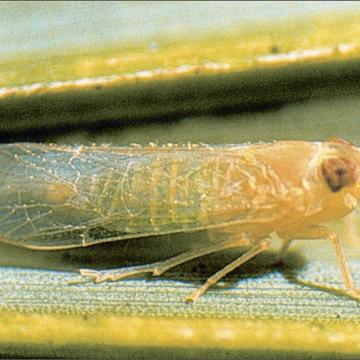
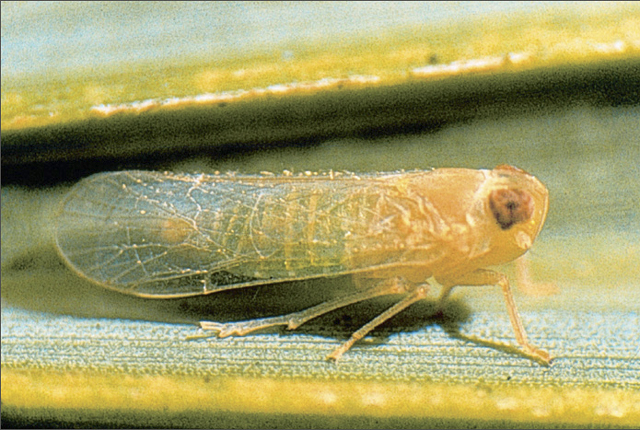
Myndus crudus, planthopper, a vector of the lethal yellowing phytoplasma of palms and grasses.
Lethal yellowing | Palm
DISEASE: Lethal yellowing
HOST: Palm (Cocos nucifera)
PATHOGEN: 'Candidatus Phytoplasma palmae'
PATHOGEN SYNONYM: Phytoplasma Coconut lethal yellowing group
SOURCE: N. A. Harrison
DISEASE: Lethal yellowing
HOST: Palm
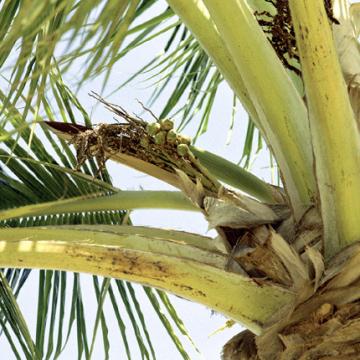
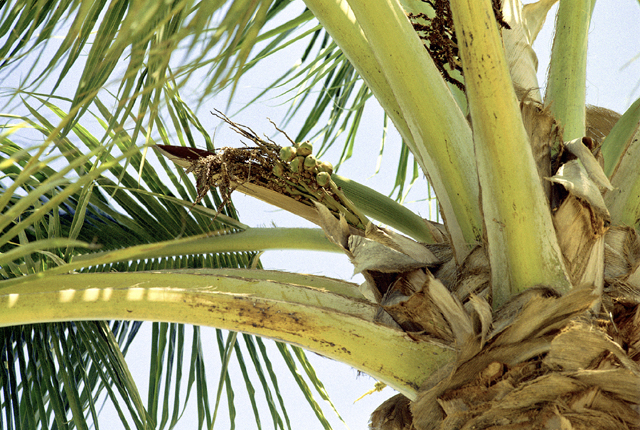
Palm with necrotic inflorescence.
Lethal yellowing | Palm
DISEASE: Lethal yellowing
HOST: Palm (Cocos nucifera)
PATHOGEN: 'Candidatus Phytoplasma palmae'
PATHOGEN SYNONYM: Phytoplasma Coconut lethal yellowing group
SOURCE: W. Sinclair
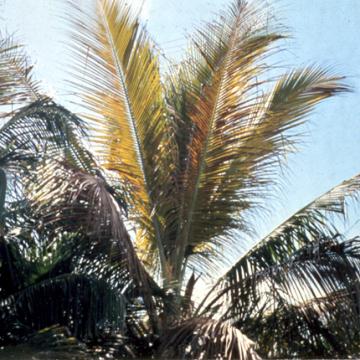
DISEASE: Lethal yellowing
HOST: Palm
Coconut palm exhibiting late stage of disease with chlorotic fronds.
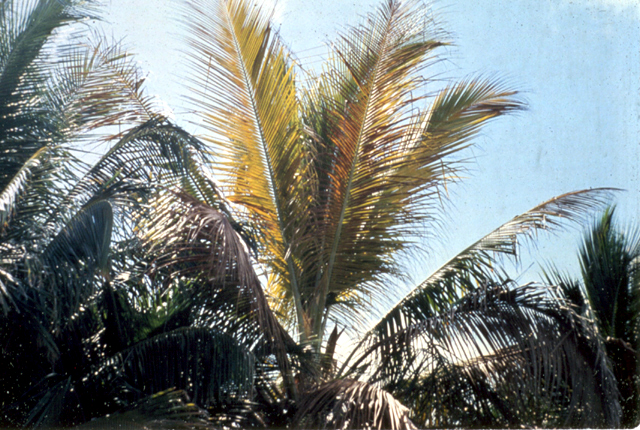
Lethal yellowing | Palm
DISEASE: Lethal yellowing
HOST: Palm (Cocos nucifera)
PATHOGEN: 'Candidatus Phytoplasma palmae'
PATHOGEN SYNONYM: Phytoplasma Coconut lethal yellowing group
SOURCE: A. Martinez
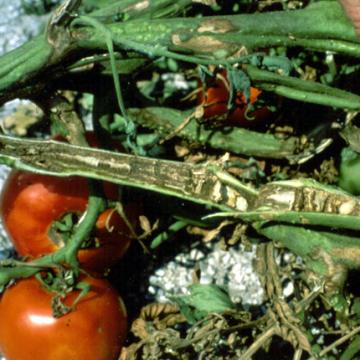
DISEASE: Pith necrosis
HOST: Tomato
Cracked, dry, hollow stems with internal necrosis.
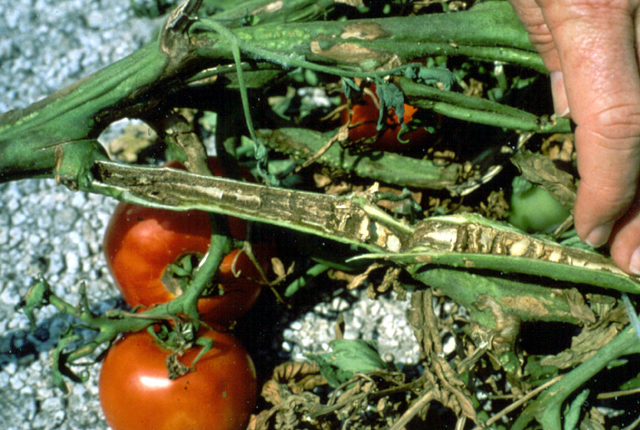
Pith necrosis | Tomato
DISEASE: Pith necrosis
HOST: Tomato (Lycopersicon esculentum)
PATHOGEN: Pseudomonas corrugata
SOURCE: A. Alvarez
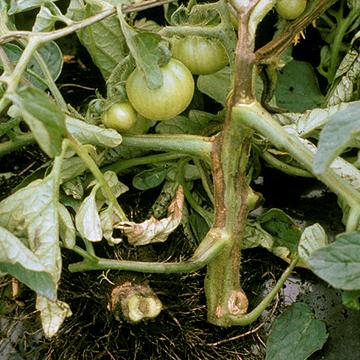
DISEASE: Pith necrosis
HOST: Tomato
External necrotic stem tissues. Initial symptoms include chlorosis of young leaves. Wilting may occur when disease is severe.
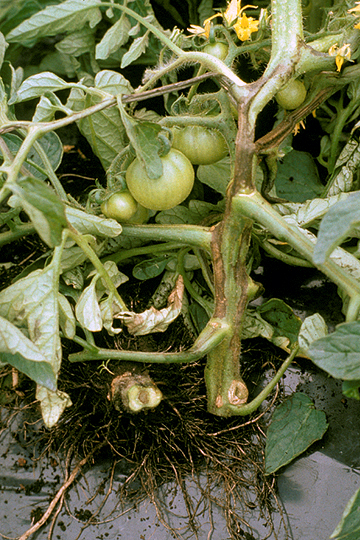
Pith necrosis | Tomato
DISEASE: Pith necrosis
HOST: Tomato (Lycopersicon esculentum)
PATHOGEN: Pseudomonas corrugata
SOURCE: K. Natsuaki, M. Goto
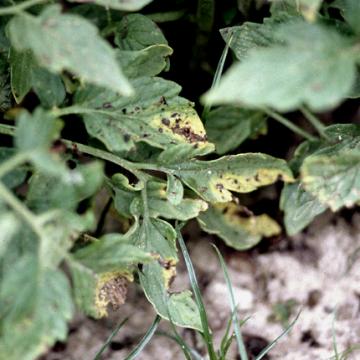
DISEASE: Syringae leaf spot
HOST: Tomato
Leaves with brown necrotic lesions and chlorotic margins. Symptoms vary greatly among cultivars. Some have black or brown lesions with bright yellow, chlorotic areas and others do not have yellowing.
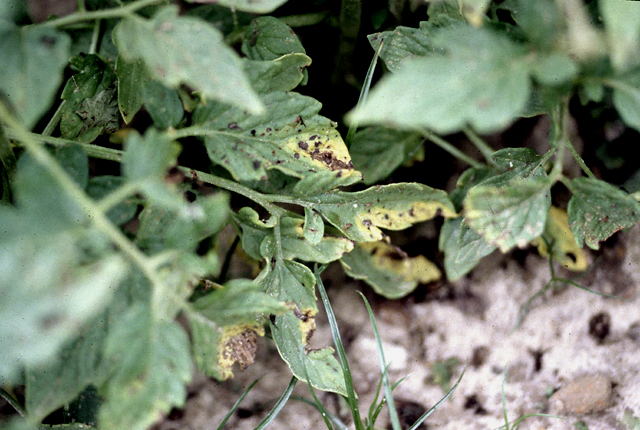
Syringae leaf spot | Tomato
DISEASE: Syringae leaf spot
HOST: Tomato (Lycopersicon esculentum)
PATHOGEN: Pseudomonas syringae pv. syringae
SOURCE: R. Gitaitis
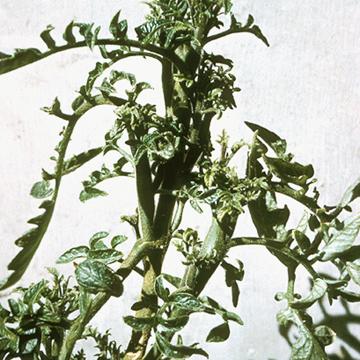
DISEASE: Tomato big bud
HOST: Tomato
Characteristic symptoms are swollen, apical stems and stunted leaves. Apical stems are generally thickened and assume a stiff and erect growth habit. Internodes are shortened and flower buds are greatly enlarged.
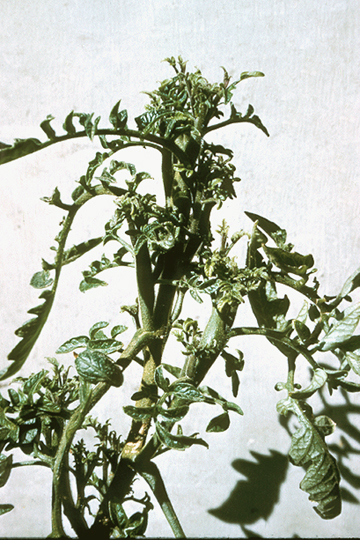
Tomato big bud | Tomato
DISEASE: Tomato big bud
HOST: Tomato (Lycopersicon esculentum)
PATHOGEN: 'Candidatus Phytoplasma asteris'
PATHOGEN SYNONYM: Phytoplasma Aster yellows group
SOURCE: D. Teakle
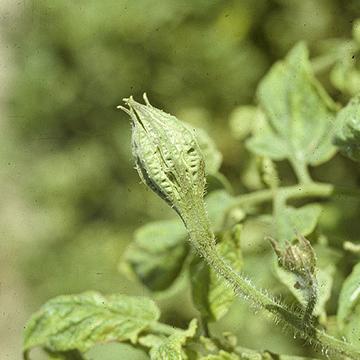
DISEASE: Tomato big bud
HOST: Tomato
Symptoms are enlarge sepals that do not separate. Flower buds stay green and do not develop into fruit. Leaves are small and chlorotic.
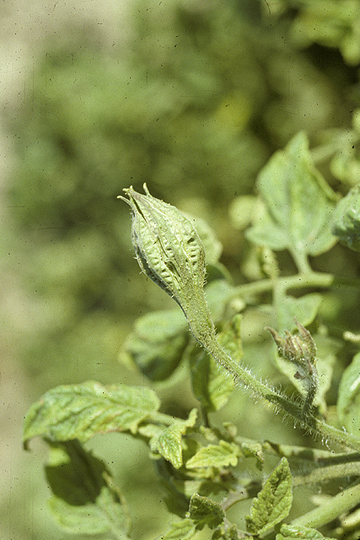
Tomato big bud | Tomato
DISEASE: Tomato big bud
HOST: Tomato (Lycopersicon esculentum)
PATHOGEN: 'Candidatus Phytoplasma asteris'
PATHOGEN SYNONYM: Phytoplasma Aster yellows group
SOURCE: S. Thomson