

background


Header Menu

  • VIEW NARRATIVES
Home

World Encyclopedia of Plant Bacterial Diseases

FILTER BY

clear all
clear done

FILTERS

  • Alfalfa
  • Almond
  • Aloe
  • Amaranth
  • Anthurium
  • Apple
  • Apricot
  • Armeria
  • Ash
  • Aspen
  • Aster
  • Avocado
  • Banana
  • (-) Barley
  • Bean
  • Beet
  • Begonia
  • Bindweed
  • Bird-of-Paradise
  • Blackberry
  • Bougainvillea
  • Broccoli
  • Butternut
  • Cabbage
  • Cactus
  • Campanula
  • Candytuft
  • Canna
  • Cantaloupe
  • Carnation
  • Carrot
  • Cassava
  • Casuarina
  • Cauliflower
  • Celery
  • Chard
  • Cherry
  • Cherry laurel
  • China fir
  • Chokecherry
  • Chrysanthemum
  • Cilantro
  • Citron melon
  • Citrus (Grapefruit)
  • Citrus (Lemon)
  • Citrus (Lime)
  • Citrus (Mandarin orange)
  • Citrus (Orange)
  • Citrus (sp. unknown)
  • Clove
  • Clover
  • Coffee
  • Collard
  • Coreopsis
  • Coriander
  • Corn (Maize)
  • Cotton
  • Cowpea
  • Crabapple
  • Croton
  • Crown-of-thorns
  • Cucumber
  • Custard apple
  • Daffodil
  • Dahlia
  • Daisy
  • Datura
  • Dieffenbachia
  • Dogwood
  • Dracaena
  • Eggplant
  • Elderberry
  • Elm
  • Euonymus
  • Fennel
  • Fern
  • Ficus
  • Florida hopbush
  • Forsythia
  • Gayfeather
  • Gentian
  • Geranium
  • Ginger
  • Ginkgo
  • Gladiolus
  • Grape
  • Grass
  • Gypsophila (Baby's breath)
  • Hawaiian ticktrefoil
  • Hawthorn
  • Hazelnut
  • Heliconia
  • Heron's bill (Stork's bill)
  • Hibiscus
  • Hickory
  • Horseradish
  • Hyacinth
  • Hydrangea (Oak-leaf)
  • Iris
  • Ivy
  • Kalanchoe
  • Kiwi
  • Koa
  • Konjac (Devil's tongue)
  • Kudzu
  • Larkspur
  • Laurel (California laurel)
  • Lavender
  • Lettuce
  • Lilac
  • Lily
  • Loquat
  • Magnolia
  • Mallotus
  • Mango
  • Maple
  • Marigold
  • Millet
  • Mulberry
  • Mume (Japanese apricot)
  • Mushroom
  • Muskmelon
  • Mustard
  • (-) Nectarine
  • Nephthytis
  • Oak
  • Oat
  • Oleander
  • Olive
  • Onion
  • Orchid
  • Ornithogalum
  • Palm
  • Panax
  • Papaya
  • Parsley
  • Parsnip
  • Paulownia (Empress tree)
  • (-) Pea
  • Peach
  • Peanut
  • Pear
  • Pecan
  • Pellionia
  • Pepper
  • Periwinkle
  • Persimmon
  • Petunia
  • Photinia
  • Pigeon pea
  • Pineapple
  • Plum
  • Pluot
  • Poinsettia
  • Poppy
  • Potato
  • Pothos
  • Primrose
  • Pumpkin
  • Radish
  • Ranunculus
  • Raspberry
  • Rhododendron
  • Rice
  • Rose
  • Rutabaga
  • Scarlet firethorn
  • Schefflera
  • Sedum
  • Sesame
  • Snapdragon
  • Sorghum
  • Soybean
  • Spathiphyllum
  • Squash
  • Stock
  • Strawberry
  • Sugarcane
  • Sweetgum
  • Sweet potato
  • Sycamore
  • Tea
  • Ti
  • Tobacco
  • Tomato
  • Tulip
  • Turnip
  • Verbena
  • Viola (Horned violet)
  • Walnut
  • Wasabi (Japanese horseradish)
  • Watercress
  • Watermelon
  • Wheat
  • Wheatgrass
  • Willow
  • Wisteria (Japanese wisteria)
  • Yam bean
  • Zinnia
  • Hordeum vulgare
  • Pisum sativum
  • Prunus persica 'Fantasia'
  • Prunus persica var. nucipersica
  • Prunus persica var. nucipersica 'Redgold'
  • Aster yellows
  • Bacterial blight
  • Bacterial dieback of nectarine
  • Bacterial kernel blight (Leaf blight)
  • Bacterial leaf blight
  • Bacterial spot
  • Bacterial wilt
  • Black chaff (Bacterial leaf streak)
  • 'Candidatus Phytoplasma asteris'
  • Pseudomonas syringae pv. persicae
  • Pseudomonas syringae pv. pisi
  • Pseudomonas syringae pv. syringae
  • Ralstonia solanacearum
  • Xanthomonas arboricola pv. pruni
  • Xanthomonas translucens pv. undulosa
Done

RESULTS

(21)
FILTER

Pagination

  • Current page 1
  • Page 2
  • Page 3
  • Next page Next ›
  • Last page Last »
DISEASE: Aster yellows
HOST: Barley
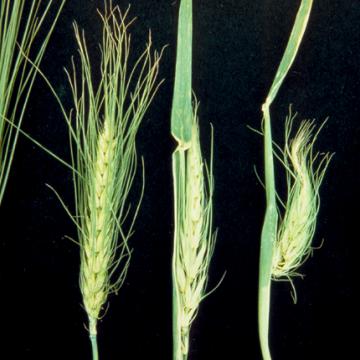
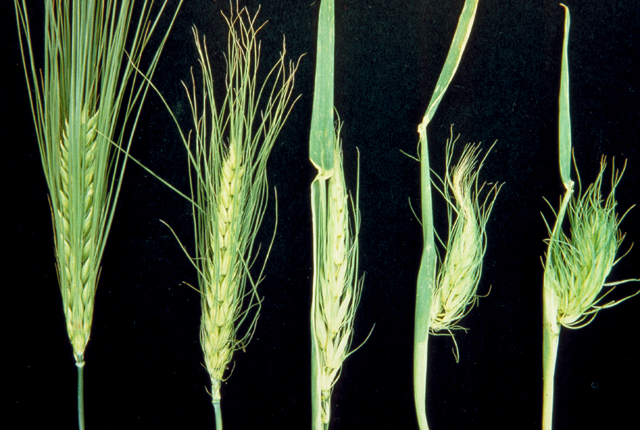
Infection by this phytoplasm causes twisted awns and sterile florets.
Aster yellows | Barley
DISEASE: Aster yellows
HOST: Barley (Hordeum vulgare)
PATHOGEN: 'Candidatus Phytoplasma asteris'
PATHOGEN SYNONYM: Phytoplasma Aster yellows group
SOURCE: E. Banttari
DISEASE: Aster yellows
HOST: Barley
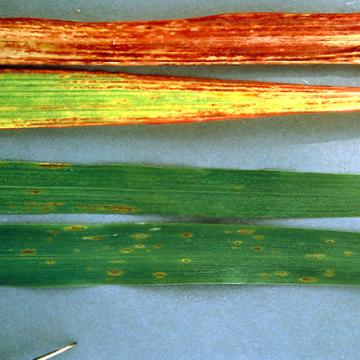
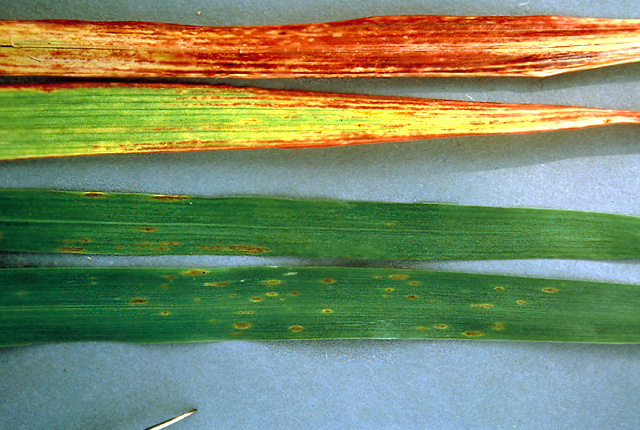
Small necrotic spots on lower leaves and red coalescing streaks on upper leaves.
Aster yellows | Barley
DISEASE: Aster yellows
HOST: Barley (Hordeum vulgare)
PATHOGEN: 'Candidatus Phytoplasma asteris'
PATHOGEN SYNONYM: Phytoplasma Aster yellows group
SOURCE: E. Banttari
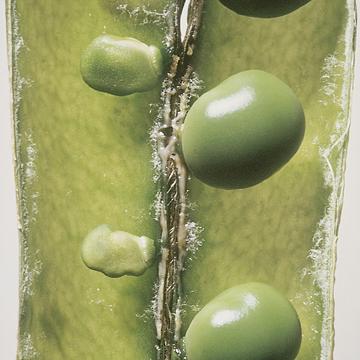
DISEASE: Bacterial blight
HOST: Pea
Pea pod with diseased seeds and infection along the suture.
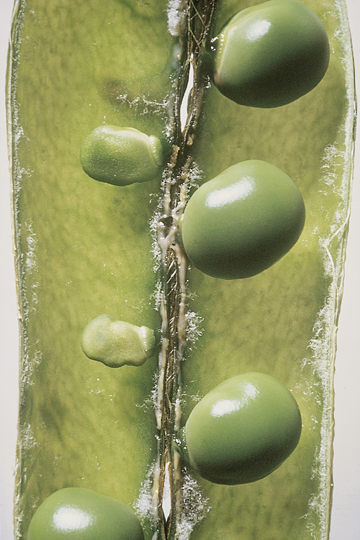
Bacterial blight | Pea
DISEASE: Bacterial blight
HOST: Pea (Pisum sativum)
PATHOGEN: Pseudomonas syringae pv. pisi
SOURCE: J. M. Kraft
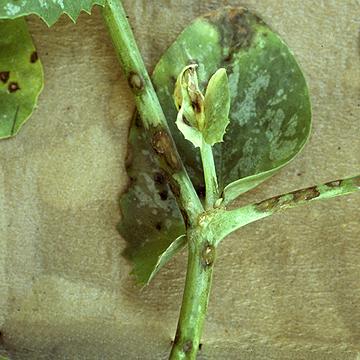
DISEASE: Bacterial blight
HOST: Pea
Pea plant with water-soaked lesions on stems and leaves with some bacterial exudate evident. Irregular lesions turn dark brown with light tan centers. Severe distortion of stems, petioles, and growing points may occur.
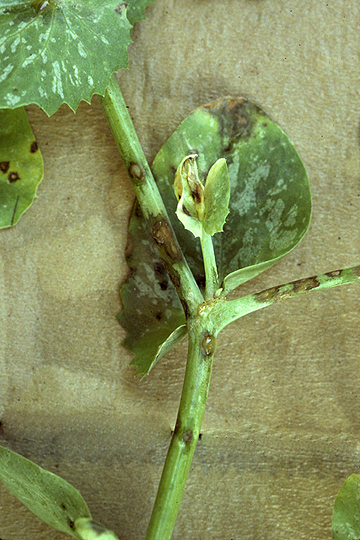
Bacterial blight | Pea
DISEASE: Bacterial blight
HOST: Pea (Pisum sativum)
PATHOGEN: Pseudomonas syringae pv. pisi
SOURCE: S. Thomson
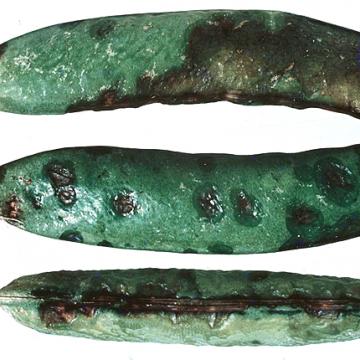
DISEASE: Bacterial blight
HOST: Pea
Dark lesions on pods and dorsal sutures.
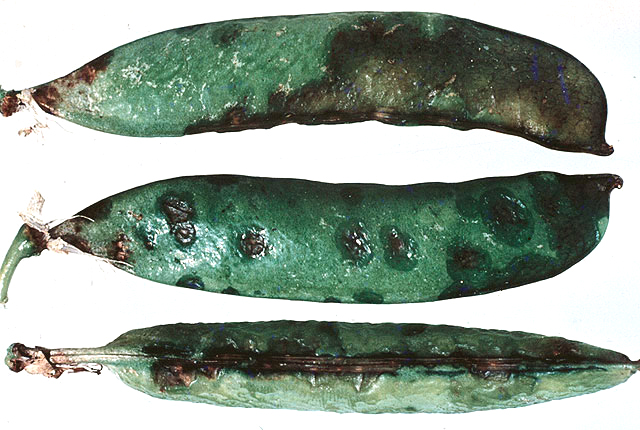
Bacterial blight | Pea
DISEASE: Bacterial blight
HOST: Pea (Pisum sativum)
PATHOGEN: Pseudomonas syringae pv. pisi
SOURCE: J. Young
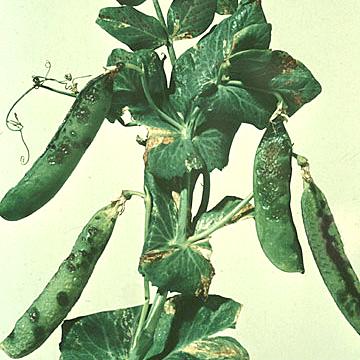
DISEASE: Bacterial blight
HOST: Pea
Severely diseased plant with array of blight symptoms.
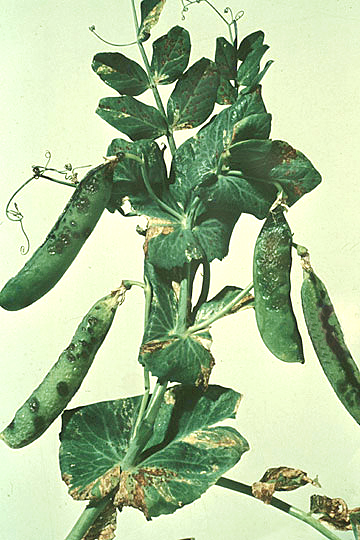
Bacterial blight | Pea
DISEASE: Bacterial blight
HOST: Pea (Pisum sativum)
PATHOGEN: Pseudomonas syringae pv. pisi
SOURCE: J. Young
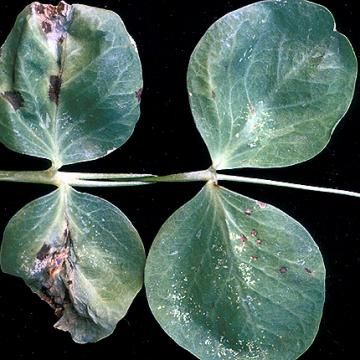
DISEASE: Bacterial blight
HOST: Pea
Leaves with typical blight symptoms. The disease also affects nodes, stipules, floral parts, stems, and pods.
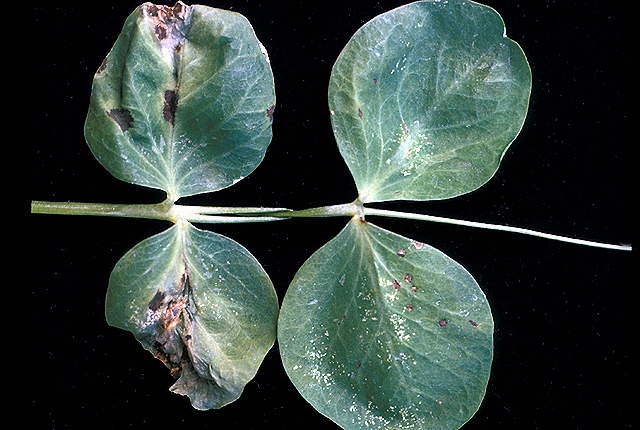
Bacterial blight | Pea
DISEASE: Bacterial blight
HOST: Pea (Pisum sativum)
PATHOGEN: Pseudomonas syringae pv. pisi
SOURCE: M. Schroth
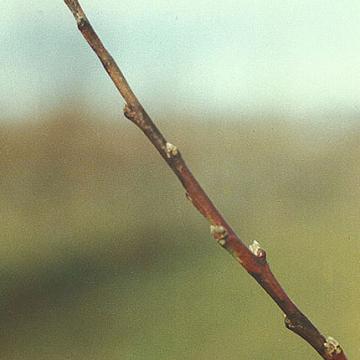
DISEASE: Bacterial dieback of nectarine
HOST: Nectarine
Dark cankers on last year's twig. Symptoms of bacterial dieback of nectarine are identical to those of bacterial dieback of peach.
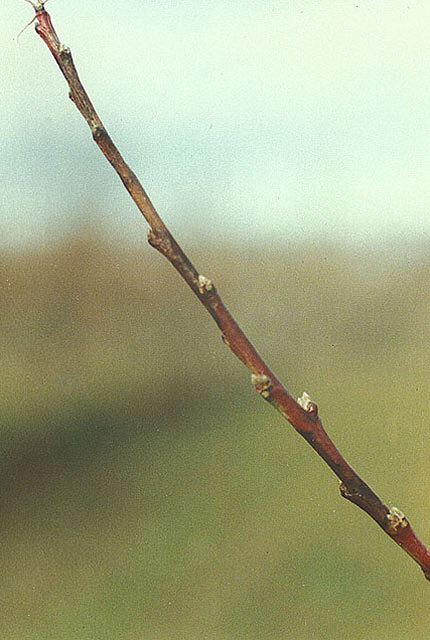
Bacterial dieback of nectarine | Nectarine
DISEASE: Bacterial dieback of nectarine
HOST: Nectarine (Prunus persica var. nucipersica)
PATHOGEN: Pseudomonas syringae pv. persicae
SOURCE: J. Young
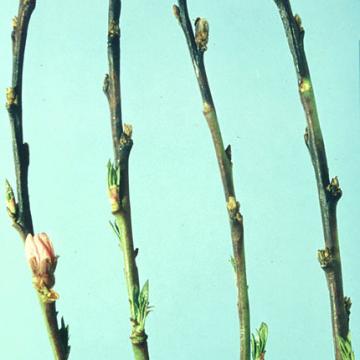
DISEASE: Bacterial dieback of nectarine
HOST: Nectarine
Diseased young twigs.
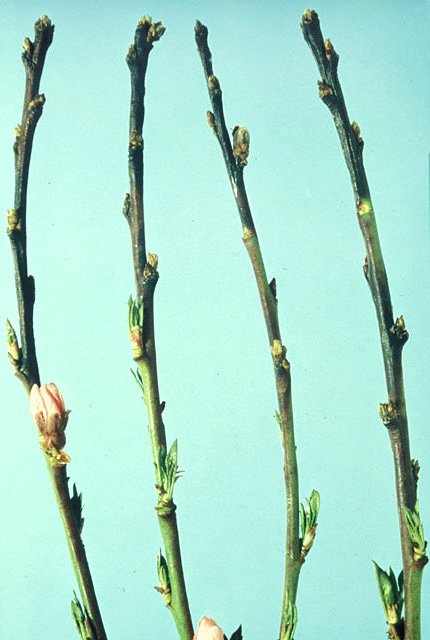
Bacterial dieback of nectarine | Nectarine
DISEASE: Bacterial dieback of nectarine
HOST: Nectarine (Prunus persica var. nucipersica)
PATHOGEN: Pseudomonas syringae pv. persicae
SOURCE: J. Young

Pagination

  • Current page 1
  • Page 2
  • Page 3
  • Next page Next ›
  • Last page Last »

Footer_Menu

  • CO-AUTHORS
  • PURPOSE
  • ACKNOWLEDGEMENTS
  • NARRATIVES
  • CONTACT
  • PRIVACY POLICY

© 2019 PlantDiseases.org. All Rights Reserved.