

background


Header Menu

  • VIEW NARRATIVES
Home

World Encyclopedia of Plant Bacterial Diseases

FILTER BY

clear all
clear done

FILTERS

  • Alfalfa
  • (-) Almond
  • Aloe
  • Amaranth
  • Anthurium
  • Apple
  • (-) Apricot
  • Armeria
  • Ash
  • Aspen
  • Aster
  • Avocado
  • Banana
  • Barley
  • Bean
  • Beet
  • Begonia
  • Bindweed
  • Bird-of-Paradise
  • Blackberry
  • Bougainvillea
  • Broccoli
  • Butternut
  • Cabbage
  • Cactus
  • Campanula
  • Candytuft
  • Canna
  • Cantaloupe
  • Carnation
  • Carrot
  • Cassava
  • Casuarina
  • Cauliflower
  • Celery
  • Chard
  • Cherry
  • Cherry laurel
  • China fir
  • Chokecherry
  • Chrysanthemum
  • Cilantro
  • Citron melon
  • Citrus (Grapefruit)
  • Citrus (Lemon)
  • Citrus (Lime)
  • Citrus (Mandarin orange)
  • Citrus (Orange)
  • Citrus (sp. unknown)
  • Clove
  • Clover
  • Coffee
  • Collard
  • Coreopsis
  • Coriander
  • Corn (Maize)
  • Cotton
  • Cowpea
  • Crabapple
  • Croton
  • Crown-of-thorns
  • Cucumber
  • Custard apple
  • Daffodil
  • Dahlia
  • Daisy
  • Datura
  • Dieffenbachia
  • Dogwood
  • Dracaena
  • Eggplant
  • Elderberry
  • Elm
  • Euonymus
  • Fennel
  • Fern
  • Ficus
  • Florida hopbush
  • Forsythia
  • Gayfeather
  • Gentian
  • Geranium
  • Ginger
  • Ginkgo
  • Gladiolus
  • Grape
  • Grass
  • Gypsophila (Baby's breath)
  • Hawaiian ticktrefoil
  • Hawthorn
  • Hazelnut
  • Heliconia
  • Heron's bill (Stork's bill)
  • Hibiscus
  • Hickory
  • Horseradish
  • Hyacinth
  • Hydrangea (Oak-leaf)
  • Iris
  • Ivy
  • Kalanchoe
  • Kiwi
  • Koa
  • Konjac (Devil's tongue)
  • Kudzu
  • Larkspur
  • Laurel (California laurel)
  • Lavender
  • Lettuce
  • Lilac
  • Lily
  • Loquat
  • Magnolia
  • Mallotus
  • Mango
  • Maple
  • Marigold
  • Millet
  • Mulberry
  • Mume (Japanese apricot)
  • Mushroom
  • Muskmelon
  • Mustard
  • Nectarine
  • Nephthytis
  • Oak
  • Oat
  • Oleander
  • Olive
  • Onion
  • Orchid
  • Ornithogalum
  • Palm
  • Panax
  • Papaya
  • Parsley
  • Parsnip
  • Paulownia (Empress tree)
  • Pea
  • Peach
  • Peanut
  • Pear
  • Pecan
  • Pellionia
  • Pepper
  • Periwinkle
  • Persimmon
  • Petunia
  • Photinia
  • Pigeon pea
  • Pineapple
  • Plum
  • Pluot
  • Poinsettia
  • Poppy
  • (-) Potato
  • Pothos
  • Primrose
  • Pumpkin
  • Radish
  • Ranunculus
  • Raspberry
  • Rhododendron
  • Rice
  • Rose
  • Rutabaga
  • Scarlet firethorn
  • Schefflera
  • Sedum
  • Sesame
  • Snapdragon
  • Sorghum
  • Soybean
  • Spathiphyllum
  • Squash
  • Stock
  • Strawberry
  • Sugarcane
  • Sweetgum
  • Sweet potato
  • Sycamore
  • Tea
  • Ti
  • Tobacco
  • Tomato
  • Tulip
  • Turnip
  • Verbena
  • Viola (Horned violet)
  • Walnut
  • Wasabi (Japanese horseradish)
  • Watercress
  • Watermelon
  • Wheat
  • Wheatgrass
  • Willow
  • Wisteria (Japanese wisteria)
  • Yam bean
  • Zinnia
  • Prunus armeniaca
  • Prunus armeniaca 'Moorpark'
  • Prunus dulcis
  • Solanum tuberosum
  • Almond leaf scorch
  • Aster yellows
  • Bacterial canker
  • Bacterial canker and blast
  • Bacterial hyperplastic canker
  • Bacterial ring rot
  • Bacterial soft rot
  • Bacterial spot
  • Blackleg
  • Brown line and decline
  • Brown rot (Bacteral wilt)
  • Common scab (Potato scab)
  • Crown gall
  • European stone fruit yellows
  • Foamy canker
  • Agrobacterium tumefaciens
  • 'Candidatus Phytoplasma asteris'
  • 'Candidatus Phytoplasma prunorum'
  • 'Candidatus Phytoplasma' sp.
  • Causal agent unknown
  • Clavibacter michiganensis subsp. sepedonicus
  • Pectobacterium atrosepticum
  • Pectobacterium carotovorum
  • Pseudomonas amygdali
  • Pseudomonas syringae pv. syringae
  • Ralstonia solanacearum
  • Streptomyces scabiei
  • Xanthomonas arboricola pv. pruni
  • Xylella fastidiosa
Done

RESULTS

(46)
FILTER

Pagination

  • Current page 1
  • Page 2
  • Page 3
  • Page 4
  • Page 5
  • Next page Next ›
  • Last page Last »
DISEASE: Almond leaf scorch
HOST: Almond
Light brown necrotic (scorched) areas on curling leaves.
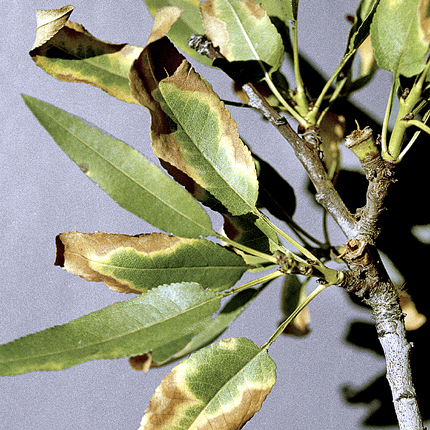
Almond leaf scorch | Almond
DISEASE: Almond leaf scorch
HOST: Almond (Prunus dulcis)
PATHOGEN: Xylella fastidiosa
SOURCE: W. Sinclair
DISEASE: Almond leaf scorch
HOST: Almond
Dying almond trees with scorched appearance. Initial symptoms are marginal chlorosis, usually late in the year. Scorch often is first noted at leaf tips, symptoms worsen, and terminal branches may die.
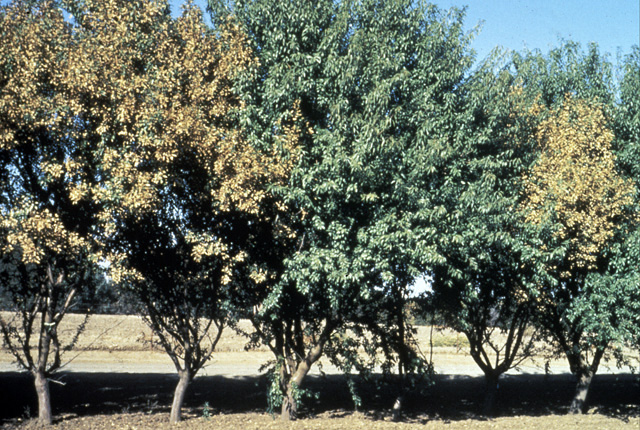
Almond leaf scorch | Almond
DISEASE: Almond leaf scorch
HOST: Almond (Prunus dulcis)
PATHOGEN: Xylella fastidiosa
SOURCE: R. Davis, M. Davis
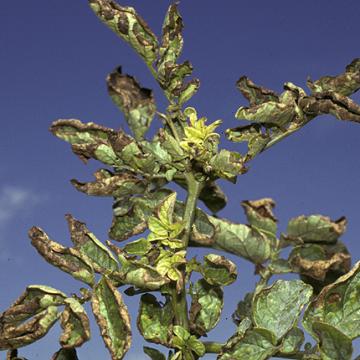
DISEASE: Aster yellows
HOST: Potato
Chlorotic and stunted foliage with necrotic leaf margins. Other symptoms may be phyllody, virescence, purple or yellow pigmentation, and rolling of leaflets.
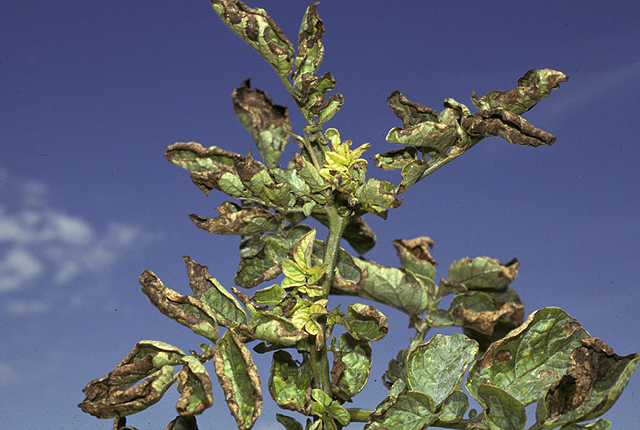
Aster yellows | Potato
DISEASE: Aster yellows
HOST: Potato (Solanum tuberosum)
PATHOGEN: 'Candidatus Phytoplasma asteris'
PATHOGEN SYNONYM: Phytoplasma Aster yellows group
SOURCE: S. Thomson
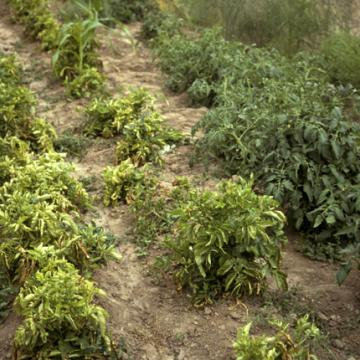
DISEASE: Aster yellows
HOST: Potato
Stunted, chlorotic plants (left) with stiff, rolled leaves.
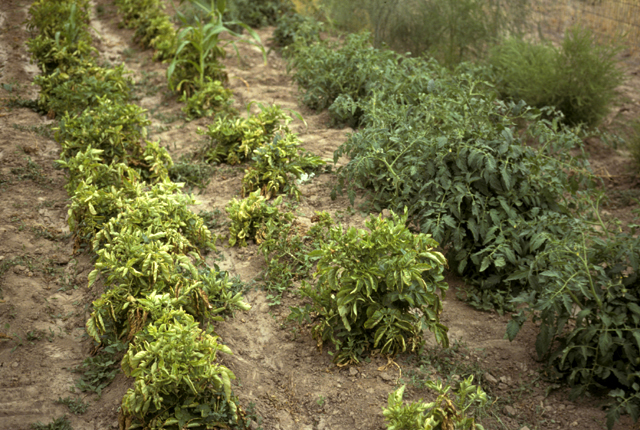
Aster yellows | Potato
DISEASE: Aster yellows
HOST: Potato (Solanum tuberosum)
PATHOGEN: 'Candidatus Phytoplasma asteris'
PATHOGEN SYNONYM: Phytoplasma Aster yellows group
SOURCE: S. Thomson
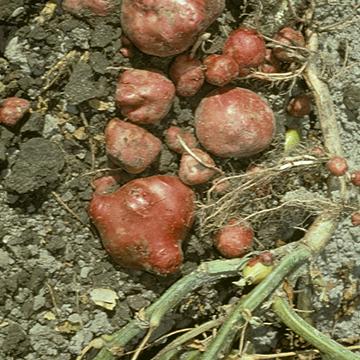
DISEASE: Aster yellows
HOST: Potato
Diseased plant with malformed tubers.
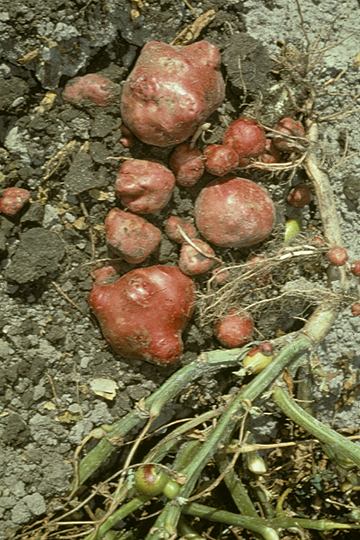
Aster yellows | Potato
DISEASE: Aster yellows
HOST: Potato (Solanum tuberosum)
PATHOGEN: 'Candidatus Phytoplasma asteris'
PATHOGEN SYNONYM: Phytoplasma Aster yellows group
SOURCE: S. Thomson
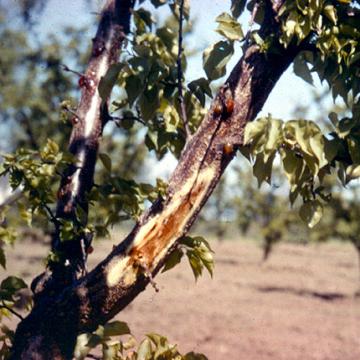
DISEASE: Bacterial canker and blast
HOST: Apricot
Apricot with typical reddish brown-discolored tissues beneath the bark and gumming around infected areas.
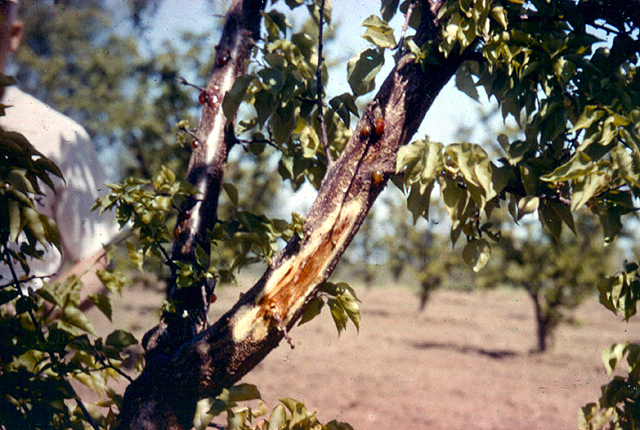
Bacterial canker and blast | Apricot
DISEASE: Bacterial canker and blast
HOST: Apricot (Prunus armeniaca)
PATHOGEN: Pseudomonas syringae pv. syringae
SOURCE: S. Sampson, M. Shurtleff
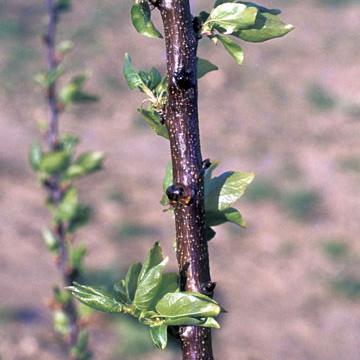
DISEASE: Bacterial canker and blast
HOST: Apricot
Young infected twig with droplets of bacterial ooze on stem.
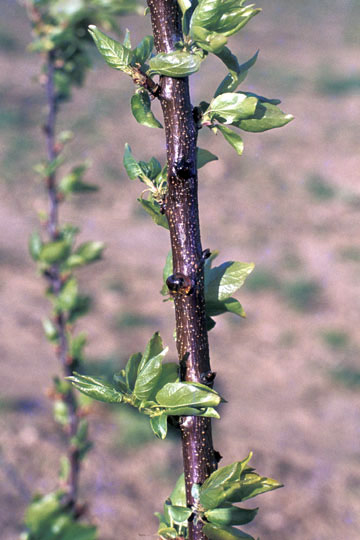
Bacterial canker and blast | Apricot
DISEASE: Bacterial canker and blast
HOST: Apricot (Prunus armeniaca 'Moorpark')
PATHOGEN: Pseudomonas syringae pv. syringae
SOURCE: J. Young
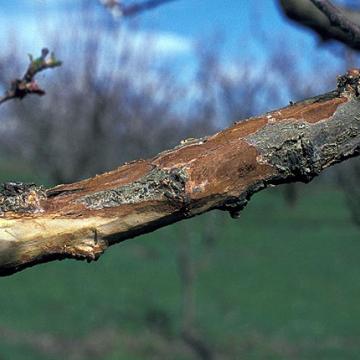
DISEASE: Bacterial canker and blast
HOST: Apricot
Bacterial canker has many symptoms. Typical symptoms are brown, sometimes reddish brown, internal tissues and rough, cracked bark.
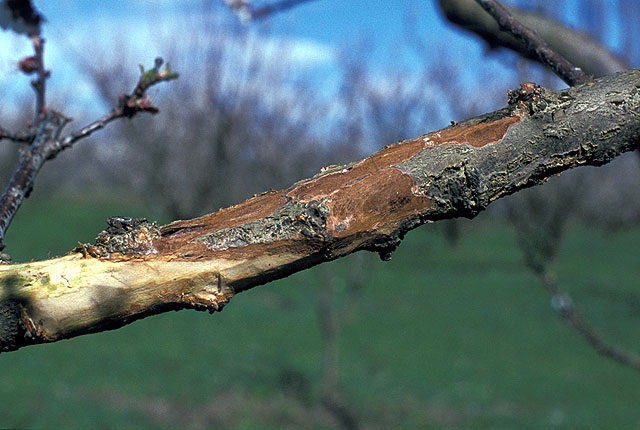
Bacterial canker and blast | Apricot
DISEASE: Bacterial canker and blast
HOST: Apricot (Prunus armeniaca 'Moorpark')
PATHOGEN: Pseudomonas syringae pv. syringae
SOURCE: J. Young
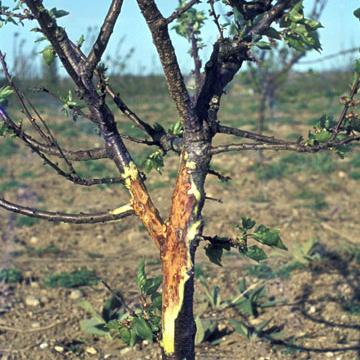
DISEASE: Bacterial canker and blast
HOST: Apricot
Infected apricot with sparse foliage (some twigs with no foliage) and a discolored area exposed where bark was removed.
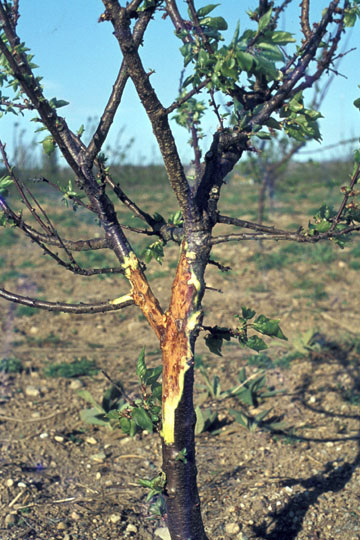
Bacterial canker and blast | Apricot
DISEASE: Bacterial canker and blast
HOST: Apricot (Prunus armeniaca 'Moorpark')
PATHOGEN: Pseudomonas syringae pv. syringae
SOURCE: J. Young

Pagination

  • Current page 1
  • Page 2
  • Page 3
  • Page 4
  • Page 5
  • Next page Next ›
  • Last page Last »

Footer_Menu

  • CO-AUTHORS
  • PURPOSE
  • ACKNOWLEDGEMENTS
  • NARRATIVES
  • CONTACT
  • PRIVACY POLICY

© 2019 PlantDiseases.org. All Rights Reserved.