

background


Header Menu

  • VIEW NARRATIVES
Home

World Encyclopedia of Plant Bacterial Diseases

FILTER BY

clear all
clear done

FILTERS

  • Alfalfa
  • Almond
  • Aloe
  • Amaranth
  • Anthurium
  • Apple
  • Apricot
  • Armeria
  • Ash
  • Aspen
  • Aster
  • Avocado
  • Banana
  • Barley
  • Bean
  • Beet
  • Begonia
  • Bindweed
  • Bird-of-Paradise
  • Blackberry
  • Bougainvillea
  • Broccoli
  • Butternut
  • Cabbage
  • Cactus
  • Campanula
  • Candytuft
  • Canna
  • Cantaloupe
  • Carnation
  • Carrot
  • Cassava
  • Casuarina
  • Cauliflower
  • (-) Celery
  • Chard
  • Cherry
  • Cherry laurel
  • China fir
  • Chokecherry
  • Chrysanthemum
  • Cilantro
  • Citron melon
  • Citrus (Grapefruit)
  • Citrus (Lemon)
  • Citrus (Lime)
  • Citrus (Mandarin orange)
  • Citrus (Orange)
  • Citrus (sp. unknown)
  • Clove
  • Clover
  • Coffee
  • Collard
  • Coreopsis
  • Coriander
  • Corn (Maize)
  • Cotton
  • Cowpea
  • Crabapple
  • Croton
  • Crown-of-thorns
  • Cucumber
  • Custard apple
  • Daffodil
  • Dahlia
  • Daisy
  • Datura
  • Dieffenbachia
  • Dogwood
  • Dracaena
  • Eggplant
  • Elderberry
  • Elm
  • Euonymus
  • Fennel
  • Fern
  • Ficus
  • Florida hopbush
  • Forsythia
  • Gayfeather
  • Gentian
  • Geranium
  • Ginger
  • Ginkgo
  • Gladiolus
  • Grape
  • Grass
  • Gypsophila (Baby's breath)
  • Hawaiian ticktrefoil
  • Hawthorn
  • Hazelnut
  • Heliconia
  • Heron's bill (Stork's bill)
  • Hibiscus
  • Hickory
  • Horseradish
  • Hyacinth
  • Hydrangea (Oak-leaf)
  • Iris
  • Ivy
  • Kalanchoe
  • Kiwi
  • Koa
  • Konjac (Devil's tongue)
  • Kudzu
  • Larkspur
  • Laurel (California laurel)
  • Lavender
  • Lettuce
  • Lilac
  • Lily
  • Loquat
  • Magnolia
  • Mallotus
  • Mango
  • Maple
  • Marigold
  • Millet
  • Mulberry
  • Mume (Japanese apricot)
  • Mushroom
  • Muskmelon
  • Mustard
  • Nectarine
  • Nephthytis
  • Oak
  • Oat
  • Oleander
  • Olive
  • Onion
  • Orchid
  • Ornithogalum
  • Palm
  • Panax
  • Papaya
  • Parsley
  • Parsnip
  • Paulownia (Empress tree)
  • Pea
  • Peach
  • Peanut
  • Pear
  • Pecan
  • Pellionia
  • Pepper
  • Periwinkle
  • Persimmon
  • Petunia
  • Photinia
  • Pigeon pea
  • Pineapple
  • Plum
  • Pluot
  • Poinsettia
  • Poppy
  • Potato
  • Pothos
  • Primrose
  • Pumpkin
  • Radish
  • Ranunculus
  • Raspberry
  • Rhododendron
  • Rice
  • Rose
  • Rutabaga
  • Scarlet firethorn
  • Schefflera
  • Sedum
  • Sesame
  • Snapdragon
  • Sorghum
  • Soybean
  • Spathiphyllum
  • (-) Squash
  • Stock
  • Strawberry
  • Sugarcane
  • Sweetgum
  • Sweet potato
  • Sycamore
  • Tea
  • Ti
  • (-) Tobacco
  • Tomato
  • Tulip
  • Turnip
  • Verbena
  • Viola (Horned violet)
  • Walnut
  • Wasabi (Japanese horseradish)
  • Watercress
  • Watermelon
  • Wheat
  • Wheatgrass
  • Willow
  • Wisteria (Japanese wisteria)
  • Yam bean
  • Zinnia
  • Apium graveolens
  • Cucurbita maxima
  • Cucurbita sp.
  • Nicotiana tabacum
  • Angular leaf spot
  • Aster yellows
  • Bacterial blight (Brown stem)
  • Bacterial fasciation (Leafy gall)
  • Bacterial leaf spot
  • Bacterial wilt
  • Hollow stalk
  • Wildfire (Angular leaf spot)
  • 'Candidatus Phytoplasma asteris'
  • Erwinia tracheiphila
  • Pectobacterium carotovorum
  • Pseudomonas cichorii
  • Pseudomonas syringae pv. apii
  • Pseudomonas syringae pv. tabaci
  • Ralstonia solanacearum
  • Rhodococcus fascians
Done

RESULTS

(15)
FILTER

Pagination

  • Current page 1
  • Page 2
  • Next page Next ›
  • Last page Last »
DISEASE: Angular leaf spot
HOST: Tobacco
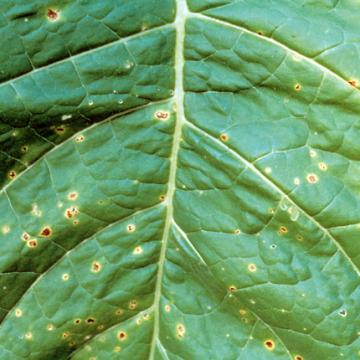
Leaf with light brown, angular spots. The difference between this disease and wildfire of tobacco is that wildfire is caused by a strain that produces tabtoxin. It causes conspicuous halos around lesions and large parts of a leaf may turn yellow .
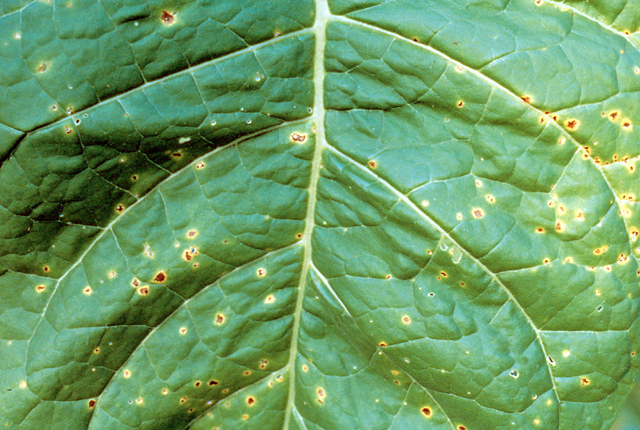
Angular leaf spot | Tobacco
DISEASE: Angular leaf spot
HOST: Tobacco (Nicotiana tabacum)
PATHOGEN: Pseudomonas syringae pv. tabaci
SOURCE: H. Shew
DISEASE: Angular leaf spot
HOST: Tobacco
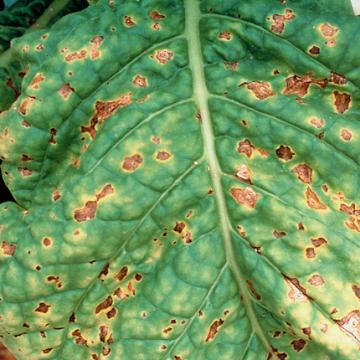
Yellowing of adjacent tissues occur as spots age (midseason). It causes conspicuous halos around lesions. Large parts of a leaf may turn yellow.
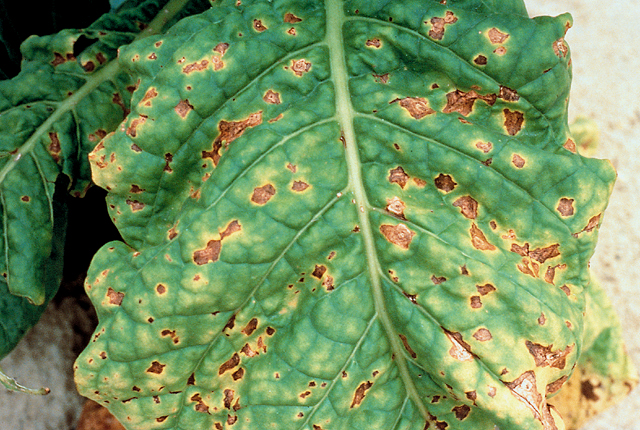
Angular leaf spot | Tobacco
DISEASE: Angular leaf spot
HOST: Tobacco (Nicotiana tabacum)
PATHOGEN: Pseudomonas syringae pv. tabaci
SOURCE: H. Shew
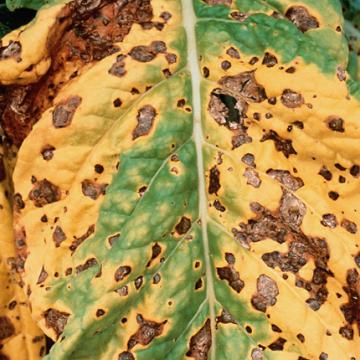
DISEASE: Angular leaf spot
HOST: Tobacco
Severely diseased leaf with extensive yellowing.
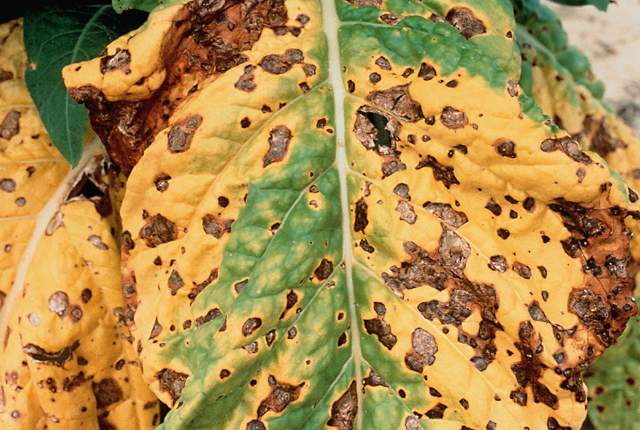
Angular leaf spot | Tobacco
DISEASE: Angular leaf spot
HOST: Tobacco (Nicotiana tabacum)
PATHOGEN: Pseudomonas syringae pv. tabaci
SOURCE: H. Shew
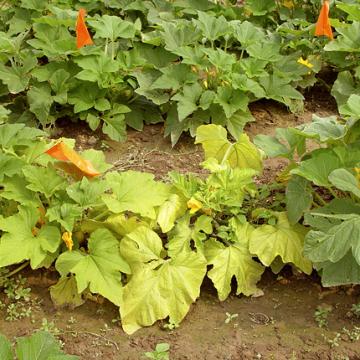
DISEASE: Aster yellows
HOST: Squash
Diagnostic characteristics for the disease are yellowing of young leaves, proliferation of secondary shoots, and rigid erect habit. Leaves are misshapen and smaller than normal and have stiff, thick laminae.
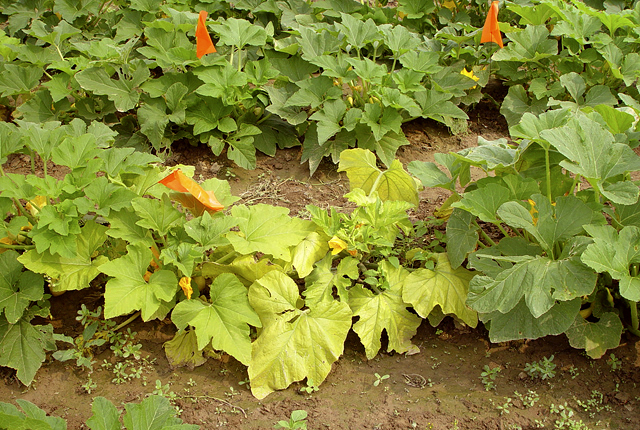
Aster yellows | Squash
DISEASE: Aster yellows
HOST: Squash (Cucurbita sp.)
PATHOGEN: 'Candidatus Phytoplasma asteris'
PATHOGEN SYNONYM: Phytoplasma Aster yellows group
SOURCE: S. Miller
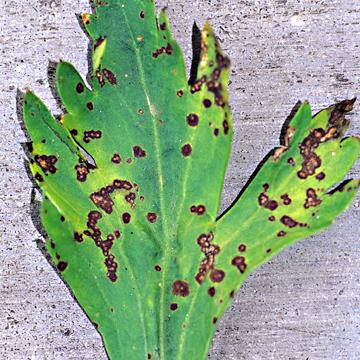
DISEASE: Bacterial blight (Brown stem)
HOST: Celery
Lesions are necrotic and circular to angular. Some have yellowish halos. Older lesions become brown and dry.
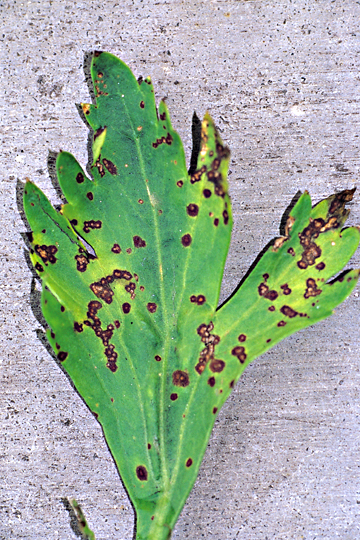
Bacterial blight (Brown stem) | Celery
DISEASE: Bacterial blight (Brown stem)
HOST: Celery (Apium graveolens)
PATHOGEN: Pseudomonas cichorii
SOURCE: R. Raid
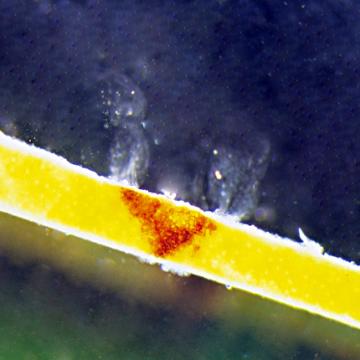
DISEASE: Bacterial blight (Brown stem)
HOST: Celery
Ooze from lesion on celery leaf.
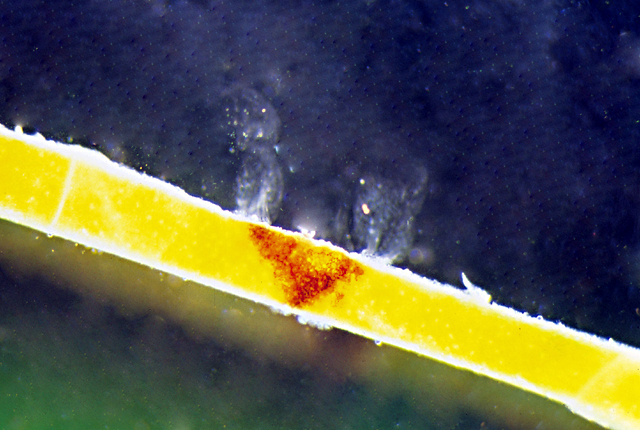
Bacterial blight (Brown stem) | Celery
DISEASE: Bacterial blight (Brown stem)
HOST: Celery (Apium graveolens)
PATHOGEN: Pseudomonas cichorii
SOURCE: R. Raid
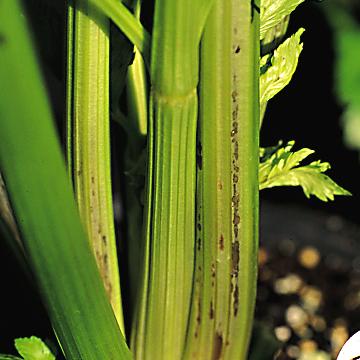
DISEASE: Bacterial blight (Brown stem)
HOST: Celery
Characteristic brown discoloration of petioles, which is more evident on inside of petiole close to the crown. Parenchyma tissues are firm and brown.
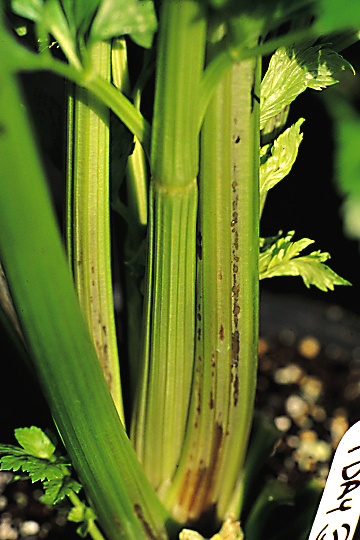
Bacterial blight (Brown stem) | Celery
DISEASE: Bacterial blight (Brown stem)
HOST: Celery (Apium graveolens)
PATHOGEN: Pseudomonas cichorii
SOURCE: K. Pernezny
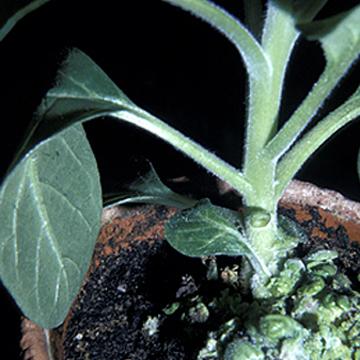
DISEASE: Bacterial fasciation (Leafy gall)
HOST: Tobacco
Bacterial fasciation of tobacco.
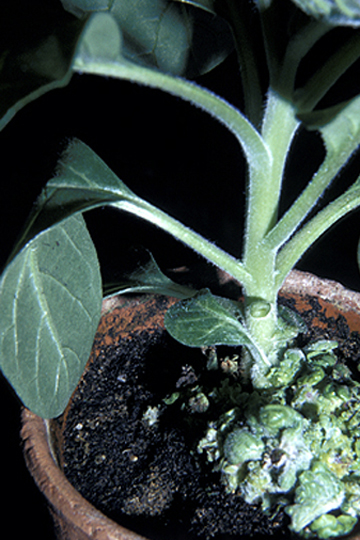
Bacterial fasciation (Leafy gall) | Tobacco
DISEASE: Bacterial fasciation (Leafy gall)
HOST: Tobacco (Nicotiana tabacum)
PATHOGEN: Rhodococcus fascians
SOURCE: R. Raabe
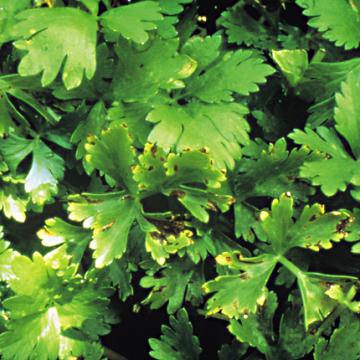
DISEASE: Bacterial leaf spot
HOST: Celery
Leaves with typical symptoms of rusty brown lesions with greasy appearance.
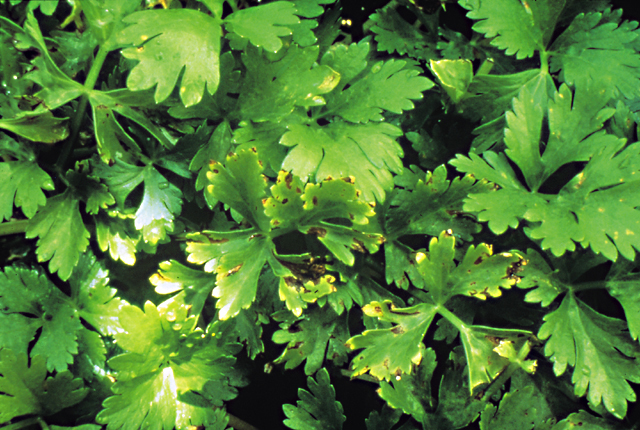
Bacterial leaf spot | Celery
DISEASE: Bacterial leaf spot
HOST: Celery (Apium graveolens)
PATHOGEN: Pseudomonas syringae pv. apii
SOURCE: R. Gilbertson

Pagination

  • Current page 1
  • Page 2
  • Next page Next ›
  • Last page Last »

Footer_Menu

  • CO-AUTHORS
  • PURPOSE
  • ACKNOWLEDGEMENTS
  • NARRATIVES
  • CONTACT
  • PRIVACY POLICY

© 2019 PlantDiseases.org. All Rights Reserved.