

background


Header Menu

  • VIEW NARRATIVES
Home

World Encyclopedia of Plant Bacterial Diseases

FILTER BY

clear all
clear done

FILTERS

  • Alfalfa
  • Almond
  • Aloe
  • Amaranth
  • Anthurium
  • Apple
  • Apricot
  • Armeria
  • Ash
  • Aspen
  • Aster
  • Avocado
  • Banana
  • Barley
  • Bean
  • Beet
  • Begonia
  • Bindweed
  • Bird-of-Paradise
  • Blackberry
  • Bougainvillea
  • Broccoli
  • Butternut
  • Cabbage
  • Cactus
  • Campanula
  • Candytuft
  • Canna
  • Cantaloupe
  • Carnation
  • Carrot
  • Cassava
  • Casuarina
  • Cauliflower
  • Celery
  • Chard
  • Cherry
  • Cherry laurel
  • China fir
  • Chokecherry
  • Chrysanthemum
  • Cilantro
  • Citron melon
  • Citrus (Grapefruit)
  • Citrus (Lemon)
  • Citrus (Lime)
  • Citrus (Mandarin orange)
  • Citrus (Orange)
  • Citrus (sp. unknown)
  • Clove
  • Clover
  • Coffee
  • Collard
  • Coreopsis
  • Coriander
  • Corn (Maize)
  • Cotton
  • Cowpea
  • Crabapple
  • Croton
  • Crown-of-thorns
  • Cucumber
  • Custard apple
  • Daffodil
  • Dahlia
  • Daisy
  • Datura
  • Dieffenbachia
  • Dogwood
  • Dracaena
  • Eggplant
  • Elderberry
  • Elm
  • Euonymus
  • Fennel
  • Fern
  • Ficus
  • Florida hopbush
  • Forsythia
  • Gayfeather
  • Gentian
  • Geranium
  • Ginger
  • Ginkgo
  • Gladiolus
  • Grape
  • Grass
  • Gypsophila (Baby's breath)
  • Hawaiian ticktrefoil
  • Hawthorn
  • (-) Hazelnut
  • Heliconia
  • Heron's bill (Stork's bill)
  • Hibiscus
  • Hickory
  • Horseradish
  • Hyacinth
  • Hydrangea (Oak-leaf)
  • Iris
  • Ivy
  • Kalanchoe
  • Kiwi
  • Koa
  • Konjac (Devil's tongue)
  • Kudzu
  • Larkspur
  • Laurel (California laurel)
  • Lavender
  • Lettuce
  • Lilac
  • Lily
  • Loquat
  • Magnolia
  • Mallotus
  • Mango
  • Maple
  • Marigold
  • Millet
  • Mulberry
  • Mume (Japanese apricot)
  • Mushroom
  • Muskmelon
  • Mustard
  • Nectarine
  • (-) Nephthytis
  • Oak
  • Oat
  • Oleander
  • Olive
  • Onion
  • Orchid
  • Ornithogalum
  • Palm
  • Panax
  • Papaya
  • Parsley
  • Parsnip
  • Paulownia (Empress tree)
  • Pea
  • Peach
  • Peanut
  • Pear
  • (-) Pecan
  • Pellionia
  • Pepper
  • Periwinkle
  • Persimmon
  • Petunia
  • Photinia
  • Pigeon pea
  • Pineapple
  • Plum
  • Pluot
  • Poinsettia
  • Poppy
  • Potato
  • Pothos
  • Primrose
  • Pumpkin
  • Radish
  • Ranunculus
  • Raspberry
  • Rhododendron
  • Rice
  • Rose
  • Rutabaga
  • Scarlet firethorn
  • Schefflera
  • Sedum
  • Sesame
  • Snapdragon
  • Sorghum
  • Soybean
  • Spathiphyllum
  • Squash
  • Stock
  • Strawberry
  • Sugarcane
  • Sweetgum
  • Sweet potato
  • Sycamore
  • Tea
  • Ti
  • Tobacco
  • Tomato
  • Tulip
  • Turnip
  • Verbena
  • Viola (Horned violet)
  • Walnut
  • Wasabi (Japanese horseradish)
  • Watercress
  • Watermelon
  • Wheat
  • Wheatgrass
  • Willow
  • Wisteria (Japanese wisteria)
  • Yam bean
  • Zinnia
  • Carya illinoinensis
  • Corylus americana
  • Syngonium podophyllum
  • Bacterial blight
  • Bacterial canker
  • Bacterial leaf scorch
  • Bacterial leaf spot
  • Bunch disease
  • Syngonium blight
  • Witches'-broom
  • 'Candidatus Phytoplasma pruni'
  • Pectobacterium carotovorum
  • Pseudomonas cichorii
  • Pseudomonas syringae pv. avellanae
  • Xanthomonas arboricola pv. corylina
  • Xanthomonas axonopodis pv. dieffenbachiae
  • Xylella fastidiosa
Done

RESULTS

(9)
FILTER
DISEASE: Bacterial blight
HOST: Hazelnut
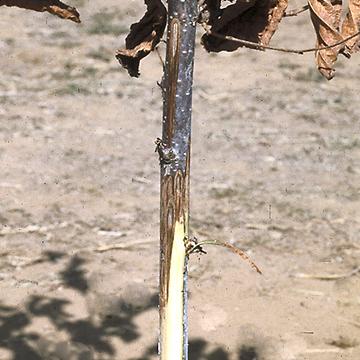
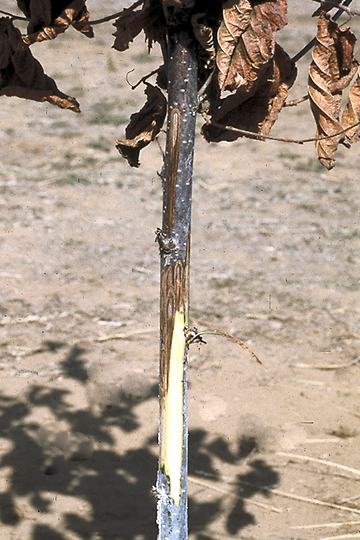
Diseased young tree with discoloration of the cambium. Dieback of young twigs and branches is characteristic. Other typical symptoms are bud and twig necrosis and small, angular or round, water-soaked leaf spots.
Bacterial blight | Hazelnut
DISEASE: Bacterial blight
HOST: Hazelnut (Corylus americana)
PATHOGEN: Xanthomonas arboricola pv. corylina
SOURCE: J. Pscheidt
DISEASE: Bacterial canker
HOST: Hazelnut
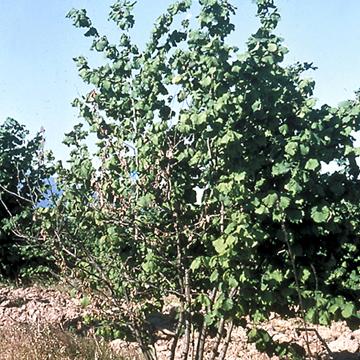
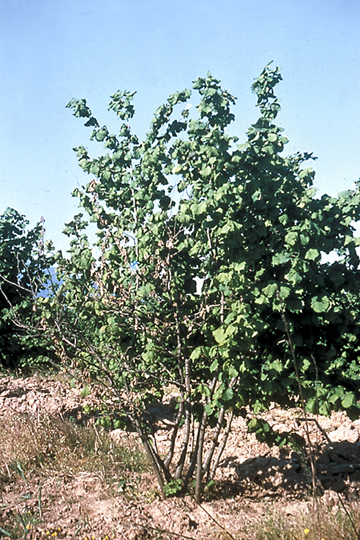
Primary symptoms are failure of buds to break and withering and death of new foliage in spring. Dead leaves remain attached to limbs after normal leaf fall.
Bacterial canker | Hazelnut
DISEASE: Bacterial canker
HOST: Hazelnut (Corylus americana)
PATHOGEN: Pseudomonas syringae pv. avellanae
PATHOGEN SYNONYM: Pseudomonas avellanae
SOURCE: P. Psalidas
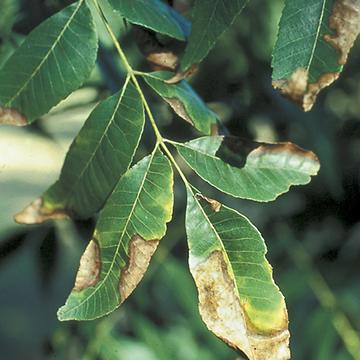
DISEASE: Bacterial leaf scorch
HOST: Pecan
Pecan with necrotic scorched leaves with distinct dark lines between healthy and diseased tissues.
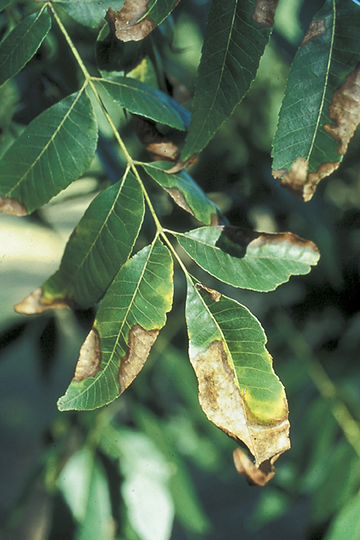
Bacterial leaf scorch | Pecan
DISEASE: Bacterial leaf scorch
HOST: Pecan (Carya illinoinensis)
PATHOGEN: Xylella fastidiosa
SOURCE: T. Brenneman
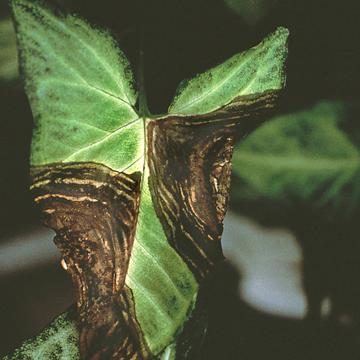
DISEASE: Bacterial leaf spot
HOST: Nephthytis
Leaf with concentric rings of dark tissues. There has been confusion of the causal agent with Dickeya sp., which also causes mushy leaf spots.
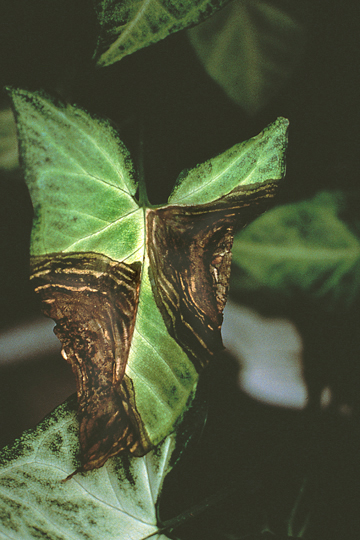
Bacterial leaf spot | Nephthytis
DISEASE: Bacterial leaf spot
HOST: Nephthytis (Syngonium podophyllum)
PATHOGEN: Pectobacterium carotovorum
PATHOGEN SYNONYM: Erwinia carotovora subsp. carotovora
SOURCE: A. Chase
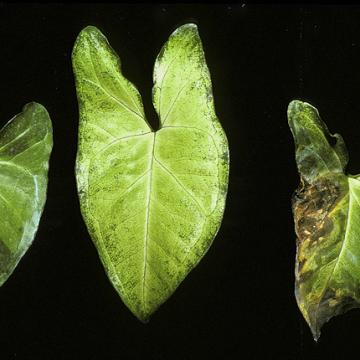
DISEASE: Bacterial leaf spot
HOST: Nephthytis
Water-soaked tissues and large, dark brown necrotic areas at leaf margins. Healthy (center leaf).
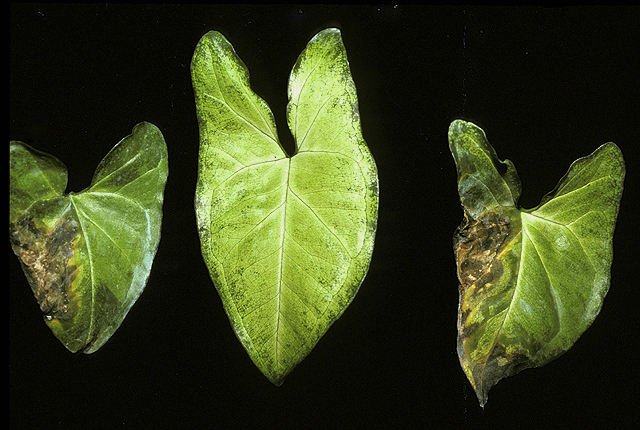
Bacterial leaf spot | Nephthytis
DISEASE: Bacterial leaf spot
HOST: Nephthytis (Syngonium podophyllum)
PATHOGEN: Pseudomonas cichorii
SOURCE: S. Thomson
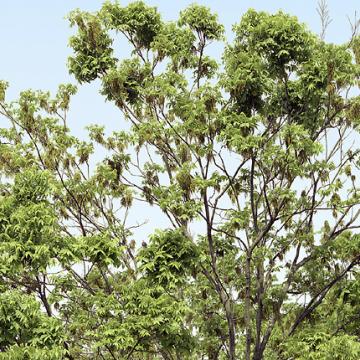
DISEASE: Bunch disease
HOST: Pecan
Pecan exhibiting bunch symptoms at ends of branches. This disease is thought to be caused by a phytoplasma similar to the walnut bunch pathogen in the X-disease group.
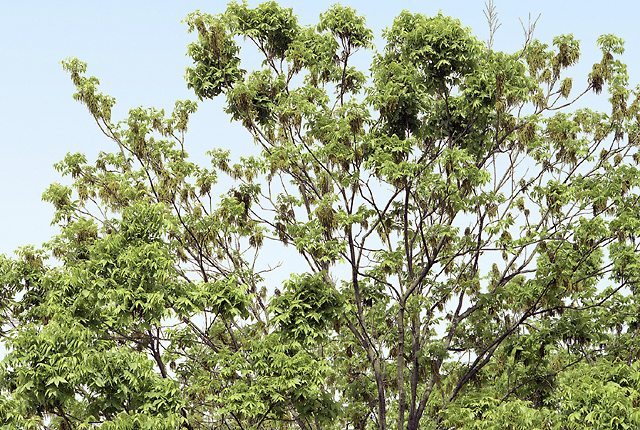
Bunch disease | Pecan
DISEASE: Bunch disease
HOST: Pecan (Carya illinoinensis)
PATHOGEN: 'Candidatus Phytoplasma pruni'
PATHOGEN SYNONYM: Phytoplasma X-disease group
SOURCE: W. Sinclair
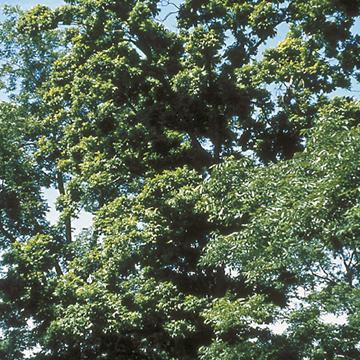
DISEASE: Bunch disease
HOST: Pecan
Severe case of bunch disease. Note bunches of foliage.
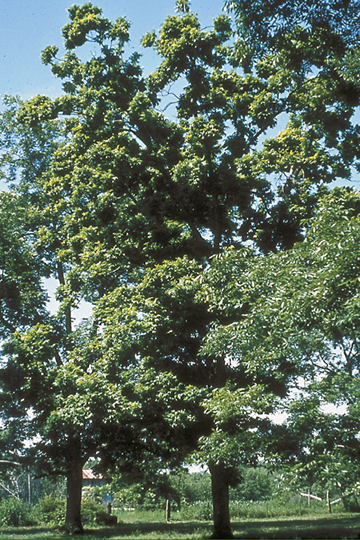
Bunch disease | Pecan
DISEASE: Bunch disease
HOST: Pecan (Carya illinoinensis)
PATHOGEN: 'Candidatus Phytoplasma pruni'
PATHOGEN SYNONYM: Phytoplasma X-disease group
SOURCE: P. Bertrand
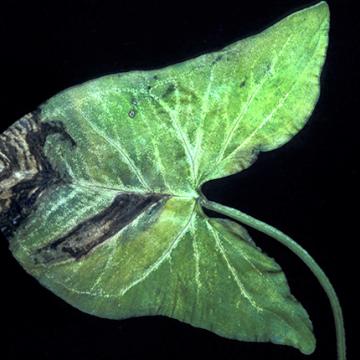
DISEASE: Syngonium blight
HOST: Nephthytis
Leaf with large, brown to blackish necrotic areas.
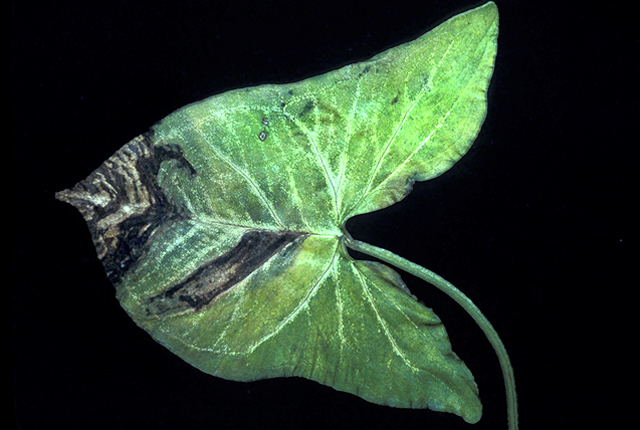
Syngonium blight | Nephthytis
DISEASE: Syngonium blight
HOST: Nephthytis (Syngonium podophyllum)
PATHOGEN: Xanthomonas axonopodis pv. dieffenbachiae
PATHOGEN SYNONYM: Xanthomonas campestris pv. dieffenbachiae
SOURCE: R. Raabe
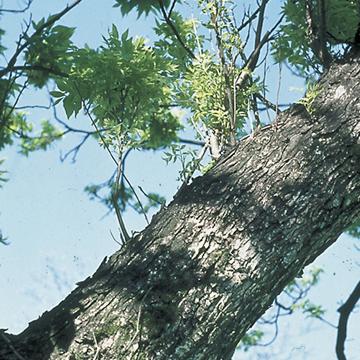
DISEASE: Witches'-broom
HOST: Pecan
Diseased pecan with short branches on trunk with witches'-broom appearance.
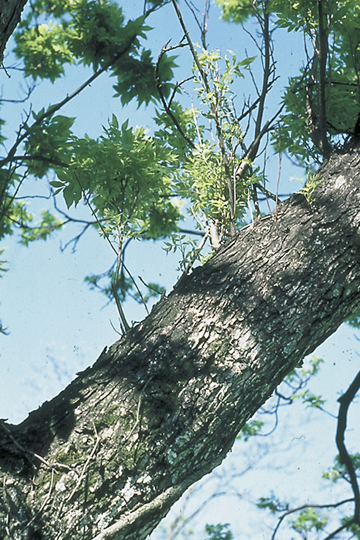
Witches'-broom | Pecan
DISEASE: Witches'-broom
HOST: Pecan (Carya illinoinensis)
PATHOGEN: 'Candidatus Phytoplasma pruni'
PATHOGEN SYNONYM: Phytoplasma X-disease group
SOURCE: P. Bertrand

Footer_Menu

  • CO-AUTHORS
  • PURPOSE
  • ACKNOWLEDGEMENTS
  • NARRATIVES
  • CONTACT
  • PRIVACY POLICY

© 2019 PlantDiseases.org. All Rights Reserved.