

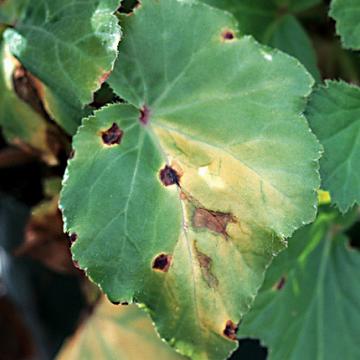
DISEASE: Bacterial leaf spot (Blight)
HOST: Begonia
Initial symptoms appear as small, blisterlike lesions. As lesions age, they enlarge, producing broad patches of necrotic leaf tissue.
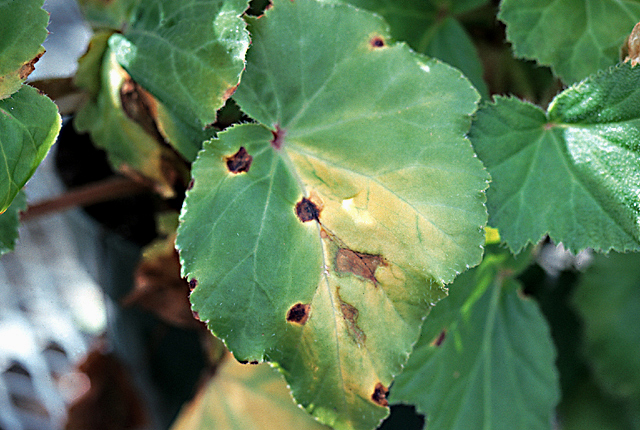
Bacterial leaf spot (Blight) | Begonia
DISEASE: Bacterial leaf spot (Blight)
HOST: Begonia (Begonia sp.)
PATHOGEN: Xanthomonas axonopodis pv. begoniae
PATHOGEN SYNONYM: Xanthomonas campestris pv. begoniae
SOURCE: APS
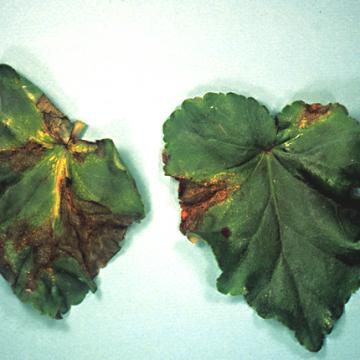
DISEASE: Bacterial leaf spot (Blight)
HOST: Begonia
Advanced stage of disease with dark, large necrotic areas on leaves and interveinal chlorosis.
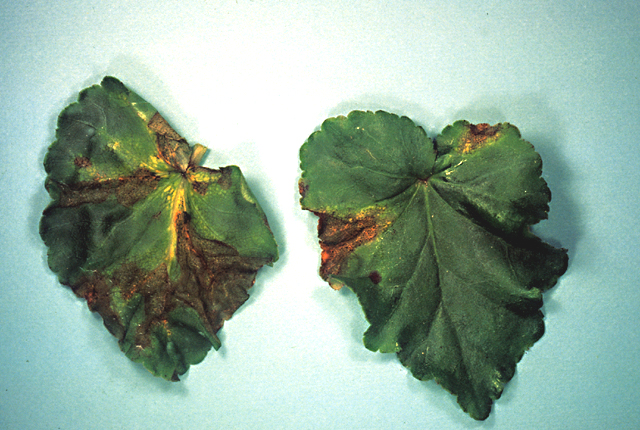
Bacterial leaf spot (Blight) | Begonia
DISEASE: Bacterial leaf spot (Blight)
HOST: Begonia (Begonia sp.)
PATHOGEN: Xanthomonas axonopodis pv. begoniae
PATHOGEN SYNONYM: Xanthomonas campestris pv. begoniae
SOURCE: APS
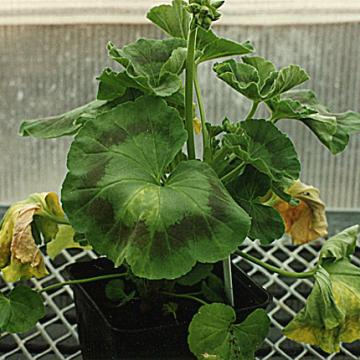
DISEASE: Pith necrosis
HOST: Geranium
Geranium with wilted, yellow necrotic leaves.
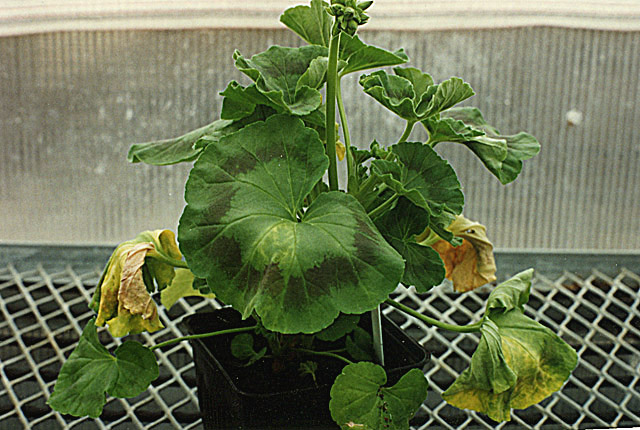
Pith necrosis | Geranium
DISEASE: Pith necrosis
HOST: Geranium (Pelargonium sp.)
PATHOGEN: Pseudomonas corrugata
SOURCE: A. Magyarosy, D. Thomas
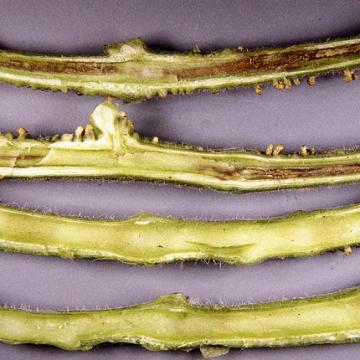
DISEASE: Pith necrosis
HOST: Geranium
Pitted and hollow stems, one of the disease symptoms.
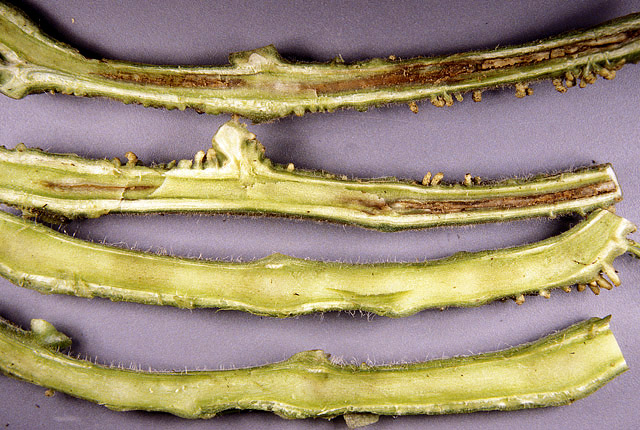
Pith necrosis | Geranium
DISEASE: Pith necrosis
HOST: Geranium (Pelargonium sp.)
PATHOGEN: Pseudomonas corrugata
SOURCE: A. Magyarosy, D. Thomas
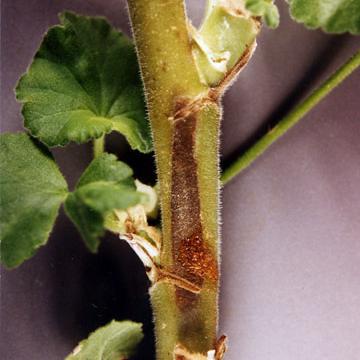
DISEASE: Pith necrosis
HOST: Geranium
Discolored stem caused by systemic infection of the pathogen.
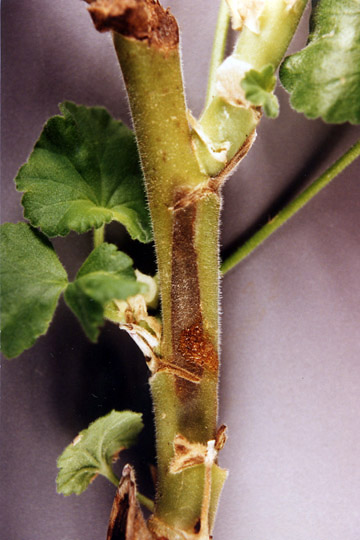
Pith necrosis | Geranium
DISEASE: Pith necrosis
HOST: Geranium (Pelargonium sp.)
PATHOGEN: Pseudomonas corrugata
SOURCE: A. Magyarosy, D. Thomas
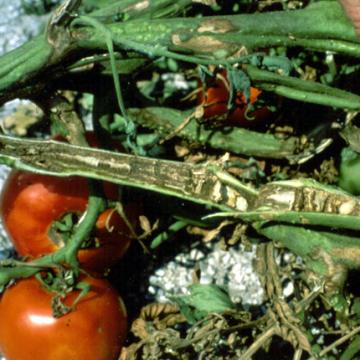
DISEASE: Pith necrosis
HOST: Tomato
Cracked, dry, hollow stems with internal necrosis.
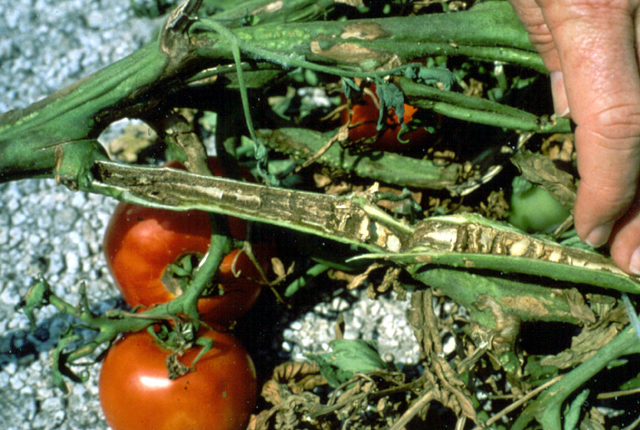
Pith necrosis | Tomato
DISEASE: Pith necrosis
HOST: Tomato (Lycopersicon esculentum)
PATHOGEN: Pseudomonas corrugata
SOURCE: A. Alvarez
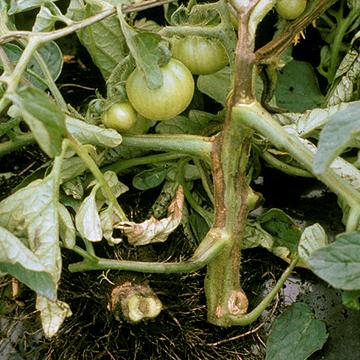
DISEASE: Pith necrosis
HOST: Tomato
External necrotic stem tissues. Initial symptoms include chlorosis of young leaves. Wilting may occur when disease is severe.
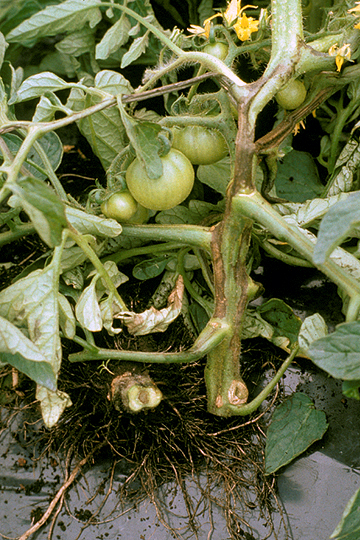
Pith necrosis | Tomato
DISEASE: Pith necrosis
HOST: Tomato (Lycopersicon esculentum)
PATHOGEN: Pseudomonas corrugata
SOURCE: K. Natsuaki, M. Goto
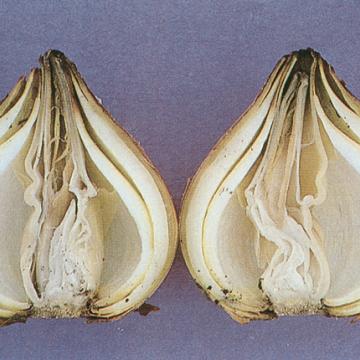
DISEASE: Slippery skin
HOST: Onion
Rot progresses from the top of infected scales and eventually internal tissues rot. In early stages, the only external symptoms may be softening of the neck.
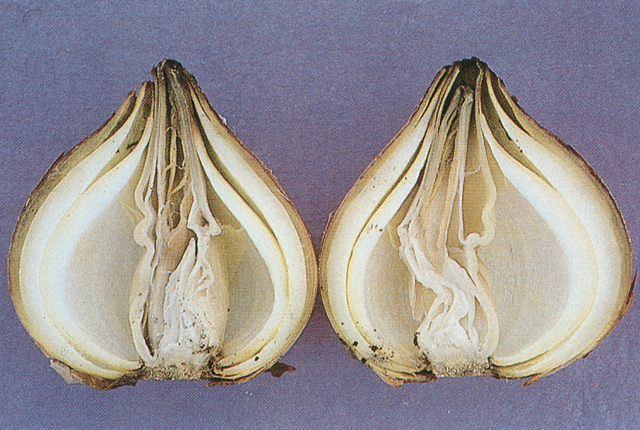
Slippery skin | Onion
DISEASE: Slippery skin
HOST: Onion (Allium cepa)
PATHOGEN: Burkholderia gladioli pv. alliicola
PATHOGEN SYNONYM: Pseudomonas gladioli pv. alliicola
SOURCE: H. Schwartz