

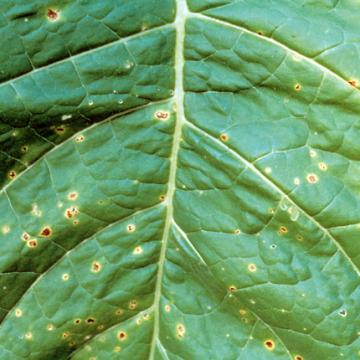
DISEASE: Angular leaf spot
HOST: Tobacco
Leaf with light brown, angular spots. The difference between this disease and wildfire of tobacco is that wildfire is caused by a strain that produces tabtoxin. It causes conspicuous halos around lesions and large parts of a leaf may turn yellow .
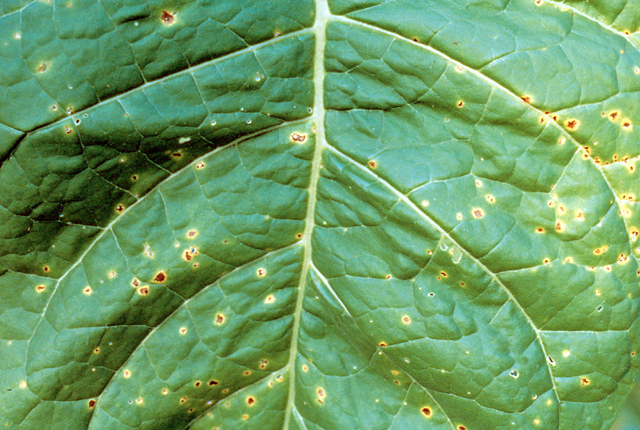
Angular leaf spot | Tobacco
DISEASE: Angular leaf spot
HOST: Tobacco (Nicotiana tabacum)
PATHOGEN: Pseudomonas syringae pv. tabaci
SOURCE: H. Shew
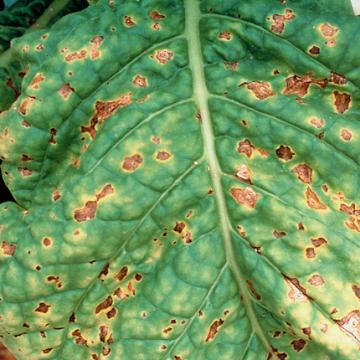
DISEASE: Angular leaf spot
HOST: Tobacco
Yellowing of adjacent tissues occur as spots age (midseason). It causes conspicuous halos around lesions. Large parts of a leaf may turn yellow.
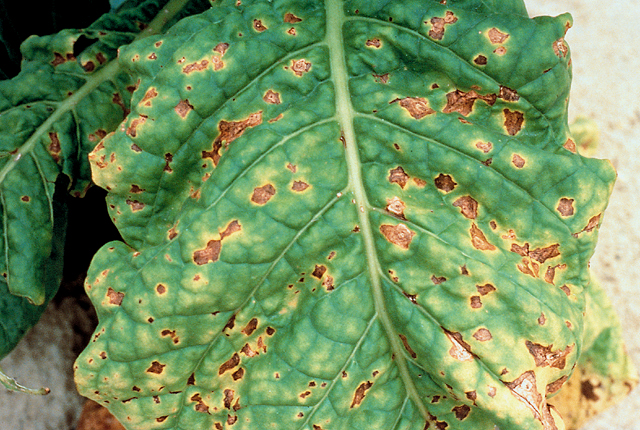
Angular leaf spot | Tobacco
DISEASE: Angular leaf spot
HOST: Tobacco (Nicotiana tabacum)
PATHOGEN: Pseudomonas syringae pv. tabaci
SOURCE: H. Shew
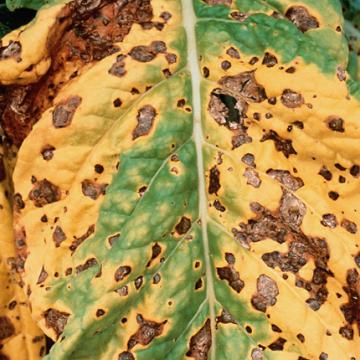
DISEASE: Angular leaf spot
HOST: Tobacco
Severely diseased leaf with extensive yellowing.
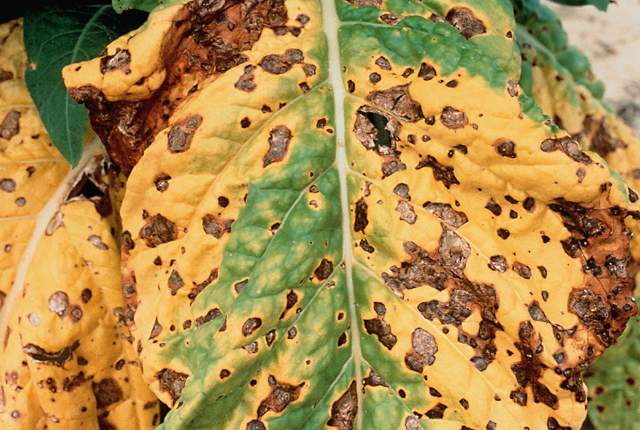
Angular leaf spot | Tobacco
DISEASE: Angular leaf spot
HOST: Tobacco (Nicotiana tabacum)
PATHOGEN: Pseudomonas syringae pv. tabaci
SOURCE: H. Shew
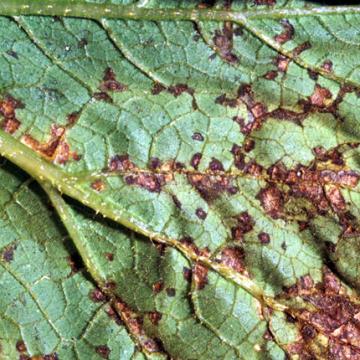
DISEASE: Bacterial leaf spot
HOST: Pumpkin
Leaf with tan to brown, angular lesions with dark margins. They are similar to those caused by angular leaf spot.
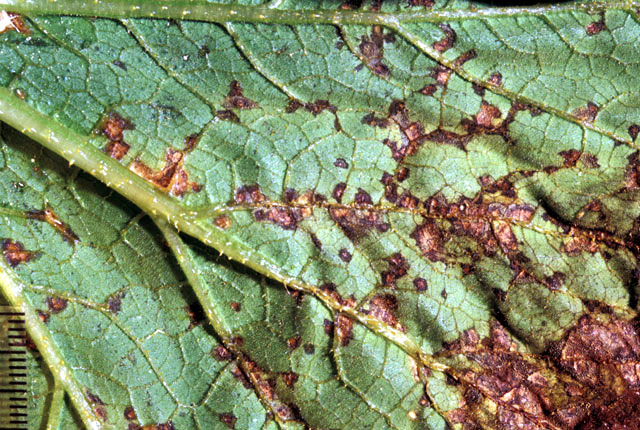
Bacterial leaf spot | Pumpkin
DISEASE: Bacterial leaf spot
HOST: Pumpkin (Cucurbita pepo)
PATHOGEN: Xanthomonas cucurbitae
SOURCE: J. Young
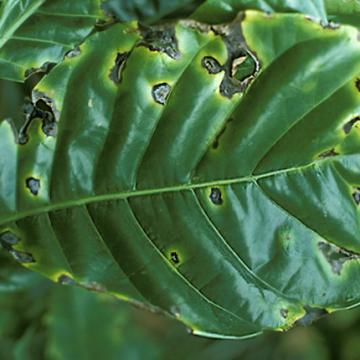
DISEASE: Halo blight
HOST: Coffee
Leaf with blackish lesions surrounded by yellow halos.
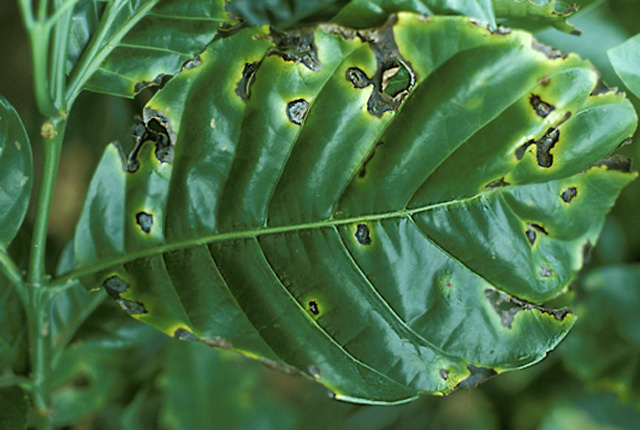
Halo blight | Coffee
DISEASE: Halo blight
HOST: Coffee (Coffea dewevrei)
PATHOGEN: Pseudomonas syringae pv. garcae
SOURCE: S. Mohan
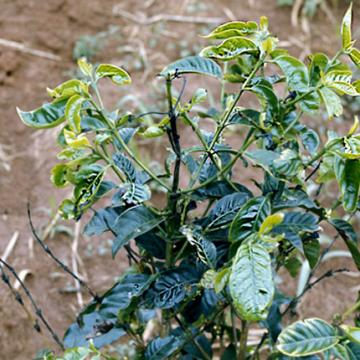
DISEASE: Halo blight
HOST: Coffee
Young blighted coffee plant.
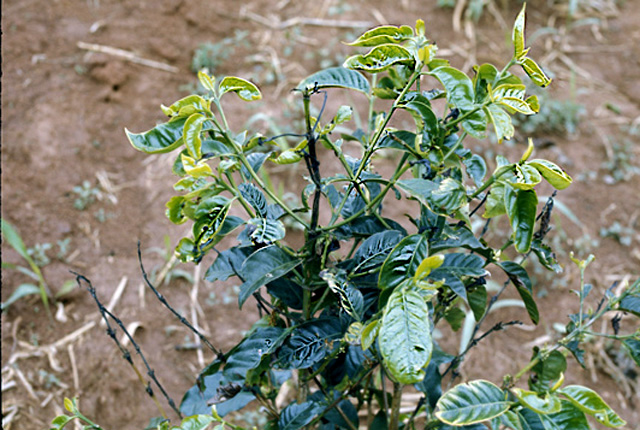
Halo blight | Coffee
DISEASE: Halo blight
HOST: Coffee (Coffea dewevrei)
PATHOGEN: Pseudomonas syringae pv. garcae
SOURCE: S. Mohan
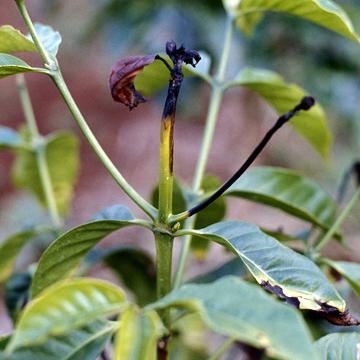
DISEASE: Halo blight
HOST: Coffee
Stem blight stage of disease.
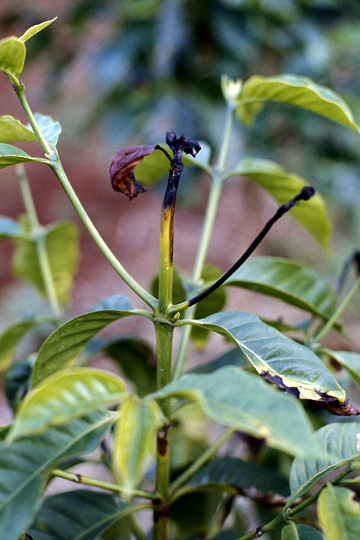
Halo blight | Coffee
DISEASE: Halo blight
HOST: Coffee (Coffea dewevrei)
PATHOGEN: Pseudomonas syringae pv. garcae
SOURCE: S. Mohan
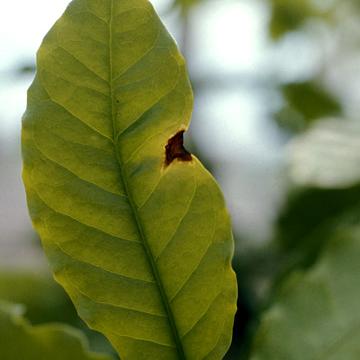
DISEASE: Halo blight
HOST: Coffee
Coffee leaf with lesion on margin.
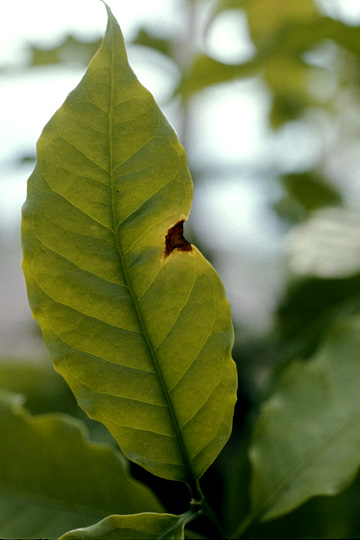
Halo blight | Coffee
DISEASE: Halo blight
HOST: Coffee (Coffea dewevrei)
PATHOGEN: Pseudomonas syringae pv. garcae
SOURCE: S. Mohan
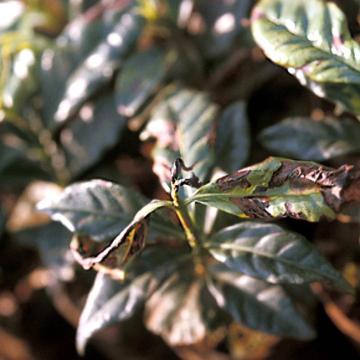
DISEASE: Halo blight
HOST: Coffee
Halo blight infection of young seedlings.
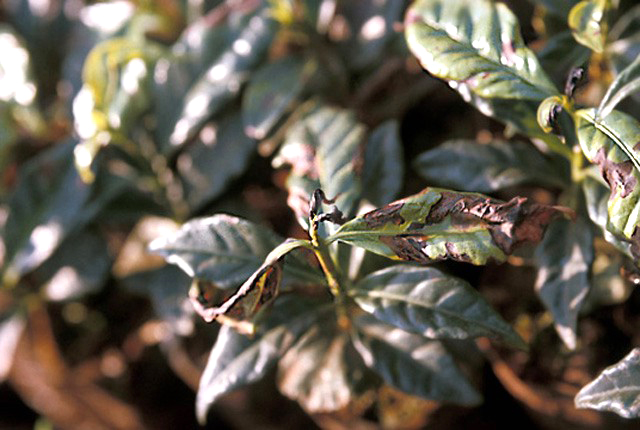
Halo blight | Coffee
DISEASE: Halo blight
HOST: Coffee (Coffea dewevrei)
PATHOGEN: Pseudomonas syringae pv. garcae
SOURCE: S. Mohan