

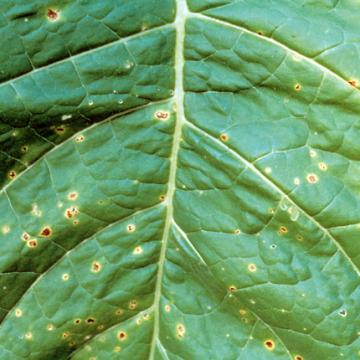
DISEASE: Angular leaf spot
HOST: Tobacco
Leaf with light brown, angular spots. The difference between this disease and wildfire of tobacco is that wildfire is caused by a strain that produces tabtoxin. It causes conspicuous halos around lesions and large parts of a leaf may turn yellow .
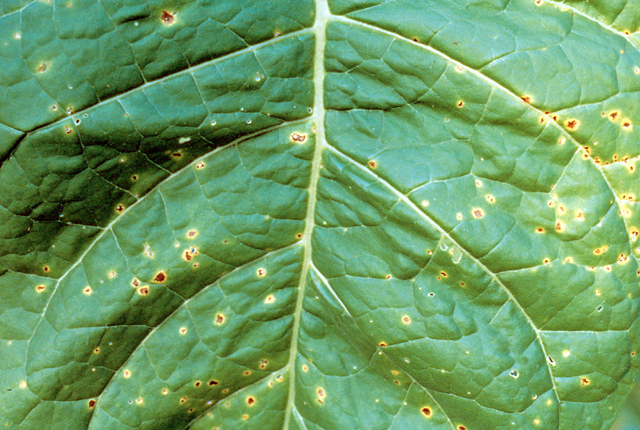
Angular leaf spot | Tobacco
DISEASE: Angular leaf spot
HOST: Tobacco (Nicotiana tabacum)
PATHOGEN: Pseudomonas syringae pv. tabaci
SOURCE: H. Shew
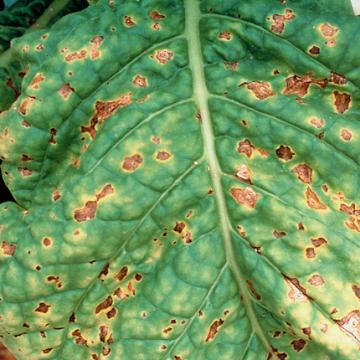
DISEASE: Angular leaf spot
HOST: Tobacco
Yellowing of adjacent tissues occur as spots age (midseason). It causes conspicuous halos around lesions. Large parts of a leaf may turn yellow.
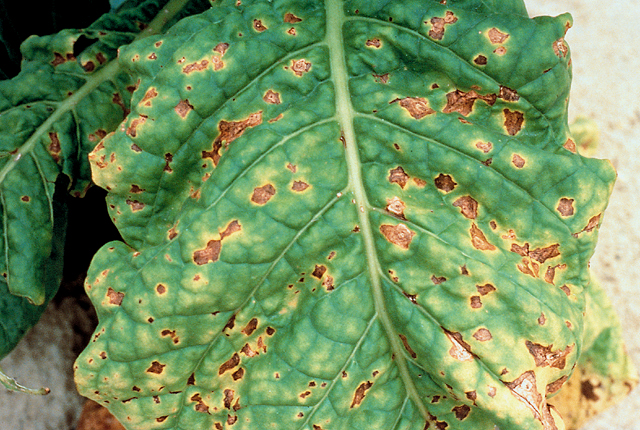
Angular leaf spot | Tobacco
DISEASE: Angular leaf spot
HOST: Tobacco (Nicotiana tabacum)
PATHOGEN: Pseudomonas syringae pv. tabaci
SOURCE: H. Shew
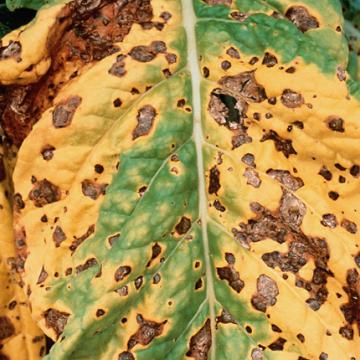
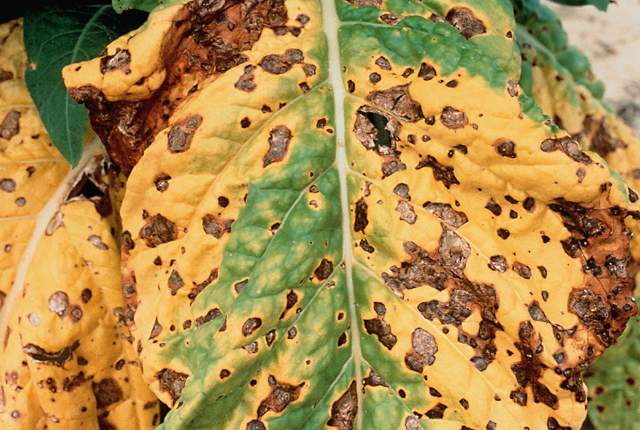
DISEASE: Angular leaf spot
HOST: Tobacco
Severely diseased leaf with extensive yellowing.
Angular leaf spot | Tobacco
DISEASE: Angular leaf spot
HOST: Tobacco (Nicotiana tabacum)
PATHOGEN: Pseudomonas syringae pv. tabaci
SOURCE: H. Shew
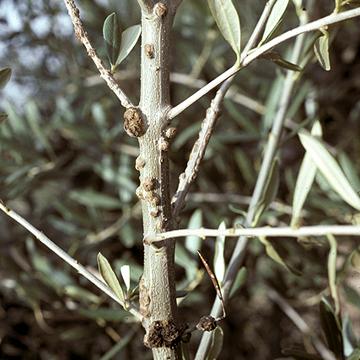
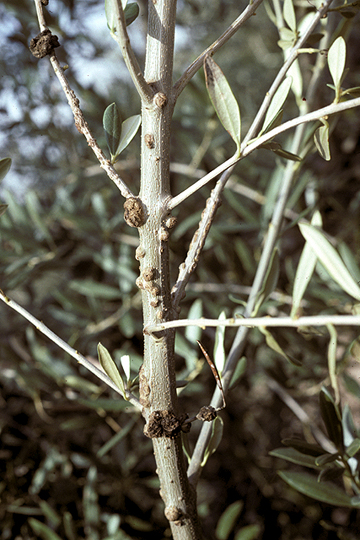
DISEASE: Olive knot
HOST: Olive
Multiple infections of young stems. The bacterium invades vascular tissues during certain times of the year and may be isolated from branches that appear healthy.
Olive knot | Olive
DISEASE: Olive knot
HOST: Olive (Olea europaea)
PATHOGEN: Pseudomonas savastanoi pv. savastanoi
SOURCE: M. Schroth
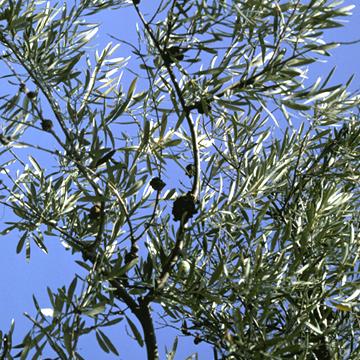
DISEASE: Olive knot
HOST: Olive
Tree with knots/galls on branches along with twig dieback, which is associated with knots. Fusarium and Diplodia spp. infect through knots and are thought to be main reason for dieback.
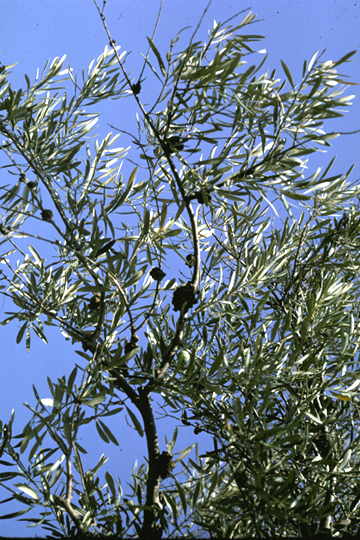
Olive knot | Olive
DISEASE: Olive knot
HOST: Olive (Olea europaea)
PATHOGEN: Pseudomonas savastanoi pv. savastanoi
SOURCE: M. Schroth
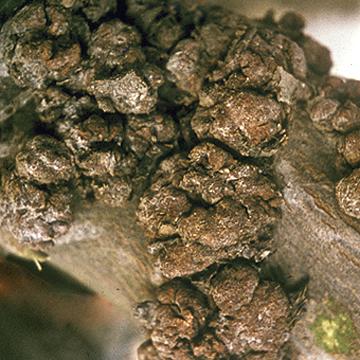
DISEASE: Olive knot
HOST: Olive
Multiple infections on olive branch. Knots at this stage begin to die from the outside in and are infected by several fungi.
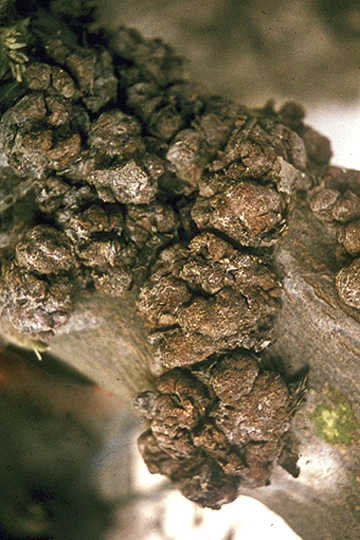
Olive knot | Olive
DISEASE: Olive knot
HOST: Olive (Olea europaea)
PATHOGEN: Pseudomonas savastanoi pv. savastanoi
SOURCE: M. Schroth
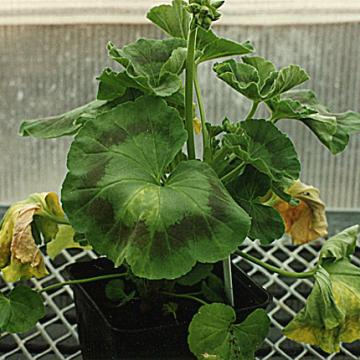
DISEASE: Pith necrosis
HOST: Geranium
Geranium with wilted, yellow necrotic leaves.
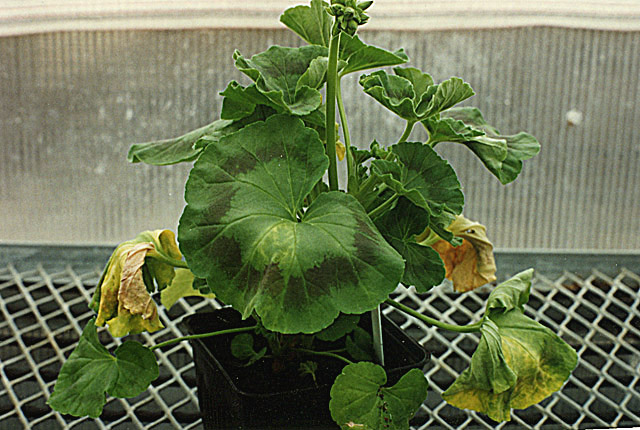
Pith necrosis | Geranium
DISEASE: Pith necrosis
HOST: Geranium (Pelargonium sp.)
PATHOGEN: Pseudomonas corrugata
SOURCE: A. Magyarosy, D. Thomas
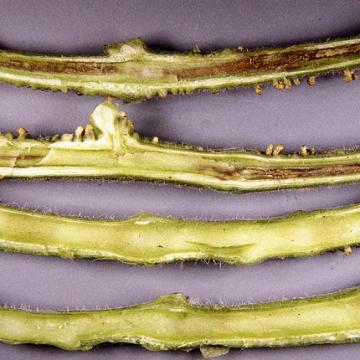
DISEASE: Pith necrosis
HOST: Geranium
Pitted and hollow stems, one of the disease symptoms.
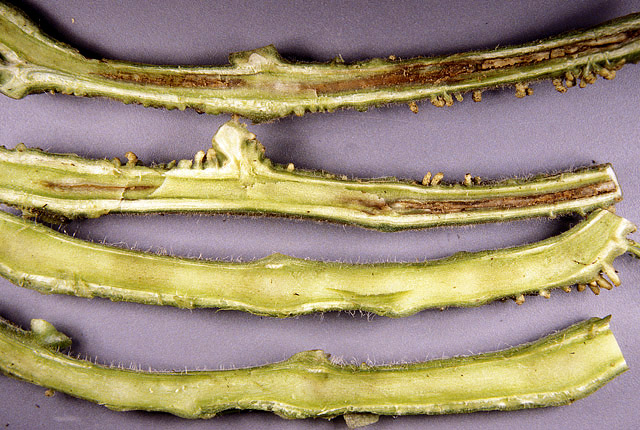
Pith necrosis | Geranium
DISEASE: Pith necrosis
HOST: Geranium (Pelargonium sp.)
PATHOGEN: Pseudomonas corrugata
SOURCE: A. Magyarosy, D. Thomas
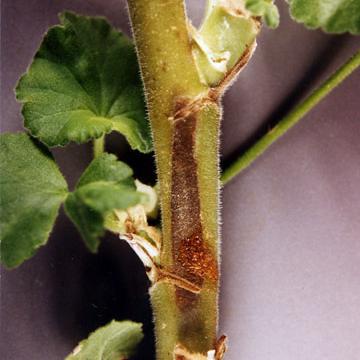
DISEASE: Pith necrosis
HOST: Geranium
Discolored stem caused by systemic infection of the pathogen.
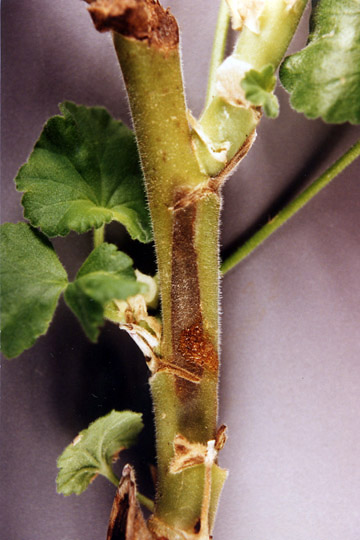
Pith necrosis | Geranium
DISEASE: Pith necrosis
HOST: Geranium (Pelargonium sp.)
PATHOGEN: Pseudomonas corrugata
SOURCE: A. Magyarosy, D. Thomas